Good Friday Marketing Campaigns 2026: A Faith-Sensitive, High-ROI Playbook for India’s Enterprise Retail, E-commerce, and Travel Brands
Key Takeaways
- Adopt a sensitivity-first approach with Quiet Hours and reflective content during Good Friday.
- Leverage CDP-driven segmentation and localization to target India’s diverse Christian communities.
- Use hyper-personalized video at scale to boost engagement across WhatsApp, email, and site.
- Optimize Easter shopping personalization with automated PLPs, CRM journeys, and WhatsApp nudges.
- Measure with incremental lift and video analytics while enforcing faith-sensitive brand governance.
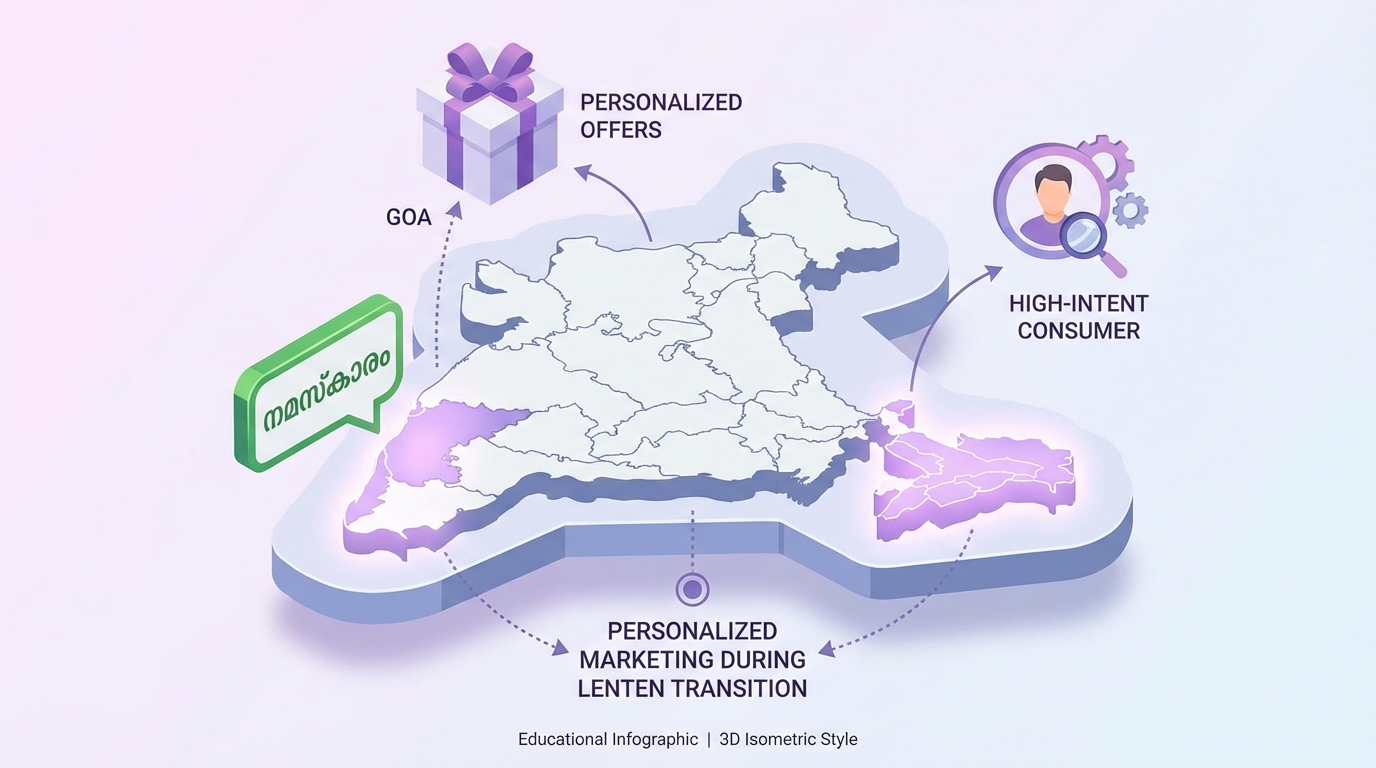
The digital landscape in 2026 demands a sophisticated synthesis of cultural empathy and algorithmic precision. For enterprise CMOs and growth leaders in India, executing Good Friday marketing campaigns 2026 requires moving beyond generic festive discounts toward a framework of "reflective resonance." With India’s Christian population representing a significant, high-intent consumer base—particularly in the South, West, and Northeast—brands must navigate the solemnity of Holy Week with surgical sensitivity while preparing for the high-velocity consumption of Easter Sunday.
The 2026 calendar marks Good Friday on April 3rd and Easter Sunday on April 5th. This 48-hour transition from somber reflection to celebratory renewal offers a unique psychological journey for the consumer. Success in this window is not measured merely by click-through rates, but by the brand’s ability to integrate into the community’s lived experience through Holy Week brand campaigns that prioritize value over volume.
In an era where 74% of Indian consumers expect brands to demonstrate a deep understanding of local cultural nuances, the stakes for religious sensitivity have never been higher. This playbook outlines the technical, creative, and ethical architecture required to dominate the 2026 Lenten season through hyper-personalization, automation, and community-centric engagement.
1. Strategic Calendar Validation and Religious Sensitivity Marketing Strategies
The foundation of any successful 2026 activation lies in respecting the liturgical rhythm of the season. Western Good Friday falls on Friday, 03 April 2026, followed by Easter Sunday on 05 April 2026. According to the 2026 Indian social media calendar, the activation window must begin at least 4–6 weeks prior to Palm Sunday (March 29, 2026) to ensure data readiness and audience segmentation.
Religious sensitivity marketing strategies in 2026 are defined by "Quiet Hours" and "Reflective Content." On Good Friday, enterprise brands should pivot away from aggressive "Buy Now" CTAs. Instead, the focus should shift to community support, donation matching, or providing utility—such as church service schedules or Lenten recipes. This approach builds long-term brand equity that converts into high-intent shopping during the Easter weekend.
Authenticity in cultural campaigns is no longer optional; Indian consumers in 2026 reward genuine, value-aligned narratives over superficial tie-ins. By implementing a sensitivity-first framework, brands avoid the "commercialization trap" that often alienates faith-based communities. This involves rigorous language checks across Malayalam, Konkani, Tamil, and English to ensure that the tone remains reverent during the Triduum (the three days leading to Easter).
Source: India Social/Festivals Calendar 2026
Source: E-commerce Marketing Calendar 2026
Source: Consumer Perception of Value-Aligned Marketing
2. Audience Architecture: Christian Consumer Targeting India
Effective Christian consumer targeting India requires a departure from monolithic demographic assumptions. In 2026, enterprise brands must leverage CDP (Customer Data Platform) unification to segment audiences by region, language, and life stage. A family in Kerala celebrating with traditional Appam has vastly different triggers than a young professional in Goa or a community leader in Mizoram.
Data sources for these cohorts should prioritize first-party CRM preferences and consented interest tags. By analyzing past purchase behavior—such as a preference for devotional items, premium chocolates, or pastel-colored apparel—brands can build high-fidelity profiles. In 2026, the integration of WhatsApp opt-ins allows for real-time preference capture, ensuring that Holy Week brand campaigns reach the right user in their preferred tongue, whether that be Nagamese, Khasi, or Tamil.
Localization is the "last mile" of audience architecture. This involves more than just translating text; it requires adapting the greeting (e.g., "He is Risen" vs. "Happy Easter") and referencing local landmarks or parish traditions. For travel brands, this means identifying users with a history of visiting pilgrimage sites like the Velankanni Basilica or Old Goa, then serving them tailored content that acknowledges their specific spiritual and travel interests.
3. Easter Shopping Personalization India: Site and CRM Orchestration
In 2026, Easter shopping personalization India is defined by dynamic product discovery and automated "Easter Basket" builders. For e-commerce giants, the goal is to reduce friction during the high-intent window between Holy Saturday and Easter Monday. This is achieved through personalized PLPs (Product Listing Pages) that prioritize seasonal filters like home decor, gifting, and apparel based on the user's previous Lenten browsing history.
Devotional product marketing automation plays a critical role here. By triggering nudges for category revisits or price drops on religious SKUs, brands can capture demand without appearing intrusive. For instance, a user who browsed "Easter candles" in late March should receive a personalized WhatsApp notification on Holy Wednesday, ensuring the product arrives before the Easter Vigil.
CRM orchestration must be cross-channel and data-driven. India’s martech stack—utilizing tools like WebEngage, MoEngage, or Netcore Cloud—allows for the deployment of sophisticated journeys. These journeys should include pre-Easter flows for VIP early access and automated replenishment reminders for last year’s buyers. High open rates in 2026 are achieved by mastering email deliverability and leveraging the high-engagement nature of WhatsApp for seasonal nudges.
Source: WhatsApp Marketing Strategies for 2026
Source: Mastering Email Deliverability in India
Source: Data-Driven Marketing Strategy India
4. Faith-Based Customer Engagement Videos at Scale
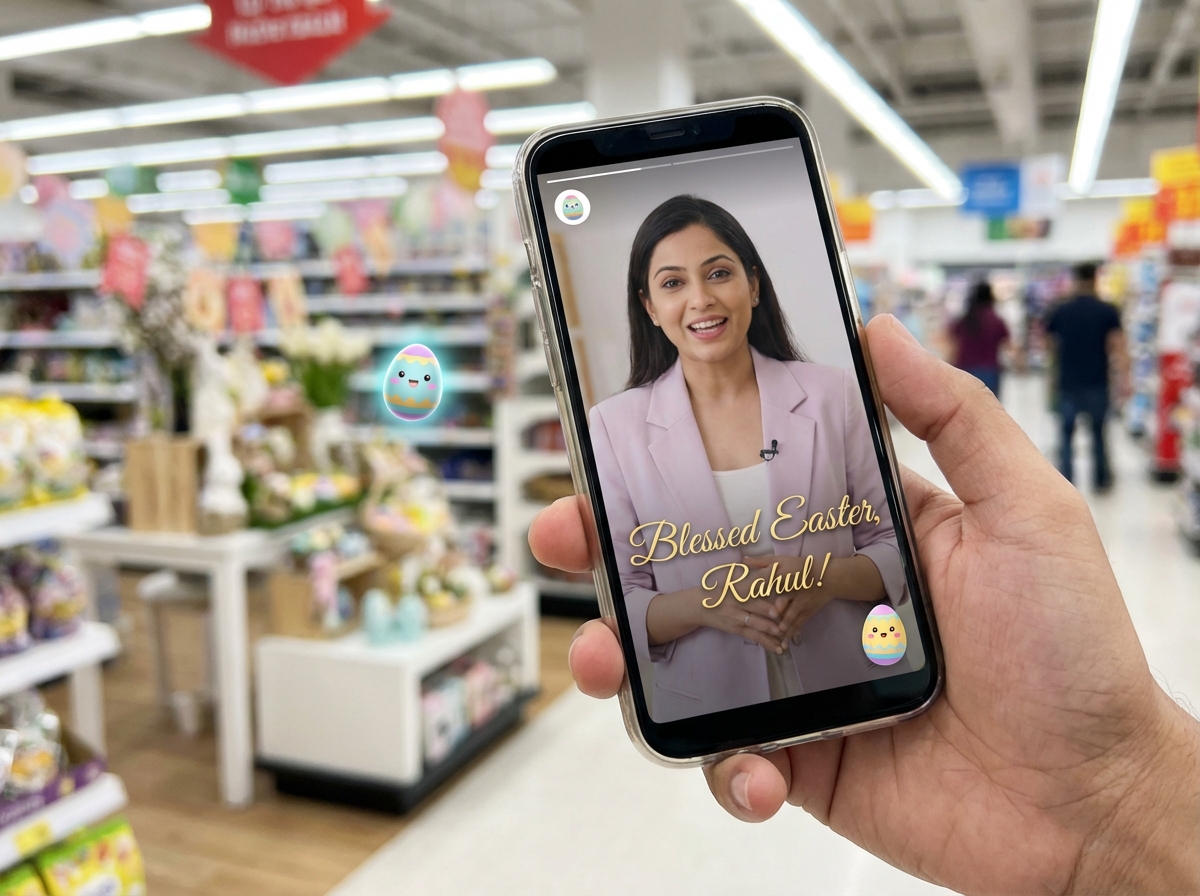
The most significant shift in 2026 marketing is the move from static imagery to hyper-personalized video. Faith-based customer engagement videos allow brands to deliver a human-centric message that resonates on a personal level. Platforms like TrueFan AI enable enterprise brands to generate thousands of personalized videos where a brand ambassador or celebrity addresses the customer by name, wishing them a blessed Holy Week in their native language.
These videos serve multiple use cases, from religious gifting personalization videos that unwrap a gift virtually to customer care messages that frame delivery delays with respect. TrueFan AI's 175+ language support and Personalised Celebrity Videos ensure that a brand’s message is as inclusive as it is impactful. By integrating these videos into WhatsApp journeys, brands can achieve significantly higher watch-through rates compared to traditional video ads.
The technical execution involves API-triggered renders that occur in under 30 seconds, pulling data from the CRM to populate fields like the user's name, city, and preferred product. This level of scale—previously seen in massive campaigns for Zomato and Hero MotoCorp—is now the benchmark for festive marketing. For Easter 2026, this means a travel brand can send a personalized video to a user in Kochi, showing them a curated itinerary for an Easter getaway in the Munnar hills, all in Malayalam.
5. Gamification, Community, and Easter Travel Package Marketing
Beyond the digital storefront, Easter egg hunt gamification marketing offers a way to bridge the gap between online and offline experiences. In 2026, AR-driven egg hunts near churches or in-store QR codes can unlock exclusive family bundles or community donation credits. The key is timing; these activations must be positioned away from prayer times on Good Friday to maintain the "sensitivity-first" mandate.
Church partnership brand activation is another high-ROI strategy. By co-creating food bank drives or sponsoring children’s choir events, brands demonstrate a commitment to the community that transcends a simple transaction. This builds trust and "Authoritativeness" (the 'A' in E-E-A-T), positioning the brand as a partner in the community’s celebration. Solutions like TrueFan AI demonstrate ROI through these community-led initiatives by providing personalized "thank you" videos to donors, further deepening the emotional connection.
For the travel sector, Easter travel package marketing should focus on "Togetherness." Long-weekend bundles that include sunrise mass proximity and family-style breakfasts are highly attractive. By retargeting users who searched for destinations like Goa or Kerala with personalized video nudges, travel brands can convert interest into bookings. The integration of UGC (User Generated Content) post-weekend—such as curated highlights of Easter brunches—provides the social proof necessary for future Lenten planning.
6. Measurement, ROI, and the 2026 Implementation Timeline
The success of Good Friday marketing campaigns 2026 is measured through a mix of traditional KPIs and video-specific analytics. Beyond conversion rates and AOV (Average Order Value), enterprise brands must track "Incremental Lift" through geo-holdout tests. Video analytics, such as the impact of a name mention within the first five seconds, provide granular insights into how personalization drives engagement across different Indian regions. See insights on video personalization.
The implementation timeline must be rigorous. Starting five weeks out, brands should form a "Sensitivity Committee" to review all copy and creative assets. By T-2 weeks, the integration between the CRM and video APIs must be load-tested to ensure the system can handle the surge in real-time renders. On Good Friday itself, the "Quiet Hours" protocol should be strictly enforced, with all aggressive promotions paused in favor of reflective, community-focused content.
As we move into 2026, the ability to iterate quickly is paramount. Using virtual reshoots and A/B testing of script lines allows brands to optimize their Easter Sunday sale campaigns in real-time. This data-driven approach ensures that every rupee of ad spend is maximized, delivering a high ROI while maintaining the cultural integrity that faith-based marketing demands.
Implementation Checklist for CMOs
- T-5 Weeks: Finalize audience segments and regional language requirements.
- T-4 Weeks: Script and record base video templates for TrueFan AI integration.
- T-3 Weeks: Set up "Quiet Hours" automation for Good Friday (April 3, 2026).
- T-2 Weeks: Launch pre-Easter preference capture via WhatsApp and Email.
- Holy Week: Deploy reflective content; monitor community sentiment.
- Easter Sunday: Activate high-velocity sale campaigns and personalized gifting videos.
- Post-Easter: Analyze video watch-through rates and incremental lift by region.
By following this data-driven, sensitivity-first playbook, enterprise brands can ensure their Good Friday marketing campaigns 2026 are not only profitable but also deeply respected by the communities they serve. The future of festive marketing in India lies in this delicate balance of high-tech personalization and high-touch cultural empathy.
Frequently Asked Questions
How can brands ensure religious sensitivity during Good Friday marketing campaigns 2026?
Brands should adopt a "reflective tone," avoid aggressive sales language, and implement "Quiet Hours" during traditional service times. It is essential to focus on community support and utility rather than pure commercialism. Using a sensitivity committee to review localized scripts is a best practice for 2026.
What is the benefit of using hyper-personalized video for Easter?
Hyper-personalized video, such as those created by TrueFan AI, allows brands to connect with consumers on a personal level by using their name and native language. This increases trust and engagement, leading to higher conversion rates for gifting and travel packages compared to static ads.
Which regions in India should be prioritized for Christian consumer targeting?
Priority should be given to states with high Christian populations, including Kerala, Goa, Tamil Nadu, and the Northeast states (Mizoram, Nagaland, Meghalaya). Each region requires specific language localization and cultural nuances in the creative assets.
When should the Easter Sunday sale campaigns officially launch?
While teaser campaigns can run during Holy Week (excluding Good Friday), the high-velocity "Easter Sunday sale campaigns" should launch at midnight on Easter Sunday. This aligns with the celebratory mood of the community and maximizes the 48-hour shopping window.
How does devotional product marketing automation work?
This involves setting up triggers in your CRM or CDP that send personalized recommendations or reminders based on a user's browsing history for religious items. For example, if a user views "Easter decor," an automated WhatsApp message can be sent three days later with a personalized bundle offer.