Employee wellness video campaigns Q4 2025: Personalized video strategies for peak-season stress and New Year resets
Key Takeaways
- Q4 is a peak-stress period; prioritize video-first wellness to cut through time-poor, mobile-first workdays.
- Structure programs as micro-learning journeys across physiological, cognitive, and boundary-setting pillars.
- Use personalized wellness journey automation to deliver the right video to the right employee at the right time.
- Demystify and localize EAP access with clear, stigma-reducing videos to lift utilization and ROI.
- Track impact metrics such as absenteeism, eNPS, and EAP bookings—not just video views and completions.
The final quarter of the year presents a unique paradox for the modern enterprise. While it is a season of celebration and festive reflection, it is simultaneously the period of highest professional intensity, characterized by year-end fiscal closures, aggressive sales targets, and the psychological weight of “holiday crunch.” For HR leaders, managing employee wellness video campaigns Q4 2025 requires more than generic encouragement; it demands a sophisticated, data-driven approach to mental health support personalization.
As we look toward 2026, the traditional “one-size-fits-all” wellness newsletter has become obsolete. Organizations are now pivoting toward video-first strategies that address the “infinite workday” and the digital intensity that has come to define the Indian workforce. By integrating mental health awareness personalization into holistic health engagement campaigns, CHROs can move beyond surface-level perks to provide genuine, scalable support that resonates with a diverse, multi-generational employee base.
1. The Strategic Imperative: Why Q4 2025 Demands Video-First Wellness
The transition from Q4 into the New Year is the most critical window for talent retention and productivity. Recent data indicates that the Indian workforce is facing a significant “time poverty” crisis. According to the Microsoft Work Trend Index 2025, Indian organizations are adopting AI at a record pace, yet this has led to a “time compression” effect where the workday feels fragmented and relentless. In this environment, long-form documents and static emails are ignored, making short-form, mobile-optimized video the only viable medium for high-impact communication.
Research from Economic Times HR (March 2025) highlights that a majority of Indian employees report dissatisfaction with their current work-life balance. This dissatisfaction peaks in Q4, where the collision of professional deadlines and personal festive commitments creates a high-risk environment for burnout. Furthermore, Deloitte India reports that poor mental health costs Indian businesses billions annually in lost productivity. To combat this, HR leaders are prioritizing workplace stress management videos and stress reduction technique videos that offer immediate, actionable relief.
2. Blueprinting High-Impact Workplace Stress Management Videos
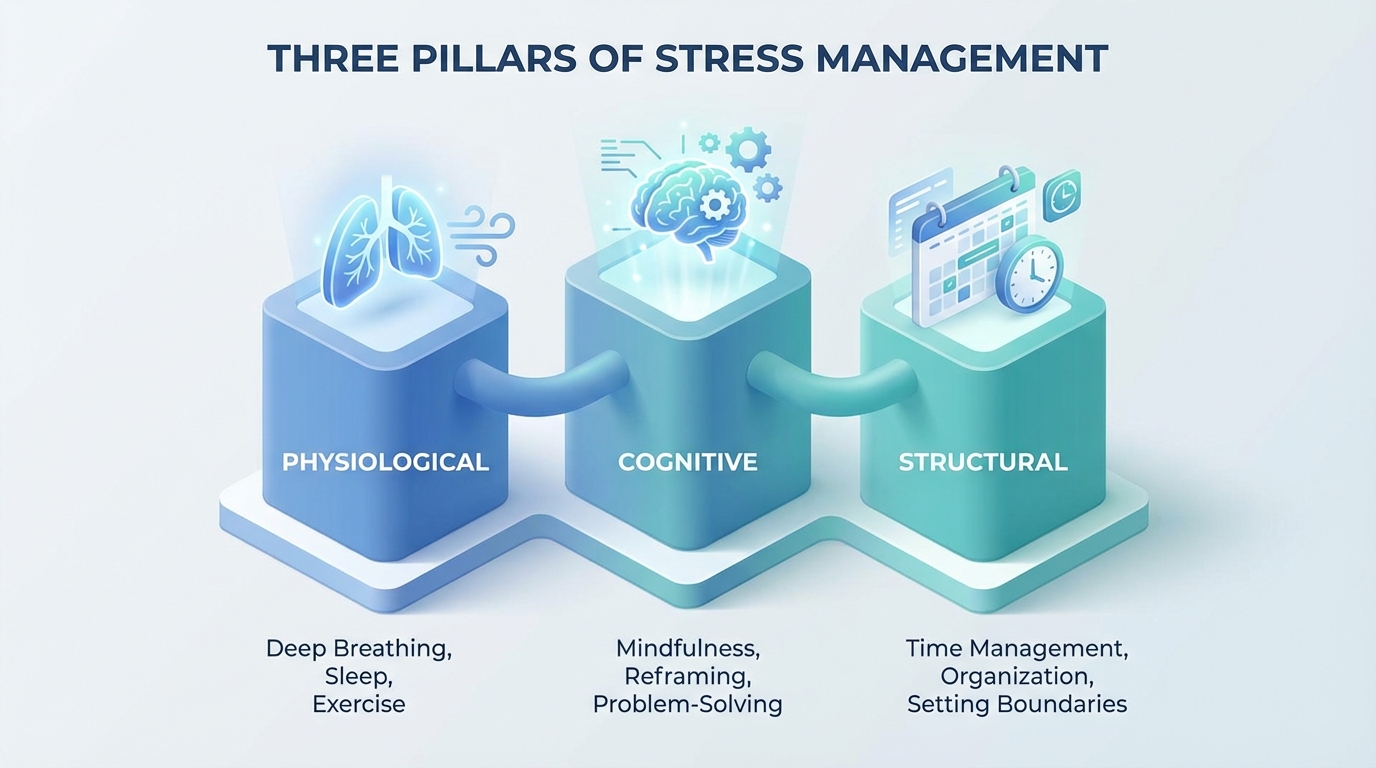
To effectively mitigate peak-season pressure, workplace stress management videos must be structured as micro-learning journeys rather than isolated broadcasts. The objective is to equip employees with evidence-backed coping mechanisms that can be applied in real-time. A successful Q4 series should be divided into three distinct pillars: physiological regulation, cognitive reframing, and structural boundary setting.
The first pillar focuses on stress reduction technique videos that teach immediate interventions. For instance, a 90-second video demonstrating the “physiological sigh”—a breathing pattern proven to lower heart rate—can be sent via Slack or Teams during peak afternoon hours. The second pillar involves cognitive reframing, teaching employees to view year-end challenges as manageable tasks through the ABC (Activating event–Belief–Consequence) model. This helps in reducing the “threat perception” often associated with high-stakes deadlines.
The third pillar addresses the “infinite workday” by providing employee support resource videos focused on focus sprints and shutdown rituals. These videos should provide templates for calendar blocking and “no-meeting focus windows,” which are essential for maintaining deep work during the Q4 chaos. Platforms like TrueFan AI enable HR teams to personalize these videos based on the employee’s specific role—for example, tailoring the “shutdown ritual” tips differently for a finance professional closing the books versus a sales lead chasing year-end targets.
3. Maximizing EAP Utilization Through Employee Assistance Program Videos
One of the greatest challenges in corporate wellness is the underutilization of the Employee Assistance Program (EAP). Despite significant investment, many employees remain unaware of the full scope of EAP services or are hesitant due to perceived stigma. Employee assistance program videos are the most effective tool for demystifying these services and driving wellness program enrollment automation.
A strategic EAP video campaign should focus on transparency and accessibility. The first video in the series must clearly define the EAP as a confidential, employer-sponsored resource that extends beyond crisis intervention to include legal, financial, and family support. By visualizing the “3-step booking process,” HR can remove the friction of navigating complex benefit portals. Showing a mock “first session” can also normalize the experience, addressing common anxieties about privacy and the counselor’s cultural sensitivity.
In the Indian context, where mental health stigma remains a barrier, mental health support personalization is vital. Videos should feature diverse representatives and use language that resonates with local norms. For example, highlighting that EAP services are available in regional languages like Hindi, Tamil, or Marathi can significantly increase trust. Data from People Matters suggests that addressing burnout through proactive EAP promotion can drive a 29x return on investment compared to traditional health insurance alone.
4. Scaling Engagement with Meditation Mindfulness Video Series and Gamification
As employees navigate the Q4 crunch, providing accessible recovery tools is essential. A meditation mindfulness video series offers a structured way for employees to reset their nervous systems throughout the day. These should be designed as 5-to-10-minute “micro-recoveries,” including AM energizers, mid-day resets, and PM wind-downs. When these are integrated into holistic health engagement campaigns, they foster a culture where mental recovery is valued as much as professional output.
To complement mindfulness, work-life balance coaching videos should provide practical tips on boundary setting and family care coordination during the festive season. These videos help employees navigate the “double burden” of year-end work and home responsibilities. By personalizing the delivery—such as sending “night shift variants” to operations teams—HR ensures that the content is relevant to the employee’s actual lived experience, rather than a generic corporate broadcast.
5. Orchestrating Personalized Wellness Journey Automation
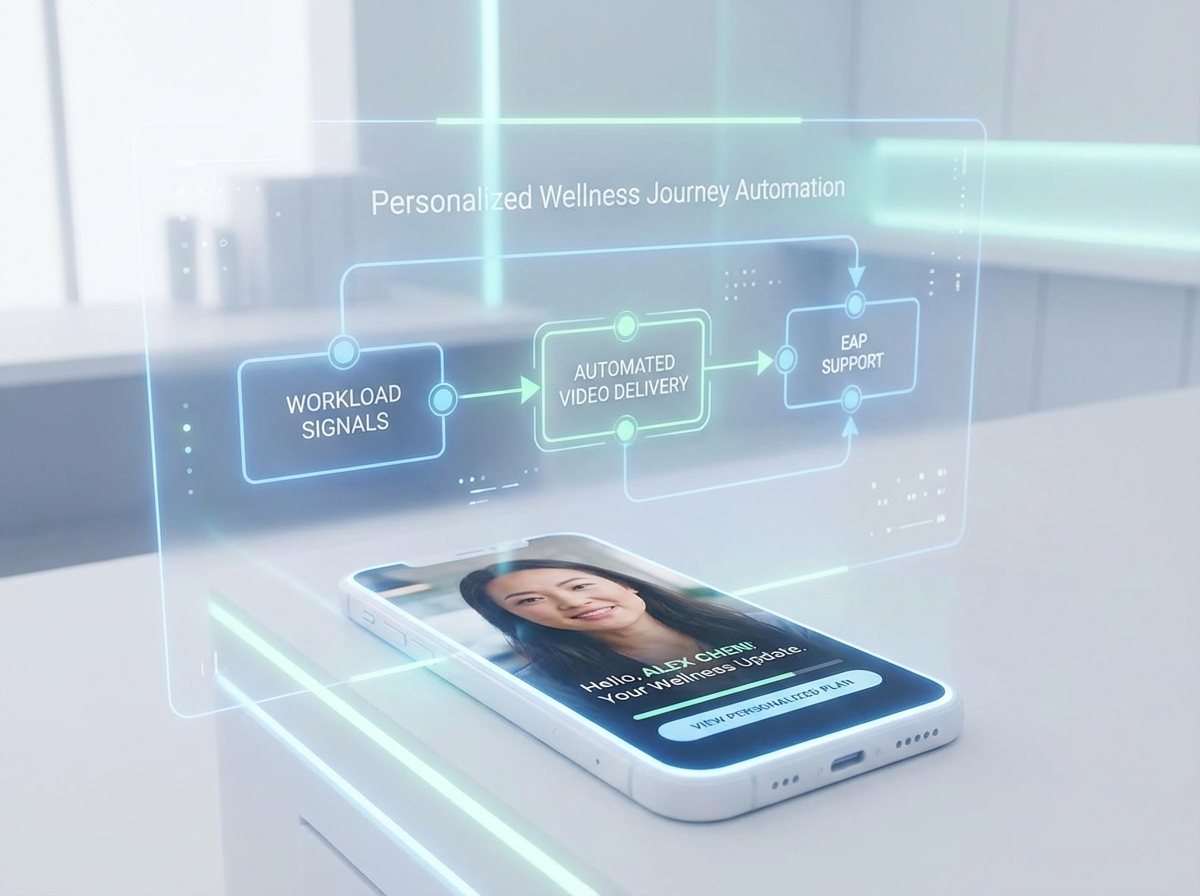
The future of HR technology lies in personalized wellness journey automation. This is the automated orchestration of content sequences—from awareness to skill-building and support activation—triggered by real-time data signals. Instead of sending the same video to 5,000 employees, automation allows HR to deliver the right message to the right person at the right time, significantly increasing the relevance and impact of employee wellness video campaigns Q4 2025.
For example, if an HRIS signal indicates a “high-stress function” like Finance is approaching a major deadline, the system can automatically trigger a sequence of workplace stress management videos. If an employee’s engagement with these videos is high, the journey might escalate to employee assistance program videos to ensure they are aware of professional support. Conversely, for those showing healthy work patterns, the automation might focus on meditation mindfulness video series to maintain their wellbeing.
TrueFan AI’s 175+ language support and Personalised Celebrity Videos allow organizations to add a layer of “human-centric” personalization that was previously impossible at scale. Imagine a New Year reset video where a well-known figure addresses the employee by name, acknowledging their hard work in Q4 and encouraging them to utilize the company’s wellness resources. This level of personalization drives much higher recall and emotional connection than standard corporate communications.
6. Execution Playbook: Implementation, Measurement, and ROI
Launching a comprehensive Q4 wellness campaign requires a disciplined 30-day implementation checklist. In Week 1, HR must define KPIs—such as EAP utilization targets and video completion rates—and finalize the data fields for personalization. Week 2 should focus on producing video templates with dynamic fields and configuring multilingual variants. By Week 3, the wellness challenge gamification videos and automation triggers should be dry-run to ensure a seamless employee experience.
The distribution calendar for employee wellness video campaigns Q4 2025 must be strategically timed. October should focus on “Awareness and Prevention,” launching the workplace stress management videos and EAP demystification. November shifts to “Resilience and Support,” intensifying the burnout prevention campaigns as deadlines loom. December is about “Recovery and Celebration,” providing festive wellbeing tips and preparing for the New Year reset journeys that will launch in early January.
Measuring the success of these campaigns requires a move from “vanity metrics” to “impact metrics.” While video starts and completions are important leading indicators, the true ROI is found in lagging indicators like reduced absenteeism, improved eNPS, and increased EAP bookings. Solutions like TrueFan AI demonstrate ROI through detailed dashboards that segment outcomes by cohort, allowing HR to see exactly which interventions are driving the most value for different parts of the business.
Conclusion
As we navigate the complexities of Q4 2025 and look toward 2026, the integration of personalized, video-first wellness strategies is no longer optional—it is a strategic necessity. By leveraging personalized wellness journey automation and high-quality employee wellness video campaigns Q4 2025, HR leaders can effectively mitigate stress, drive EAP utilization, and foster a resilient organizational culture.
Frequently Asked Questions
How do we personalize mental health videos safely without using protected health information?
Safe personalization relies on using non-sensitive data such as role, department, region, and language preference. By focusing on engagement signals—like whether an employee has watched a previous wellness video—rather than medical data, you can tailor the journey effectively.
What’s the best cadence for workplace stress management videos in Q4?
During the high-pressure Q4 period, a cadence of 2–3 videos per week is ideal. Each video should be concise (2–3 minutes) and offer a single, actionable tip.
How do we measure ROI on wellness program enrollment automation?
ROI is measured by tracking the conversion from video engagement to actual benefit utilization. By using unique tracking links in employee assistance program videos, HR can see exactly how many employees booked a session after watching a video.