Pre-monsoon healthcare marketing 2026: Personalized immunity, prevention, and family protection for India’s March–April window
Estimated reading time: ~9 minutes
Key Takeaways
- Use AI-driven personalization and localized risk signals to deliver timely prevention messages ahead of the monsoon.
- Deploy video-led engagement (WhatsApp-first) with one-to-one immunity and family protection creatives.
- Build an automation framework tied to IMD and NDMA alerts, plus behavioral triggers and frequency capping.
- Prove value with preventive care ROI metrics: CAC, LTV, claims ratio, VTR, and CTA CTR by language/region.
In the rapidly evolving landscape of Indian healthcare, pre-monsoon healthcare marketing 2026 represents the strategic convergence of predictive analytics and hyper-personalized patient engagement. As the March–April window approaches, healthcare providers and pharma brands must transition from generic awareness to high-precision, video-led interventions that address the specific anxieties of Indian households.
This guide provides a comprehensive roadmap for executing a seasonal illness prevention marketing strategy that leverages real-time data, regional nuances, and advanced automation. By focusing on the critical weeks before the first rains, organizations can drive significant growth in preventive wellness subscriptions while establishing themselves as trusted guardians of family health.
1. Defining the 2026 Pre-Monsoon Healthcare Marketing Framework
The concept of pre-monsoon healthcare marketing 2026 is defined as a set of hyper-personalized, prevention-first campaigns executed during the March–April window to prime Indian households for monsoon-borne disease risks. This period is critical for mitigating the impact of dengue, malaria, and gastrointestinal infections through proactive education and service delivery.
To operationalize this framework, marketers must deploy several key campaign archetypes. Immunity booster personalization videos serve as the cornerstone, offering one-to-one video content that addresses the recipient by name and provides localized health advice based on their PIN code. These videos educate consumers on the importance of micronutrients like Vitamins C, D, and Zinc, while maintaining strict adherence to non-curative claims.
Furthermore, preventive wellness subscription campaigns bundle teleconsultations, lab panels, and essential supplements into a cohesive family protection plan. By utilizing monsoon disease awareness automation, brands can trigger these communications based on real-time weather alerts from the India Meteorological Department (IMD), ensuring that the message reaches the consumer exactly when the risk is highest.
Sources:
2. The 2026 Risk Landscape: Why March–April is the Critical Window
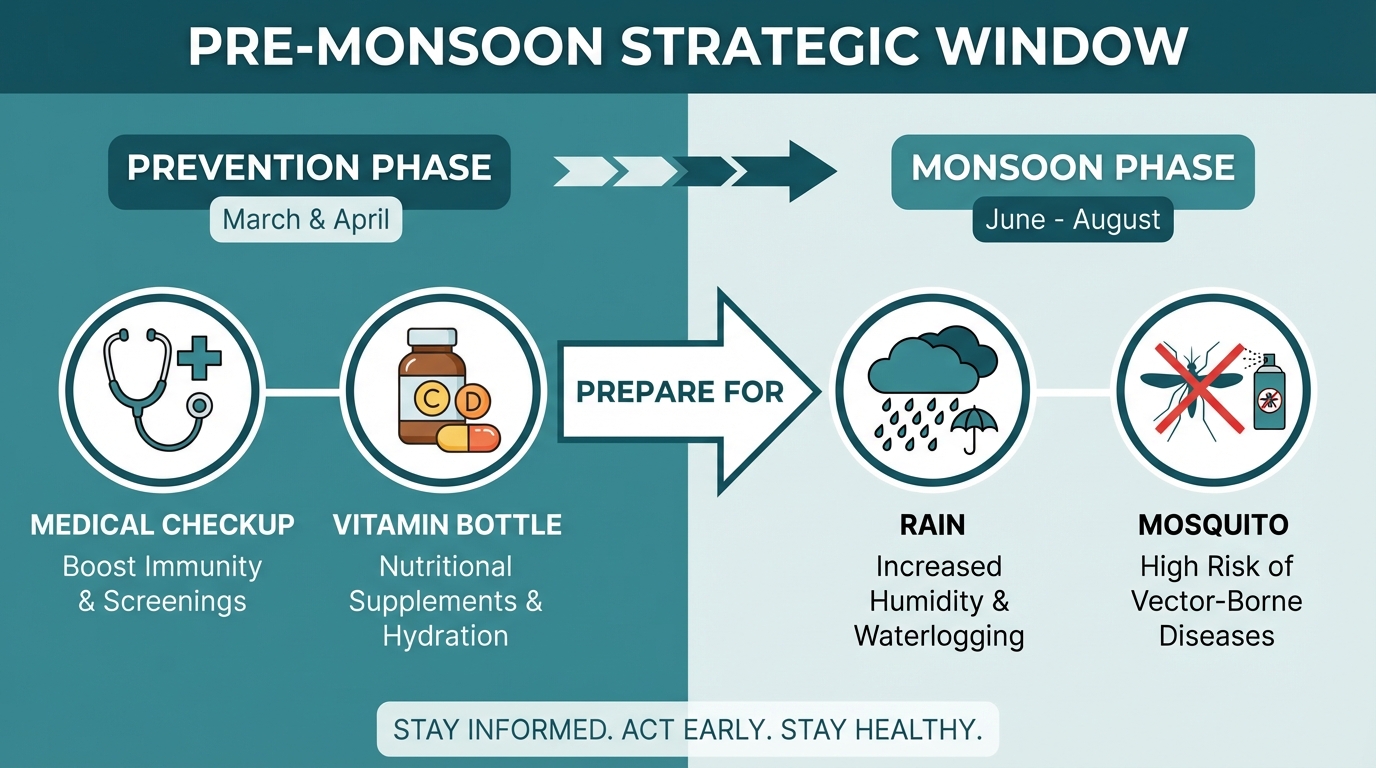
The urgency of acting in the March–April window is driven by the shifting epidemiology of vector-borne diseases in India. Data from the National Center for Vector Borne Diseases Control (NCVBDC) indicates that pre-monsoon preparedness is the single most effective factor in reducing dengue and malaria outbreaks. Marketers must align their seasonal illness prevention marketing with these clinical realities to ensure maximum impact.
In 2026, the Indian healthcare market is characterized by three dominant trends: the mainstreaming of AI-driven personalization, the shift toward WhatsApp-first patient communication, and the rigorous enforcement of the Digital Personal Data Protection (DPDP) Act. Consumers now expect health interactions to be as seamless and personalized as their retail experiences.
To capitalize on these trends, brands are increasingly utilizing regional health alert personalization. This involves tailoring content not just to a language, but to specific municipal vector advisories and local rainfall patterns. By embedding physician-led education into short-form, personalized videos, healthcare brands can overcome the “trust deficit” often associated with digital health marketing.
Sources:
- NCVBDC National Guidelines for Dengue
- afaqs! Healthcare Trends 2026
- LeadSquared Healthcare Marketing Trends
3. Scaling Personalization with Enterprise Video Technology
Executing a nationwide pre-monsoon campaign requires the ability to generate millions of personalized touchpoints without compromising on quality or compliance. Platforms like TrueFan AI enable healthcare enterprises to transform a single video shoot into a vast library of personalized variants, featuring perfect lip-sync and voice retention across multiple dialects.
This technology is particularly effective for creating family health protection videos. A single master creative can be dynamically updated to mention a mother’s name, her specific city, and the nearest diagnostic center for her children’s checkups. TrueFan AI's 175+ language support and Personalised Celebrity Videos allow brands to leverage the authority of trusted figures while maintaining a localized, intimate feel that resonates with diverse Indian demographics.
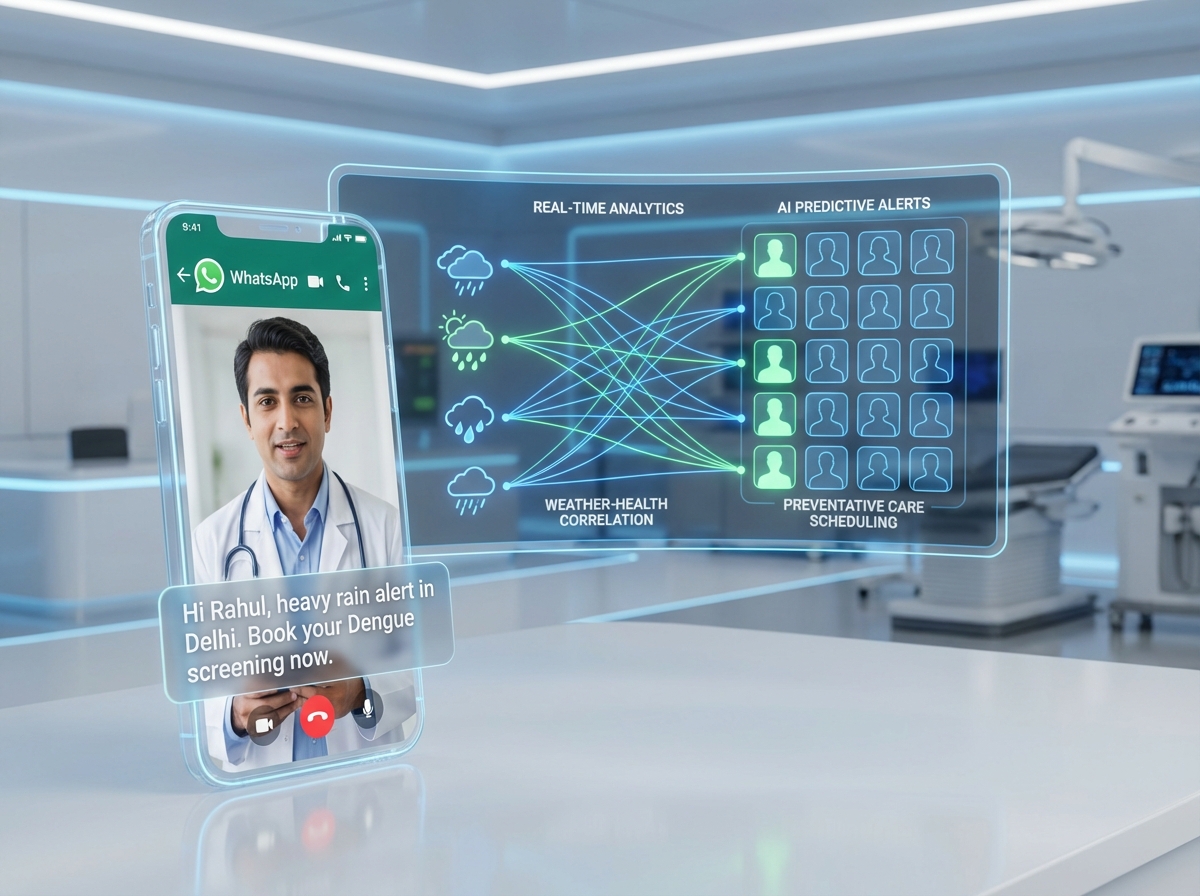
Beyond creative production, the enterprise advantage lies in integration. These personalized videos are triggered by CRM or CDP data and delivered via WhatsApp with sub-30 second render latency (ONDC personalized video onboarding). This ensures that a medical checkup reminder video is sent the moment a patient’s local area receives a heavy rainfall warning, driving immediate action through deep-linked booking flows.
Sources:
4. Orchestrating Monsoon Disease Awareness Automation
The success of monsoon disease awareness automation depends on a robust data schema and a sophisticated trigger framework. To achieve one-to-one relevance, marketers must integrate identity data (name, language) with location-based risk factors (PIN code, flood-prone status) and household composition (presence of seniors or children).
The trigger framework should be multi-layered. Risk triggers are pulled from the IMD API, escalating communication sequences when district-level rainfall alerts reach “Orange” or “Red” status. Public alerts from the NDMA SACHET system can also be used to align brand messaging with official government safety advisories, enhancing the credibility of the intervention.
Behavioral triggers further refine the journey. If a user watches more than 50% of an immunity booster personalization video but does not purchase, a follow-up message featuring a limited-time wellness product bundling video can be automatically deployed. This omnichannel approach ensures that the brand remains top-of-mind throughout the high-risk season while minimizing message fatigue through frequency capping.
Sources:
5. The Campaign Playbook: Tactical Execution for 2026
A successful pre-monsoon strategy requires a diversified portfolio of campaigns, each mapped to specific consumer needs and business objectives. The following playbook outlines the tactical execution of these high-impact workstreams.
Dengue and Malaria Prevention Marketing
This campaign focuses on environmental control and early diagnosis. Marketers should deploy localized education videos that nudge users toward purchasing repellents and booking NS1 antigen tests.
- Tactic: Use district-level mosquito breeding advisories to trigger “clean-up” checklists.
- Personalization: “Hi [Name], [City] municipal alerts show high mosquito activity. Protect your family with these 3 steps...”
- KPI: Number of NS1 test bookings and repellent kit sales.
Vitamin Supplement Marketing Campaigns
Evidence-based messaging is key here. Focus on the role of Vitamins C, D, and Zinc in supporting the immune system during seasonal transitions.
- Tactic: Offer subscription-based savings for monthly immunity packs.
- Personalization: Tailor dosage reminders based on the age of family members (pediatric vs. geriatric).
- Compliance: Ensure all videos include a medical disclaimer: “Supplements support immunity; they do not cure diseases.”
Health Insurance Monsoon Offers
Insurers can drive growth by offering “Monsoon Care” riders or seasonal top-ups for family-floater plans.
- Tactic: Use personalized premium calculators embedded within the video.
- Personalization: Show the specific cost of adding a dengue rider based on the user's current policy.
- KPI: Policy top-up conversion rate and reduction in claim-to-premium ratios.
Water Purifier Urgency Marketing
Contaminated water is a primary driver of gastrointestinal issues during the monsoon. This campaign targets filter replacements and AMC renewals.
- Tactic: Use “fast-install” messaging for high-risk flood zones. Quick Commerce Festival Marketing 2026
- Personalization: “Your [Model Name] filter is due for a change before the rains start in [City].”
- KPI: AMC renewal rate and filter sales volume.
Sources:
6. Measuring Success: Preventive Care ROI Campaigns
In 2026, healthcare marketing is no longer just about top-of-funnel awareness; it is about proving measurable health outcomes and financial returns. Solutions like TrueFan AI demonstrate ROI through granular tracking of video engagement and its direct correlation to downstream actions like lab bookings or policy renewals.
A robust preventive care ROI campaign framework tracks the reduction in Customer Acquisition Cost (CAC) and the increase in Lifetime Value (LTV) through subscription models. For insurers, the ultimate KPI is the reduction in the claims ratio, achieved by successfully nudging policyholders toward preventive checkups and early diagnosis.
Measurement should also include “Video KPIs” such as view-through rates (VTR) and CTA click-through rates, segmented by language and regional variants. This allows for rapid optimization sprints, where underperforming scripts can be “virtually reshot” using AI to test new offers or different physician-KOLs without the need for a new production cycle.
Sources:
Conclusion: Securing the 2026 Monsoon Season
The transition to pre-monsoon healthcare marketing 2026 is not merely a technological shift; it is a fundamental change in how healthcare brands interact with the Indian consumer. By prioritizing personalization, regional relevance, and data-driven automation, organizations can move beyond traditional advertising to become an active participant in their customers' wellness journeys.
As we look toward the 2026 monsoon, the winners will be those who can combine clinical authority with the scale of AI-driven video. By implementing the strategies outlined in this playbook—from medical checkup reminder videos to preventive wellness subscription campaigns—healthcare marketers can ensure a healthier, more resilient India while driving unprecedented business growth.
Recommended Internal Links
- Monsoon Healthcare Marketing 2026: Proven Campaign Ideas
- AI Celebrity Video Marketing India: Scalable, Personalized Endorsements
- ONDC Personalized Video Onboarding: 2026 Playbook Guide
- 80C Investment Personalized Videos for March 31 Tax Rush
- Quick Commerce Festival Marketing 2026: Personalization Wins
Frequently Asked Questions
What is the best time to start pre-monsoon healthcare marketing 2026?
The ideal window is March–April. This allows brands to build awareness and secure subscriptions before the peak disease season begins in June. Integrating with the IMD API ensures that your campaign cadence matches actual weather patterns.
How do I ensure my immunity booster personalization videos are compliant?
Compliance under the DPDP Act 2023 requires clear consent for data usage. For OTC products, avoid curative claims. Include a physician disclaimer and focus on “supporting” rather than “curing” health.
How to personalize dengue prevention videos by region in India?
Use a combination of PIN code, local language preference, and real-time municipal vector alerts. This aligns advice to the specific risk level of each neighborhood.
Can TrueFan AI help in reducing the cost of these large-scale campaigns?
Yes. A single master creative can generate millions of personalized versions with TrueFan AI, eliminating thousands of individual shoots and lowering cost per personalized impression.
What KPIs prove preventive care ROI for these campaigns?
Track conversion from video view to lab booking, wellness subscription retention, reduced emergency hospitalization claims, and video KPIs such as VTR and CTA CTR by language/region.