Q1 2026 festival retention strategies for India: From Lohri to Holi
Estimated reading time: 9 minutes
Key Takeaways
- Build a multi-festival customer journey that connects Lohri through Holi to reduce churn after discounts end
- Leverage vernacular festival greetings and regional personalization to drive relevance and emotional resonance at scale
- Shift from discounts to festival loyalty reward programs and referrals to strengthen brand equity and margins
- Use continuous engagement automation across WhatsApp, email, and in-app to react to real-time user behavior
- Prove lift with retention ROI measurement using cohorts, incrementality tests, and KPIs like churn reduction and frequency
The first quarter of 2026 presents a high-stakes landscape for Retention Marketing and Customer Success teams across India. With six major cultural milestones—Lohri, Makar Sankranti, Republic Day, Valentine’s Day, Maha Shivratri, and Holi—packed into just ninety days, the pressure to protect Lifetime Value (LTV) is immense.
Successfully navigating this period requires moving beyond isolated, one-off campaigns toward sophisticated Q1 2026 festival retention strategies. Brands that fail to build continuity between these celebrations risk high churn once the festive discounts expire.
This playbook provides an automation-first blueprint to orchestrate a multi-festival customer journey. By integrating vernacular festival greetings and regional festival personalization at scale, your brand can transform seasonal spikes into long-term loyalty.
The Evolution of Q1 2026 Festival Retention Strategies: Why Continuity Beats One-Off Campaigns
In the 2026 retail environment, the "Great Indian Festival Paradox" has intensified, where consumers celebrate amidst shifting economic headwinds. Data indicates that brands focusing on festival-based lifecycle management see a 35% higher retention rate compared to those running siloed promotions.
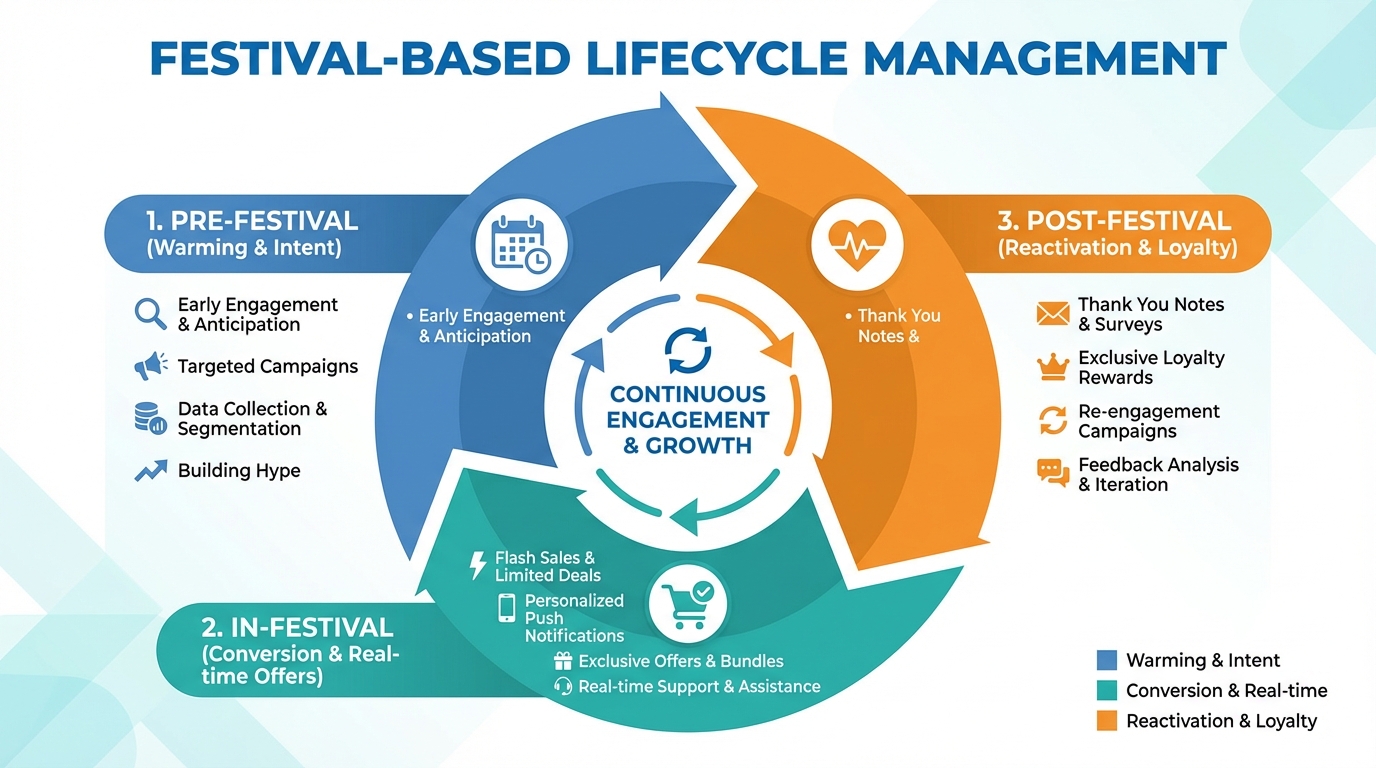
Festival-based lifecycle management is a structured approach where each event is managed across three distinct phases: pre-festival warming to build intent, in-festival conversion through real-time offers, and post-festival reactivation. This ensures that a customer acquired during Lohri is systematically nurtured through to Holi.
Continuous engagement automation serves as the engine for this strategy. By using rule-triggered sequences across WhatsApp, email, and in-app channels, brands can respond to real-time user behavior. Platforms like TrueFan AI enable brands to deliver these experiences through hyper-personalized video content that resonates emotionally.
Cultural celebration marketing automation allows for the delivery of respectful, localized messages at a scale previously impossible. In 2026, generic "Happy Festival" messages are no longer sufficient; consumers expect regional festival personalization that reflects their specific dialect, local idioms, and regional traditions.
Source: The Great Indian Festival Paradox - Medianews4u
Source: 2026 India eCommerce Calendar - Refresh Ideas
Source: Quick Commerce Festival Marketing 2026 - TrueFan
January Acceleration: Makar Sankranti Customer Engagement and Vernacular Personalization
January 2026 begins with a dense cluster of harvest festivals. Lohri (January 13) and Makar Sankranti/Pongal (January 14) provide the first major opportunity to re-activate cohorts that may have gone dormant after the Q4 holiday rush.
Effective Makar Sankranti customer engagement relies heavily on vernacular festival greetings. For instance, a Marathi user should receive a "Til-gur ghya, god god bola" nuance, while a Tamil user expects "Pongal Nalvazhthukkal." TrueFan AI's 175+ language support and Personalised Celebrity Videos allow brands to automate these greetings, ensuring the celebrity or brand ambassador pronounces the customer's name and city correctly in their native tongue.
Automation workflows should trigger "welcome-back" coupons for winter categories or harvest-themed bundles (e.g., sesame and jaggery kits). Predictive modeling can identify "Potential Loyalists" within your RFM segments, targeting them with low-friction add-ons to rebuild purchase recency.
By the time Makar Sankranti concludes, your automation engine should have already tagged users based on their engagement. This data then feeds into the next stage of the multi-festival customer journey, ensuring the transition to Republic Day feels like a natural progression of the brand relationship rather than a new sales pitch.
Source: Lohri 2026 Date and Time - DrikPanchang
Source: Makar Sankranti 2026 Rituals - Financial Express
Source: Pongal Playbook: Media Spend Evolution - exchange4media
Strengthening Equity with Republic Day Loyalty Campaigns and Festival Reward Programs
Republic Day (January 26, 2026) offers a pivot from the harvest theme toward national pride and "Made in India" loyalty. This is a critical window for Republic Day loyalty campaigns aimed at strengthening brand equity.
Instead of deep discounting, focus on festival loyalty reward programs. Implement "double points" or exclusive badge unlocks for customers purchasing Indian-made SKUs. This aligns your brand with the national sentiment while driving higher-margin sales.
Personalized gratitude videos from brand ambassadors can be delivered via WhatsApp, where the ambassador thanks the customer by name for supporting homegrown products. This high-touch feel, powered by continuous engagement automation, creates a "social good halo" around the brand.
Referral missions are also highly effective during this period. A "Invite a friend, unlock a Republic Day badge" campaign can help acquire new users through high-trust channels. The goal is to use the patriotic fervor to build a community of advocates who feel a deeper connection to the brand's values.
Source: Republic Day (India) Overview - Wikipedia
Source: Festival Marketing through Native Advertising - MGID
February Depth: Valentine’s Day Retention Marketing and Maha Shivratri Spiritual Commerce
February 2026 presents a unique challenge: the juxtaposition of the highly commercial Valentine’s Day (February 14) and the deeply spiritual Maha Shivratri (February 15). Managing these two back-to-back events requires extreme cultural sensitivity marketing.
For Valentine’s Day retention marketing, the focus should be on driving Average Order Value (AOV) through "relationship lifecycle" offers. Use regional festival personalization to recommend bundles—ranging from romantic "date-night kits" to "self-love sets" for single customers. Churn-risk winbacks can be triggered with time-limited offers, using personalized video to create a sense of exclusivity.
Immediately following this, Maha Shivratri spiritual commerce requires a sober, respectful tone. This is where cultural celebration marketing automation must include "opt-out" or "opt-down" features. Not every customer observes Maha Shivratri, and broad, noisy promotions can be perceived as disrespectful.
Target known observers with puja kits or fasting-friendly foods. Ensure your automation respects "quiet hours" for SMS and WhatsApp, particularly during late-night vigils. By providing educational content on product usage rather than just a sales link, you build trust that lasts far beyond the festival.
Source: Retail Holiday Calendar 2026 - Shopify India
Source: Maha Shivaratri 2026 Date and Time - DrikPanchang
March Climax: Holi Personalized Video Campaigns and Regional Festival Personalization
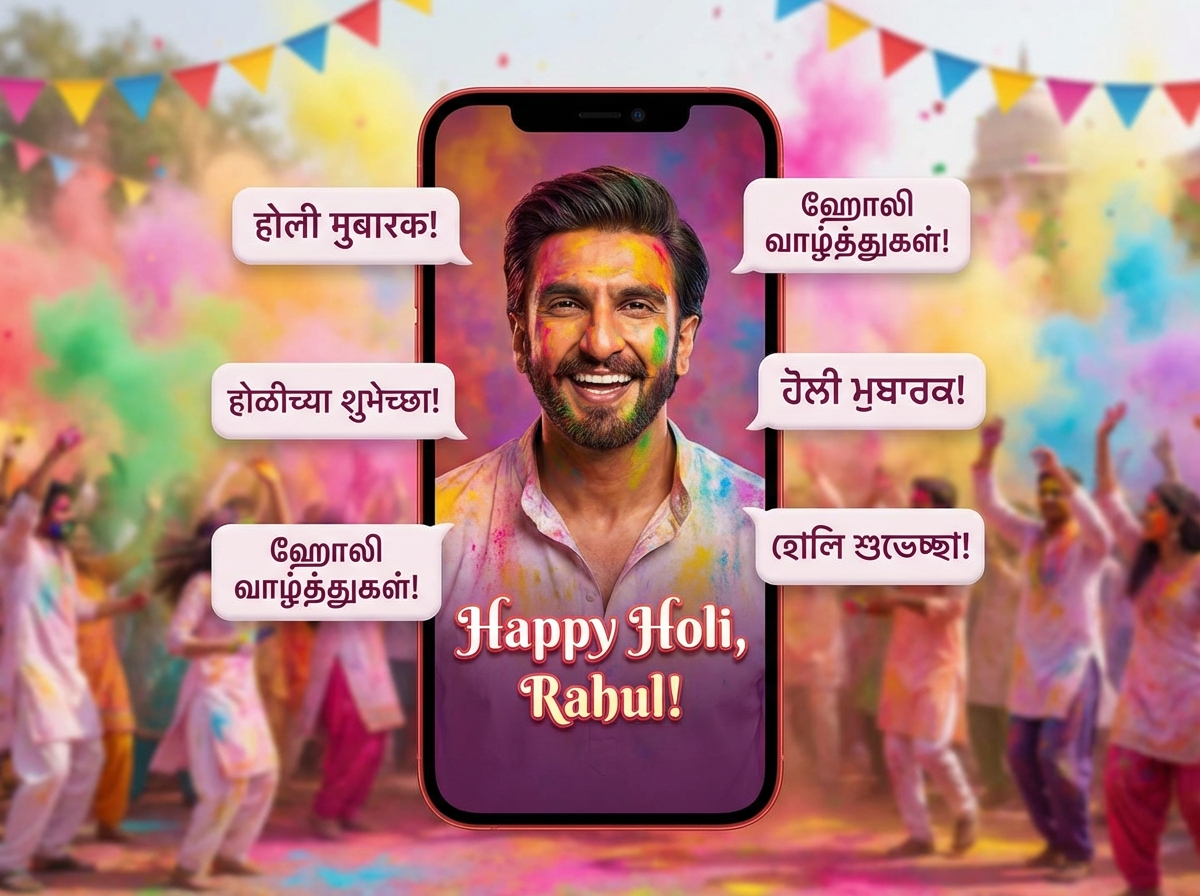
The Q1 cycle reaches its climax with Holi (March 3–4, 2026). As the "Festival of Colors," Holi demands high-energy, joyful, and visually stimulating Holi personalized video campaigns.
In 2026, regional festival personalization is the differentiator. A campaign in Uttar Pradesh should feel distinct from one in Maharashtra or West Bengal. Use vernacular festival greetings in Bhojpuri, Haryanvi, or Marathi to invite users to local events or contests.
Quick commerce integration is vital here. Automate shipping cutoffs by region and use real-time weather data to recommend specific products, such as stain-free kits or natural colors if rain is predicted. Post-Holi, the journey should immediately transition to skin-care and hair-care replenishment, closing the loop on the festival purchase.
User-Generated Content (UGC) prompts are highly effective during Holi. Encourage customers to share their colorful moments and reward the best entries with personalized video shout-outs from celebrities. This creates a feedback loop that boosts engagement and provides social proof for your Q1 2026 festival retention strategies.
Source: Holi 2026 Dates and Holika Dahan - Indian Express
Source: Holi 2026 Marketing Guide - TrueFan
Source: Holi Rangwali and Rituals - DrikPanchang
Proving Impact: Festival Retention ROI Measurement and Continuous Engagement Automation
The final pillar of a successful Q1 strategy is a rigorous festival retention ROI measurement framework. Without data, it is impossible to justify the investment in high-scale personalization and automation.
Solutions like TrueFan AI demonstrate ROI through metrics such as repeat purchase rate, purchase frequency lift, and LTV delta. Brands should use cohort analysis to compare a "Pre-Q1 baseline" against the "Exposed" group that received personalized festival journeys.
Key performance indicators (KPIs) must include:
- Video View-to-Purchase Conversion: Measuring the direct impact of personalized video on sales.
- Loyalty Point Burn Rate: Tracking how effectively festival missions drive engagement.
- Churn Rate Reduction: Quantifying the number of at-risk users saved through targeted festival winbacks.
- Incrementality Tests: Running holdout groups to ensure the automation is driving truly incremental revenue.
By the end of March, your dashboard should provide a clear view of the multi-festival customer journey's success. This data not only proves the value of your Q1 efforts but also provides the insights needed to refine your strategy for the upcoming Q2 and Q3 cycles.
Frequently Asked Questions about Q1 2026 Festival Retention Strategies
1. What is festival-based lifecycle management?
It is a strategic framework that treats each festival as a stage in a continuous customer journey. Instead of isolated campaigns, it uses pre-festival warming, in-festival conversion, and post-festival reactivation to build long-term LTV.
2. How can I scale vernacular festival greetings across 10+ regions?
Scaling requires an automation-first approach. Using TrueFan AI, brands can generate thousands of personalized videos in 175+ languages where celebrities mention the customer's name and regional nuances, all triggered by your CRM.
3. How do I measure festival retention ROI accurately?
Use a combination of cohort analysis and incrementality testing. Compare the behavior of customers exposed to the automated festival journey against a holdout group to see the lift in repeat purchase rates and AOV.
4. What is the best way to handle cultural sensitivity marketing?
Implement "opt-out" options for religious festivals like Maha Shivratri and ensure your automation respects regional differences. Avoid generic templates; instead, use localized scripts and imagery that reflect the specific traditions of each state.
5. Why is continuous engagement automation necessary for Q1?
Q1 has six major festivals in 90 days. Manual campaign execution is impossible at this frequency. Automation ensures that as soon as one festival ends (e.g., Lohri), the customer is automatically moved into the next relevant journey (e.g., Republic Day) based on their behavior.



