Tavus AI India Pricing 2026: How to Deploy Real-Time AI Avatar Conversations for Enterprise Customer Service
Estimated reading time: 10 minutes
Key Takeaways
- Tavus uses a tiered platform + usage model; enterprise rates in India are typically bespoke with local SLAs.
- DPDP compliance and Indic language coverage are critical for large-scale deployments across Indian BFSI and retail.
- Optimize TCO via concurrency, knowledge grounding (RAG), and premium Indic TTS/STT add-ons.
- Pair real-time avatar engines with Studio by TrueFan AI for governance, integration, and multilingual orchestration.
- Conclusion will be the penultimate section; FAQs appear at the very end.
The landscape of digital engagement has undergone a seismic shift, moving away from static, scripted video content toward dynamic, real-time AI avatar conversations. If you’re comparing Tavus AI India pricing 2026, you’re likely planning pilots or rollouts of two-way video chat AI in India contact centers to handle dynamic Q&A, complex escalations, and personalized customer journeys. In 2026, the demand for an interactive digital humans platform has surged by 45% YoY in the Indian BFSI and retail sectors, as enterprises seek to bridge the gap between automated efficiency and human-like empathy.
Executive Summary: The 2026 Outlook
For Indian enterprises, Tavus offers a tiered pricing model combined with usage-based meters for conversational minutes. While there is no public “India-only” rate card, enterprise-grade deployments typically involve custom contracts with regional SLAs and localized data routing.
Key Takeaways for 2026:
- Pricing Structure: Expect a mix of platform fees (Starter/Growth) and pay-as-you-go conversational credits.
- Compliance: Adherence to the Digital Personal Data Protection (DPDP) Act is non-negotiable, impacting how voice cloning and user recordings are stored.
- Performance: 5G penetration in India has made sub-800ms latency the standard for “natural” two-way video chat AI.
1. The India-Ready Framework: DPDP Compliance & Indic Language Mastery
Deploying real-time AI avatar conversations in the Indian market requires more than just a slick API; it demands a rigorous adherence to local regulations and linguistic nuances. By 2026, the Digital Personal Data Protection (DPDP) Act has fully matured, placing strict obligations on “Data Fiduciaries” regarding consent and purpose limitation.
DPDP Act Obligations for AI Avatars
When using a conversational avatar API, Indian enterprises must ensure:
- Explicit Consent: Users must provide clear, affirmative consent before an AI avatar records their interaction or uses their voice for real-time cloning AI voice cloning Indian accents.
- Data Residency: While cross-border transfers are permitted to certain “notified” jurisdictions, many Indian banks now mandate local data residency for PII (Personally Identifiable Information).
- Right to Erasure: Systems must allow users to request the immediate deletion of their conversational logs and video sessions.
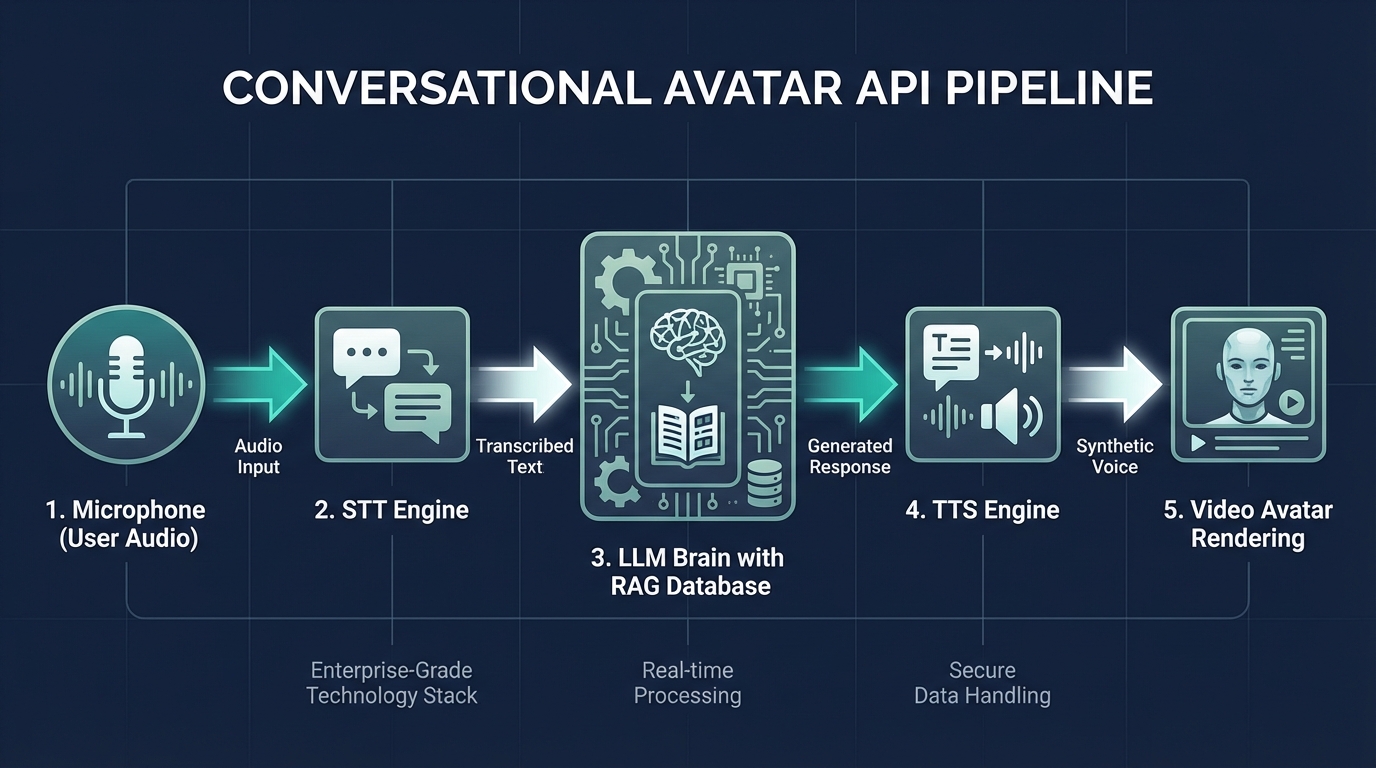
The Indic Language Challenge
India’s linguistic diversity is a significant hurdle for global platforms. In 2026, successful deployments must support not just Hindi, but also Tamil, Telugu, Bengali, and Marathi with high fidelity. Statistics show that 85% of consumers in Tier 2 and Tier 3 Indian cities prefer video-based AI interactions over text bots when the avatar speaks their native tongue AI voice cloning Indian accents. Platforms like Gnani.ai have set a high bar for Indic-native digital humans, forcing global players to optimize their STT (Speech-to-Text) and TTS (Text-to-Speech) engines for regional accents and “Hinglish” code-switching.
Source: MeitY DPDP Act Guidelines; Analytics India Mag on Indic Avatars
2. Tavus AI India Pricing 2026: A Deep Dive into CVI Costs
Tavus has positioned itself as a leader in the “Conversational Video Interface” (CVI) space. Unlike traditional video generators that render a file and send it to the user, Tavus’s CVI is built for live, two-way interaction over WebRTC.
Understanding the Pricing Tiers
While exact figures can fluctuate based on volume, the 2026 pricing framework for Tavus generally follows this structure:
- Starter/Developer Tier: Aimed at initial prototyping. Includes a limited number of conversational minutes (e.g., 30–60 mins) and access to standard replicas.
- Growth Tier: Designed for scaling startups. Offers higher concurrency limits (the number of simultaneous sessions) and reduced per-minute overage rates.
- Enterprise Tier: This is where most Indian corporations land. It includes custom SLAs, white-labeling, and priority support during Indian Standard Time (IST). Pricing is typically bespoke, based on committed annual minutes and the number of custom “Professional Replicas” required.
Total Cost of Ownership (TCO) Levers
When calculating your budget, consider these often-overlooked cost drivers:
- Concurrency Bursting: If your customer service traffic spikes during a holiday sale, how much does it cost to add 500 simultaneous avatar streams?
- Knowledge Indexing: The “brain” behind the avatar—often a RAG (Retrieval-Augmented Generation) pipeline—incurs costs for token processing and vector database hosting.
- Language Add-ons: Premium Indic language models with high emotional prosody may carry a surcharge compared to standard English models.
Platforms like Studio by TrueFan AI enable enterprise leaders to bridge the gap between these high-end conversational APIs and the practical need for localized, brand-consistent content at scale.
Source: Tavus Pricing Page; Tavus CVI Cost Comparison
3. Competitive Landscape: Tavus vs Synthesia vs BHuman vs Hour One
Choosing the right interactive digital humans platform requires understanding the fundamental differences in architecture and intent.
Tavus vs Synthesia features
The “Tavus vs Synthesia features” Tavus vs Synthesia comparison debate usually boils down to Interactivity vs. Production.
- Synthesia: Optimized for asynchronous, high-quality video production. It is the gold standard for training modules and marketing explainers where the user watches a video.
- Tavus: Optimized for synchronous, real-time sessions. It is designed for live troubleshooting and authenticated account workflows where the avatar must react to what the user says in under a second.
BHuman alternatives comparison
When looking at a BHuman alternatives comparison, the focus shifts to personalization. BHuman excels at outbound, template-driven video (e.g., sending 10,000 personalized “Happy Birthday” videos). However, for live, two-way video chat AI in India, Tavus and Hour One are more robust choices. It is critical to note that BHuman voice cloning India deployments must strictly follow the DPDP Act’s consent protocols to avoid heavy penalties.
Hour One interactive avatars
Hour One interactive avatars offer a middle ground, providing photorealistic digital twins with strong Hour One multilingual support. In 2026, Hour One has expanded its Indic language library significantly, making it a strong contender for Indian virtual-branch banking pilots, similar to the Kiya.ai banking metaverse initiatives.
| Feature | Tavus | Synthesia | Hour One | BHuman |
|---|---|---|---|---|
| Primary Use | Real-time CX | Training/Marketing | Hybrid/Interactive | Outbound Sales |
| Latency | Sub-800ms | N/A (Pre-rendered) | ~1-2 seconds | N/A |
| Indic Languages | High (API-driven) | Moderate | High | Moderate |
| India Compliance | Enterprise Custom | Standard | Enterprise Custom | Standard |
4. Reference Architecture for Two-Way Video Chat AI in India
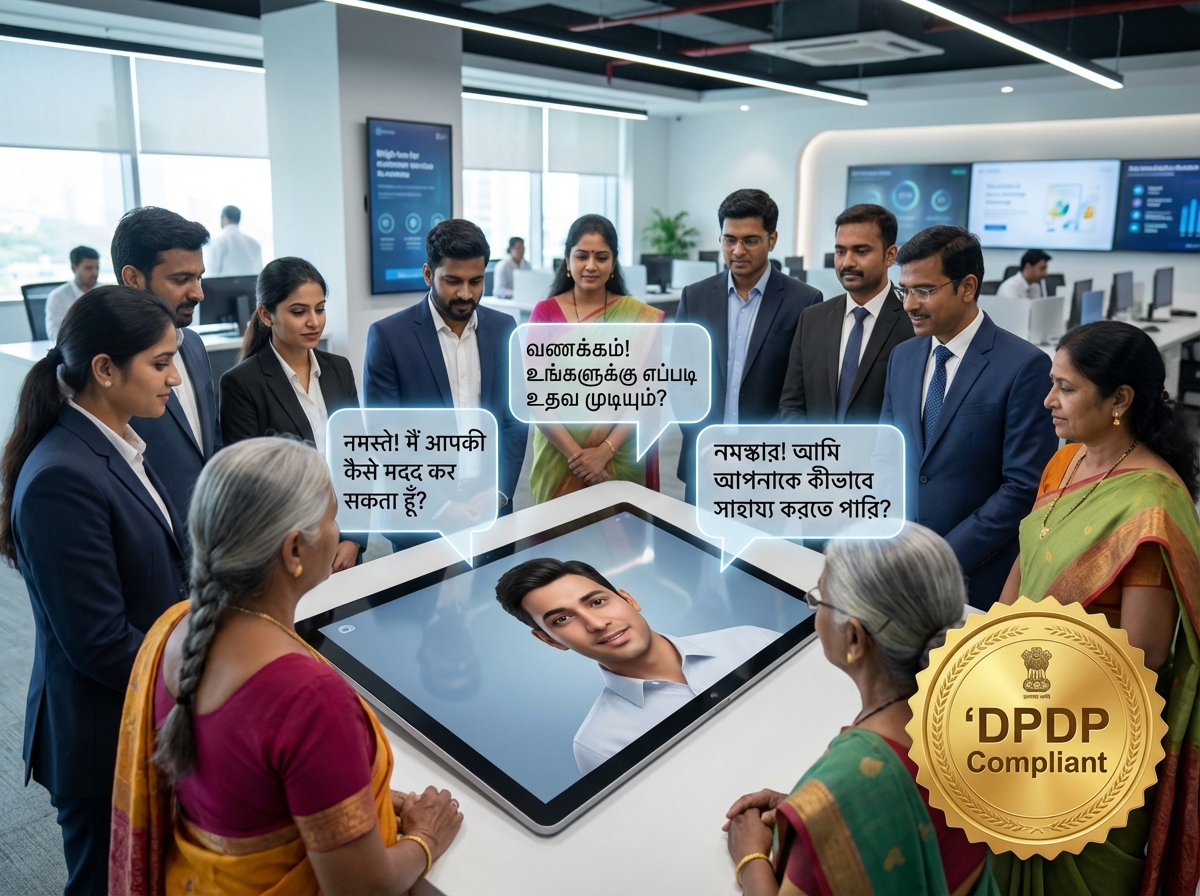
To achieve a seamless experience, the technical pipeline must be optimized for India's unique network conditions. Even with 5G, packet loss in high-density urban areas can cause “jitter” in video streams.
The Conversational Avatar API Pipeline
- Ingestion: User audio is captured via WebRTC and sent to an STT engine.
- Orchestration: The text is processed by an LLM (like GPT-4o or a fine-tuned Llama 3) which uses RAG to pull data from the enterprise knowledge base (e.g., “What is my current loan balance?”).
- Safety Layer: Content moderation filters check for profanity or PII leaks.
- Synthesis: The response is sent to a TTS engine and then to the avatar rendering engine (Tavus/Hour One). Multimodal AI video creation 2026
- Delivery: The synchronized video/audio stream is sent back to the user via WebRTC.
Performance Benchmarks for 2026
- Audio Turn Latency: Target <800ms. Anything above 1.2 seconds feels like a “walkie-talkie” conversation rather than a human one.
- Adaptive Bitrate: The system must automatically downgrade video quality to maintain audio fluidity if the user’s connection drops.
- Barge-in Capability: The avatar must stop speaking immediately if the user interrupts—a critical feature for natural dynamic avatar responses.
Studio by TrueFan AI's 175+ language support and AI avatars provide the necessary localization for a diverse market like India, ensuring that the “Synthesis” step of this architecture is both culturally relevant and technically sound.
Source: Inc42 on Banking Metaverse; Tavus API Documentation
5. Live AI Spokesperson Tools for Enterprise Customer Service
The ROI of live AI spokesperson tools in 2026 is no longer theoretical. Early adopters in the Indian insurance and telecom sectors have reported a 30% reduction in Average Handle Time (AHT) when avatars handle the initial eKYC and onboarding phases.
High-Impact Use Cases
- Guided Troubleshooting: An avatar walks a customer through resetting a home router, using visual cues and real-time feedback.
- Loan Pre-screening: In the BFSI sector, avatars can conduct initial interviews, verify documents via camera, and answer complex policy questions.
- Multilingual Onboarding: For a national brand, an avatar can greet a user in Kannada, switch to Hindi if requested, and complete a registration in under three minutes. AI voice cloning Indian accents
Measuring Success (KPIs)
Enterprises should track:
- Automation Containment Rate: What percentage of queries were resolved without human intervention?
- CSAT Uplift: How does the customer satisfaction score compare between a text-bot and a video-avatar?
- First Contact Resolution (FCR): Does the visual element help resolve issues faster?
Solutions like Studio by TrueFan AI demonstrate ROI through automated onboarding and 24/7 multilingual support, allowing brands to maintain a “human” presence without the massive overhead of a 24/7 physical call center.
6. Orchestration with Studio by TrueFan AI: Scaling Enterprise CX
While platforms like Tavus provide the “engine” for real-time video, enterprises need an orchestration layer to manage content, governance, and multi-channel distribution. This is where a holistic approach to AI video becomes essential.
The Governance Layer
In 2026, “shadow AI” is a major risk. Marketing teams might use one tool, while CX teams use another. A centralized platform like Studio by TrueFan AI acts as the “Walled Garden,” ensuring that:
- Brand Consistency: All avatars use approved brand voices and visual styles.
- Compliance: Every video generated or session initiated is logged for DPDP audit trails.
- Integration: The avatar doesn’t just “talk”; it integrates with WhatsApp APIs for follow-up messages and CRM systems for data entry.
Why Orchestration Matters
Using a standalone conversational avatar API is powerful, but connecting it to your existing tech stack (Salesforce, Zendesk, or custom Indian ERPs) is where the real value lies. By using an orchestration layer, you can swap out underlying models (e.g., moving from a global LLM to a specialized Indic LLM) without rebuilding your entire front-end interface. This flexibility is vital for managing the Tavus AI India pricing 2026 variables, as it allows you to optimize for cost based on the complexity of the task.
7. Buyer Checklist & FAQ: Navigating the 2026 Avatar RFP
Before signing a contract for an interactive digital humans platform, ensure your vendor meets these India-specific criteria.
The 2026 India RFP Checklist
- [ ] DPDP Compliance: Does the vendor offer a Data Processing Agreement (DPA) aligned with Indian law?
- [ ] Latency Guarantee: Can they demonstrate <1s latency on Indian mobile networks (4G/5G)?
- [ ] Indic STT/TTS: Does the system accurately handle “Hinglish” and regional dialects? best AI voice cloning software
- [ ] WhatsApp Integration: Can the avatar experience be triggered via a WhatsApp link?
- [ ] SSO/RBAC: Does the platform integrate with enterprise identity providers for secure internal use?
Conclusion
Final Thoughts for CX Leaders
As you evaluate Tavus AI India pricing 2026, remember that the goal is not just to replace humans, but to augment the customer experience. The combination of real-time interactivity, Indic language support, and strict DPDP compliance will define the winners in the Indian enterprise space over the next decade. Whether you are building a virtual bank branch or a 24/7 retail assistant, the tools are now mature enough to deliver on the promise of truly human-like digital engagement.
Frequently Asked Questions
Q1: How does Tavus AI India pricing 2026 compare to traditional BPO costs?
While the initial setup for AI avatars is higher, the per-minute cost in 2026 is roughly 60% lower than a human agent in a Tier-1 city. Furthermore, avatars offer infinite scalability without the need for additional physical infrastructure.
Q2: Can I use my own brand's spokesperson as an avatar?
Yes. Most enterprise plans allow for “Professional Replicas.” You can film your brand ambassador for 10-15 minutes, and the platform will create a digital twin capable of having millions of unique, real-time conversations.
Q3: What happens if the AI avatar gives the wrong information?
This is why “Knowledge Grounding” via RAG is essential. By restricting the avatar’s “brain” to your official documents and databases, you minimize the risk of hallucinations. Additionally, human-in-the-loop (HITL) triggers can escalate the call to a live agent if the AI detects frustration or a complex query.
Q4: Is real-time video chat AI heavy on data consumption for Indian users?
Modern WebRTC implementations are highly efficient. A 5-minute video call uses approximately 15–25MB of data, which is well within the daily limits of most Indian mobile plans in 2026.
Q5: How does TrueFan AI handle data privacy?
Studio by TrueFan AI ensures compliance through ISO 27001 and SOC 2 certifications, maintaining a “walled garden” approach where all content is moderated and watermarked for traceability, aligning perfectly with the DPDP Act’s requirements for transparency and accountability.
Q6: Can these avatars handle payments?
Yes, through secure API integrations. The avatar can guide the user through a payment gateway, though for security, the actual credit card entry usually happens in a secure, masked overlay rather than the avatar “seeing” the numbers.