
Shoppable video ads Instagram Reels India 2026: How D2C brands turn Reels and Shorts into instant purchases
Estimated reading time: ~12 minutes
Key Takeaways
- Interactive video commerce on Instagram Reels and YouTube Shorts now drives direct purchases without leaving the feed.
- A high-converting Reel uses a 2-second hook, clear price anchor, clickable product tags, and a “Tap to Shop” overlay.
- YouTube Shorts product tagging and Demand Gen campaigns enable utility-led shopping with measurable CTR to PDPs.
- Optimize with a video-to-purchase conversion rate and an ROI model that accounts for COD, RTO, and logistics.
- Scale with AI for vernacular content, automated explainers, and governance while addressing India-specific RTO/COD challenges.
The landscape of digital commerce has shifted fundamentally, and shoppable video ads Instagram Reels India 2026 have become the primary engine for brand growth in the subcontinent. As India’s social commerce market surges toward a multi-trillion-rupee scale this year, the traditional “click-to-website” ad is being replaced by immersive, interactive experiences that allow users to buy without ever leaving their favorite video feeds. Platforms like Studio by TrueFan AI enable brands to capitalize on this shift by generating high-quality, localized video content that bridges the gap between discovery and checkout.
1. The Rise of Interactive Video Commerce in India (2026 Context)
In 2026, the Indian consumer no longer just “browses” the internet; they “experience” it through a continuous stream of short-form content. According to recent market data, over 70% of Indian internet users now spend an average of 55 minutes daily consuming short-form video, with Instagram Reels and YouTube Shorts leading the pack. This behavioral shift has turned social media from a mere discovery platform into a high-velocity sales floor.
For D2C brands, the opportunity is staggering. Research from the Economic Times indicates that fashion and lifestyle engagement is approximately 40% higher on Reels compared to any other content format in India. This is not just vanity engagement; it is discovery-led purchasing. Brands are seeing a direct correlation between the use of product tags and a reduction in the customer acquisition cost (CAC).
The 2026 social commerce ecosystem in India is defined by three pillars:
- Discovery on Reels: Users find products through creator-led content or algorithmic suggestions.
- Instant Gratification: In-video shopping links and product tags compress the funnel from curiosity to purchase.
- Localized Trust: The integration of UPI and clear Cash on Delivery (COD) options within the checkout flow has finally solved the “trust deficit” that previously hindered social commerce.
As platforms like Instagram and YouTube refine their native shopping surfaces, the ability to deploy clickable video ads D2C brands can trust has become the ultimate competitive advantage. See our in-depth guide on shoppable video ads for Instagram Reels.
Source: Economic Times - Why Fashion and Lifestyle Shopping is Growing on Instagram
2. Instagram Shopping Video Ads Guide: Mastering Reels in 2026
To succeed with shoppable video ads Instagram Reels 2026, brands must move beyond standard video ads and embrace the “Shop” ecosystem. Instagram has evolved its ad products to include Advantage+ shopping campaigns, which automatically optimize creative assets for users most likely to convert.
The Anatomy of a High-Converting Shoppable Reel
A successful shoppable Reel in the Indian market requires a specific creative structure:
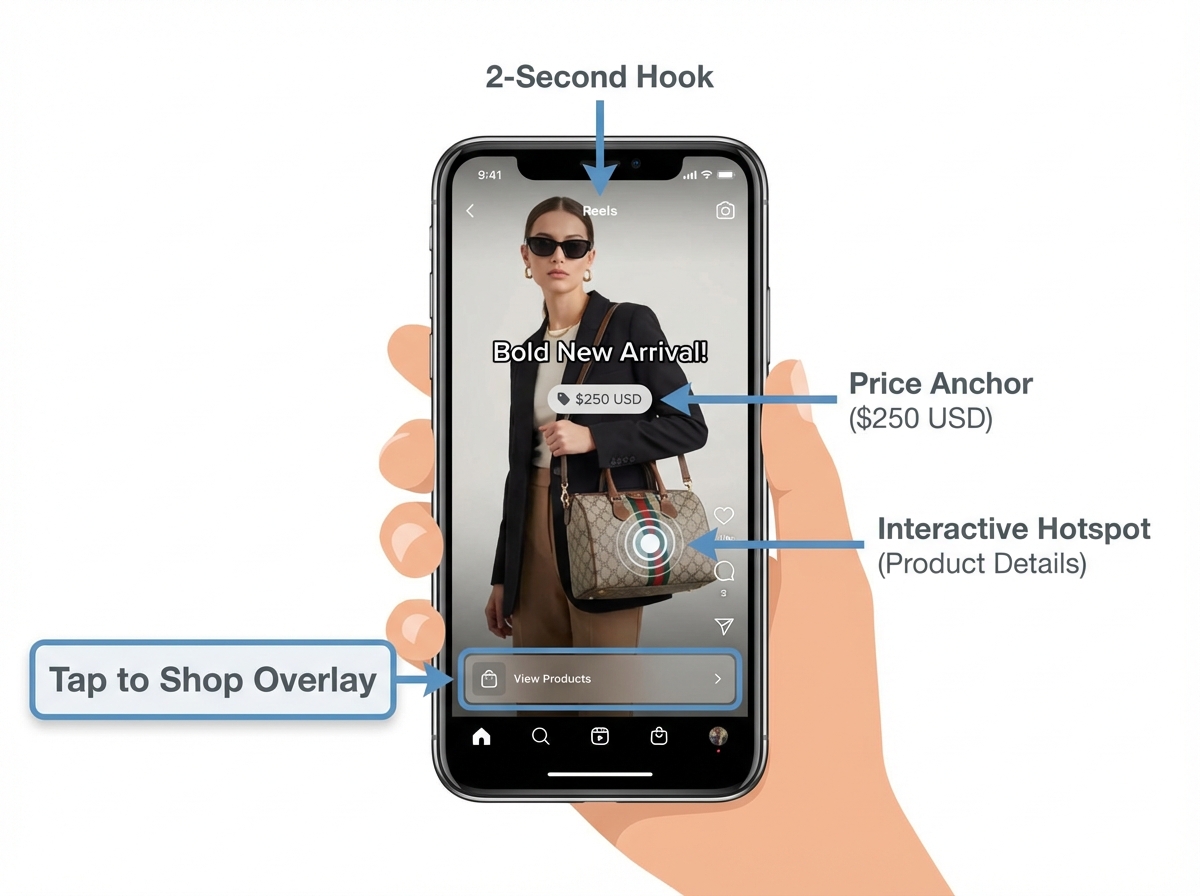
- The 2-Second Hook: Use proven Instagram Reels hooks for India such as a visual “pattern interrupt” or a high-energy audio trend. In 2026, humor-driven hooks and <10s rapid-cut edits are performing 3x better than traditional product showcases.
- The Price Anchor: By the 5-second mark, the product’s value proposition and price should be clear. Indian consumers are value-conscious; transparency builds immediate intent.
- Interactive Hotspots: Use product tags strategically. Ensure they are placed away from “safe zones” (like the caption area or the right-side engagement icons) so they remain clickable.
- The “Tap to Shop” Overlay: Explicitly guide the user. A simple text overlay or a sticker arrow pointing to the product tag can increase the video-to-purchase conversion rate by up to 25%.
Technical Setup for Indian Retailers
While Instagram has introduced native checkout in some regions, most Indian D2C brands in 2026 still find the highest ROI by routing users to a mobile-optimized Product Detail Page (PDP). To do this effectively:
- Sync Your Catalog: Use Meta Commerce Manager to sync your Shopify or WooCommerce catalog. Ensure GST-inclusive pricing is reflected to avoid friction at checkout.
- Leverage Conversions API (CAPI): With the death of third-party cookies, CAPI is essential for tracking the journey from a Reel view to a final purchase.
- Regional Localization: Studio by TrueFan AI’s 175+ language support and AI avatars allow brands to create localized versions of these Reels for different Indian states, significantly increasing relevance in Tier 2 and Tier 3 markets.
Source: Shopify India - Instagram for Retail Guide
3. YouTube Shorts Product Tagging: The New Frontier for D2C
While Reels dominates lifestyle, YouTube Shorts has emerged as the powerhouse for “utility-led” and “tech-spec” shopping. YouTube Shorts product tagging India automation with AI workflows has become a vital tool for brands selling electronics, home improvement, and beauty products where “how-to” content drives sales.
Implementing Shoppable Shorts
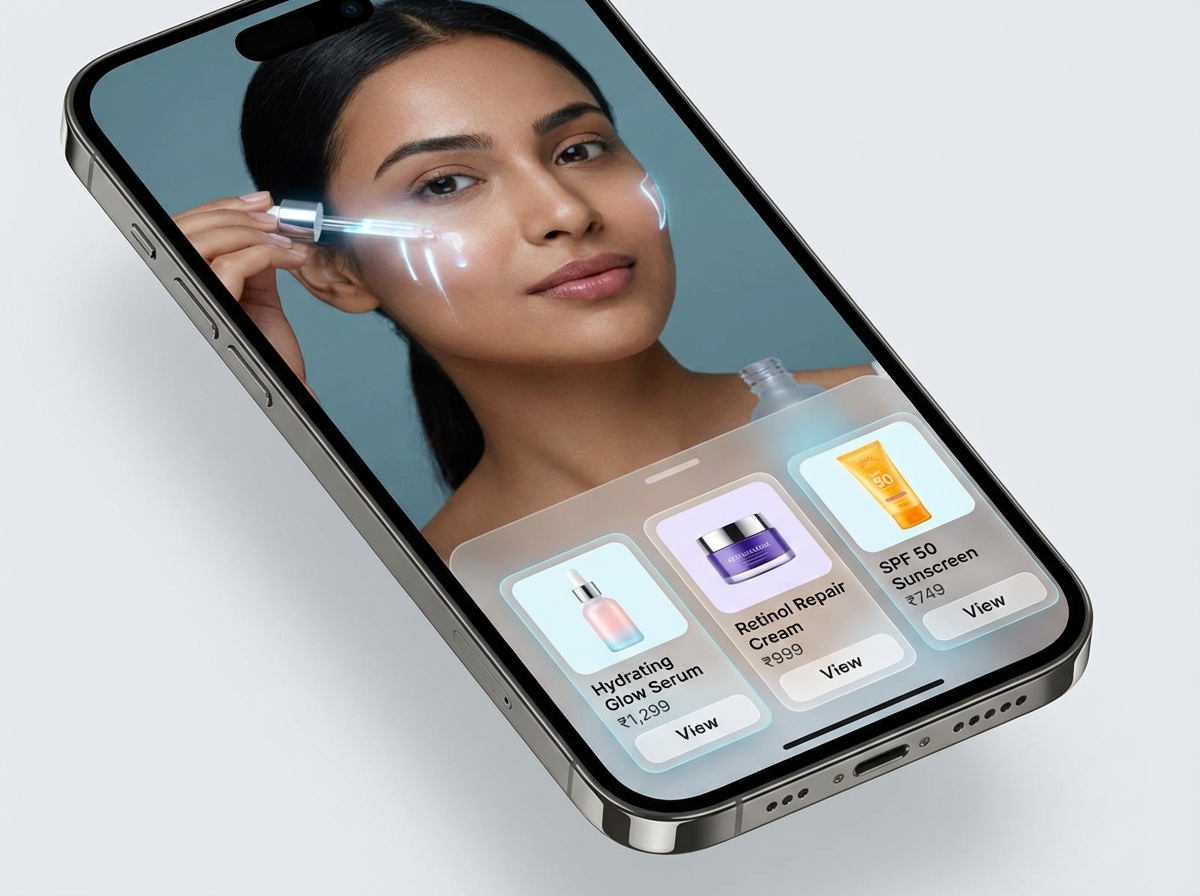
The process for YouTube shoppable shorts India using the YouTube Shorts editor for Android in India involves connecting your Google Merchant Center to your YouTube channel. Once linked, you can tag up to 30 products in a single Short.
- The Product Shelf: When a user watches a tagged Short, a “View Products” button appears. Clicking this opens a shelf at the bottom of the screen, allowing the user to browse while the video continues to loop.
- Demand Gen Campaigns: For paid scaling, use YouTube’s Demand Gen campaigns. These ads place your shoppable Shorts across the Shorts feed, YouTube Home, and Discover, using AI to find “in-market” cohorts.
- Measurement: Track the CTR from the Short to your PDP. In 2026, the benchmark for a healthy social commerce video marketing India campaign on Shorts is a 1.8% click-through rate to the product shelf.
By pinning a comment with a direct PDP link and a limited-time coupon code, brands can further bridge the gap between a viewer and a customer.
Source: Agency Reporter - How Reels and Shorts Turn Views into Revenue
4. Measuring Success: The Shoppable Video ROI Calculator
One of the biggest mistakes D2C brands make is using traditional ROAS (Return on Ad Spend) metrics for shoppable video. In 2026, the complexity of the Indian funnel—including high COD shares and RTO (Return to Origin) risks—requires a more nuanced approach.
Defining the Video-to-Purchase Conversion Rate
To calculate your true performance, you must look at the video-to-purchase conversion rate. This is calculated as:
(Total Attributed Purchases / Total Unique Video Viewers) x 100
The D2C India ROI Framework
When building your shoppable video ROI calculator, use this detailed 2026 framework you must include the following variables:
- Production Cost: The cost of creating the video (minimized by using AI tools).
- Media Spend: Total investment across Meta and Google.
- COD vs. UPI Split: UPI orders generally have a 15-20% higher realization rate than COD.
- RTO Rate: In India, RTO can range from 15% to 40%. Your ROI calculation must subtract the logistics cost of returned items.
- Logistics Cost per Order: Including forward and reverse shipping.
Solutions like Studio by TrueFan AI demonstrate ROI through their ability to drastically reduce production costs while increasing the volume of creative testing. By generating 100+ variants of a single product video, brands can identify the “winning” hook that minimizes CAC before scaling spend.
Source: iCarry - Social Commerce Trends India 2026
5. Scaling with AI: The Enterprise Playbook for 2026
For enterprise-level D2C brands, the challenge isn't just making one shoppable video; it's making thousands. With product catalogs expanding and the need for regional language content growing, manual production is no longer viable. This is where interactive video commerce India meets generative AI.
The “TikTok Shop Alternative” Strategy
Since TikTok remains unavailable in India, brands have had to replicate its high-conversion “Shop” model across a fragmented ecosystem. The 2026 playbook involves:
- Multi-Surface Publishing: Creating a single “master” video and using AI to adapt it into 9:16 for Reels/Shorts, 1:1 for feed, and 16:9 for YouTube skippable ads.
- Vernacular Dominance: 80% of new internet users in India prefer content in their native language. AI-driven localization allows a brand to launch a campaign in Hindi, Tamil, Telugu, and Marathi simultaneously.
- Automated Product Explainers: Using webhooks to trigger the creation of a new shoppable video the moment a new SKU is added to the e-commerce backend.
Governance and Brand Safety
At scale, brand safety becomes paramount. Enterprise tools now offer ISO 27001 and SOC 2 compliance, ensuring that AI-generated avatars and scripts align with brand guidelines and legal requirements. This level of control allows brands to experiment with interactive product videos Reels users love, without the risk of “hallucinated” claims or off-brand messaging.
Source: Passionbits - Instagram Trends for Consumer Brands India 2026
6. Overcoming India-Specific Hurdles: RTO, COD, and Logistics
The final hurdle in the shoppable Reels tutorial India journey isn't the click—it’s the delivery. Social commerce in India faces unique operational challenges that can eat into margins if not managed correctly.
Managing the RTO (Return to Origin) Crisis
RTO is the silent killer of D2C profitability. Shoppable videos often drive “impulse” purchases, which have a higher likelihood of being rejected at the doorstep. To mitigate this:
- WhatsApp Verification: Use personalized checkout reminder videos on WhatsApp via the WhatsApp Business API to send an automated message the moment a shoppable video order is placed. Confirming the address and intent via WhatsApp can reduce RTO by up to 15%.
- In-Video Trust Signals: Include overlays that highlight “Easy Returns,” “Secure UPI,” or “1 Million+ Happy Customers.”
- COD to Prepaid Incentives: Offer a small discount (e.g., “Extra ₹50 off on UPI”) directly within the video's pinned comment.
The Role of Live Shopping Repurposing
While live shopping has had a mixed reception in India, repurposing live sessions into shoppable Reels has proven highly effective. Platforms like Myntra’s M-Live allow brands to host creator-led sessions. Clipping the most engaging 30 seconds of these lives and adding product tags creates a “social proof” loop that drives consistent sales long after the live stream has ended.
Source: Storyboard18 - The State of Live Commerce in India
Summary Checklist for D2C Brands in 2026
- Catalog Sync: Ensure your Meta and Google catalogs are updated daily.
- Creative Volume: Aim for at least 10 new shoppable video variants per week to combat ad fatigue.
- Localization: Use AI to translate your top-performing ads into at least 3 regional languages.
- Tracking: Implement the Conversions API to ensure you are capturing every “View to Purchase” event.
- Operations: Align your logistics team to prioritize social commerce orders for faster fulfillment, reducing the window for customer “buyer's remorse.”
By following this playbook, Indian D2C brands can transform their social media presence from a gallery of images into a high-converting, automated sales machine. The era of shoppable video ads Instagram Reels India 2026 is here—and those who master the tech and the creative today will own the market tomorrow.
Frequently Asked Questions
How do I add shopping links to Reels if I don't have Instagram Checkout enabled in India?
In India, you use “Product Tags” rather than direct checkout links. When a user taps the tag, it opens a product detail page within Instagram, which then features a “View on Website” button. This button deep-links the user directly to your website’s PDP for checkout.
What is the ideal video length for shoppable video ads on Instagram Reels in 2026?
Data shows that the “sweet spot” for conversion is between 12 and 18 seconds. This is long enough to demonstrate the product but short enough to maintain the high-velocity engagement typical of the Reels feed.
Can I use AI-generated avatars for my shoppable video ads?
Yes, and it is highly recommended for scaling. Studio by TrueFan AI’s 175+ language support and AI avatars allow you to create human-like presenters who can speak to your audience in their regional language, which is a major trust-builder in the Indian market.
How does YouTube Shorts product tagging differ from Instagram Reels tagging?
YouTube Shorts allows for a “Product Shelf” that can display multiple items simultaneously at the bottom of the screen. Instagram Reels is more focused on individual tags that appear on the product itself within the video frame. YouTube also integrates more deeply with Google Merchant Center for real-time inventory updates.
What is a “good” ROAS for shoppable video ads in the Indian D2C space?
In 2026, a “good” ROAS is category-dependent. For Beauty and Personal Care, a 3.5x to 4.5x ROAS is standard. For Apparel, due to higher return rates, brands should aim for a 4x ROAS to maintain a healthy net contribution margin.
How can I reduce the RTO (Return to Origin) from social commerce sales?
The most effective way is to use Click-to-WhatsApp cart recovery video automation ads or post-purchase WhatsApp automation. By engaging the customer on a personal messaging platform immediately after the impulse buy, you can confirm their commitment to the purchase and verify delivery details.



