AI Voice Agent for Lead Generation: Your 2025 Ultimate Guide to Boosting SaaS Growth
8 min read
Key Takeaways
- AI voice agents are crucial for SaaS lead generation, offering 24/7 engagement and personalized interactions.
- They significantly automate outreach, improve response times, and scale lead qualification efforts.
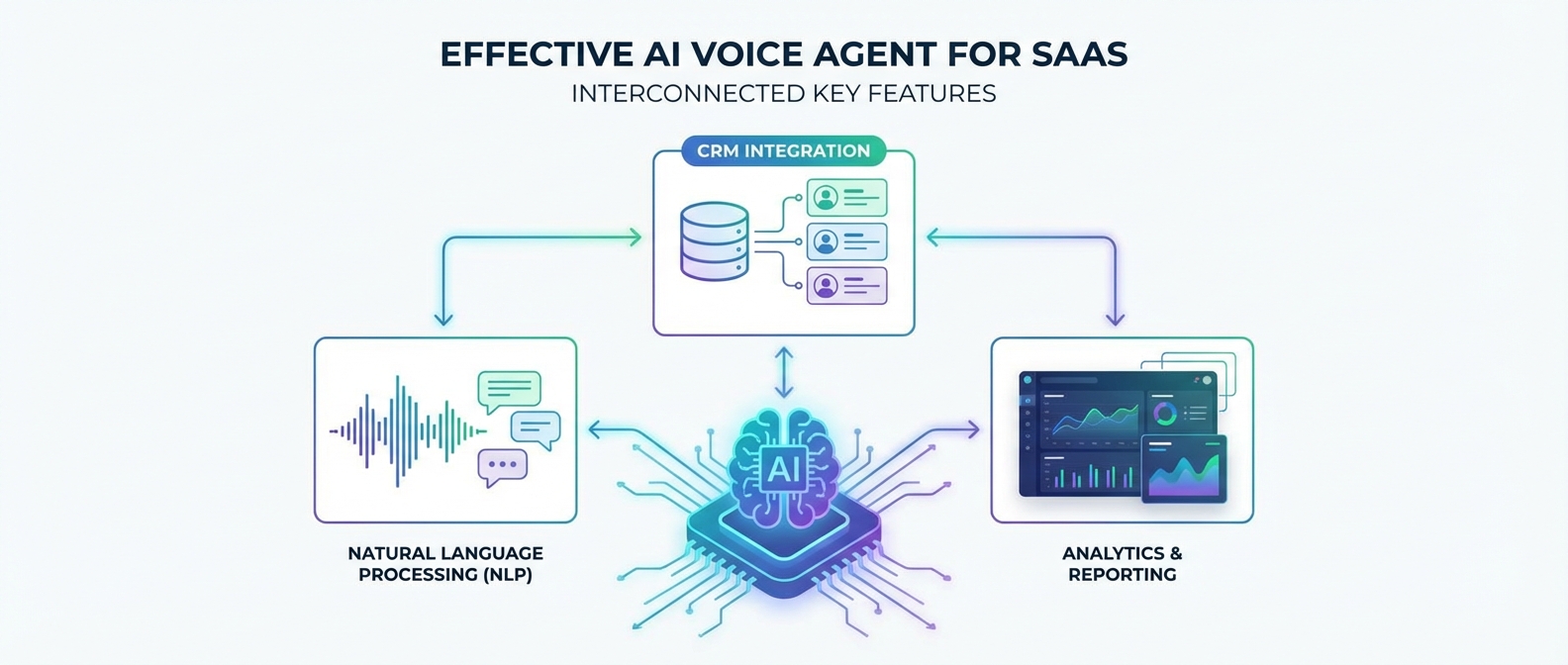
- Advanced NLP, CRM integration, and analytics are key features for effective AI voice agents.
- Successful implementation requires clear objectives, continuous optimization, and sales team training.
- Future trends include hyper-speed response, emotional intelligence, and proactive outreach, further enhancing their impact.
In the fiercely competitive landscape of SaaS, effective lead generation isn't just a goal; it's the lifeblood of sustainable growth. As businesses strive for efficiency and personalization, a revolutionary technology is rapidly transforming how leads are identified, qualified, and nurtured: the AI voice agent. This comprehensive guide will delve into how AI voice agents are not merely a futuristic concept but a present-day imperative for any SaaS company aiming to dominate its market in 2025 and beyond.
What Exactly is an AI Voice Agent?
At its core, an AI voice agent is a sophisticated software application that leverages artificial intelligence to simulate human conversation through voice interaction. Think of it as an intelligent, tireless virtual assistant capable of understanding, processing, and responding to spoken language. These agents are designed to perform a myriad of tasks, from answering customer queries and providing support to, most critically for SaaS, qualifying leads and scheduling appointments.
The relevance of AI voice agents in lead generation is skyrocketing. They offer an unparalleled blend of efficiency and personalization, allowing businesses to engage with potential customers at scale, around the clock, and with a level of tailored interaction that traditional methods simply cannot match. For SaaS companies, where rapid response and consistent engagement are paramount, AI voice agents are becoming an indispensable tool.
The Critical Role of Lead Generation in SaaS
Lead generation is the engine that drives growth and revenue for any SaaS business. Without a steady stream of qualified leads, even the most innovative product will struggle to gain traction. However, traditional lead generation methods are often fraught with challenges. Manual outreach is time-consuming, expensive, and prone to human error. Slow response times are a notorious culprit for high dropout rates, with studies indicating that leads have an 80% chance of being qualified if responded to within 5 minutes. This statistic alone underscores the urgent need for more agile and responsive lead generation strategies.
The demand for efficient lead generation is only intensifying. According to recent data, 77% of marketers are now using AI and automation specifically for lead generation, highlighting a significant shift in industry practices. Businesses that embrace these technologies are reporting substantial improvements in their lead generation efforts, with some seeing up to a 50% increase in leads and 47% higher conversion rates. This demonstrates a clear trend: AI-powered solutions are not just an advantage, but a necessity for staying competitive.

How AI Voice Agents Supercharge Lead Generation
AI voice agents are not just automating tasks; they are fundamentally transforming the lead generation funnel. Here’s how they enhance every stage:
Automation: 24/7 Engagement and Scalability
One of the most significant advantages of AI voice agents is their ability to automate outreach and follow-up processes. Unlike human agents, AI voice agents can work tirelessly, 24/7, engaging with potential leads across different time zones without fatigue. This constant availability ensures that no lead goes uncontacted, drastically reducing response times and maximizing the chances of qualification.
For instance, platforms like Studio by TrueFan AI enable businesses to deploy AI-powered virtual agents that can initiate conversations, answer common questions, and even qualify leads based on predefined criteria, all without human intervention. This automation frees up sales teams to focus on higher-value activities, such as closing deals with pre-qualified prospects.
Personalization: Tailored Conversations at Scale
The true power of AI voice agents lies in their advanced personalization capabilities. Utilizing natural language processing (NLP) and machine learning, these agents can analyze lead data in real-time and tailor conversations to individual prospects. This means addressing specific pain points, offering relevant solutions, and guiding leads through a personalized journey that feels genuinely human.
Imagine an AI voice agent engaging a prospect, understanding their industry, company size, and specific needs, and then adapting its script on the fly to provide a highly relevant and engaging experience. This level of personalization significantly increases engagement rates and builds rapport, leading to more qualified leads. Tools like CloudTalk and Regie.ai exemplify these capabilities, demonstrating how AI can create highly effective, personalized outreach at scale.
Data-Driven Insights and Optimization
Beyond direct interaction, AI voice agents are powerful data collection tools. Every conversation provides valuable insights into lead behavior, common objections, and successful conversion paths. This data can then be analyzed to continuously optimize scripts, refine targeting, and improve overall lead generation strategies. This iterative process ensures that your AI voice agents are constantly learning and becoming more effective over time.
Key Features of Effective AI Voice Agents for SaaS
When selecting an AI voice agent for your SaaS lead generation efforts, certain features are non-negotiable for maximizing impact:
- Natural Language Processing (NLP): This is the bedrock of any effective AI voice agent. Advanced NLP allows the agent to understand the nuances of human speech, interpret intent, and generate human-like responses, making interactions feel natural and engaging.
- Speech-to-Text and Text-to-Speech: Seamless conversion between spoken words and text is crucial for accurate understanding and clear communication. High-quality text-to-speech ensures that the AI's voice is natural and easy to understand.
- Analytics and Reporting: Robust analytics dashboards are essential for tracking key performance indicators (KPIs) such as call volume, conversion rates, lead qualification rates, and agent efficiency. This data empowers businesses to identify areas for improvement and measure ROI.
- CRM Integration: For a truly streamlined lead generation process, your AI voice agent must seamlessly integrate with your existing Customer Relationship Management (CRM) systems like Salesforce, HubSpot, or Zoho CRM. This ensures that lead data is automatically captured, updated, and accessible to your sales team.
- Customizable Scripts and Workflows: The ability to customize conversation scripts and define complex workflows is vital for tailoring the AI voice agent to your specific sales process and target audience.
- Multi-language Support: For SaaS companies with a global reach, multi-language support is a critical feature, allowing the AI voice agent to engage with prospects in their native language. Studio by TrueFan AI's 175+ language support and AI avatars are prime examples of how advanced platforms cater to diverse linguistic needs, expanding market reach and enhancing user experience.
- Sentiment Analysis: Understanding the emotional tone of a conversation can help the AI voice agent adapt its approach, ensuring a more empathetic and effective interaction.
Examples of popular AI voice agents used for lead generation include CloudTalk and Air AI, which offer a range of features designed to automate and optimize sales outreach.
Real-World Impact: Case Studies and Success Stories
The theoretical benefits of AI voice agents are compelling, but their real-world impact is even more impressive. Businesses across various sectors are reporting significant gains in their lead generation efforts after implementing these intelligent assistants.
One notable trend is the substantial increase in conversion rates. Businesses leveraging AI voice agents have seen a 27% increase in conversion rates, a testament to their ability to engage and qualify leads more effectively. This isn't just about making more calls; it's about making more effective calls.
Consider a mid-sized SaaS company struggling with a high volume of inbound inquiries but a limited sales team. By deploying an AI voice agent, they were able to:
- Automate initial lead qualification: The AI agent handled the first round of calls, asking qualifying questions and filtering out unqualified leads.
- Improve response times: Leads were contacted within minutes, significantly increasing the likelihood of engagement.
- Increase appointment setting: The AI agent successfully scheduled qualified leads directly into the sales team's calendars.
The result? A dramatic reduction in the time spent on unqualified leads, a significant boost in sales team productivity, and a measurable increase in their sales pipeline. Solutions like Studio by TrueFan AI demonstrate ROI through their ability to streamline these processes, providing quantifiable improvements in lead qualification and conversion metrics.
Best Practices for Implementing AI Voice Agents
Implementing AI voice agents effectively requires careful planning and execution. Here are some best practices to ensure success:
- Define Clear Objectives: Before deployment, clearly define what you want your AI voice agent to achieve. Is it lead qualification, appointment setting, or initial information gathering? Clear objectives will guide your script development and performance metrics.
- Start Small and Iterate: Begin with a pilot program on a specific segment of your leads. Gather data, analyze performance, and make iterative improvements to your scripts and workflows before scaling up.
- Focus on Natural Conversation: While automation is key, the goal is to create a natural, human-like interaction. Invest in well-designed scripts that anticipate various responses and guide the conversation smoothly. Avoid overly robotic or scripted dialogue.
- Integrate with Your CRM: Seamless integration with your CRM is crucial for data flow and ensuring your sales team has all the necessary context when they take over from the AI agent.
- Monitor and Optimize Continuously: AI voice agents are not "set it and forget it" tools. Regularly monitor their performance, analyze call recordings, and use the insights to refine your strategies. A/B test different scripts and approaches to identify what works best.
- Train Your Sales Team: Ensure your sales team understands how to work in conjunction with the AI voice agent. They should know when and how to intervene, and how to leverage the data collected by the agent.
- Address Potential Pitfalls: Be mindful of common pitfalls, such as neglecting to personalize interactions, failing to monitor performance metrics, or over-automating to the point where the customer experience suffers. The human touch remains vital for complex or sensitive interactions.
Future Trends in AI Voice Agents for Lead Generation
The evolution of AI voice agents is accelerating, promising even more sophisticated capabilities in the near future. Here are some emerging trends to watch:
- Hyper-Speed Response Capabilities: Expect AI voice agents to become even faster and more responsive, capable of engaging leads almost instantaneously after an inquiry, further capitalizing on the critical "first five minutes."
- Advanced Personalization and Emotional Intelligence: Future AI voice agents will likely incorporate more advanced emotional intelligence, allowing them to detect sentiment and adapt their tone and approach accordingly. This will lead to even more empathetic and persuasive interactions.
- Proactive Outreach and Predictive Analytics: AI voice agents will move beyond reactive responses to proactive outreach, leveraging predictive analytics to identify potential leads who are most likely to convert, even before they express explicit interest.
- Multimodal AI: The integration of voice with other AI modalities, such as visual cues or text analysis, will create richer and more comprehensive lead generation experiences.
- Self-Learning and Adaptive Agents: AI voice agents will become even more adept at self-learning, continuously improving their scripts and strategies based on real-time interactions and outcomes, requiring less manual intervention.
These advancements will further enhance lead generation strategies in the SaaS sector, making AI voice agents even more powerful tools for identifying, qualifying, and nurturing prospects at scale.
Conclusion
The era of the AI voice agent for lead generation is not just upon us; it's rapidly maturing into an indispensable asset for SaaS businesses. By automating outreach, enabling hyper-personalization, and providing invaluable data-driven insights, these intelligent assistants are revolutionizing how companies acquire and convert leads. The benefits—increased efficiency, improved engagement, and higher conversion rates—are undeniable.
As we move further into 2025, embracing AI voice agents will no longer be an option but a strategic imperative for any SaaS company seeking to maintain a competitive edge and drive sustainable growth. It's time to consider adopting AI voice agents as a key component of your lead generation strategy, unlocking new levels of productivity and profitability.
Frequently Asked Questions
Q1: How quickly can I expect to see ROI from implementing an AI voice agent for lead generation?
A1: The timeline for ROI can vary depending on the complexity of your implementation and the specific goals. However, many businesses report seeing positive results within the first few months, particularly in areas like reduced response times and increased lead qualification rates. Solutions like Studio by TrueFan AI demonstrate ROI through their ability to streamline these processes, providing quantifiable improvements in lead qualification and conversion metrics.
Q2: Are AI voice agents suitable for all types of SaaS businesses?
A2: While highly versatile, AI voice agents are particularly beneficial for SaaS businesses with a high volume of inbound inquiries, a need for 24/7 lead engagement, or those looking to scale their outreach efforts without significantly increasing headcount.
Q3: What are the biggest challenges in integrating AI voice agents into an existing sales workflow?
A3: Common challenges include ensuring seamless integration with existing CRM systems, developing effective and natural-sounding scripts, and training sales teams to effectively collaborate with the AI agents. Careful planning and iterative optimization are key to overcoming these hurdles.
Q4: Can AI voice agents handle complex sales conversations or only basic lead qualification?
A4: Modern AI voice agents, with advanced NLP, can handle increasingly complex conversations. While they excel at initial qualification and information gathering, they can also guide prospects through more nuanced discussions, escalating to a human agent only when truly necessary.
Q5: How do AI voice agents ensure data privacy and compliance?
A5: Reputable AI voice agent platforms prioritize data security and compliance with regulations like GDPR and CCPA. They typically offer features such as data encryption, secure storage, and configurable privacy settings to ensure sensitive lead information is protected.