FMCG distributor enablement videos 2026: Personalize distributor training, launches, and incentives at scale
Estimated reading time: ~12 minutes
Key Takeaways
- Personalized, data-triggered videos are the new standard for distributor enablement in 2026.
- AI-driven workflows connect SFA/ERP data to real-time video generation for measurable outcomes.
- B2B channel partner automation and distribution network digitization bridge strategy and field execution.
- Enterprises deploy videos across 13 end-to-end use cases from training to ROI reporting.
- A 6–8 week pilot can lift training completion, incentive uptake, and time-to-shelf metrics.
The landscape of Indian retail is undergoing a seismic shift, making FMCG distributor enablement videos 2026 the definitive standard for enterprise growth and operational excellence. As brands navigate a $1.1 trillion retail market, the traditional “one-size-fits-all” communication model has collapsed under the weight of fragmented territories and hyper-local demand. To maintain a competitive edge, FMCG leaders are now pivoting toward B2B channel partner automation and distribution network digitization to ensure every distributor, wholesaler, and retailer receives high-context, personalized guidance.
By integrating personalized training, onboarding automation, and FMCG scheme explanation videos, enterprises are seeing a transformation in how they engage their downstream partners. These automated video workflows, often triggered by real-time SFA (Sales Force Automation) data, are not merely marketing assets; they are operational tools that drive dealer incentive program automation and deliver measurable FMCG channel marketing ROI within a single fiscal quarter.
The 2026 Inflection Point for India’s Distributor Networks
In 2026, the Indian FMCG sector has reached a critical juncture where digital maturity is no longer optional. The rapid expansion of the Open Network for Digital Commerce (ONDC) and the success of initiatives like HUL’s Project Shikhar have set a new benchmark for real-time distributor-kirana connectivity. Brands are now required to manage “demand sensing” at a granular level, which necessitates a more sophisticated approach to territory sales enablement.
According to recent industry data, India’s e-retail market is projected to exceed $160 billion by 2026, with quick commerce platforms reshaping how stock is moved through dark stores and traditional kiranas alike. This acceleration means that product launch cycles have shrunk from months to weeks. Traditional PDF manuals and static WhatsApp images are no longer sufficient to educate a diverse, multilingual workforce of Distributor Sales Representatives (DSRs).
The transformation of India's $1T retail sector requires brands to modernize their routes-to-market by evolving field logistics and partner engagement strategies simultaneously. Distribution network digitization is the only way to bridge the gap between high-level corporate strategy and ground-level execution in a country with 175+ active dialects and varying levels of digital literacy.
Sources:
- Redseer: India’s $1T Retail Transformation
- ACR-Journal: Strategic Integration of FMCG Supply Chains with ONDC
- Bain India: How India Shops Online 2025/2026
Defining the 2026 Standard for FMCG Distributor Enablement Videos
What exactly constitutes FMCG distributor enablement videos 2026? Unlike generic brand films, these are operational, data-triggered, and role-specific assets designed to move the needle on specific KPIs. They are generated automatically using AI-driven engines that pull variables from your PRM (Partner Relationship Management) or ERP systems.
These videos are personalized by persona (Distributor Owner vs. DSR), territory (Urban vs. Rur-ban), and language (addressing the user in their mother tongue). They serve as the “digital coach” for the partner, explaining complex trade schemes, demonstrating new planograms, or providing a personalized nudge to hit the next incentive slab.
The shift toward distributor training personalization and retailer engagement personalization is driven by the need for “zero-latency” communication. When a new scheme is launched at 9:00 AM, a personalized video explainer can be in the hands of 50,000 distributors by 9:05 AM, each mentioning the distributor's specific targets and historical performance. This level of B2B channel partner automation ensures that no information is lost in translation as it moves down the value chain.
The Automation Backbone for B2B Channel Partner Automation
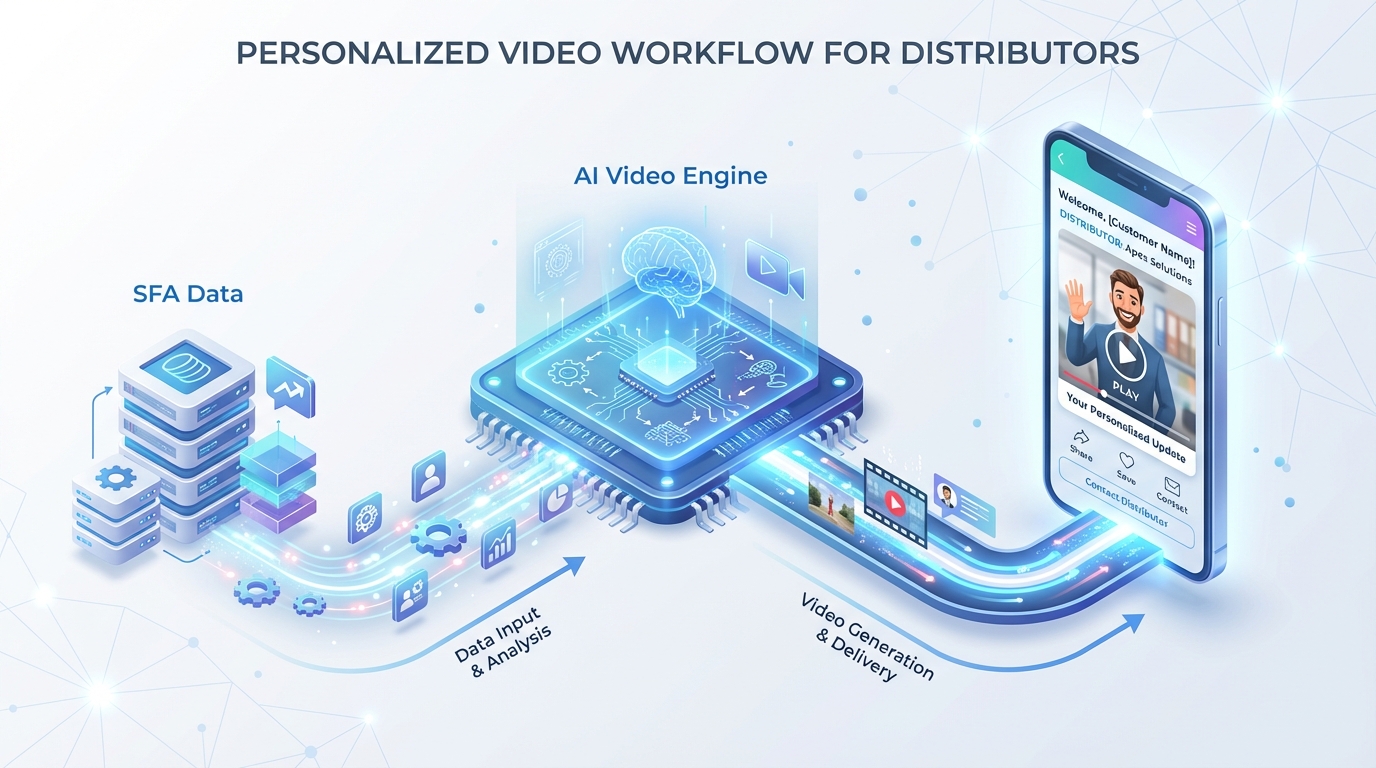
To achieve this scale, enterprises are adopting a “Reference Architecture” that connects data silos to a high-speed generation engine. This backbone consists of four primary layers: the Data Layer (SFA/ERP), the Personalization Engine, the Delivery Layer (CPaaS), and the Analytics Loop.
Platforms like TrueFan AI enable this architecture by functioning as the central personalization engine, transforming static data points into high-fidelity video content. By connecting to your SFA via API, the system can detect when a DSR has failed a training module or when a retailer is 10% away from a loyalty milestone, triggering the creation of a custom video in under 30 seconds.
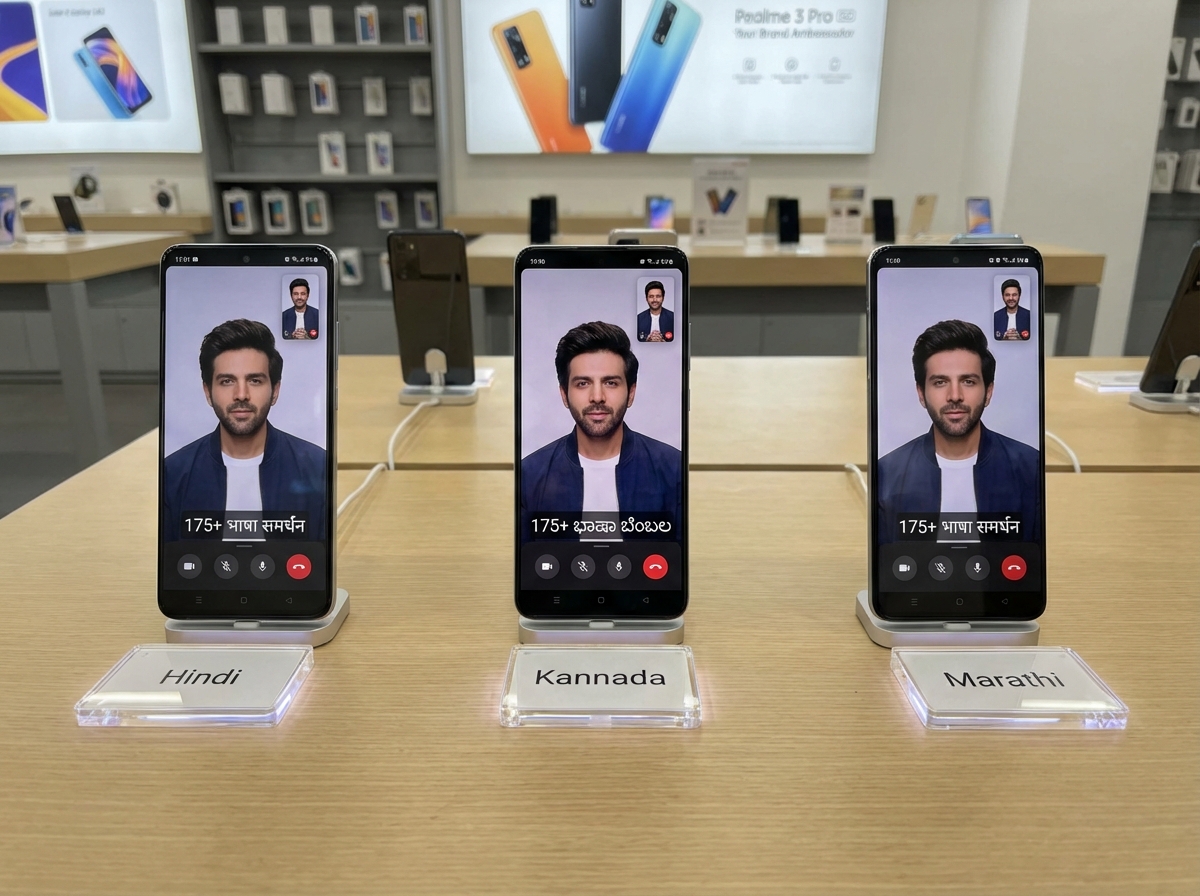
TrueFan AI's 175+ language support and Personalised Celebrity Videos allow brands to use a single brand ambassador to speak to every partner in India. Through advanced diffusion-based face reanimation and voice cloning, a celebrity can address a distributor in Marathi, then instantly switch to Kannada for another, maintaining perfect lip-sync and the celebrity's original vocal texture. This creates a “VIP experience” for partners that traditionally felt disconnected from the brand's core identity.
Sources:
13 Strategic Use Cases for High-Impact Growth
To maximize FMCG channel marketing ROI, enterprises must deploy video across the entire partner lifecycle. Below are 13 high-impact use cases designed for the 2026 landscape.
1. Distributor Training Personalization
Audience: DSRs and Merchandisers.
Trigger: New SKU launch or low compliance score in SFA.
Script Blueprint:
- Personalized greeting (“Namaste, Rajesh!”).
- Objective (“Today we master the new 500g pack display”).
- 60-second “How-to” with visual overlays.
- Micro-quiz (“Which shelf does this go on?”).
- CTA (“Complete the module to unlock your badge”).
Data Variables: Name, Territory, Language, Current Competency Level.
KPIs: Completion rate, time-to-competency.
2. FMCG Product Launch Videos
Audience: Retailers and Wholesalers.
Trigger: Stock arrival at the local depot.
Script Blueprint:
- Teaser of the new product.
- Margin comparison vs. competitors.
- Planogram guidance (where to place it).
- Launch offer details.
- “Order Now” button link.
Data Variables: Retailer Tier, Local Pricing, Language.
KPIs: Time-to-shelf, first-week order volume.
3. Dealer Incentive Program Automation
Audience: Distributor Owners.
Trigger: Weekly performance review.
Script Blueprint:
- Visual dashboard of current attainment.
- “You are only 50 cases away from the Gold Slab!”
- Tips to bridge the gap (focus on high-margin SKUs).
- Visual of the reward (e.g., a trip or cash bonus).
- Support contact link.
Data Variables: Current Sales, Target Gap, Reward Type.
KPIs: Slab attainment rate, incentive uptake.
4. Territory Sales Enablement
Audience: Territory Sales Managers (TSMs).
Trigger: Monday morning briefing.
Script Blueprint:
- Territory scorecard (Red/Green zones).
- Top 3 SKUs to push this week.
- Competitor activity alert in the region.
- Route plan optimization tips.
- Motivational sign-off.
Data Variables: Territory Code, Local Language, Heatmap Data.
KPIs: Call productivity, Out-of-Stock (OOS) reduction.
5. Distributor Loyalty Video Campaigns
Audience: Long-term partners (Platinum/Gold tiers).
Trigger: Anniversary or milestone achievement.
Script Blueprint:
- “Thank you for 10 years of partnership, Amit.”
- Recap of growth together.
- Exclusive “Loyalty Only” offer.
- Invitation to the annual gala.
- Personal message from the Zonal Head.
Data Variables: Tenure, Total Revenue, Tier.
KPIs: Retention rate, Share of Wallet (SoW).
6. B2B Order Management Videos
Audience: Retailer Order Clerks.
Trigger: Cart abandonment in the B2B app.
Script Blueprint:
- “We noticed you left items in your cart.”
- Reminder of the MOQ (Minimum Order Quantity) benefits.
- Estimated delivery time if ordered now.
- One-click checkout link.
- Support chat trigger.
Data Variables: Abandoned SKUs, Delivery SLA, Name.
KPIs: Reorder rate, cart recovery %; B2B order management videos are critical for reducing friction in the ordering process.
7. Channel Partner Onboarding Automation
Audience: New Distributors.
Trigger: KYC approval.
Script Blueprint:
- Welcome to the brand family.
- 3-step guide to using the PRM portal.
- Compliance and credit policy overview.
- Introduction to the assigned ASM (Area Sales Manager).
- First-order incentive offer.
Data Variables: Role, Region, Assigned ASM Name.
KPIs: Time-to-first-order, KYC completion speed.
8. FMCG Scheme Explanation Videos
Audience: All Channel Partners.
Trigger: Monthly scheme rollout.
Script Blueprint:
- Visual breakdown of the “Buy 10 Get 1” logic.
- Example calculation based on the partner's average order.
- FAQ on payout timelines.
- Dispute resolution process.
- Enrollment CTA.
Data Variables: Slab Eligibility, Historical Order Volume.
KPIs: Scheme participation, support ticket reduction.
9. Retailer Engagement Personalization
Audience: Kirana Store Owners.
Trigger: Local festival (e.g., Ganesh Chaturthi in Maharashtra) cultural celebration marketing automation.
Script Blueprint:
- Hyper-local festival greeting.
- Special “Festival Bundle” offer.
- Visual of a festive-themed display.
- Link to download digital posters.
- Order nudge.
Data Variables: Local Festival, Language, Store Format.
KPIs: Promo redemption, display compliance.
10. Distribution Network Digitization
Audience: Channel Operations Teams.
Trigger: SOP (Standard Operating Procedure) update predictive inventory marketing.
Script Blueprint:
- “We've updated our return policy.”
- Step-by-step video of the new digital return process.
- How to upload photos for damaged goods.
- Expected turnaround time.
- Quiz to confirm understanding.
Data Variables: Role, Region.
KPIs: Ticket deflection, PRM feature adoption.
11. Channel Conflict Resolution Videos
Audience: Overlapping Distributors.
Trigger: Territory boundary dispute or parallel trade alert.
Script Blueprint:
- Neutral explanation of the territory policy.
- Visual map of the assigned area.
- Escalation path if the issue persists.
- “Do's and Don'ts” for healthy competition.
- Policy acknowledgment button.
Data Variables: Territory Mapping, Dispute Category.
KPIs: Conflict incidents reduced, policy quiz pass rates.
12. B2B Relationship Building Automation
Audience: High-value Retailers.
Trigger: Quarterly Business Review (QBR).
Script Blueprint:
- “Here is your Q3 performance summary, Sunil.”
- Growth highlights and areas for improvement.
- Strategic focus for Q4.
- Direct feedback link to the CEO's office.
- Thank you for the partnership.
Data Variables: Name, Performance Highlights, Tenure.
KPIs: NPS (Net Promoter Score), Meeting acceptance.
13. Measuring FMCG Channel Marketing ROI
Audience: CXOs and Marketing Heads.
Trigger: Monthly ROI audit.
Script Blueprint:
- Summary of video reach and engagement.
- Correlation between video views and order lift.
- Cost savings from reduced field visits.
- Projected growth for the next month.
- Link to the full analytics dashboard.
Data Variables: Total Spend, Total Lift, Engagement Metrics.
KPIs: ROI, Cost per Activation.
Tech Architecture, Privacy, and Governance
Implementing B2B relationship building automation at scale requires a robust governance framework. In 2026, data privacy is a non-negotiable pillar of enterprise operations. Brands must ensure that all personalized content is generated within a secure environment that complies with ISO 27001 and SOC 2 standards.
The technical workflow typically follows this sequence:
- Data Trigger: The PRM/SFA system identifies a “moment of truth” (e.g., a missed target).
- API Call: A secure API call is sent to the personalization engine with the necessary variables (Name, Language, Target).
- Real-time Rendering: The engine generates a high-definition video with perfect lip-sync in under 30 seconds.
- Omnichannel Delivery: The video is delivered via WhatsApp Business API, ensuring high open rates.
- Analytics Feedback: Every interaction (view, click, order) is fed back into the CRM to refine future triggers.
Solutions like TrueFan AI demonstrate ROI through this closed-loop system, ensuring that every video sent is an investment in a specific business outcome. Furthermore, built-in content moderation filters ensure that no unapproved or offensive content is ever generated, protecting the brand's reputation across millions of unique interactions.
Sources:
ROI Framework and the 6–8 Week Pilot Plan
To justify the shift toward FMCG channel marketing ROI, enterprises should look at benchmarks from early adopters. Pilot programs in the Indian FMCG space have shown a 15–25% increase in training completion and a 10–20% lift in incentive program uptake. More importantly, the time-to-shelf for new launches can be reduced by up to 30% when retailers receive clear, personalized video guidance.
The 8-Week Execution Blueprint
Weeks 1–2: Discovery & Design
- Select 2 pilot territories (e.g., Maharashtra and Karnataka).
- Identify 3 core use cases (Training, Schemes, and Launches).
- Map data fields from your SFA/ERP to the video templates.
Weeks 3–4: Integration & Setup
- Connect TrueFan AI APIs to your existing PRM.
- Configure the WhatsApp Business API for delivery.
- Create 175+ language variants for the pilot regions.
Weeks 5–6: Go-Live & Optimization
- Launch the first wave of personalized videos.
- Monitor real-time analytics for watch-through rates and CTA clicks.
- Use “Virtual Reshoots” to iterate on script lines that aren't performing.
Weeks 7–8: Scale & Procurement
- Analyze the lift in orders and training compliance.
- Present the ROI readout to stakeholders.
- Finalize the annual calendar for a national rollout.
Conclusion: The Future of Channel Engagement
The era of mass, impersonal communication in the FMCG sector is over. By 2026, the brands that dominate the Indian market will be those that treat their distributors and retailers as “segments of one.” Through FMCG distributor enablement videos 2026, enterprises can finally bridge the communication gap, ensuring that every partner feels seen, valued, and empowered to grow.
Whether it is through B2B channel partner automation or retailer engagement personalization, the goal remains the same: driving efficiency and growth in a complex, multilingual market. The technology is here, the data is ready, and the ROI is proven. The only question remains: how fast can your organization pivot to this new standard of excellence?
Ready to transform your distribution network?
Book an enterprise demo with TrueFan AI to co-build a multi-territory pilot and achieve measurable FMCG channel marketing ROI within 8 weeks.
Frequently Asked Questions
How do FMCG distributor enablement videos 2026 differ from traditional training videos?
Traditional videos are static and generic. The 2026 standard uses data-triggered personalization, meaning each video is unique to the viewer's name, territory, performance data, and language, delivered automatically via API.
Can these videos work for retailers with low-end smartphones?
Yes. The delivery layer is optimized for WhatsApp and SMS, using compressed video formats and cloud-based landing pages that load instantly even on 4G/5G networks common across India.
Is it possible to use our existing brand ambassador for these personalized videos?
Absolutely. Platforms like TrueFan AI can take a single 15-minute shoot of your brand ambassador and use AI to generate millions of personalized messages, allowing the celebrity to “speak” to every distributor individually.
How do we measure the ROI of these video campaigns?
ROI is measured through operational KPIs: increase in lines per order, reduction in support tickets for schemes, faster time-to-competency for DSRs, and higher participation in incentive programs.
What is the typical rendering time for a personalized video?
For enterprise-grade solutions, the rendering time is typically under 30 seconds, allowing for real-time “nudge” marketing based on immediate user actions.



