Tier-2 Festival Commerce Automation for India 2026: From Vernacular Video to Small City Customer Acquisition
~10 min read
Key Takeaways
- Tier-2 festival commerce automation converts local celebrations into high-conversion shopping moments through district-level precision.
- A vernacular personalization platform auto-generates dialect-accurate videos and offers across 200+ cities, integrating creative with product-price-inventory data.
- Hyperlocal orchestration aligns promotions and logistics with regional rituals, delivery windows, and trusted dealer networks.
- Measure impact via lift-by-PIN and KPIs across awareness, consideration, conversion, and offline footfall/leads.
The landscape of Indian e-commerce has reached a definitive inflection point where the next 300 million shoppers reside not in the metros, but in the heartlands. Tier-2 festival commerce automation has emerged as the critical operating system for national brands seeking to penetrate these high-growth markets with surgical precision. This AI-orchestrated framework ingests district-level festival calendars and CRM data to auto-generate vernacular creatives that drive measurable small city customer acquisition.
By 2026, the digital economy in India is projected to see over 70% of its incremental growth originating from Tier-2 and Tier-3 cities. Platforms like TrueFan AI enable enterprise marketers to bridge the cultural gap by delivering hyper-personalized, regional celebration marketing videos at a scale previously deemed impossible. This strategy moves beyond generic broadcasting, focusing instead on district-level granularity to turn local celebrations into high-conversion commerce events.
Source: Bain & Company: How India Shops Online 2025
The Strategic Imperative of Local Festival Calendar Marketing
Winning in “Bharat” requires a fundamental shift from a Diwali-centric mindset to a rolling, 365-day local festival calendar marketing strategy. While national holidays provide a baseline, the real growth in Tier-2/3 cities is unlocked through micro-festivals like Gudi Padwa, Ugadi, Bihu, and Vishu. These events are deeply tied to regional harvest cycles and local pay cycles, making them the most opportune moments for small city customer acquisition.
Data from 2026 indicates that vernacular-first campaigns during regional festivals achieve a 40% higher engagement rate compared to standard English or Hindi-only assets. Brands must map their campaigns to the specific rituals and auspicious timings of each district to build authentic trust. This involves understanding that a consumer in Coimbatore celebrating Puthandu has different purchase triggers than a consumer in Amritsar celebrating Baisakhi.
Regional tradition-based campaigns are no longer optional; they are the primary driver of brand affinity in non-metro markets. By aligning product launches and promotional windows with these cultural milestones, brands can leverage the heightened emotional state of the consumer. This alignment ensures that marketing messages are perceived as helpful celebrations rather than intrusive advertisements.
Source: EY India: Shape the Future of Indian Media and Entertainment
Building the Vernacular Festival Personalization Platform
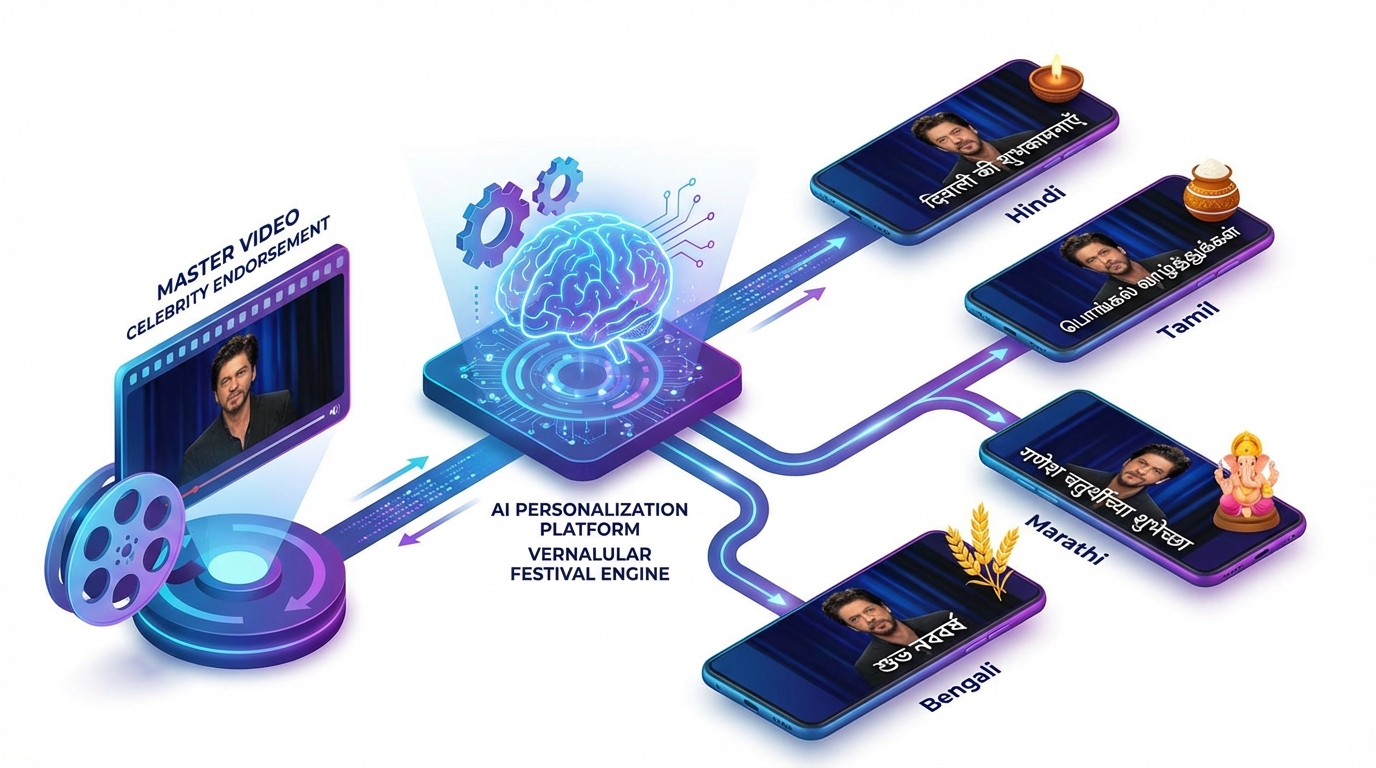
To execute at the scale of 200+ cities, enterprises must deploy a robust vernacular festival personalization platform that automates the creative lifecycle. This system utilizes AI templates to transform a single brand shoot into millions of localized variants, each featuring dialect-accurate greetings and district-specific offers. TrueFan AI's 175+ language support and Personalised Celebrity Videos provide the technological backbone for this level of mass-customization.
The architecture of such a platform relies on a seamless integration between the creative engine and the brand's product-price-inventory feed. This allows for the dynamic overlay of real-time data, such as the name of the nearest local dealer or the specific EMI options available in a particular PIN code. The result is a library of local language shopping videos that feel bespoke to every individual recipient.
Technical requirements for this automation include sub-30-second rendering latency to support real-time triggers, such as a “Happy Birthday” or “Happy Pongal” message sent via WhatsApp. Furthermore, the platform must ensure cultural QA by region, verifying that the attire, rituals, and linguistic nuances in the video are accurate. This level of detail prevents the cultural missteps that often plague centralized marketing efforts.
Source: TrueFan AI: Cultural Celebration Marketing Automation Q1 2026
Optimizing Local Festival Offer Orchestration and Logistics
Effective tier-2 festival commerce automation extends beyond the creative to include sophisticated local festival offer orchestration. This involves a rules-based engine that varies promotional bundles and discounts based on district-level stock availability and regional demand patterns. For instance, a brand might offer a specific “Puja Bundle” in West Bengal while simultaneously running an “Exchange Bonus” campaign in Maharashtra.
In 2026, the integration of hyperlocal delivery festival offers has become a significant conversion lever. By mapping delivery promises to specific festival rituals—such as “Delivered before the evening Aarti”—brands can create a sense of urgency and reliability. These offers are backed by micro-warehousing and dark-store networks that ensure the last-mile SLA is met even during peak festive surges.
Regional dealer festival campaigns further bridge the gap between digital discovery and physical fulfillment. By including the local dealer's name, address, and a unique QR code in the personalized video, brands drive footfall to retail outlets. This “phygital” approach is essential for high-consideration categories like automotive and electronics, where the local dealer remains a trusted figure in the purchase journey.
Source: IMARC Group: India E-commerce Logistics Market Report
Multi-Channel Execution for Small Town E-commerce Activation
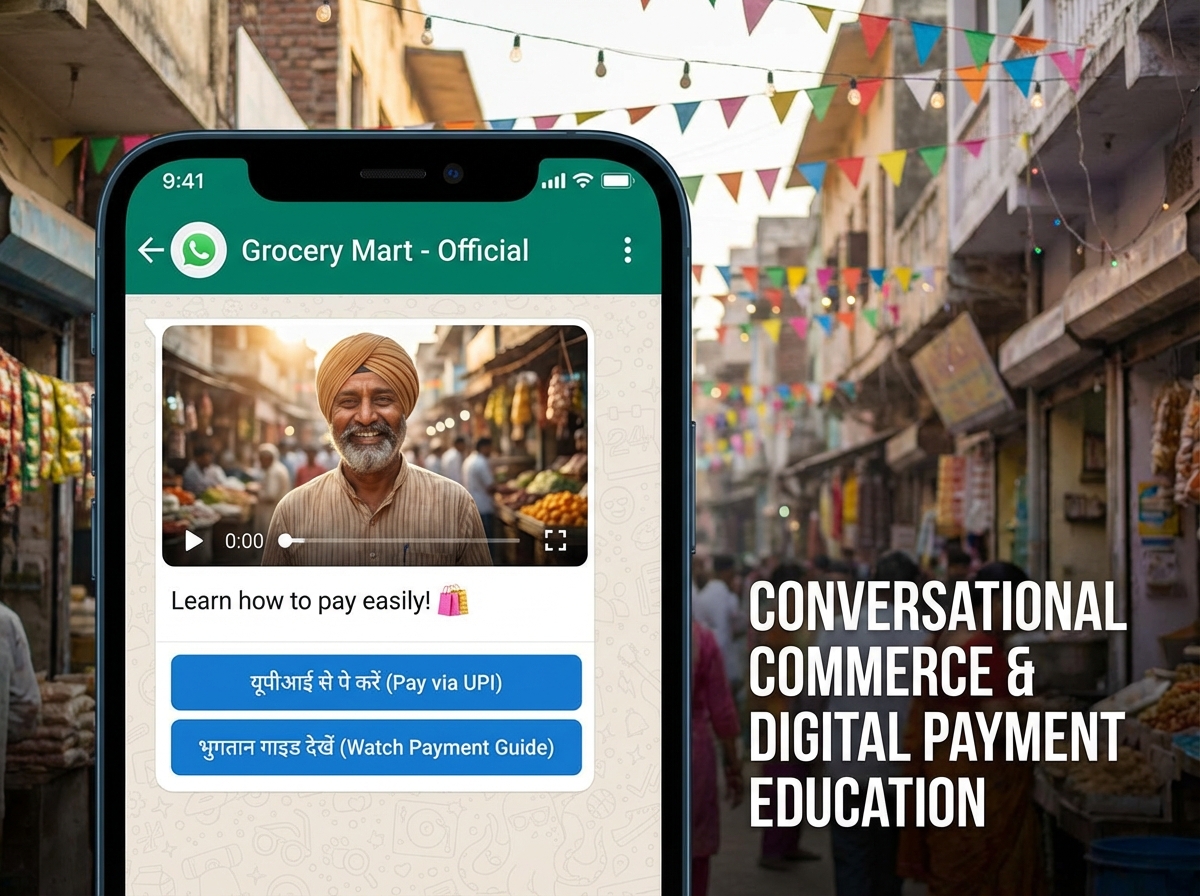
Achieving successful small town e-commerce activation requires a multi-channel approach that prioritizes conversational commerce and trust-building. WhatsApp has become the primary storefront for Tier-2/3 India, serving as the platform where local language shopping videos are consumed and acted upon. These journeys often include automated “COD-to-UPI” nudges to encourage digital payments while maintaining the comfort of cash-on-delivery. A critical, often overlooked component of this activation is rural digital payment education. Many first-time shoppers in smaller cities harbor concerns regarding online payment security and refund processes. By embedding short, local-language explainer videos within the checkout flow, brands can reduce drop-off rates by up to 25%. These videos demystify UPI setup and provide clear instructions on how to identify legitimate payment requests. This conversational commerce foundation also pairs well with seller onboarding flows in interoperable networks.
Regional influencer festival partnerships play a pivotal role in establishing credibility at the district level. Hyperlocal creators who speak the local dialect and understand regional nuances can voice-over automated assets, lending an air of authenticity to the brand's message. This collaborative approach ensures that the brand's tier-2 festival commerce automation efforts feel grounded in the community rather than dictated from a corporate headquarters.
Source: IBEF: E-commerce Industry in India 2026 Outlook
Measuring Success with District-Level Personalization Strategies
To ensure long-term ROI, brands must implement rigorous district-level personalization strategies that move beyond aggregate metrics. Success should be measured by the “lift-by-PIN,” comparing the performance of localized assets against generic control groups. Solutions like TrueFan AI demonstrate ROI through significant increases in view-through rates (VTR) and dealer lead volumes, particularly when regional celebration marketing videos are used.
Key Performance Indicators (KPIs) for these campaigns should include:
- Awareness: VTR on vernacular videos and the percentage of users watching past the 75% mark.
- Consideration: Click-through rates (CTR) from local language shopping videos to WhatsApp or ONDC storefronts.
- Conversion: The shift from COD to UPI following rural digital payment education interventions.
- Offline Impact: Footfall and lead generation attributed to regional dealer festival campaigns.
Real-world applications of this framework have shown remarkable results. For example, Zomato’s Mother’s Day campaign utilized hyper-personalized video automation to deliver over 354,000 unique messages in a single day, driving massive social engagement. Similarly, Hero MotoCorp leveraged personalized festive wishes to reach 2.4 million customers, resulting in a measurable spike in service camp bookings and dealer visits across multiple states.
Source: StoreHippo: 10 Must-Follow Ecommerce Trends for 2026
Frequently Asked Questions
What is a vernacular festival personalization platform?
A vernacular festival personalization platform is an AI-driven system that allows brands to create millions of personalized video assets in over 175 languages and dialects. It automates the process of tailoring greetings, product offers, and local dealer information to individual consumers based on their geographic location and cultural context.
How does TrueFan AI ensure the cultural accuracy of these videos?
The platform uses a combination of regional linguistic experts and AI-driven moderation to ensure that every dialect, ritual, and visual element is culturally appropriate for the target district.
How does local festival offer orchestration work at the district level?
Local festival offer orchestration involves using a rules engine to dynamically change promotions based on local factors. This includes adjusting discounts based on a specific district's inventory levels, aligning offers with regional pay cycles (such as harvest times), and ensuring that the most relevant product bundles are promoted during specific local rituals.
What are district-level personalization strategies and why do they matter?
District-level personalization strategies involve managing marketing budgets and creative assets at the micro-geographic level (PIN code or district). They matter because consumer behavior, language, and festival importance vary significantly across India. By personalizing at this level, brands can achieve much higher engagement and conversion rates than with a one-size-fits-all national campaign.
How can brands improve small city customer acquisition through video?
Brands can improve acquisition by using local language shopping videos that feature familiar faces (celebrities or local influencers) and address specific local needs. Including rural digital payment education within these videos also helps overcome the trust barriers that often prevent small-town consumers from completing an online purchase.
What is the role of hyperlocal delivery festival offers in 2026?
In 2026, hyperlocal delivery is a key differentiator. Offers that promise delivery within specific festive windows (e.g., “before the puja starts”) create a powerful incentive for consumers. This requires tight integration between the marketing automation platform and the brand's logistics providers to ensure that the delivery promise shown in the video is accurate for the user's specific location.
Conclusion
The era of generic, mass-market advertising is being replaced by the precision of tier-2 festival commerce automation. By combining a vernacular festival personalization platform with sophisticated local festival offer orchestration, national brands can finally speak the language of “Bharat.” As we move through 2026, the ability to execute district-level personalization strategies will be the defining factor in which brands successfully capture the immense potential of India's small cities. The future of commerce is local, linguistic, and deeply celebratory.