Sustainable shopping rewards automation 2026: How enterprises use personalized eco‑video to drive carbon‑neutral commerce
Key Takeaways
- Enterprises are adopting AI‑driven eco‑loyalty automation to turn every transaction into a verifiable sustainability action.
- Personalized eco‑videos convert emissions data into compelling narratives that lift conversions and justify green premiums.
- A layered architecture of CDP + emissions APIs + orchestration enables secure, consented impact messaging at scale.
- Operational nudges like green delivery and sustainable packaging reduce costs while raising ESG impact and LTV.
- Robust governance and compliance (GHG Protocol, ISO 27001/SOC 2) prevent greenwashing and build consumer trust.
The global retail landscape is undergoing a seismic shift toward radical transparency and automated accountability. As we navigate the complexities of the mid-decade economy, sustainable shopping rewards automation 2026 has emerged as the definitive standard for enterprises seeking to align profit with planetary health. No longer a niche preference, carbon-neutral commerce is now driven by sophisticated AI orchestrations that turn every transaction into a verifiable act of environmental stewardship.
For modern enterprises, the challenge is no longer just “being green” but communicating that impact at a granular, individual level. Sustainable shopping rewards automation 2026 leverages real-time data from CDPs and emissions APIs to deliver hyper-personalized incentives that nudge consumers toward lower-impact choices. By integrating automated video content and real-time rewards, brands are transforming the traditional loyalty model into a dynamic engine for ESG (Environmental, Social, and Governance) excellence.
1. The Enterprise Case for Sustainable Shopping Rewards Automation 2026
The business imperative for automating eco-loyalty is backed by robust data. By 2026, AI-powered retail personalization and intelligent fulfillment have become core capabilities for Indian and global enterprises. According to the NASSCOM Strategic Review 2025, AI mainstreaming in India has reached a critical mass, enabling brands to deploy automated eco-nudges that were previously cost-prohibitive. This technological maturity allows for the seamless integration of default “green” options into the checkout flow, significantly reducing the friction associated with sustainable decision-making.
The financial upside is equally compelling. The PwC Voice of the Consumer 2024 report highlighted that consumers are willing to pay an average premium of approximately 9.7% for sustainably produced goods. However, capturing this premium requires more than just a label; it requires a narrative. Platforms like TrueFan AI enable enterprises to bridge this gap by transforming raw sustainability data into compelling, personalized video stories that justify the value proposition of eco-friendly products.
Furthermore, the EY–NASSCOM AI Adoption Index identifies the retail and CPG sectors as leaders in AI implementation. These organizations are moving beyond static rewards to eco-loyalty program automation, where incentives are dynamically adjusted based on the customer’s historical carbon footprint and real-time inventory of low-impact SKUs. This level of orchestration ensures that sustainability is not an afterthought but a primary driver of Customer Lifetime Value (LTV) and Net Promoter Score (NPS).
Source: NASSCOM Strategic Review 2025
Source: EY–NASSCOM AI Adoption Index
Source: PwC Voice of the Consumer 2024
2. Architecture and Data Governance for Eco-Loyalty Program Automation
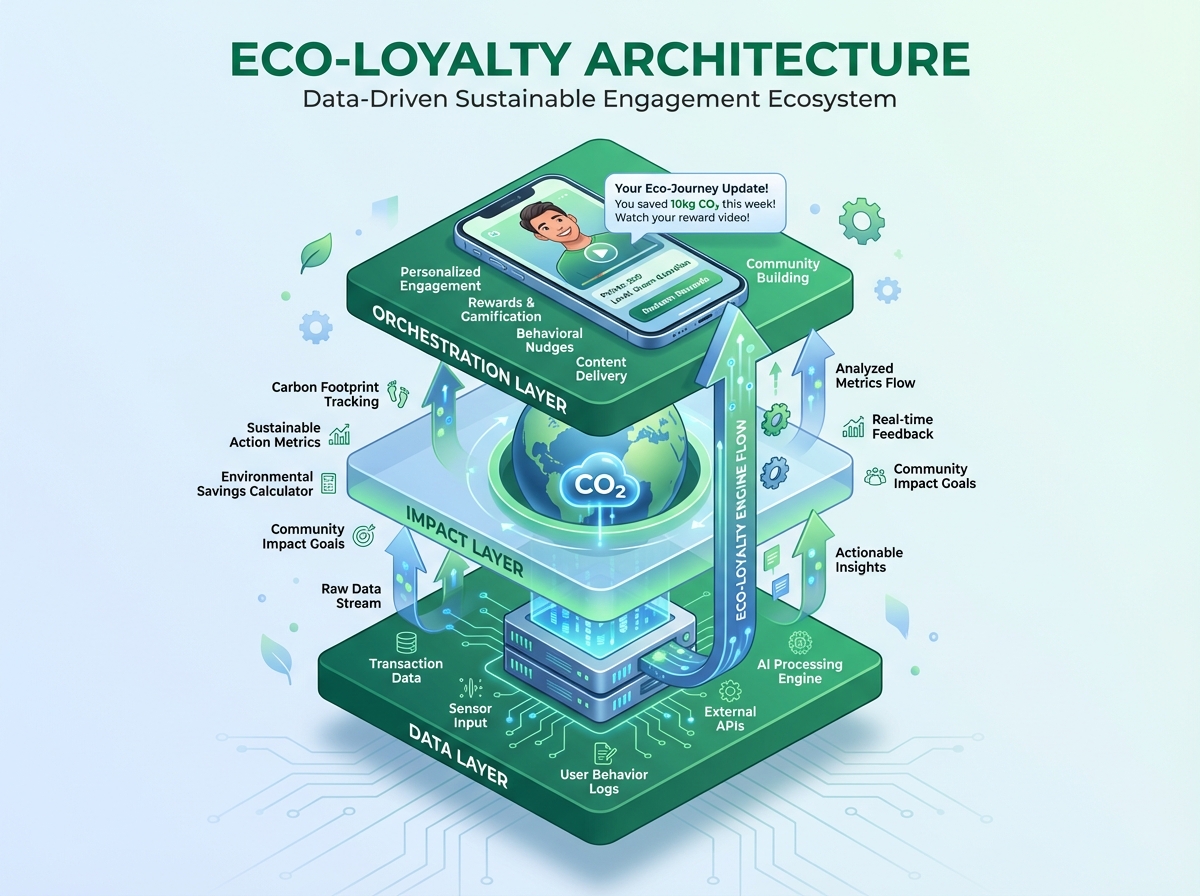
Building a robust system for sustainable shopping rewards automation 2026 requires a sophisticated enterprise architecture. At the core is the Data Layer, typically a Customer Data Platform (CDP) or advanced CRM that aggregates customer profiles, purchase history, and sustainability preferences. This is augmented by an Impact Layer—APIs that calculate order-level CO2e emissions based on product weight, dimensions, and logistics modes.
The Orchestration Layer then takes these inputs to trigger specific marketing actions. For instance, when a customer adds a high-impact item to their cart, the system can instantly trigger eco-friendly purchase incentive videos. These videos are rendered in real-time, featuring dynamic data overlays that show the specific carbon savings if the customer switches to a refillable or locally sourced alternative. TrueFan AI's 175+ language support and Personalised Celebrity Videos allow these messages to resonate across diverse demographics, ensuring the “green” message is culturally and linguistically relevant (see Personalised Video & Celebrity Endorsement for SaaS).
Data governance is paramount in this architecture. Enterprises must adhere to ISO 27001 and SOC 2 standards to ensure that the personalization of sustainability data remains secure and consented. Automated workflows must include content moderation and strict adherence to the GHG Protocol to avoid “greenwashing” claims. By automating the verification of impact visuals, brands can provide a transparent audit trail for both consumers and regulatory bodies, fostering a level of trust that static marketing cannot achieve.
Source: NASSCOM “Unlocking Value from Data and AI”
Source: TrueFan AI Enterprise Capabilities
3. Hyper-Personalizing Incentives: Eco-Friendly Purchase and Recommendation Videos
The key to driving behavioral change in 2026 is the transition from generic “save the planet” messaging to carbon footprint calculator personalization. When a customer sees exactly how their specific order impacts the environment, the motivation to choose a greener alternative increases exponentially. Personalized short videos can present eco-friendly product swaps or incentives, such as instant digital coupons, tailored specifically to the user's past behavior and geographic location (AI Celebrity Video Marketing India).
Green product recommendation videos take this a step further by using AI to prioritize renewable or low-impact SKUs in the recommendation engine. Instead of just showing “people also bought,” the system shows “people who care about carbon reduction chose these.” These videos can include dynamic “CO2e saved” bubbles and QR codes for immediate add-to-cart functionality. This approach addresses the “coverage gap” often found in traditional e-commerce, where sustainable options are buried under high-margin, high-impact bestsellers.
Moreover, environmental impact visualization videos turn abstract ESG data into tangible customer-friendly visuals. A video might show a progress bar of “trees planted” or “plastic diverted” specifically because of that customer’s loyalty tier. This level of transparency is a significant differentiator in India’s digital economy. As noted in the Bain & Company “How India Shops Online 2025” report, the rising e-retail penetration provides a massive canvas for these automated eco-nudges, allowing brands to scale sustainability initiatives across millions of touchpoints with minimal manual intervention.
Source: Bain & Company “How India Shops Online 2025”
Source: Economic Times Retail FoodXP Summit 2025
4. Operationalizing Green Choices: Sustainable Packaging and Delivery Promotions
One of the most effective applications of sustainable shopping rewards automation 2026 is at the point of fulfillment. Sustainable packaging choice campaigns now use personalized explainer videos to show the lifecycle of a compostable mailer versus a standard plastic one. By making “recycled packaging” the default and reinforcing that choice with a thank-you video that counts the grams of plastic avoided, enterprises can achieve opt-in rates exceeding 80%.
Similarly, green delivery option promotions nudge customers toward “no-rush” or consolidated shipments. The automation engine calculates the emissions delta between express shipping and a consolidated “Green Friday” delivery. A personalized video then presents this choice: “Wait until Friday and save 1.2 kg of CO2e—and we'll credit your eco-account with 50 bonus points.” This logic is particularly effective in the Indian market, where logistics optimization is a major cost and carbon lever (Rapid Fulfillment Personalization for Quick Commerce and Quick Commerce Festival Marketing 2026).
Solutions like TrueFan AI demonstrate ROI through these operational efficiencies. By automating the creation of these “nudge” videos, brands can A/B test different incentive framings—such as “environmental gain” versus “waste avoidance”—to find the most effective psychological trigger for each customer segment. This data-driven approach ensures that sustainability initiatives contribute directly to the bottom line by reducing shipping costs and packaging waste while simultaneously boosting customer engagement.
Source: TrueFan AI Case Study (Goibibo WhatsApp Nudges)
Source: ET Retail FoodXP Summit 2025 (Sustainability in Packaging)
5. Gamification and Circularity: Sustainability Scores and Participation Videos
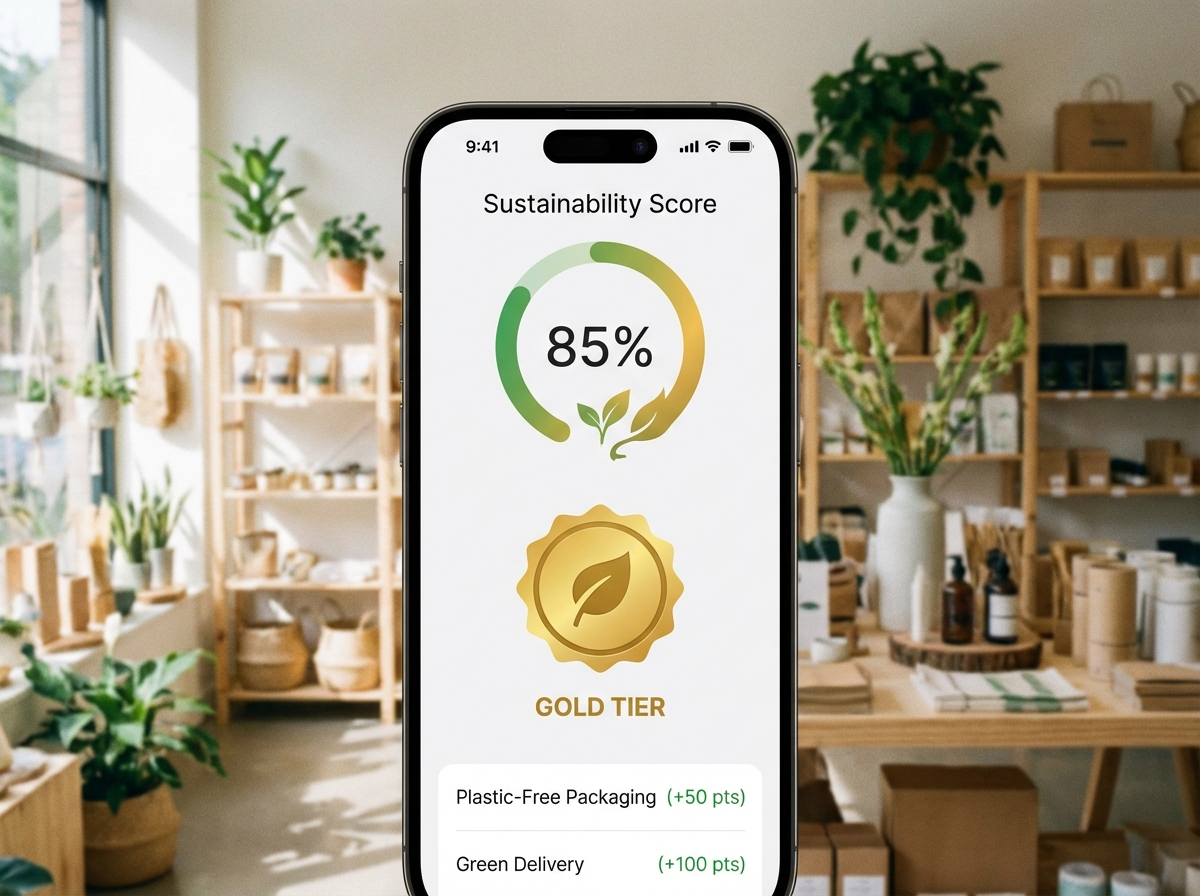
To sustain long-term engagement, enterprises are turning to sustainability score gamification. This involves a per-customer ledger that tracks eco-behaviors—such as choosing green delivery, opting for plastic-free packaging, or participating in circular programs. These scores are then visualized through automated video scorecards that reveal new badges, tiers, and rewards. This gamified approach transforms sustainability from a chore into a competitive, rewarding experience (Post‑purchase Loyalty Automation India).
Circular economy participation videos play a crucial role in this ecosystem. They provide personalized guides for repair, refurbishment, and trade-in programs. For example, a customer who purchased a high-end electronics item two years ago might receive a video showing its current trade-in value and the “landfill diversion” impact of returning it for refurbishment. These conscious consumer engagement videos guide the user through the entire lifecycle, ensuring that the relationship with the brand doesn't end at the point of sale.
Furthermore, plastic-free shopping campaigns and refill/reuse journeys are automated based on consumption cadence. If a customer typically buys detergent every 45 days, the system triggers a “Refill Reminder” video on day 40, offering a discount if they use a reusable container. This proactive engagement not only drives repeat purchases of green SKUs but also reinforces the brand's commitment to a circular economy. By 2026, this level of automated, values-based marketing is the primary driver of brand advocacy among Gen Z and Alpha consumers.
Source: NASSCOM Strategic Review 2025 (AI-powered CX)
Source: TrueFan AI Enterprise (Virtual Reshoots for Rapid Script Changes)
6. Scaling Impact: Environmental CSR Communication Automation and ROI
The final pillar of sustainable shopping rewards automation 2026 is the automation of stakeholder communications. Environmental CSR communication automation involves scheduled, segmented video briefings that translate complex ESG data into plain language for customers, employees, and investors. Instead of a static 100-page PDF, stakeholders receive a 60-second personalized video summarizing the quarterly impact, such as total carbon sequestered or local community projects funded (2026 Digital Transformation Budget Planning).
Measuring the ROI of these programs requires a dual-track approach. Program KPIs track conversion lift on eco-options, green delivery selection rates, and refill adherence. Simultaneously, Impact KPIs measure the aggregate kg of CO2e avoided and units diverted from landfills. The economic reality is that sustainable shopping rewards automation 2026 pays for itself through increased LTV and reduced operational waste. By 2026, the cost per avoided kg of CO2e has become a standard metric for marketing efficiency.
Compliance and integrity are the bedrock of these communications. Automated systems must align emissions calculations with the GHG Protocol and include necessary disclaimers. TrueFan AI’s enterprise-grade platform ensures this by providing built-in moderation and consent-first workflows. This allows brands to scale their environmental impact visualization videos with total confidence, knowing that every claim is backed by data and every video meets the highest standards of corporate governance.
Source: NASSCOM “Unlocking Value from Data and AI”
Source: TrueFan AI (ISO 27001/SOC 2 Compliance)
7. Implementation Blueprint and FAQ for Sustainable Shopping Rewards
Implementing a comprehensive system for sustainable shopping rewards automation 2026 is an 8-week journey for most enterprises.
- Weeks 1–2: Audit data readiness. Identify product sustainability attributes and integrate emissions calculator APIs. Define the economics of your eco-incentives.
- Weeks 3–4: Configure journeys and triggers in your CRM/CDP. Build the first set of video templates for eco-swaps and footprint summaries.
- Weeks 5–6: Pilot green delivery and packaging campaigns. Use A/B testing to refine the messaging and incentive levels. Enable the sustainability score ledger.
- Weeks 7–8: Scale to circular participation flows and plastic-free journeys. Launch the first quarterly impact visualization for all stakeholders (Cultural Celebration Marketing Automation: Q1 Playbook).
Conclusion
The era of passive sustainability is over. In 2026, the most successful enterprises are those that have mastered sustainable shopping rewards automation 2026. By combining real-time impact data with hyper-personalized video content, these brands are not just selling products—they are inviting consumers to be part of a verifiable global solution.
Through environmental CSR communication automation and environmental impact visualization videos, the complex data of ESG is transformed into a powerful tool for customer engagement and brand growth. As we look toward the future of commerce, the integration of automation, personalization, and purpose is no longer an option; it is the blueprint for enterprise resilience and relevance in a carbon-conscious world.
Final Implementation Checklist:
- Integrate order-level emissions API.
- Tag product catalog with sustainability attributes.
- Deploy TrueFan AI for real-time video rendering.
- Establish a sustainability score ledger in your CDP.
- Automate quarterly ESG stakeholder briefings.
Frequently Asked Questions
What systems do I need to implement eco-loyalty automation?
You’ll need a CDP/CRM to unify profiles and consent, product and logistics data to calculate order-level CO2e, an orchestration layer (journeys and triggers), and a dynamic video rendering platform to personalize impact narratives at scale.
How do personalized eco‑videos connect to my emissions data?
APIs compute CO2e per order or SKU and pass those values into video templates as dynamic fields. The system renders real‑time overlays (e.g., “CO2e saved”) and adapts creative and incentives based on user history and inventory.
How can brands avoid greenwashing while scaling these programs?
Align calculations to the GHG Protocol, maintain audit trails, use pre‑approved templates with required disclaimers, and enforce ISO 27001/SOC 2 practices for data security and consent. Automated checks reduce manual errors and exaggeration.
Which KPIs best prove ROI for sustainable rewards automation?
Track conversion lift on eco‑options, green delivery selection rate, refill adherence, LTV uplift, logistics cost savings, and environmental KPIs such as kg CO2e avoided and units diverted from landfill.
Can this scale across regions and languages?
Yes. Use multilingual templates and localization for voice, text, and cultural context. With robust orchestration and video automation, enterprises can support dozens of locales while preserving brand and compliance controls.