
Ramadan Marketing Campaigns India 2026: Enterprise Playbooks for Fashion, Food, Gifting, and Community
Key Takeaways
- 2026 Ramadan success demands culturally sensitive personalization aligned to local prayer times and \"Golden Hours\" of Sehri and Iftar.
- Use data-driven signals (Context, Commerce, Identity) to power at-scale Eid greeting personalization and halal-aware recommendations.
- Quick-commerce wins hinge on real-time orchestration of stock, ETAs, and dynamic coupons linked to Iftar/Sehri windows.
- Fashion and gifting require personalized video lookbooks with delivery-by-Eid promises and community impact (Zakat automation).
- Measure beyond CTR/CVR with Delivery SLA Adherence and Donation Completion Rates to track trust and impact.
The landscape of Ramadan marketing campaigns India 2026 is defined by a shift from broad-spectrum broadcasting to high-fidelity, culturally sensitive personalization. As the holy month approaches, enterprise leaders in fashion, quick-commerce, and retail face the dual challenge of respecting sacred traditions while driving record-breaking engagement. Success in 2026 hinges on the ability to deliver Eid greeting personalization and iftar offer video automation that feels local, timely, and deeply respectful of the consumer’s spiritual journey.
For Indian enterprises, the 2026 Ramadan window—expected to span from late February to late March—requires a sophisticated blend of quick commerce iftar delivery logistics and AI-driven creative scaling. This is not merely about seasonal discounts; it is about mastering the "Golden Hours" of Sehri and Iftar with precision-engineered content. By leveraging real-time data and automated video, brands can transition from being mere vendors to becoming integral participants in the community’s daily observance.
1. India 2026 Context: Navigating the Ramadan Timeline and Consumer Behavior
Understanding the temporal and regional nuances of Ramadan marketing campaigns India 2026 is the first step toward enterprise-grade execution. Unlike fixed holidays, Ramadan’s start is dictated by the lunar calendar, meaning dates vary across the Indian subcontinent based on local moon sightings. Projections suggest Ramadan 2026 will likely begin around February 18th, with Eid-ul-Fitr falling near March 20th, though city-specific variances are guaranteed.
Enterprises must account for these geographic shifts when scheduling their Muslim consumer engagement videos. A campaign triggered for a consumer in Mumbai may need to go live several minutes after one in Kolkata to align with local prayer times. This level of granularity is no longer optional; it is the baseline for religious sensitivity marketing. Consumers in 2026 expect brands to respect the sanctity of the fast, meaning promotional content must be paused during prayer windows and accelerated during the high-intent periods of Sehri and Iftar.
The 2026 consumer landscape in India is dominated by Gen Z and Millennials who exhibit a high degree of "digital-first" comfort. Recent data indicates that over 65% of Indian urban consumers now prefer digital ordering for their festive needs, a trend accelerated by the expansion of quick-commerce infrastructure. This demographic prioritizes convenience but remains deeply rooted in tradition, seeking brands that can offer Sehri meal delivery campaigns with the same speed they expect for daily groceries.
Source: NDTV: Ramadan 2026 in India Start Date and Moon Sighting Context
Source: Ummid.com: Projection for Ramadan/Eid 2026 Timeline
Source: Times of India: Moon Sighting Process and Variability
2. The Pillars of Religious Sensitivity Marketing and Compliance
In the high-stakes environment of religious sensitivity marketing, the margin for error is non-existent. For an enterprise to maintain trust, every visual and verbal cue must be vetted for cultural accuracy. This involves more than just avoiding stereotypes; it requires a proactive commitment to modesty, halal integrity, and community support. In 2026, "faith-safe" content is a primary KPI for brand health.
Halal product personalization is a critical component of this strategy. For food and personal care brands, simply labeling a product as "Ramadan-friendly" is insufficient. Enterprises must integrate verified halal certifications directly into their digital assets. When a consumer receives a personalized video offer, the inclusion of a verifiable halal badge—linked to the certifying authority—builds immediate credibility. Furthermore, recommendation engines must be programmed to avoid cross-selling non-halal items alongside certified products, ensuring the shopping experience remains religiously compliant.
Beyond product labeling, zakat donation campaign automation has emerged as a powerful tool for community engagement. Zakat, the obligatory act of charity, is a central pillar of Ramadan. In 2026, leading Indian marketplaces are automating this process by allowing consumers to see the direct impact of their purchases. For instance, a video could inform a customer that "₹50 from your Eid outfit purchase has been contributed to [Verified NGO] for education." This transparency, backed by real-time impact meters, transforms a transaction into a shared act of worship.
Creative precedents from previous years show that the most successful Indian ads emphasize themes of gratitude, family reunions, and the "spirit of giving." Brands must ensure that their Muslim consumer engagement videos reflect these values through modest fashion choices in visuals and the use of respectful greetings like "Ramadan Kareem" or "Eid Mubarak" in appropriate regional dialects.
Source: exchange4media: Eid Ads That Embraced the Ramadan Spirit
3. Data-Driven Personalization: Primitives for the 2026 Consumer
To scale Ramadan marketing campaigns India 2026 across millions of users, enterprises must move beyond basic segmentation. The 2026 personalization model relies on three core signal categories: Context, Commerce, and Identity. By synthesizing these signals, brands can create Eid shopping personalization strategies that feel uniquely tailored to every household.
Contextual signals are the most dynamic. They include the user’s city, local prayer times, and the specific phase of the month (e.g., the "Last 10 Nights"). During the final ten days of Ramadan, consumer intent shifts dramatically toward gifting and Eid preparation. Commerce signals, such as category interest in modestwear or previous AOV (Average Order Value), allow brands to refine their offers. Finally, identity signals like language preference (Urdu, Hindi, Bengali, Malayalam, Tamil) and family composition ensure the creative resonates on a personal level.
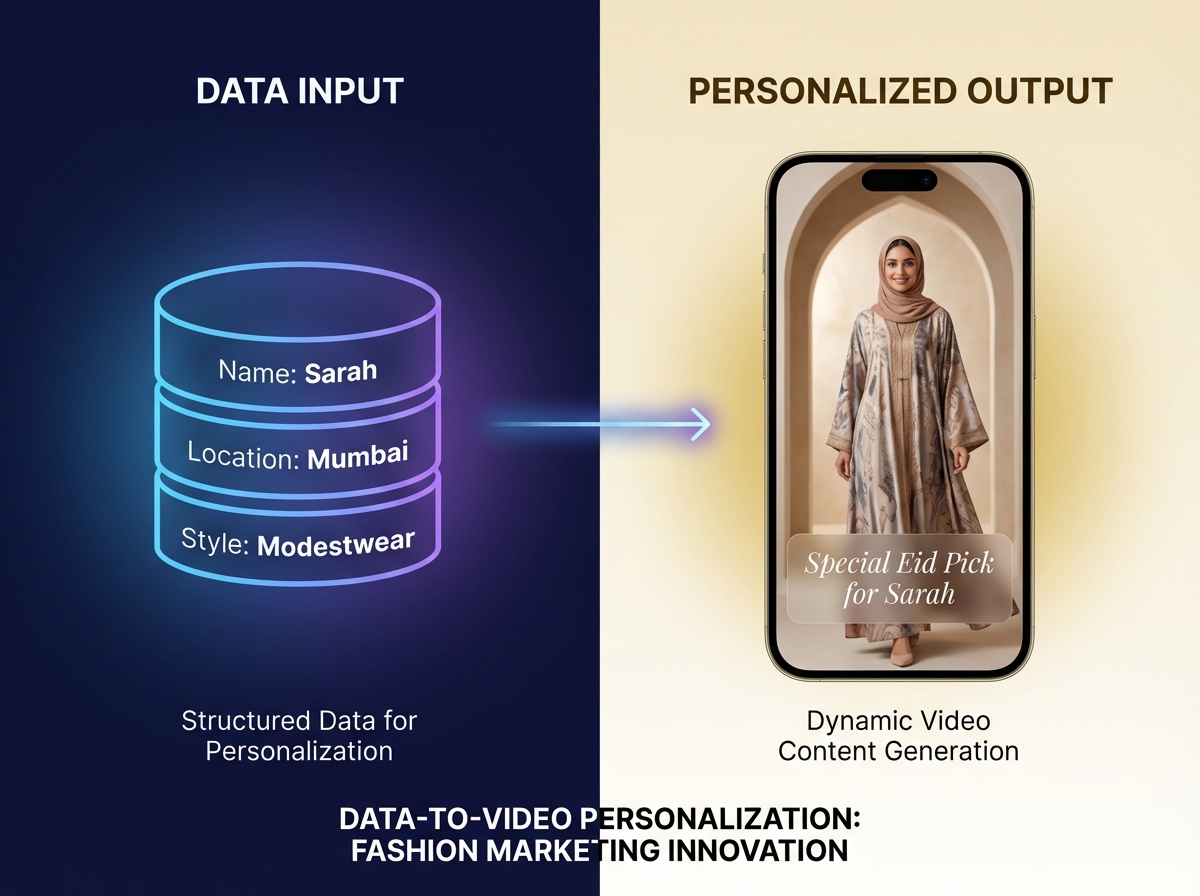
Platforms like TrueFan AI enable enterprises to transform these data points into high-impact video assets in near real-time. By feeding CRM data—such as a user’s name, preferred store, and loyalty tier—into pre-approved video templates, brands can generate millions of unique variations. This allows for Eid greeting personalization that mentions the user by name and references their local neighborhood store, significantly increasing click-through rates (CTR) compared to generic static banners.
The implementation of halal product personalization also benefits from this data-driven approach. By identifying users who have previously searched for or purchased halal-certified goods, brands can prioritize these items in their automated video lookbooks. This not only improves the user experience but also demonstrates a sophisticated understanding of the consumer’s lifestyle and values.
10-minute delivery personalization India also plays a central role in Ramadan, ensuring offers, ETAs, and messaging align with local realities.
4. Sector Playbook: Food and Quick-Commerce Excellence
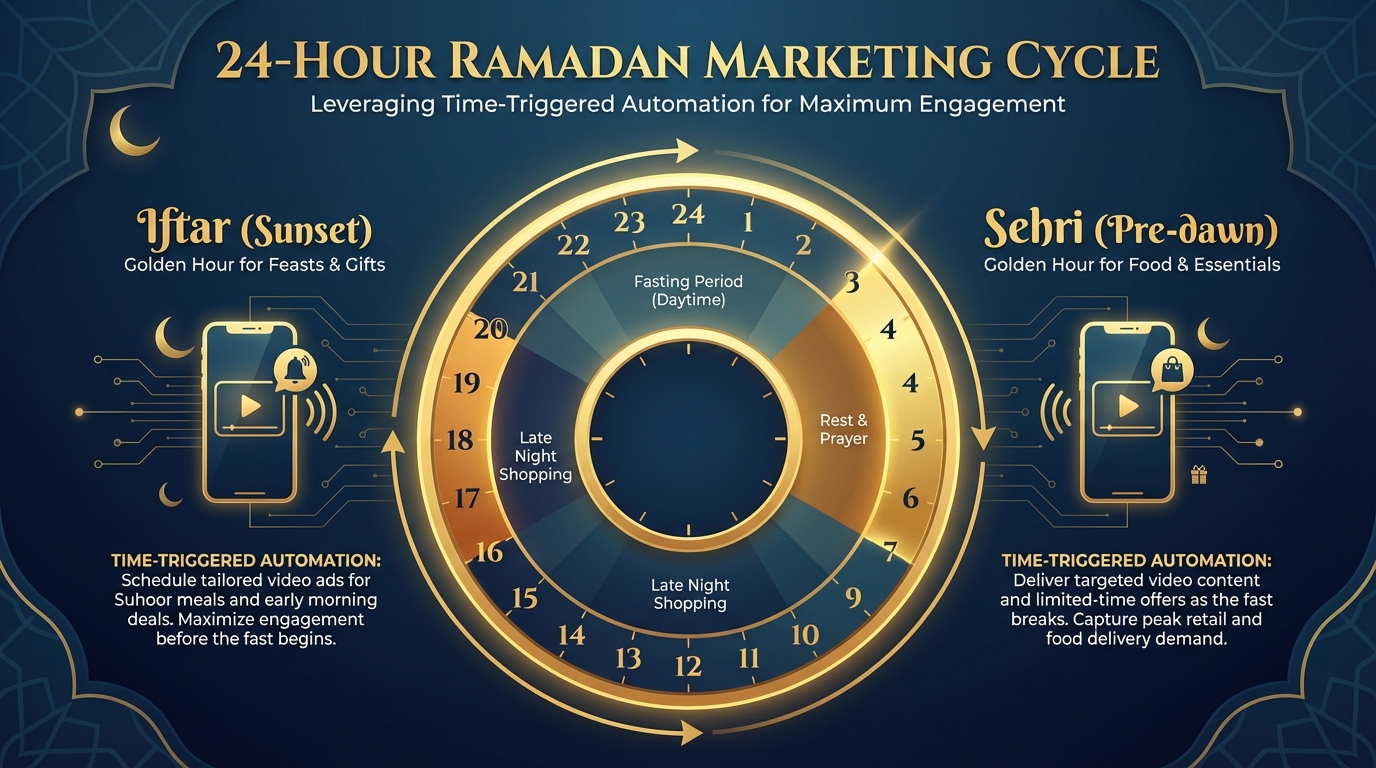
For the food and grocery sector, quick commerce iftar delivery is the ultimate battleground in 2026. With Indian consumers increasingly relying on apps for their daily needs, the window between Iftar (sunset) and Sehri (pre-dawn) represents a massive opportunity for time-bound meal solutions. Success here requires a "just-in-time" marketing strategy.
Sehri meal delivery campaigns should be triggered by local pre-dawn timings. Imagine a consumer in Hyderabad receiving a WhatsApp video at 3:00 AM, featuring a "Sehri Bundle" of dates, milk, and fresh parathas, with a clear message: "Order by 3:30 AM for delivery before 4:15 AM." This level of operational integration—linking marketing triggers to real-time delivery SLAs—is what defines enterprise leadership in 2026. The use of iftar offer video automation follows a similar logic, with sunset-triggered videos offering dynamic coupons that expire as the Iftar window closes.
Subscription models are also gaining traction. Festive meal subscription offers allow families to plan their entire month of Iftars and Sehris in advance. Personalized videos can be used to upsell these subscriptions by highlighting the convenience of "set-and-forget" deliveries and the cost savings over 30 days. These videos should dynamically update to show the user's remaining subscription days and offer "weekend specials" to keep engagement high throughout the month.
The YouGov India report highlights that Gen Z and Millennials are the primary drivers of this digital shift. To capture this audience, brands must ensure their Muslim consumer engagement videos are optimized for mobile viewing, featuring fast-paced editing, clear CTAs, and deep links that lead directly to the checkout page. The integration of "stock-aware" logic is also vital; if a specific Iftar bundle is sold out in a particular neighborhood, the video template should automatically swap it for an available alternative.
5. Sector Playbook: Fashion, Gifting, and Community Impact
The final two weeks of Ramadan see a massive surge in spending on apparel and gifts. Eid fashion collection marketing in 2026 is no longer about a single "hero" film; it is about thousands of personalized "lookbooks." By using Eid shopping personalization strategies, fashion retailers can show a customer exactly how a specific kurta or abaya would look, tailored to their size and color preferences, in a video that also confirms "Delivery before Eid" for their specific pincode.
TrueFan AI's 175+ language support and Personalised Celebrity Videos learn more allow brands to add an extra layer of prestige to these campaigns. A well-known celebrity can "personally" invite a customer to view the new Eid collection, using their name and speaking in their native tongue. This creates an emotional connection that static ads cannot replicate, driving both brand affinity and conversion.
In the gifting space, Ramadan gift recommendation videos are essential for helping consumers navigate the overwhelming number of choices. These videos can be segmented by "giftee persona"—such as "Gifts for Parents" or "Eid Treats for Kids"—and include dynamic price points and delivery ETAs. For NRI (Non-Resident Indian) customers looking to send gifts back home, these videos can provide much-needed clarity on customs, delivery timelines, and gift-wrapping options.
Finally, the "Charity and Community" pillar allows brands to demonstrate their values. Zakat donation campaign automation ensures that every purchase contributes to a larger cause. Enterprises can use video to showcase the impact of these donations, featuring footage from the NGOs they support and providing personalized "Thank You" videos to donors. Similarly, community iftar sponsorship videos can highlight a brand’s involvement in local masjid events, fostering a sense of partnership with the community.
6. Creative Architecture and Lifecycle Orchestration
To execute Ramadan marketing campaigns India 2026 at scale, enterprises need a modular creative system. A "plug-and-play" template architecture allows for the rapid generation of assets without the need for constant reshoots. Each video should consist of dynamic blocks: a culturally respectful intro, a personalized offer section, a social proof/community block, and a clear, time-sensitive CTA.
The orchestration of these assets must follow the Ramadan lifecycle:
- Pre-Ramadan (T-45 to T-15): Focus on preference capture and Ramadan loyalty programs enrollment. Use videos to ask users about their language preferences and favorite categories.
- Ramadan Weeks 1-2: Launch Sehri meal delivery campaigns and early Eid fashion edits. Establish the brand as a reliable partner for the daily fast.
- The Last 10 Days: Pivot to high-urgency gifting and "Last Chance" Eid shopping. This is the peak period for Ramadan gift recommendation videos and Zakat matching drives.
- Eid Week & Beyond: Focus on Eid greeting personalization and post-purchase support. Use videos to thank customers and offer "Post-Eid" relaxation bundles or exchange assistance.
Solutions like TrueFan AI demonstrate ROI through this phased approach by ensuring that the right message reaches the right user at the exact moment of intent. Whether it's a "Sehri reminder" at 3 AM or an "Eid Mubarak" greeting on the morning of the festival, the automation engine ensures no opportunity for connection is missed across Blinkit Zepto festival campaigns.
7. Measurement, Analytics, and FAQ
The success of Ramadan marketing campaigns India 2026 is measured through a combination of traditional commerce KPIs and community-centric metrics. Enterprises should track CTR and CVR, but also monitor "Delivery SLA Adherence" for Iftar orders and "Donation Completion Rates" for Zakat campaigns. A/B testing is crucial—testing different greeting tones (formal vs. friendly), vernacular vs. English scripts, and the placement of halal badges to see what drives the highest uplift.
Frequently Asked Questions
Q1: When exactly does Ramadan 2026 start in India?
Ramadan 2026 is projected to begin around February 18th, but the exact date depends on the moon sighting in different cities. Enterprises should use geo-targeted scheduling to account for these variances.
Q2: How can we ensure our ads are religiously sensitive?
Focus on religious sensitivity marketing by ensuring modest visuals, avoiding prayer-time interruptions, and using verified halal labels. Avoid humor that might be seen as trivializing the fast.
Q3: What is the benefit of using video for Eid greetings?
Eid greeting personalization via video has a significantly higher emotional impact than text. Using a platform like TrueFan AI allows you to scale these greetings so every customer feels personally recognized by the brand.
Q4: How do we automate Zakat donations through our e-commerce platform?
Use zakat donation campaign automation to link a percentage of every sale to a verified NGO. Ensure the math is transparent (e.g., "₹X per order") and provide instant digital receipts to the customer.
Q5: Which languages should we prioritize for Indian Ramadan campaigns?
While English and Hindi are standard, prioritizing Urdu, Bengali, Malayalam, and Tamil is essential for reaching regional heartlands where Ramadan observance is high.
Conclusion: The 2026 Enterprise Mandate
As we look toward Ramadan marketing campaigns India 2026, the mandate for enterprises is clear: blend high-tech automation with high-touch cultural empathy. By mastering quick commerce iftar delivery, scaling Eid fashion collection marketing, and committing to religious sensitivity marketing, brands can unlock unprecedented growth during this holy month. The future of festive retail belongs to those who can deliver a personalized, respectful, and seamless experience to every consumer, every day of the fast.
Frequently Asked Questions
When does Ramadan 2026 start in India?
Projections suggest around February 18, 2026, but the exact start varies by local moon sighting. Schedule campaigns with geo-targeted prayer time alignment.
How can brands ensure religious sensitivity in campaigns?
Use modest visuals, respect prayer windows, include verified halal badges, and adopt respectful greetings like "Ramadan Kareem" and "Eid Mubarak" in regional languages.
Why use personalized video for Eid greetings?
Personalized video drives higher emotional resonance and CTRs. With platforms such as TrueFan AI, brands can scale name, language, and locality-level personalization.
How do we implement Zakat donation automation?
Map a clear per-order contribution to verified NGOs, show real-time impact, and issue instant receipts. Reflect contributions in order confirmations and follow-up videos.
Which languages should be prioritized for national reach?
Alongside English and Hindi, prioritize Urdu, Bengali, Malayalam, and Tamil to authentically reach regional audiences with high Ramadan observance.



