Employee Wellness Appraisal Season 2026: Personalized HR Video, Wellness Gamification, and Recognition to Beat Review Stress
Estimated reading time: ~9 minutes
Key Takeaways
- Q1 2026 appraisals in India heighten anxiety; a retention-first strategy is critical to prevent attrition spikes.
- Personalized HR videos humanize reviews at scale, improving clarity, empathy, and employee trust.
- Targeted mindfulness and wellness gamification reduce cortisol spikes and build positive momentum.
- A 4-week blueprint wraps a safety net around employees with education, momentum, recognition, and recovery.
- Track holistic health engagement metrics—video views, EAP CTR, challenge participation—to demonstrate ROI.
The employee wellness appraisal season 2026 is set to be the most high-stakes performance window in a decade, particularly for Indian enterprises navigating a complex talent landscape. As Q1 2026 approaches, HR leaders are bracing for the traditional “March Madness” where ratings, calibrations, and compensation letters often trigger a surge in performance review anxiety. Without a proactive strategy for retention crisis prevention, the intersection of high-pressure evaluations and existing workplace fatigue could lead to a significant attrition spike.
Modern People Operations leaders are shifting away from static, one-size-fits-all review cycles. Instead, they are deploying performance review anxiety solutions that leverage HR video personalization and workplace mental health support to humanize the process. By integrating scalable technology with empathetic communication, organizations can protect morale and ensure that the appraisal season serves as a catalyst for growth rather than a driver of burnout.
The urgency for this shift is underscored by the unique timing of the Indian fiscal year. Appraisals typically peak in March, concentrating immense psychological pressure into a narrow window that often dictates an employee’s financial and professional trajectory for the following year. Addressing this requires a multi-dimensional approach that combines meditation mindfulness programs, wellness challenge gamification, and automated burnout prevention.
1. Navigating the Retention Crisis Prevention During Q1 2026 Appraisals
The employee wellness appraisal season 2026 arrives at a time when the psychological contract between employer and employee is under intense scrutiny. In India, the appraisal month of March is historically associated with peak anxiety, as employees await the outcome of year-long efforts. Research indicates that this concentrated window of evaluation often amplifies disengagement if not managed with extreme care and transparency.
Current projections for 2026 suggest that nearly 92% of Indian millennials report significant stress at work, a figure that typically climbs by 15–20% during the Q1 review cycle. This heightened state of “appraisal alarm” makes retention crisis prevention a top priority for HR Directors. When the review process feels opaque or purely transactional, high-performers begin to look elsewhere, leading to a preventable exodus in Q2.
To mitigate these risks, enterprises are adopting holistic health engagement strategies that begin long before the first review meeting. These strategies focus on psychological safety, ensuring that managers are equipped with the tools to deliver feedback that is constructive rather than crushing. By framing the appraisal as a collaborative wellness check-in rather than a top-down judgment, companies can maintain a stable and motivated workforce.
2. Deploying Appraisal Stress Management Videos for Scalable Support
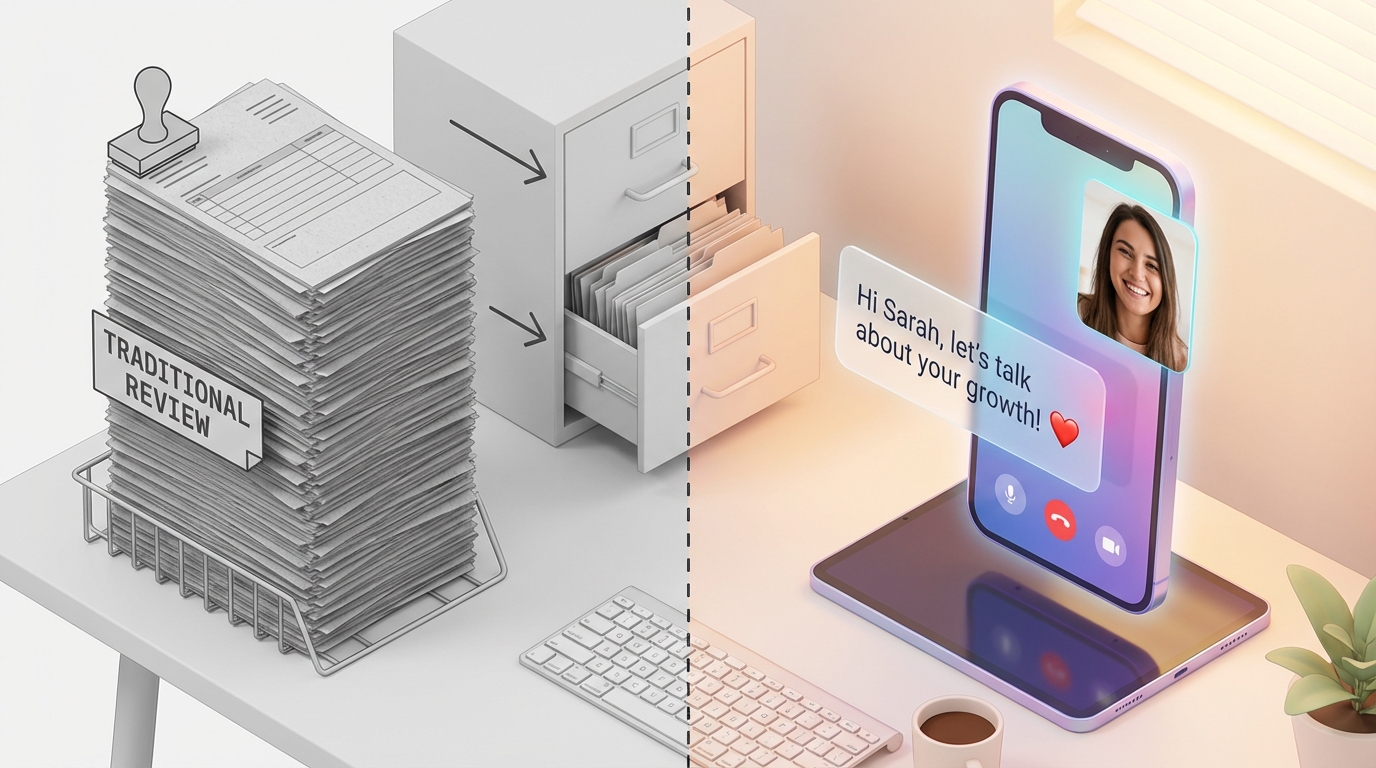
One of the most effective performance review anxiety solutions for the employee wellness appraisal season 2026 is the use of hyper-personalized video content. Appraisal stress management videos serve as a digital bridge between HR and the individual contributor, offering a level of empathy that text-based emails simply cannot replicate. These videos are designed to be short, mobile-first, and delivered at critical friction points in the review timeline.
Platforms like TrueFan AI enable enterprises to transform a single executive message into thousands of personalized videos that address employees by name and acknowledge their specific business unit’s challenges. This technology allows HR to scale a “human touch” across a workforce of 50,000+ employees simultaneously. For example, a pre-review video might guide an employee through a three-minute box-breathing exercise while setting clear expectations for the upcoming conversation.
3. Integrating Meditation Mindfulness Programs and Gamification
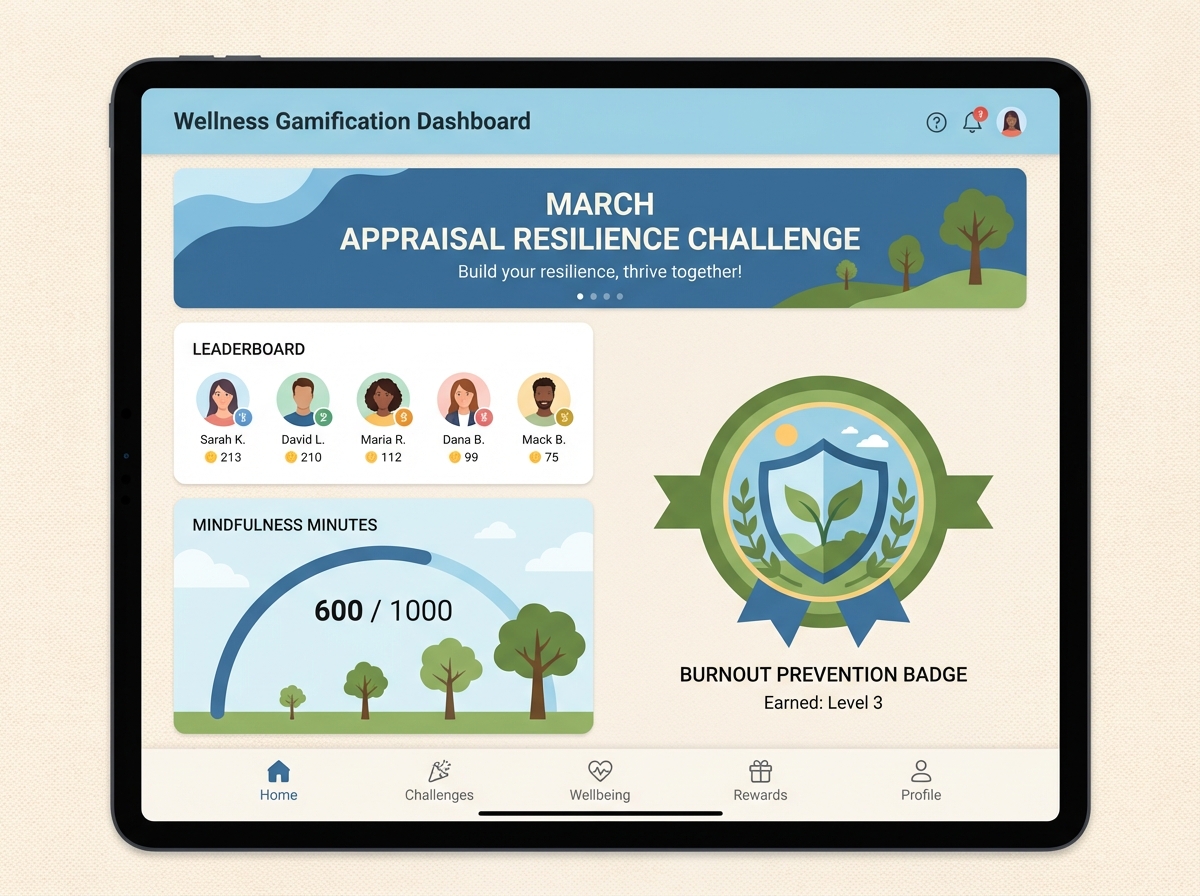
To sustain morale during the employee wellness Q1 2026 window, HR leaders are looking beyond traditional benefits toward active engagement. Meditation mindfulness programs that are specifically tailored for the review season provide employees with practical tools to manage cortisol spikes. These are not generic libraries but structured sequences of 2-to-7 minute sessions designed to be consumed during the workday.
These programs often include “compassion breaks” and “thought labeling” exercises that help employees detach their self-worth from their performance rating. By integrating these sessions directly into the review calendar—such as a mandatory 5-minute “calm window” before calibration meetings—enterprises signal that they value the employee’s mental state as much as their output. This level of care is a cornerstone of modern workplace mental health support.
Complementing these programs is wellness challenge gamification. During the high-stress weeks of March, opt-in challenges can create a sense of positive momentum. These challenges might reward daily recovery habits, such as taking 5,000 steps during a lunch break or sending a “gratitude note” to a peer after a difficult review session. Team-based leaderboards, with options for anonymity, foster a sense of community and shared resilience.
4. Leveraging HR Video Personalization for Global Enterprise Scale
Scaling empathy across a diverse, multi-regional workforce is the primary challenge of the employee wellness appraisal season 2026. This is where TrueFan AI's 175+ language support and Personalised Celebrity Videos provide a unique advantage. For a global enterprise with a large India workforce, the ability to deliver a message in Hindi, Tamil, Telugu, or Bengali with perfect lip-sync and voice fidelity ensures that the wellness message resonates culturally and emotionally.
5. The 4-Week Blueprint for a Stress-Free Appraisal Season
Executing a successful employee wellness appraisal season 2026 requires a phased rollout that builds a “safety net” around the workforce. This blueprint ensures that support is layered, starting with education and ending with recovery.
Week 1: Launch the Safety Net
The focus of the first week is preparation. HR should deploy personalized appraisal stress management videos that explain the “why” behind the 2026 review criteria. Simultaneously, the meditation mindfulness programs should be launched, with 2-minute “prep sessions” embedded directly into calendar invites for review meetings. This week also sees the release of employee assistance video content, ensuring every employee knows how to access EAP resources before the pressure peaks.
Week 2: Build Positive Momentum
As reviews begin in earnest, the wellness challenge gamification kicks off. This keeps the focus on healthy habits rather than just ratings. Managers are provided with work-life balance coaching playbooks, including “meeting diet” templates to ensure that the intense review schedule doesn't lead to 12-hour workdays. These micro-coaching modules help managers handle emotional conversations with empathy and clarity.
Week 3: Recognition and Inclusion
During the peak of the calibration phase, morale boosting campaigns are essential. This involves peer-to-peer shout-outs and leadership videos that acknowledge the effort put in throughout the year, regardless of the final rating. Employee retention incentives are announced for those who have consistently engaged with the wellness programs, reinforcing that the company values holistic health engagement as a key performance indicator.
Week 4: Prevent Burnout at the Peak
In the final week of March, burnout prevention automation becomes the priority. HR systems can trigger “cool-off” buffers—mandatory 15-minute breaks after any meeting tagged as a “Performance Review.” Success stories from the wellness challenges are shared to maintain a positive atmosphere. This week is about closing the loop, ensuring that every employee has a post-review action plan and feels supported as they transition into the new fiscal year.
6. Measuring Holistic Health Engagement and Retention ROI
To justify the investment in performance review anxiety solutions, HR leaders must track both leading and lagging indicators throughout the employee wellness appraisal season 2026. Leading indicators provide real-time data on how the workforce is coping. These include video view-through rates, the click-through rate (CTR) to EAP booking pages, and the participation rate in wellness challenges. High engagement in these areas suggests that the “safety net” is working.
Frequently Asked Questions
How can we reduce performance review anxiety for remote or hybrid teams in 2026?
Remote teams often feel more isolated during the employee wellness appraisal season 2026. The key is using HR video personalization to deliver face-to-face messages digitally. When an employee receives a personalized video from their leader, it bridges the physical gap and provides the non-verbal cues (tone, expression) that are essential for reducing anxiety in a remote setting.
What are the most effective employee retention incentives during the review cycle?
Beyond monetary bonuses, the most effective incentives in 2026 are those that offer “time and wellness.” Extra PTO days, wellness stipends for home-office ergonomics, and access to premium meditation mindfulness programs are highly valued. Linking these rewards to participation in wellness challenges ensures that the incentives drive healthy behaviors.
How does burnout prevention automation work in a large enterprise?
Burnout prevention automation uses HRIS and calendar data to identify high-risk periods. For example, if a manager has six back-to-back performance reviews scheduled, the system can automatically insert “breathing room” blocks or send a micro-video with a 60-second stress-relief exercise. This proactive intervention prevents the cumulative fatigue that leads to burnout.
Can TrueFan AI help with multilingual workforces in India?
Yes, TrueFan AI's 175+ language support and Personalised Celebrity Videos are designed specifically for diverse workforces. You can create a wellness message in English and automatically generate versions in Hindi, Marathi, Kannada, and other regional languages, ensuring that every employee receives support in the language they are most comfortable with.
What is the first step to implementing a holistic health engagement plan for Q1 2026?
The first step is a “Wellness Audit” of your current appraisal process. Identify the friction points where stress is highest—usually the week before reviews and the week after comp letters are issued. Once these are identified, you can layer in appraisal stress management videos and mindfulness programs at those specific moments to provide maximum relief.



