Q1 2026 Appraisal Retention Strategies: A Blueprint for Indian Enterprises
Estimated reading time: 11 min
Key Takeaways
- Indian enterprises face tight compensation budgets and high mobility; personalized, transparent appraisals are vital to retention.
- Adopt three pillars—appraisal personalization, career progression, and wellness & transparency—to reduce flight risk.
- Follow a 4-week video-led blueprint across pre-review, review week, and post-review stabilization for maximum impact.
- Scale with enterprise-grade integrations and compliance; measure ROI using attrition deltas, mobility, and engagement signals.
- Activate a data-driven retention crisis protocol to address sudden sentiment dips immediately after ratings.
Q1 2026 appraisal retention strategies are no longer a luxury for Indian enterprises; they are a fundamental necessity in a landscape defined by tightening compensation budgets and rising talent mobility. As organizations navigate the complexities of the 2026 fiscal year, the implementation of Q1 2026 appraisal retention strategies will determine which firms maintain their competitive edge and which suffer from the traditional “appraisal season” exodus.
The stakes for Indian HR leaders have never been higher. According to recent industry projections, salary hikes in India are expected to dip to an average of 8.9% in 2026, while attrition rates are forecasted to remain stubbornly high at approximately 13.6%. This disconnect creates a volatile environment where employees, feeling undervalued by modest financial increments, are more likely to seek external opportunities. Platforms like TrueFan AI enable HR leaders to bridge this communication gap by delivering hyper-personalized video messages that resonate on an individual level, ensuring that recognition extends far beyond a mere percentage increase on a payslip.
1. The High Stakes of Q1 2026 Appraisal Retention Strategies
The Q1 review season in India is a period of high anxiety and concentrated decision-making. It is the time when ratings are finalized, promotions are announced, and bonuses are distributed. However, it is also the period where perceived unfairness and opaque communication can trigger a “retention during review crisis.” When the appraisal process remains a “black box,” employees often feel that their contributions have been overlooked, leading to a sharp spike in flight intent.
In 2026, the challenge is compounded by the rapid adoption of AI and shifting skill requirements. Indian firms are being tested on their ability to integrate AI into their workflows while simultaneously managing the human element of performance management. Research indicates that 2026 will be a pivotal year for HR leaders to move away from traditional, static reviews toward more dynamic, transparent, and empathetic engagement models. The goal is to mitigate appraisal stress wellness support by providing clear, consistent, and personalized communication throughout the cycle.
The annual appraisal cycle often creates unnecessary stress and mistrust if it remains disconnected from the employee's daily reality. To combat this, forward-thinking organizations are adopting video-led engagement signals. These trends emphasize the use of predictive analytics and personalized video content to preempt disengagement before it leads to a resignation. By acknowledging the emotional weight of the appraisal season, CHROs can transform a period of high attrition into an opportunity for reinforced loyalty.
Source: Salary hikes in India to dip to 8.9% in 2026 - People Matters
Source: AI skills shifts and HR priorities in 2026 - People Matters
Source: Performance Management as HR's Longest Running Black Box - HRKatha
Source: Q1 FY26 Performance Review Engagement Trends - TrueFan AI
2. The Three Pillars of Performance Appraisal Personalization
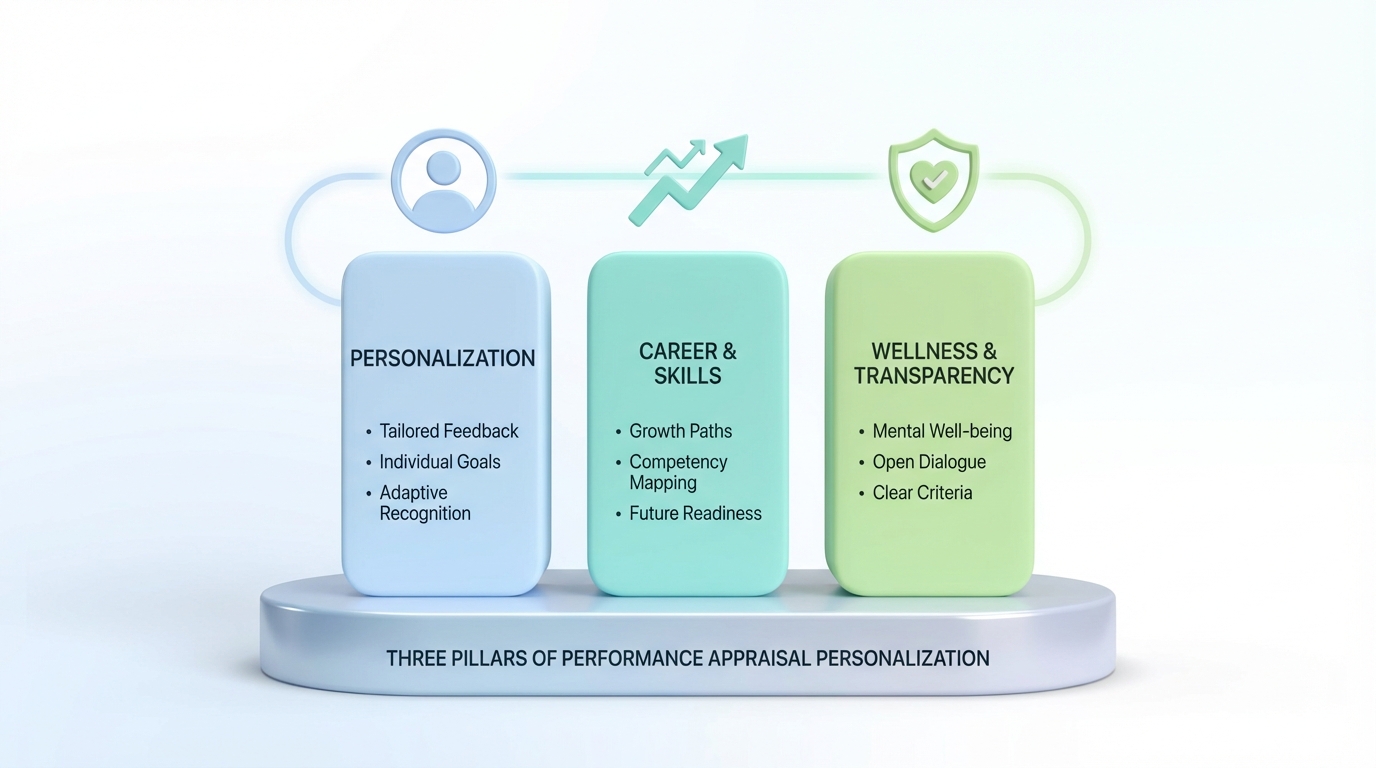
To execute effective Q1 2026 appraisal retention strategies, HR leaders must anchor their efforts in three distinct pillars. These pillars move the needle from generic corporate communication to individualized employee experiences.
Pillar 1: Performance Appraisal Personalization
Performance appraisal personalization is defined as the programmatic tailoring of review communications, recognition, and feedback assets to each employee’s specific role, goals, and rating context. This involves using HRIS and LMS data to deliver personalized videos and messages at scale. Instead of a standard “thank you” email, an employee receives a video that mentions their specific project wins, their manager's feedback, and their unique contribution to the company's 2026 objectives.
Pillar 2: Career Progression and Skills
This pillar focuses on the future. Career progression video campaigns are sequenced video touchpoints that visualize an employee's individualized mobility pathways and role benchmarks. Complementing this is skill development pathway content—personalized learning journeys that map an individual's current skill gaps to curated micro-learning modules, certifications, and internal mentorship opportunities. By showing an employee exactly how they can grow within the firm, you reduce the urge for them to look elsewhere.
Pillar 3: Wellness and Transparency
The final pillar addresses the psychological aspects of the review season. Employee review anxiety management videos are short, empathetic clips from leadership that guide employees on what to expect during their reviews, offering coping strategies and wellness resources. This is supported by appraisal transparency communication, which provides clear explainers on rating rubrics and appeal processes. Furthermore, performance bonus explanation videos offer personalized breakdowns of payout math, ensuring that employees understand the “why” behind their compensation, thereby reducing friction and perceived bias.
3. A 4-Week Video-Led Blueprint for Retention During Review Crisis
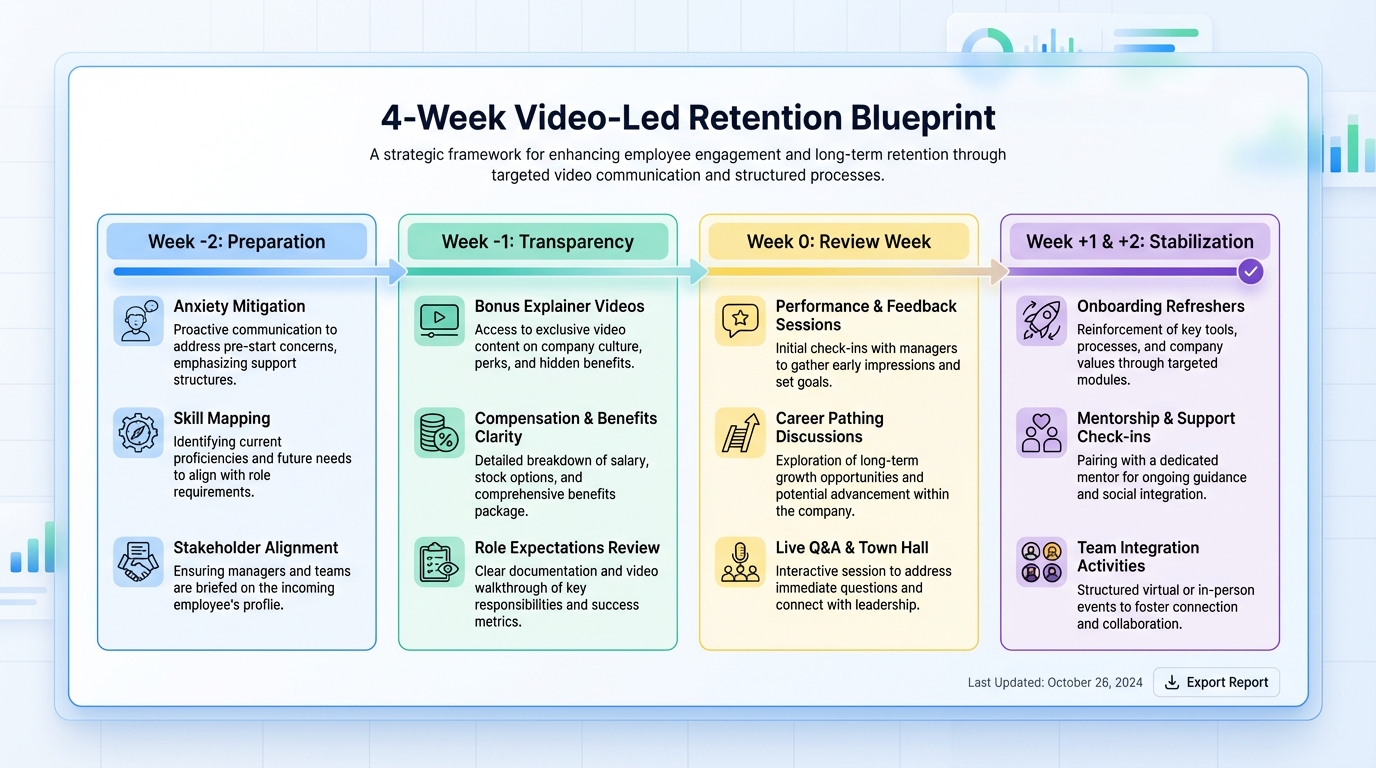
Implementing Q1 2026 appraisal retention strategies requires a disciplined, chronological approach. This 4-week blueprint outlines the critical assets and actions needed to stabilize the workforce during the appraisal peak.
Week -2: Pre-Review Preparation
Two weeks before the formal review meetings begin, the focus is on anxiety mitigation. Organizations should launch employee review anxiety management videos from the CHRO. These videos should address the timeline of the reviews and point employees toward financial wellbeing resources, as financial stress is cited as a rising risk for Indian employees in 2026. Simultaneously, HR must deploy manager feedback preparation content to line managers, ensuring they are equipped to deliver bias-aware, constructive feedback. To prime positive sentiment, workforce appreciation personalization teasers—micro-recognition clips acknowledging year-long wins—should be triggered.
Week -1: Transparency and Skill Mapping
One week prior to reviews, the emphasis shifts to clarity. Roll out appraisal transparency communication videos that explain the rating scale, calibration process, and data privacy measures. These should be available in multiple regional languages, such as Hindi, Tamil, and Bengali, to ensure inclusivity. This is also the time to launch skill development pathway content previews, showing employees that the company has a vested interest in their long-term growth regardless of their upcoming rating.
Week 0: The Review Meeting Week
During the week of the reviews, timing is everything. Send day-before nudges to both managers and employees, highlighting checklists from the manager feedback preparation content. As bonus discussions occur, trigger performance bonus explanation videos that provide a personalized breakdown of payout formulas, bands, and timelines. To maintain momentum, use employee value recognition automation to celebrate specific milestones achieved during the year, reinforcing the employee's value to the organization in real-time.
Week +1 & +2: Post-Review Stabilization
The week after reviews is the highest risk period for resignations. Publish career progression video campaigns tailored to the rating outcomes. For high performers, show promotion readiness steps; for others, map out clear upskilling plans. This is also when promotion announcement videos should be distributed to celebrate success. If sentiment dips in specific departments, activate the retention during review crisis triage protocol, using rapid-response personalized videos to address concerns. TrueFan AI's 175+ language support and Personalised Celebrity Videos provide the necessary cultural nuance to ensure that every employee, regardless of region, feels valued during the appraisal cycle.
Source: Financial Wellbeing in the 2026 Leadership Radar - People Matters
Source: Performance Management Transparency - HRKatha
4. Solving the Black Box with Appraisal Transparency Communication
One of the primary drivers of attrition during the Q1 cycle is the “black box” nature of performance management. When employees do not understand how their ratings were determined or how their bonuses were calculated, trust erodes. Appraisal transparency communication is the antidote to this systemic issue.
By utilizing personalized video explainers, HR can demystify the calibration process. These videos should explicitly state the criteria used for ratings, the data points considered, and the steps an employee can take if they feel their assessment is inaccurate. This level of transparency is particularly crucial in 2026, as Indian employees increasingly demand data privacy and ethical handling of their performance metrics.
Furthermore, appraisal stress wellness support must be integrated into the transparency framework. The review process is inherently stressful; providing access to Employee Assistance Programs (EAP) and meditation micro-sessions directly through the communication interface can significantly lower anxiety levels. Solutions like TrueFan AI demonstrate ROI through increased engagement metrics and a measurable reduction in post-appraisal resignation rates by making these resources accessible and personalized.
Effective transparency also extends to compensation. Performance bonus explanation videos should break down complex variables such as multipliers, tax treatments, and payout timelines. When an employee receives a personalized video explaining that their bonus was calculated based on a specific achievement or business unit performance, the “perceived unfairness” factor is drastically reduced.
5. Enterprise Execution: Scaling Recognition and Career Progression
For large-scale Indian enterprises, the challenge of Q1 2026 appraisal retention strategies lies in execution. Personalizing a review experience for 10,000+ employees requires robust technology and seamless integration.
Personalization at Scale
The execution model must support hyper-personalization, including accurate voice retention and dynamic visuals. Whether the video is led by the CEO, the CHRO, or even a celebrity for high-impact recognition, the content must feel authentic. This is where employee value recognition automation becomes vital, allowing the system to trigger 1:1 thank-you clips the moment a milestone is logged in the HRIS.
Technical Integration and Governance
To achieve this, the video platform must integrate directly with existing HRIS, ATS, and LMS systems. This allows for the automatic pulling of employee data—such as project tags, tenure, and mobility preferences—into the video templates. Governance is equally important; enterprises must ensure that all data handling complies with ISO 27001 and SOC 2 standards. A consent-first model, combined with built-in moderation to prevent unapproved content, ensures that the workforce appreciation personalization remains brand-safe and legally compliant. Learn more about compliance in Personalised Video & Celebrity Endorsement for SaaS (Compliance & Security) and the TrueFan AI Enterprise Documentation.
Career Progression Video Campaigns
Post-appraisal, the focus must shift to the future. Career progression video campaigns should be segmented by performance tiers. High performers should receive videos outlining their track to leadership, while core performers receive role-benchmark clarity and a 90-day upskilling plan. By automating these journeys, HR ensures that every employee receives a growth commitment, which is a key driver of retention in the 2026 AI-driven job market.
Source: TrueFan AI Enterprise Documentation - Compliance and Security
Source: AI and Skill Shifts in 2026 - People Matters
6. Measuring ROI and the Crisis Playbook
The success of Q1 2026 appraisal retention strategies must be measured through both quantitative and qualitative KPIs. HR leaders need to move beyond simple completion rates to understand the true impact on talent stability.
Primary KPIs for Retention
- Q1 Attrition Delta: Compare the 2026 attrition rate during the review season against the historical baseline.
- Internal Mobility Rate: Track how many employees engaged with skill development pathway content and subsequently applied for internal roles.
- Offer Acceptance for Retention Incentives: Measure the take-up rate of employee retention incentives Q1, such as learning wallets or spot bonuses.
- Regretted Attrition: Specifically monitor the exit rates of high-potential employees who received personalized engagement.
The “Retention During Review Crisis” Protocol
Despite the best preparations, sentiment can sometimes dip unexpectedly. A crisis playbook is essential. This involves predictive flagging via pulse surveys and video engagement metrics. If a specific department shows a spike in negative sentiment, HR should activate a rapid-response protocol. This includes “townhall in your inbox” personalized videos from leadership addressing the specific concerns of that group, followed by a 24-48 hour SLA for HR Business Partners to conduct one-on-one listening sessions.
By treating the appraisal season as a dynamic event rather than a static deadline, organizations can use real-time data to pivot their retention strategies. This proactive approach ensures that the “review crisis” is managed before it manifests as a wave of resignations.
7. FAQ and Implementation Strategy
Frequently Asked Questions
1. Will using videos for appraisals trivialize serious performance topics?
No. When executed correctly, personalized videos enhance the seriousness of the topic by showing that leadership has taken the time to address the individual personally. The tone should always be respectful and transparent, and transcript PDFs should be provided for formal documentation.
2. How is data privacy maintained during performance appraisal personalization?
Data privacy is a top priority. Platforms must utilize a consent-first model and adhere to international standards such as ISO 27001 and SOC 2. Data minimization is practiced, ensuring only the necessary fields (like name and role) are used to generate the personalized content.
3. How does TrueFan AI ensure data security during the appraisal process?
TrueFan AI employs enterprise-grade security protocols, including encryption at rest and in transit, multi-factor authentication, and rigorous moderation filters. This ensures that sensitive performance data is handled with the highest level of integrity and confidentiality.
4. How can these strategies help retention if our salary hikes are lower than market average?
Retention is not solely about the percentage increase. Clarity, recognition, and a defined career path are often more significant drivers of loyalty. By using appraisal transparency communication and showing clear growth opportunities, you reduce the “perceived unfairness” that often leads to attrition during tight hike cycles.
5. What should we do if employee sentiment drops suddenly after ratings are released?
You should immediately activate your “retention during review crisis” protocol. This involves using predictive analytics to identify the affected cohorts and deploying rapid-response personalized communications to address their specific concerns and offer support.
Implementation and Next Steps
To begin implementing these Q1 2026 appraisal retention strategies, organizations should consider a 2-week pilot program.
- Week 1: Focus on data integration between your HRIS and the video platform. Build scripts for employee review anxiety management videos and appraisal transparency communication in English and relevant regional languages.
- Week 2: Conduct a dry run with a single department (200-500 employees). Measure the engagement and sentiment lift. Use these insights to iterate on your scripts before a full-scale rollout.
By providing managers with manager feedback preparation content and employees with review season morale boosters, you create a holistic ecosystem that supports both the giver and receiver of feedback. The goal is to transform the 2026 appraisal season from a period of risk into a cornerstone of your long-term retention strategy.
Ready to secure your workforce for Q1 2026? Access our comprehensive asset pack, including templates for career progression video campaigns and guidelines for employee retention incentives Q1, to fast-track your review readiness today.
Frequently Asked Questions
What is the best time to launch transparency communications?
Begin one week before review meetings. Explain rating scales, calibration, and data privacy in multiple regional languages to maximize clarity and inclusivity.
How do we measure the impact of personalized videos?
Track completion rates, repeat views, sentiment lift, and downstream actions such as internal role applications and reductions in Q1 attrition versus baseline.
What data is safest to use for personalization?
Use minimal, consented fields from HRIS/LMS such as name, role, tenure, projects, and skills. Avoid sensitive attributes unless strictly necessary and compliant.
How can SMEs apply these strategies on a budget?
Start with a 2-week pilot, template a few key video flows (transparency, recognition, career path), and scale based on engagement and attrition delta improvements.
How do we handle negative sentiment peaks?
Activate a crisis protocol: pulse surveys, targeted leadership videos, manager 1:1s within 24–48 hours, and clear follow-up on actions taken.



