Quick Commerce Festival Marketing 2026: Hyperlocal Personalization Playbooks for Holi on Blinkit, Zepto, and Instamart
Estimated reading time: ~13 minutes
Key Takeaways
- Win Holi 2026 by shifting from generic campaigns to hyperlocal, pin-code level personalization aligned to dark store radii and dayparts.
- Activate retail media partnerships on Blinkit, Zepto, and Instamart with exclusives, geo-dynamic creatives, and offsite-to-onsite paths.
- Use dark store marketing automation to throttle promos, swap creatives on low stock, and preserve SLA reliability during peaks.
- Deploy real-time inventory videos and SLA-aware overlays to boost instant shopping conversion while maintaining trust.
- Measure success with geo-incrementality testing, comparing activated clusters against controls to attribute true lift.
Quick commerce festival marketing 2026 is the strategic discipline of orchestrating hyperlocal, same-hour festival delivery promotions through a sophisticated blend of personalized creative, retail media partnerships, and dark store marketing automation. By leveraging real-time inventory data and neighborhood-specific insights, enterprise brands can drive unprecedented instant shopping conversion during Holi and other major Indian cultural milestones. In an era where consumer expectations have shifted from mere speed to absolute reliability, mastering the nuances of the 2026 quick commerce landscape is no longer optional for FMCG and D2C leaders.
The Evolution of Instant Gratification Marketing in 2026
The quick commerce landscape in 2026 has matured into a complex ecosystem where ultra-fast fulfillment is powered by a dense network of dark stores and micro-fulfillment centers. These hubs typically serve a 2–4 km radius, enabling consistent same-hour festival delivery even during the chaotic peak demand of Holi. While the “10-minute” promise defined the early years, the 2026 market prioritizes transparency and trust, with platforms now utilizing dynamic SLA windows—often ranging from 25 to 45 minutes—to manage consumer expectations during high-traffic periods.
Retail Media Networks (RMNs) have evolved into sophisticated “walled gardens,” offering brands a suite of tools including homepage tiles, search boosts, and dedicated brand stores. As the market enters its most competitive phase, the expansion into non-grocery categories like high-end electronics, premium beauty, and fashion has created massive opportunities for Average Order Value (AOV) growth through intelligent bundling. Brands that fail to utilize structured platform partnerships and exclusive festival kits risk being sidelined by the aggressive rise of platform-led private labels and the deepening penetration of quick commerce into Tier II and Tier III cities.
The scale of the opportunity is underscored by historical performance; Holi 2024 saw record-breaking order surges that tested the limits of the then-nascent infrastructure. By 2026, the integration of automation and multi-city footprints has made these platforms the primary destination for festival essentials. To win, marketers must move beyond generic nationwide campaigns and embrace a strategy rooted in hyperlocal granularity and location-based urgency triggers.
Sources:
Holi Quick Commerce Campaigns: From Strategy to Hyperlocal Activation
Effective Holi quick commerce campaigns in 2026 are defined as hyperlocal, timeboxed promotions meticulously mapped to dark store radii and specific festival dayparts. This requires a shift from broad-stroke marketing to neighborhood-specific offers that reflect local tastes and consumption patterns. For instance, a campaign in Andheri West might prioritize premium eco-friendly gulal and gourmet thandai kits, while a dark store in JP Nagar focuses on high-volume pichkaris and family-sized sweet boxes.
To accelerate the path to checkout, brands must deploy location-based urgency triggers that calculate real-time inventory and delivery ETAs based on the user’s precise pin code. Messaging such as “Arrives in 22 mins” or “Only 8 thandai kits left at the Indiranagar store” creates a genuine sense of scarcity that drives instant shopping conversion. These triggers must be dynamic, adapting instantly as dark store capacity fluctuates or as rider availability changes during the peak hours of the festival.
Hyperlocal flash sales India represent another critical pillar, utilizing 30–90 minute micro-windows tied to specific festival activities. A “Pre-Holi Color Hour” between 7 PM and 9 PM on the eve of the festival can capture last-minute planners, while a “Post-Holi Clean Up” window from 3 PM to 5 PM on the day of the festival can drive sales of stain removers, shampoos, and skincare. These sales should be limited to dark stores with sufficient rider capacity to ensure the brand promise of same-hour festival delivery is never compromised.
Sources:
10-Minute Delivery Personalization and Creative Primitives
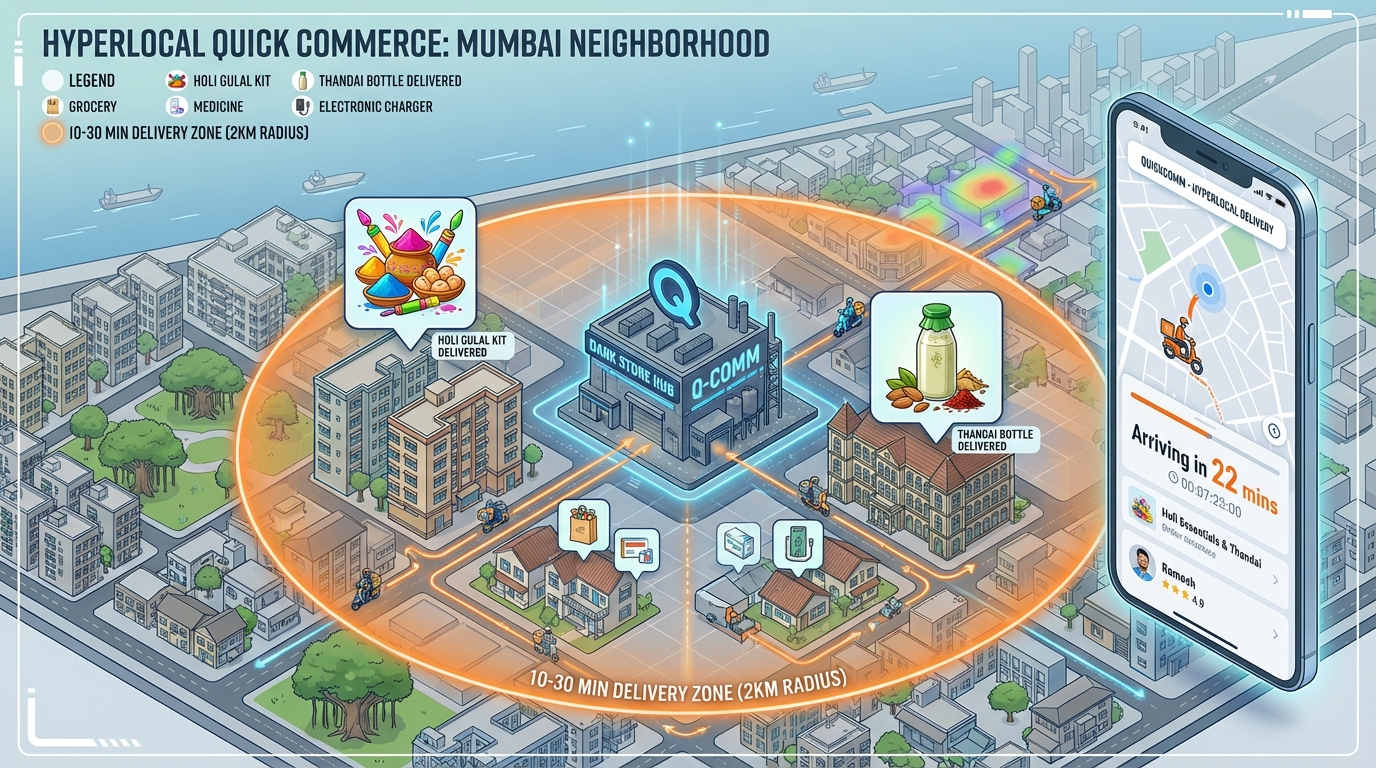
In the 2026 landscape, 10-minute delivery personalization involves tailoring every creative asset and offer module based on ultra-fast SLA signals and micro-fulfillment throughput. This rapid fulfillment personalization adapts in real-time to variables such as the user’s historical AOV, propensity to bundle, and even local weather conditions. If a heatwave is detected in a specific Delhi cluster, the personalization engine should automatically prioritize chilled beverages and lassi over dry snacks.
Platforms like TrueFan AI enable brands to transform these complex data signals into high-impact visual content through automated creative workflows. By ingesting live inventory and ETA feeds, brands can generate real-time inventory videos—short, auto-updating clips that feature dynamic overlays for stock levels, pricing, and countdown timers. These videos can be localized into the user’s preferred language, ensuring that a customer in Chennai sees a different cultural nuance and language than a customer in Lucknow, even for the same product SKU.
The creative system must also account for the “walled garden” nature of retail media in 2026. This means developing geo-dynamic banners and tiles that can be swapped instantly based on dark store performance. If a specific bundle is selling at a high velocity in one neighborhood, the budget can be automatically reallocated to boost that creative in that specific radius, while suppressing it in areas where stock is low. This level of granularity ensures that marketing spend is always tied to actual product availability.
Sources:
Blinkit Zepto Partnerships and the Retail Media Playbook
Securing dominant visibility during Holi requires deeply integrated Blinkit Zepto partnerships that go beyond simple ad placements. Brands should negotiate for platform-exclusive deals, such as co-branded “Holi-only” SKUs or curated festival kits that are only available on a specific platform. These exclusives not only improve click-through rates (CTR) but also help brands stand out in an increasingly crowded marketplace where private labels are vying for the same “above the fold” digital real estate.
The 2026 retail media playbook also emphasizes the importance of offsite-to-onsite paid media paths. By using social media and OOH advertising to drive traffic directly to deep-linked platform PDPs (Product Detail Pages), brands can capture high-intent shoppers who are looking for instant gratification marketing. For example, a QR code on a metro station billboard can lead a user directly to a pre-filled cart of Holi essentials on Swiggy Instamart, bypassing the search process entirely and maximizing the chance of conversion.
Measurement remains a challenge in these walled gardens, necessitating a collaborative approach to data sharing. Brands must work with platform partner teams to establish clean reporting cadences and experimental designs, such as geo-incrementality tests. By comparing sales lift in dark store clusters where specific retail media plays were active against control clusters, marketers can accurately calculate the ROI of their festival investments and refine their strategies for future activations.
Sources:
Dark Store Marketing Automation and Operational Guardrails
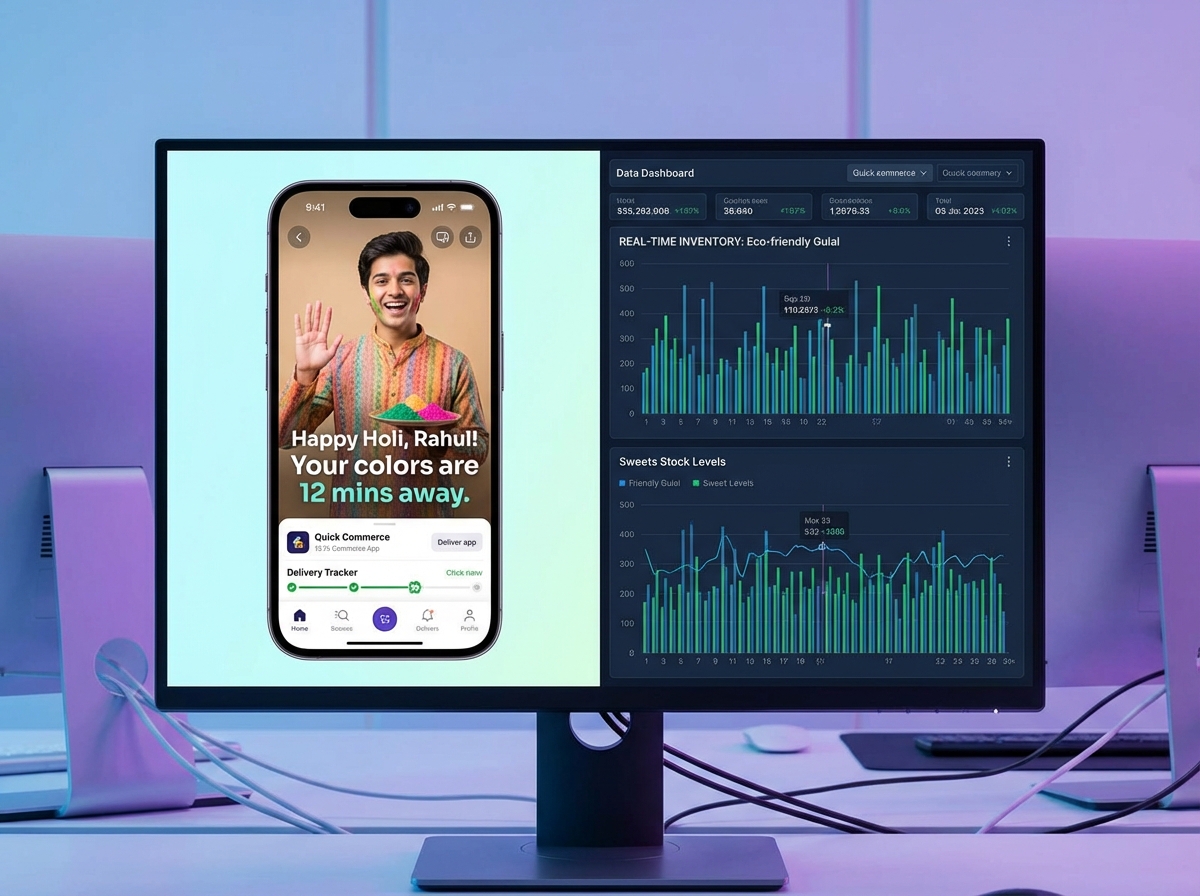
Dark store marketing automation is the engine that allows quick commerce festival marketing 2026 to scale without human intervention. This involves setting up rule-based orchestration that automatically pauses or triggers creative variants based on live operational data. For instance, if the substitution risk for a specific SKU exceeds a certain threshold, the automation system should instantly switch the creative to a “nearby alternative” or a different bundle to prevent customer dissatisfaction and high return rates.
Capacity-aware promo throttling is another essential guardrail. During the peak of Holi, if a dark store’s rider capacity utilization exceeds 85%, the system should automatically suppress “10-minute” framing and switch to “same-hour festival delivery” messaging. This protects the brand’s reputation for reliability and prevents the logistics network from being overwhelmed. Furthermore, if a velocity spike is detected on specific bundles, the system can automatically widen the delivery radius—provided the SLA remains within acceptable limits—to capture more demand.
Operational alignment is the final piece of the puzzle. Brands must work closely with platform ops teams to ensure replenishment buffers are in place for top-selling Holi SKUs like eco-friendly colors and festive sweets. Staggering flash sales by city clusters can also help manage the load on the fulfillment network, ensuring that every order placed during a hyperlocal flash sale India is delivered within the promised window.
Sources:
Execution Blueprint: The Holi 2026 Countdown (T-21 to T+14)
A successful Holi activation requires a rigorous execution timeline that begins weeks before the first color is thrown. Between T-21 and T-14, the focus is on SKU curation and creative system setup. Brands must define their platform-exclusive deals and build out the templates for real-time inventory videos. This phase also involves locking in partnership terms with Blinkit, Zepto, and Instamart, ensuring that the necessary digital real estate is reserved for the peak festival period.
From T-13 to T-7, the technical integration takes center stage. Marketing teams must connect their personalization engines to live inventory, SLA, and weather feeds. This is the time for A/B testing rapid fulfillment personalization variants on a small subset of dark stores to determine which messaging—shorter ETA or higher discount—resonates most with the local audience. By T-6, the “warm-up” phase begins, with teaser hyperlocal flash sales India and creator-led content seeding awareness across social channels.
The peak festival period (T-2 to T+1) requires real-time monitoring and rapid iteration. Holi quick commerce campaigns should be rotated based on the time of day, with location-based urgency triggers tightened to reflect the surging demand. Finally, the post-festival phase (T+2 to T+14) is dedicated to retention and analysis. Win-back offers for non-converters and replenishment flows for skincare and hair care products can extend the campaign’s impact, while a deep dive into geo-incrementality readouts provides the insights needed for the next major festival cycle.
TrueFan AI’s 175+ language support and Personalised Celebrity Videos can be integrated into this blueprint to provide a layer of emotional resonance that static ads cannot match. By featuring a celebrity who greets the user by name and mentions their specific neighborhood, brands can create a “wow” factor that significantly boosts watch-through rates and conversion. Solutions like TrueFan AI demonstrate ROI through these high-engagement formats, which are particularly effective during the high-clutter environment of a national festival.
Sources:
Conclusion: Mastering the 2026 Festival Surge
Success in quick commerce festival marketing 2026 requires a fundamental shift from “fast delivery” to “intelligent fulfillment.” By combining strategic Blinkit Zepto partnerships with the technical rigor of dark store marketing automation, brands can navigate the complexities of India’s retail media walled gardens. The integration of real-time inventory videos and neighborhood-specific offers ensures that every marketing dollar is spent on a relevant, available, and highly personalized consumer experience.
As we look toward Holi 2026, the winners will be those who prioritize trust through transparent same-hour festival delivery and leverage data to create genuine moments of instant gratification. The tools and playbooks are now available to transform quick commerce from a convenience channel into a primary driver of brand growth and festival dominance.
Sources:
Recommended Internal Links
Frequently Asked Questions
How do we balance 10-minute delivery personalization with regulatory compliance?
In 2026, the industry has moved toward using SLA “buckets” for personalization. While the internal engine might optimize for a 10-minute window, public-facing messaging often uses the “same-hour festival delivery” framing. This sets a realistic expectation for the consumer while still highlighting the speed of the service. Platforms like TrueFan AI help automate this by adjusting video overlays to match the current SLA bucket of a specific dark store.
What happens to our active campaigns if a dark store runs out of stock?
This is where dark store marketing automation is critical. Your system should be integrated with the platform’s live inventory API. If stock for a featured SKU hits a pre-defined “low” level, the automation should instantly pause the creative or switch it to a “Back in Stock Soon” teaser with a notification toggle, ensuring you don’t waste ad spend on unavailable products.
How can we measure the true impact of our quick commerce festival marketing 2026?
The most effective method is geo-incrementality testing. By selecting two similar clusters of dark stores and only running your advanced personalization and retail media plays in one, you can measure the “lift” in sales, AOV, and new customer acquisition. You should also track on-platform metrics like search rank lift and brand store dwell time to understand your overall share-of-voice.
Are platform-exclusive deals worth the potential loss in reach?
Yes, especially during high-competition periods like Holi. Platforms often reward brands that offer exclusives with better organic search placement and lower ad rates. Furthermore, an exclusive bundle creates a unique value proposition that can drive higher instant shopping conversion than a generic product available on every app.
How do we ensure cultural sensitivity in our hyperlocal creative?
Every creative asset should undergo a safety review that considers local cultural nuances, music, and attire. Using AI-driven creative tools allows you to create hundreds of localized variants that respect these differences. It is also wise to review OOH learnings from previous years to avoid controversial themes and ensure all disclaimers regarding delivery windows are clearly visible.