
Monsoon Preparedness Marketing 2026: AI Weather Prediction, Regional Targeting, and Personalization That Drive Pre-Monsoon Sales
Estimated reading time: ~13 minutes
Key Takeaways
- Adopt AI weather prediction to trigger hyper-relevant offers ahead of local monsoon onset.
- Use regional monsoon targeting to stagger activations by state/city and reduce wasted spend.
- Deploy humidity-based product recommendations and dynamic creatives for precision merchandising.
- Scale personalization across languages via video, WhatsApp, and DOOH for rainy season customer acquisition.
- Balance insurance urgency with compliance using approved dynamic templates and IRDAI guidelines.
The landscape of seasonal retail and financial services in India is undergoing a radical transformation as we approach the mid-decade mark. Monsoon preparedness marketing 2026 monsoon preparedness marketing 2026 is no longer a broad-brush seasonal campaign; it is a high-precision, data-driven discipline that leverages real-time atmospheric data to influence consumer behavior weeks before the first raindrop hits the pavement. For enterprise marketing teams in the retail and insurance sectors, the March–April window represents the critical "Golden Hour" for inventory movement and policy acquisition.
Success in this environment requires a departure from traditional calendar-based scheduling. Instead, brands are adopting sophisticated weather prediction marketing AI to synchronize their messaging with the Indian Meteorological Department’s (IMD) extended-range forecasts. By integrating climate signals directly into the marketing stack, enterprises can automate the delivery of highly relevant offers that address the specific anxieties and needs of consumers during the pre-monsoon transition. Platforms like TrueFan AI enable this level of hyper-personalization by bridging the gap between real-time weather triggers and scalable video content. See the AI celebrity video marketing in India guide for examples.
As the 2026 monsoon season approaches, the focus shifts toward regional monsoon targeting to account for the significant variability in onset dates across the subcontinent. From the early arrival in Kerala to the delayed progression in Rajasthan, a one-size-fits-all approach is a recipe for wasted ad spend. This playbook outlines the strategic framework for deploying climate-responsive personalization to accelerate rainy season customer acquisition and maximize ROI during India’s most volatile weather period.
Section 1: The Strategic Shift in Monsoon Preparedness Marketing 2026
The definition of monsoon preparedness marketing 2026 has evolved into a multi-layered strategy that combines predictive analytics with automated creative execution. In 2026, the reliance on the IMD’s operational outlooks has reached an all-time high, with enterprises using 10–30 day planning windows to optimize their supply chains and marketing outreach. This shift is driven by the increasing reliability of regional advisories, which allow brands to prime consumers with personalized offers for waterproofing, appliances, and insurance exactly when the "preparedness mindset" begins to peak.
The March–April window is particularly crucial for inventory build-up and service reminders. For instance, the transition from dry heat to rising humidity serves as a powerful psychological trigger for consumers to invest in air conditioning maintenance or humidity-control appliances. By utilizing regional monsoon targeting, brands can stagger their campaigns to follow the actual progression of the monsoon, ensuring that marketing dollars are concentrated in areas where the intent to purchase is highest. This precision prevents the "fatigue effect" caused by premature advertising in regions where the rains are still weeks away.
Furthermore, the rise of vernacular personalization has become a non-negotiable component of rainy season customer acquisition. Consumers in Tier 2 and Tier 3 cities respond significantly better to localized messaging that acknowledges their specific regional climate challenges. When a brand can communicate the urgency of monsoon preparedness in the local dialect, backed by real-time weather data, the conversion rates see a measurable uplift. This level of sophistication is what separates market leaders from laggards in the 2026 landscape. Explore cultural celebration marketing automation for Q1 playbooks.
Sources:
Section 2: Leveraging Weather Prediction Marketing AI for Precision Activation
The core of a modern monsoon strategy lies in weather prediction marketing AI. This technology goes beyond simple "if-then" logic; it utilizes complex forecast signals—such as rainfall probability, relative humidity (RH) percentages, and the heat index—to automatically select the most effective creative assets and delivery channels. In 2026, enterprise marketers are using these signals to move from reactive responses to proactive engagement. For example, a 10-day forecast indicating a significant rise in humidity can trigger the automated distribution of pre-monsoon appliance sales videos to specific cohorts in the affected region.
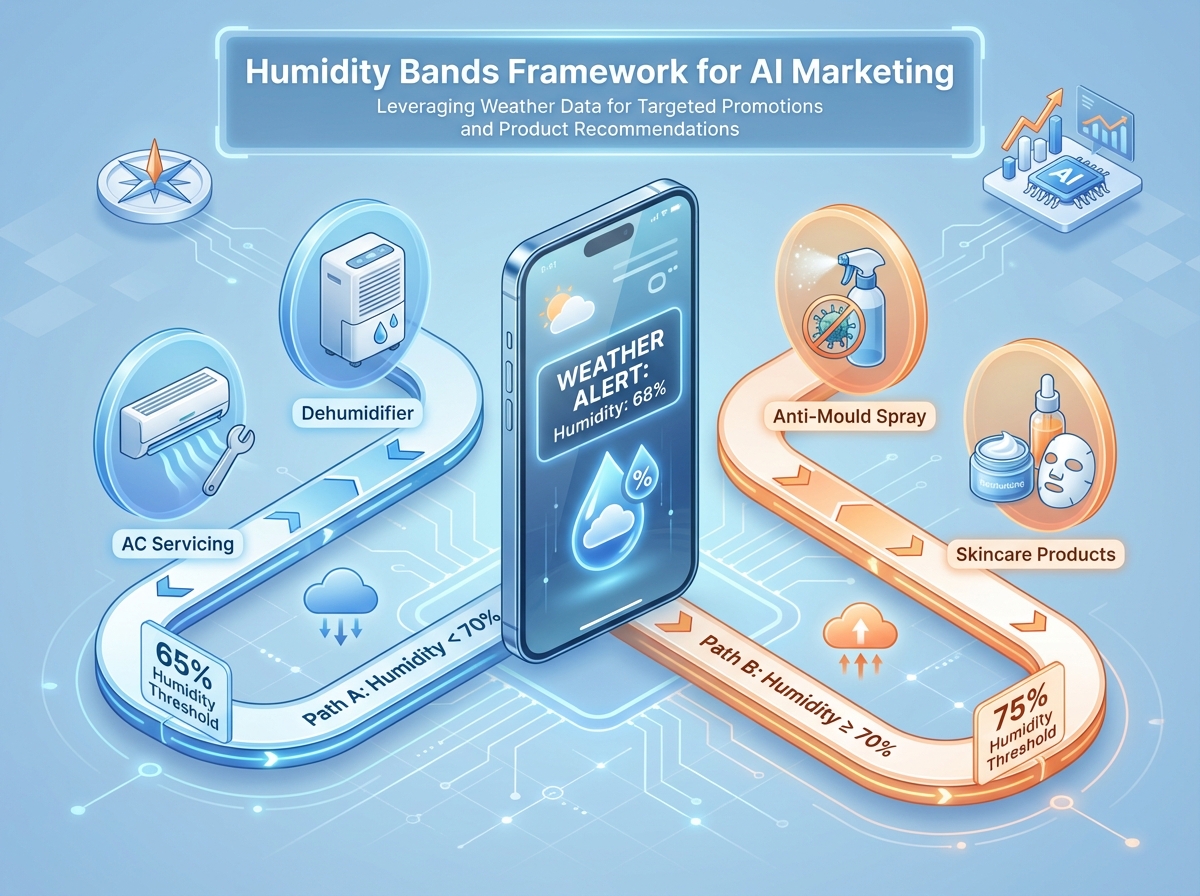
A critical component of this AI-driven approach is the "Humidity Bands Framework." By setting specific thresholds, brands can automate humidity-based product recommendations with surgical precision. For instance, when RH levels are forecasted to exceed 65% for three consecutive days, the system can trigger campaigns for dehumidifiers, anti-mould solutions, and specialized food storage. If the RH spikes above 70%, the focus shifts to skincare, haircare, and insect repellents. These triggers are not just limited to digital ads; they are increasingly integrated into WhatsApp catalog video marketing and app push notifications to reach consumers during high-intent morning windows.
The data stack required for this level of automation involves a seamless connection between Weather APIs, a Centralized Data Platform (CDP), and creative rendering engines. This allows for the creation of seasonal inventory optimization videos that reflect real-time store-level availability. If a particular region is expected to experience heavy rainfall, the AI can prioritize the promotion of products that are currently in stock at the nearest local warehouse, thereby reducing fulfillment times and increasing customer satisfaction. This integration ensures that every marketing message is backed by operational reality.
Sources:
Section 3: Retail Playbooks: From Pre-Monsoon Appliance Sales Videos to Humidity-Based Product Recommendations
Retailers in 2026 are utilizing weather-triggered offer automation to dominate the pre-monsoon market. One of the most effective tools in this arsenal is the use of pre-monsoon appliance sales videos. These videos are not generic commercials; they are dynamically generated to include the viewer's name, their city's specific weather forecast, and a personalized discount for appliances like ACs, refrigerators, or water purifiers. By timing these videos to the "heat-to-humidity transition" alerts provided by the IMD, retailers can capture demand at the exact moment consumers begin to feel the discomfort of the changing season.
Another high-growth area is waterproofing service marketing. Homeowners and housing societies are most receptive to these services 7–10 days before the first major rainfall event. By monitoring IMD thunderstorm advisories and rainfall probability, brands can deploy "before-the-first-rain" urgency campaigns. These campaigns often feature localized visuals of roof or terrace repairs, creating a sense of scarcity by highlighting the limited number of service slots available before the monsoon officially arrives. This strategy effectively moves consumers from the "consideration" phase to the "booking" phase in a matter of hours.
The retail sector also sees a significant surge in monsoon health product offers. As humidity rises, so does the risk of vector-borne diseases and water-borne illnesses. Retailers and FMCG brands are now using climate-responsive personalization to bundle products like mosquito repellents, disinfectants, and immunity boosters. These offers are triggered by local health bulletins and stagnant water advisories. By providing educational snippets via personalized video—explaining how to prevent breeding grounds or recognize early symptoms—brands build trust and authority, which directly translates into higher loyalty and rainy season customer acquisition.
Sources:
Section 4: Insurance Innovation: Rain Insurance Personalization Campaigns and Urgency Triggers
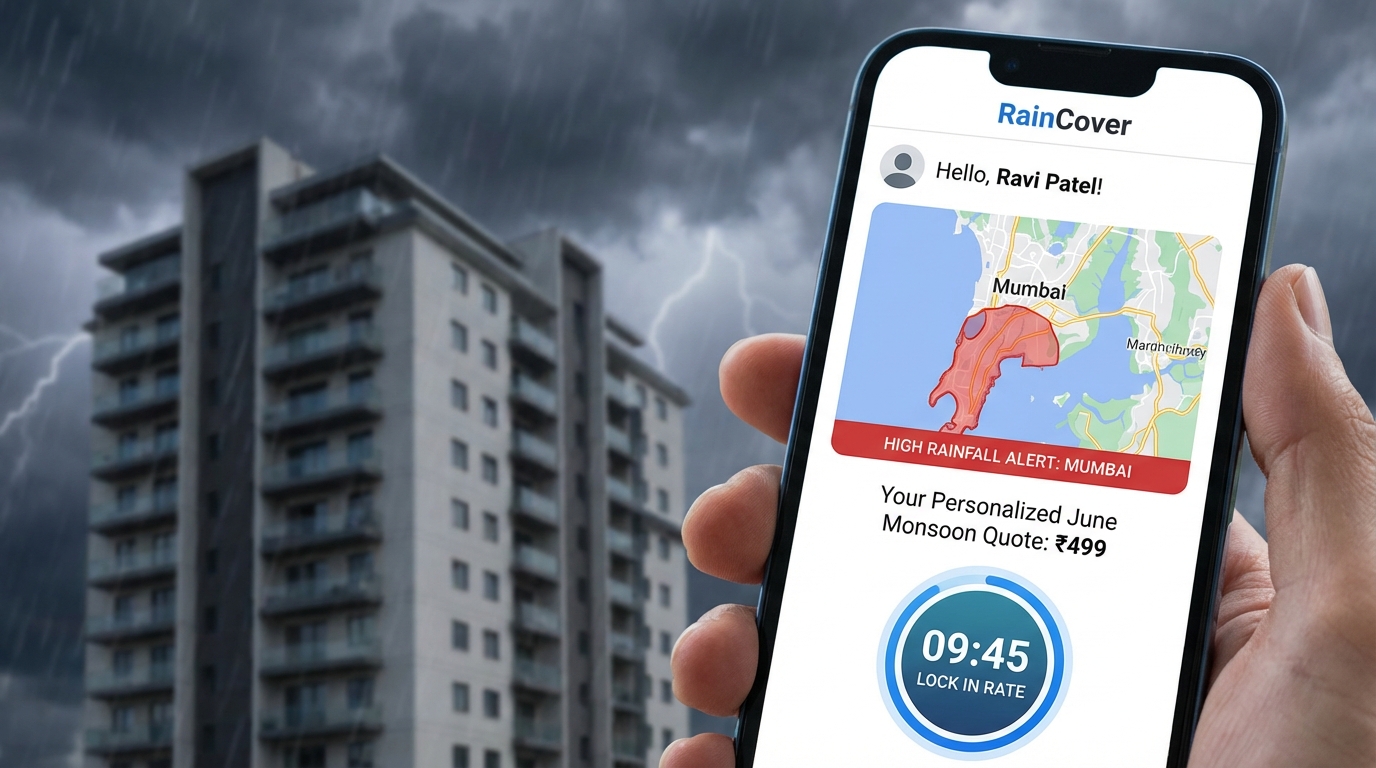
The insurance industry has found a powerful ally in weather prediction marketing AI. In 2026, rain insurance personalization campaigns have become a staple for protecting both property and agricultural interests. These campaigns are highly sophisticated, using CDP data to personalize quotes based on the user's specific location, property type, and prior claims history. When the IMD issues a 5–7 day forecast with a rainfall probability exceeding 60%, insurers can automatically trigger personalized video messages that pre-fill quotes and highlight the specific risks associated with the upcoming weather event.
To drive immediate action, weather insurance urgency campaigns utilize dynamic countdown timers and live weather overlays. These creatives might urge a customer to "lock in their rate before the red alert advisory begins," creating a legitimate reason for immediate policy binding. However, compliance remains paramount. In 2026, leading insurers ensure that all dynamic templates include state-wise T&Cs and mandatory IRDAI disclaimers, such as "Subject to policy terms and underwriting approval." This balance of urgency and transparency is critical for maintaining E-E-A-T standards in the financial sector.
Furthermore, monsoon disease prevention marketing monsoon healthcare marketing 2026 has opened new avenues for partnerships between health insurers and retail pharmacies. By monitoring vector-borne disease guidance from the National Center for Vector Borne Diseases Control (NCVBDC), insurers can send city-level incidence alerts combined with preventive check-up vouchers or OPD add-ons for dengue and malaria. This proactive approach not only drives policy renewals but also reduces claim costs by encouraging early detection and prevention. These integrated health ecosystems are a hallmark of the 2026 insurance landscape.
Sources:
Section 5: Scaling Rainy Season Customer Acquisition Through Climate-Responsive Personalization
Scaling rainy season customer acquisition in a country as diverse as India requires a creative system that can adapt to hundreds of micro-climates and languages simultaneously. The use of Dynamic Creative Optimization (DCO) allows brands to auto-swap weather inserts—such as rain icons, local temperature readings, and regional advisories—into their video and display ads. TrueFan AI's 175+ language support and Personalised Celebrity Videos provide the infrastructure needed to deliver these localized experiences at an enterprise scale, ensuring that a consumer in Kochi receives a vastly different (and more relevant) message than one in Chandigarh. See the AI celebrity video marketing in India guide for creative tactics.
The choice of channels is equally important. While paid social and display are effective for broad awareness, the "last mile" of conversion often happens on private messaging platforms. WhatsApp Business API has become the preferred channel for delivering weather-triggered offer automation because of its high open rates and ability to handle rich media. By sending a personalized video message that addresses the user by name and mentions their specific local weather forecast, brands can achieve engagement rates that are 3-5x higher than traditional email or SMS.
Digital Out-of-Home (DOOH) is another frontier for regional monsoon targeting. In 2026, smart billboards in major metros like Mumbai and Bangalore change their creative in real-time based on live weather feeds. If it starts raining, the billboard might switch from an AC service ad to a "10-minute umbrella delivery" quick commerce festival marketing 2026 or a "monsoon-special masala chai" offer. This level of environmental relevance ensures that the brand remains top-of-mind during the most volatile moments of the day, effectively turning weather disruptions into conversion opportunities.
Sources:
Section 6: Implementation Blueprint: Weather-Triggered Offer Automation and Regional Monsoon Targeting
Implementing a successful weather-triggered offer automation strategy requires a structured approach to data and creative orchestration. The first step is connecting high-fidelity weather API signals—such as rainfall intensity, thunderstorm alerts, and humidity levels—to the brand's CRM or CDP. This allows for the creation of specific audience cohorts based on their geographic vulnerability to certain weather patterns. For example, a "High Humidity Cohort" might be defined as users in coastal cities where the RH is projected to stay above 70% for the next week.
Once the data layers are connected, the focus shifts to template orchestration. Enterprises must build master templates for AC servicing reminder videos and seasonal inventory optimization videos that can be dynamically populated with local data. This includes not just the weather forecast, but also store-level availability, local pricing, and regional language variants. Solutions like TrueFan AI demonstrate ROI through their ability to render these complex, personalized videos in less than 30 seconds ONDC personalized video onboarding, allowing brands to respond to sudden weather changes (like a flash flood warning or a sudden heatwave) with immediate, relevant content.
Finally, the measurement and optimization loop is what ensures long-term success. Marketers must track KPIs that go beyond simple clicks, focusing instead on quote-to-bind rates for insurance or store sell-through rates for retail. Experimentation is key; brands should A/B test different trigger thresholds (e.g., triggering a waterproofing ad at 10mm vs. 20mm of forecasted rain) and creative variations (e.g., localized scarcity messaging vs. celebrity-led education). By feeding these insights back into the AI model, enterprises can continuously refine their climate-responsive personalization for maximum impact.
Sources:
Section 7: FAQ and Future Outlook
How to run weather-triggered offer automation for retail in India?
To execute this effectively, you must integrate a real-time weather API with your CDP. Define specific triggers based on IMD data—such as a 65% humidity threshold for three days—and map these to pre-approved creative templates. Use a rendering engine that supports low-latency video production to deliver personalized offers via WhatsApp or app push as soon as the weather conditions are met.
What is the best timing for monsoon preparedness marketing 2026?
The ideal window is March–April for planning and initial "warm-up" campaigns. However, the actual activation should be staggered based on regional monsoon targeting. Use the IMD’s 10–30 day extended-range forecasts to identify when specific regions will enter their "preparedness window" and launch your high-intensity triggers accordingly.
How can insurers personalize rainy season customer acquisition compliantly?
Insurers must use dynamic templates that have been pre-approved by legal and compliance teams. These templates should automatically pull in state-specific T&Cs and the mandatory IRDAI disclaimers. By using a platform that offers full audit logs and ISO 27001 compliance, such as TrueFan AI, insurers can ensure that every personalized video sent is both effective and legally sound.
What are the key KPIs for weather-triggered campaigns?
For retail, focus on CTR, conversion rate (CVR), and assisted revenue. For insurance, the most critical metrics are quote completion rates and quote-to-bind ratios. Additionally, track the "forecast-to-activation" latency to ensure your messages are reaching consumers while the weather event is still relevant.
Can weather prediction marketing AI help with inventory management?
Yes. By correlating weather forecasts with historical sales data, AI can predict demand spikes for specific SKUs like umbrellas, raincoats, or water purifiers. This allows retailers to move inventory to the right regional hubs before the rains begin, reducing stockouts and optimizing logistics costs.
Conclusion
As we look toward the future of seasonal engagement, the integration of environmental data and hyper-personalization will only deepen. The 2026 monsoon season serves as a benchmark for how enterprises can use technology to turn unpredictable weather into a predictable driver of growth. By mastering the playbooks of monsoon preparedness marketing 2026, brands can ensure they are not just reacting to the rain, but leading the conversation long before it arrives.
Sources:
Frequently Asked Questions
How do I run weather-triggered offer automation for retail in India?
Integrate a reliable weather API with your CDP, define triggers (e.g., RH >= 65% for 3 days), and map them to pre-approved video/display templates. Use WhatsApp or app push for fast delivery, and measure forecast-to-activation latency for effectiveness.
What is the best timing for pre-monsoon activation?
Plan in March–April, then stagger activations by region using IMD’s 10–30 day outlooks. Align offers with local onset windows to avoid fatigue and maximize intent capture.
How can insurers personalize rainy season acquisition while staying compliant?
Use legally approved dynamic templates that auto-insert state T&Cs and IRDAI disclaimers. Maintain audit logs and security controls; personalize quotes by location, risk, and claims history.
Which KPIs matter most for weather-triggered campaigns?
Retail: CTR, CVR, assisted revenue, and sell-through. Insurance: quote completion and quote-to-bind. Track latency from forecast to activation to maintain contextual relevance.
Can AI weather prediction improve inventory management?
Yes. Linking forecasts with historical sales reveals SKU demand spikes (e.g., umbrellas, repellents), enabling pre-positioning by region to minimize stockouts and logistics costs.



