WhatsApp Business API Video Automation 2026: The India Playbook for AI-Powered Conversational Commerce
Key Takeaways
- In 2026, video-first commerce on WhatsApp becomes essential for Indian brands to drive conversions at scale.
- Personalized video automation tailored by language, region, and intent outperforms text-only messaging.
- Optimized chat-to-purchase funnels with UPI payments reduce friction and lift conversion rates.
- End-to-end conversational AI powers sales, support, and retention through automated, multimedia experiences.
- Measurement and compliance frameworks prove ROI and ensure data privacy in the 2026 pricing model.
The digital landscape in India is undergoing a seismic shift, moving beyond static text-based interactions toward a dynamic, video-first ecosystem. As we look toward the horizon, WhatsApp Business API video automation 2026 is emerging as the definitive cornerstone for e-commerce directors and D2C founders aiming to capture the attention of over 500 million active users. In a market where the average user spends approximately 21.4 hours per month on the platform, the transition from simple messaging to sophisticated, automated video funnels is no longer optional; it is a strategic imperative for survival and growth.
This evolution is driven by the convergence of generative AI, high-speed connectivity, and a consumer base that increasingly prioritizes visual storytelling over traditional product descriptions. By integrating advanced video automation, brands can now deliver personalized, interactive experiences that mirror the intimacy of an in-store consultation while maintaining the efficiency of a global digital platform. The promise of 2026 lies in the ability to turn every chat window into a high-converting storefront, leveraging the near-instant read rates of WhatsApp to deliver just-in-time nudges that drive measurable ROI.
1. The India Opportunity: Why Conversational Commerce India Personalization Wins
The Indian market presents a unique set of challenges and opportunities that demand a highly localized approach to digital commerce. Conversational commerce India personalization is the practice of tailoring every interaction based on a user’s language, regional preferences, price sensitivity, and cultural context. In 2026, this goes far beyond simply inserting a customer’s name into a text template; it involves the orchestration of dynamic multimedia flows that resonate with the diverse demographic fabric of the subcontinent.
Data indicates that 65% of WhatsApp Business API users in India are already utilizing marketing messages that incorporate images or video to enhance engagement. This shift is supported by the fact that multimedia formats consistently correlate with higher click-through rates and deeper brand recall compared to text-only communications. Platforms like TrueFan AI enable brands to bridge the gap between generic broadcasts and hyper-personalized engagement by automating the creation of video content that speaks directly to the individual’s needs and aspirations.
As we approach the January 2026 pricing updates, the focus for Indian enterprises must shift toward maximizing the value of every “Marketing Conversation.” With the introduction of INR direct billing and revised category-based costs, the ability to deliver one-to-one video marketing at scale becomes a critical lever for maintaining healthy margins. By utilizing personalized video to cut through the noise, brands can ensure that their marketing spend results in higher conversion rates, effectively offsetting the rising costs of platform engagement.
Source: AiSensy: WhatsApp Statistics for Businesses
Source: D7Networks: WhatsApp Business Statistics
Source: Fyno: INR Direct Billing 2026 Guide
2. From Catalog to Camera: WhatsApp Catalog Video Marketing and Interactive Product Discovery
The traditional e-commerce catalog is a static relic in a world that demands movement and interaction. WhatsApp catalog video marketing represents the next phase of product exploration, where static SKUs are transformed into short, tappable, and highly engaging video snippets. These interactive product discovery videos act as virtual sales assistants, providing 10–20 second explainers that highlight product features, demonstrate usage, and address common consumer queries in real-time.
To implement this effectively, brands must develop a robust video content system that caters to different stages of the buyer journey. This includes high-energy teaser videos for WhatsApp Status to drive top-of-funnel awareness, followed by deeper, personalized product explainers triggered within 1:1 chats. For instance, a beauty brand can use a quiz-based trigger to send a video recommendation that matches a user’s specific skin tone and concerns, effectively moving them from curiosity to intent within a single conversation thread.
The technical requirements for this scale of automation involve a per-SKU script library and the ability to render vertical (9:16) video formats with regional language subtitles. By 2026, generative video technology will allow for the seamless translation of these assets into 175+ languages, ensuring that a brand’s message is accessible from Mumbai to Mizoram. This level of detail not only builds trust but also significantly reduces the friction associated with online shopping, as customers can “see” the product in action before making a commitment.
Source: D7Networks: Video/Voice Interaction Trends
Source: Flowcall: WhatsApp Business API Benchmarks
3. Architecting Chat-to-Purchase Video Funnels with WhatsApp Payment Integration Campaigns
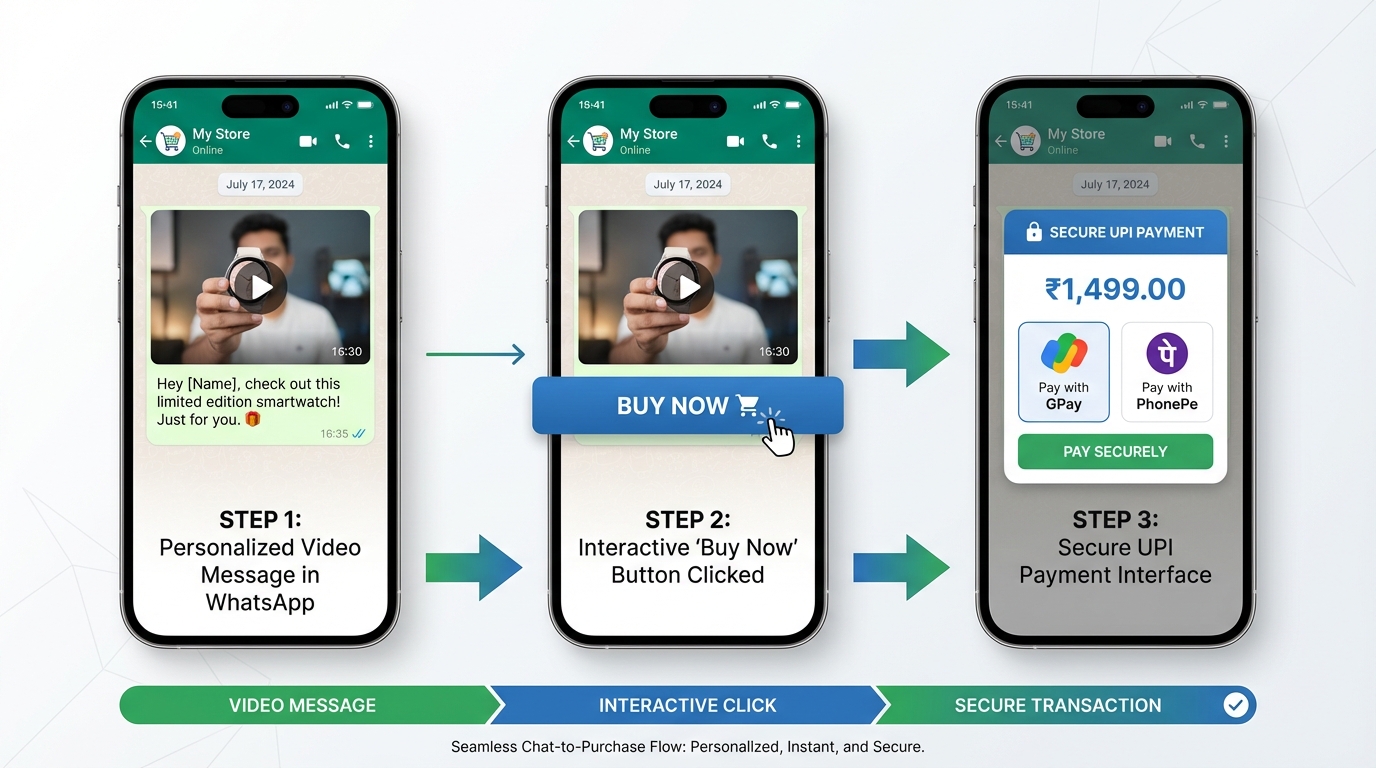
The ultimate goal of any messaging strategy is to close the loop between discovery and transaction. Chat-to-purchase video funnels are sequential, automated journeys that guide a user through the entire sales process without ever requiring them to leave the WhatsApp interface. These funnels are triggered by various entry points, such as Click-to-WhatsApp ads, QR codes at physical points of sale, or website widgets, and they rely on a sophisticated logic of “next-best-action” prompts.
- T+0: A user clicks an ad and receives a teaser video followed by a quick interactive quiz to capture their preferences (e.g., budget, size, style).
- T+5m: The system generates a personalized video recommendation mentioning the user’s name and preferred language, accompanied by a limited-time offer.
- T+10m: WhatsApp payment integration campaigns trigger a UPI deep link or an in-chat payment prompt, allowing for a frictionless checkout experience.
- Post-Purchase: An automated order confirmation video is sent immediately upon successful payment, reinforcing the brand's reliability.
Optimizing these flows requires a deep understanding of the 24-hour service window and the distinction between marketing and utility conversation categories. By strategically timing video nudges, brands can maximize engagement within a single paid session. Benchmarks from early adopters in the Indian market show that these optimized video-led journeys can achieve conversion rates between 45% and 60% for high-intent cohorts, far outperforming traditional email or SMS marketing.
Source: Authkey: WhatsApp Pricing Update 2026
Source: mTalkz: WhatsApp Business API Cost India
Source: Sprinklr: boAt Conversational Commerce Case Study
4. Building Conversational AI Shopping Experiences and Automated Support Flywheels
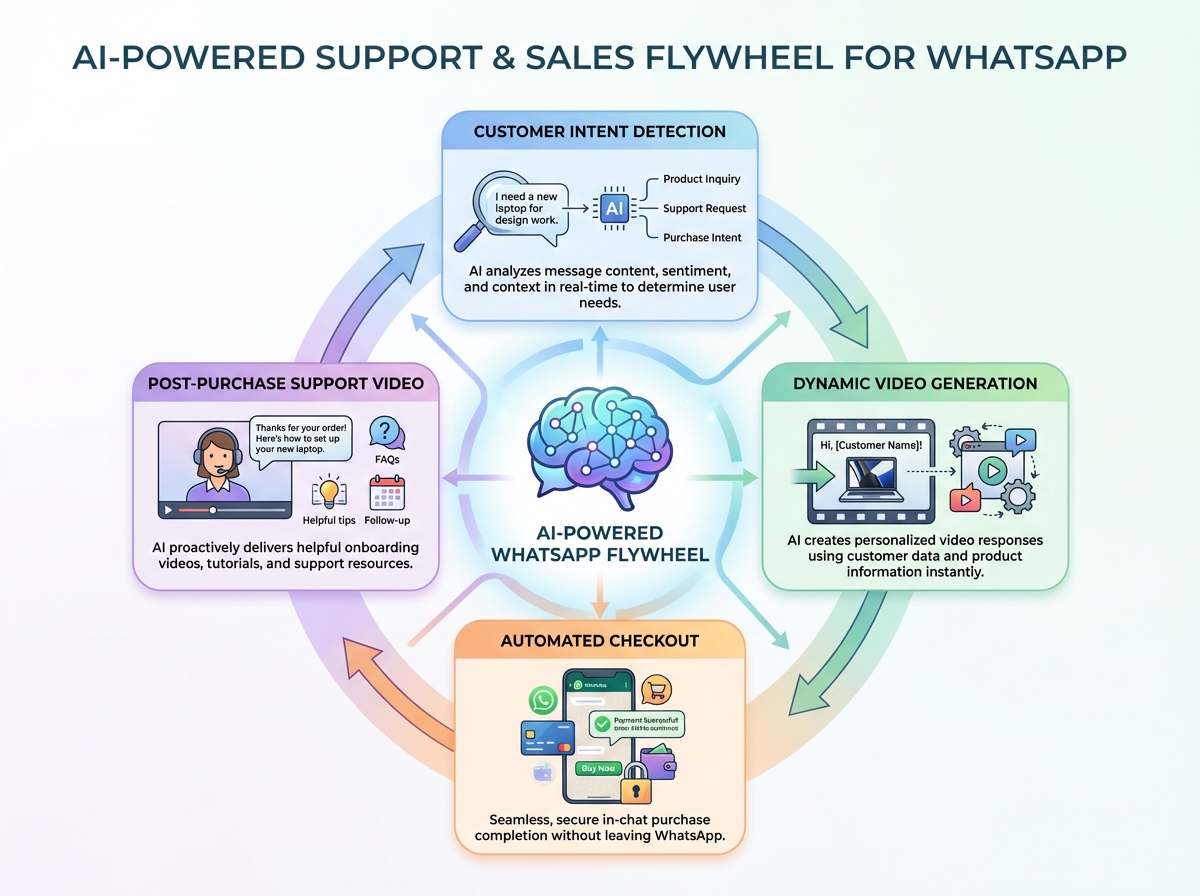
In 2026, the distinction between sales and support is blurring. Conversational AI shopping experiences utilize advanced AI agents to interpret user intent, fetch real-time catalog data, and generate personalized video replies. These agents are capable of handling complex queries regarding product availability, sizing, and shipping timelines, providing a level of service that was previously only possible with a massive human workforce.
The post-purchase phase is where conversational support automation truly shines, turning a one-time buyer into a loyal advocate. WhatsApp order tracking videos provide shipment updates in a visually engaging format, often including unboxing tips or personalized cross-sell recommendations based on the items purchased. If a customer encounters an issue, the AI agent can facilitate self-serve returns or exchanges through video walkthroughs, only escalating to a human agent when specific sentiment thresholds or high-value cart triggers are met.
This “flywheel” effect ensures that every customer interaction contributes to a larger data set, allowing for even more refined business messaging personalization strategies. For example, a grocery D2C brand can use vernacular weekly bundles and recipe explainer clips to drive repeat purchases, while an electronics brand can use WhatsApp group marketing automation to nurture VIP communities with early access to product launches and setup support videos.
Source: AiSensy: India Usage Growth and AI Automation
Source: Flowcall: Conversion and ROI Benchmarks
5. Scaling Personalization: One-to-One Video Marketing at Scale with TrueFan AI
To achieve the level of personalization required for the 2026 landscape, enterprise brands need more than just a messaging platform; they need a robust video orchestration engine. One-to-one video marketing at scale is made possible through deep integrations between a brand’s CRM/CDP and specialized video generation APIs. TrueFan AI's 175+ language support and Personalised Celebrity Videos allow for a level of cultural resonance previously impossible at scale, enabling brands to deliver thousands of unique video assets in near-real-time.
The TrueFan AI enterprise architecture is designed for high-volume, low-latency delivery. By utilizing virtual reshoots and AI-driven editing, brands can update lines, offers, and visuals without the need for expensive new shoots. This capability is particularly vital for the Indian market, where seasonal festivals and flash sales require rapid creative iterations. For instance, during a major festive sale, a brand can generate millions of personalized greetings and offers, each addressing the recipient by name and referencing their local city, all within a sub-30-second rendering window.
Large-scale implementations, such as those seen with Zomato or Hero MotoCorp, demonstrate the power of this approach. By mapping user events—like a cart abandonment or a loyalty tier upgrade—directly to a personalized video trigger, brands can create a seamless experience that feels bespoke rather than automated. This integration ensures that the right video reaches the right user at the exact moment of highest intent, significantly boosting the overall messaging app commerce ROI.
Source: TrueFan AI: Enterprise Solutions and Case Studies
Source: Fyno: WhatsApp Business Indian Rupee (INR) Direct Billing 2026 Guide
6. Measurement and Compliance: Proving Messaging App Commerce ROI in 2026
As marketing budgets come under increased scrutiny, proving the messaging app commerce ROI is essential for any enterprise-scale deployment. This requires a CFO-grade analytics framework that tracks the entire funnel: from reach and read rates to click-throughs, PDP views, and final purchase attribution. Brands must also implement cohort experimentation, A/B testing video-first versus text-first templates, and vernacular versus English content to identify the most effective drivers of incremental revenue.
The 2026 cost model must account for Meta’s revised conversation categories—Marketing, Utility, and Authentication—each with its own pricing structure in India. Strategic broadcast list personalization India involves segmenting users by RFM (Recency, Frequency, Monetary) scores and language preferences to ensure that high-cost marketing messages are only sent to the most receptive audiences. Furthermore, compliance with India-specific data privacy regulations and WhatsApp’s own opt-in requirements is non-negotiable. Brands must maintain transparent consent records and ensure that sensitive user data is handled with the highest level of security.
Solutions like TrueFan AI demonstrate ROI through significant lifts in click-through rates and reduced customer acquisition costs by automating the creative production process that would otherwise require hundreds of manual hours. By combining these creative efficiencies with rigorous data governance and payment compliance (such as UPI PSP integrations), Indian enterprises can build a sustainable, high-growth channel that thrives in the competitive landscape of 2026.
Source: Authkey: India 2026 Pricing Changes
Source: mTalkz: India Pricing Overview
Source: Flowcall: ROI and Pricing Guide 2026
Frequently Asked Questions (FAQ)
1. How does WhatsApp Business API video automation 2026 differ from current video messaging?
By 2026, video automation will be fully integrated with generative AI and real-time data feeds. Unlike current methods where you might send a generic video file, 2026 automation allows for the dynamic generation of videos that include the customer's name, their specific city, and the exact product they were viewing, all rendered in their preferred regional language in under 30 seconds.
2. Is WhatsApp payment integration available in India, and how do UPI deep links work?
Yes, WhatsApp payment integration is fully operational in India. Brands can utilize UPI-intent deep links that allow customers to complete a transaction using their preferred UPI app (like Google Pay, PhonePe, or WhatsApp Pay) directly from the chat interface. This significantly reduces drop-offs during the checkout process.
3. What are the 2026 pricing changes for WhatsApp Business API in India?
Starting in January 2026, Meta is introducing revised pricing for different conversation categories. Marketing conversations will generally carry a higher cost than Utility or Authentication conversations. Indian businesses are also encouraged to move toward INR direct billing to simplify accounting and potentially benefit from localized pricing structures.
4. How can brands ensure compliance while using personalized video at scale?
Compliance involves capturing explicit opt-ins through verified channels, maintaining secure data storage for personalization tokens (like names and purchase history), and adhering to WhatsApp's template approval process. It is crucial to use platforms that are ISO 27001 and SOC 2 compliant to protect consumer data.
5. How does TrueFan AI handle high-volume video generation for Indian festivals?
TrueFan AI uses a high-performance, API-driven rendering engine designed to handle millions of requests simultaneously. During peak periods like Diwali or Big Billion Days, the platform can generate hundreds of thousands of personalized videos per hour, ensuring that every customer receives a timely and relevant message without lag.
6. What is the typical ROI for one-to-one video marketing at scale?
While ROI varies by industry, early benchmarks for video-led conversational commerce in India show a 3x to 5x increase in click-through rates compared to text-only messages. Furthermore, brands often see a 20-30% reduction in cart abandonment rates when using personalized video nudges and automated support.