Republic Day 2026 marketing India: An enterprise playbook for patriotic growth and customer acquisition
Key Takeaways
- Build authentic patriotic narratives that celebrate Indian craftsmanship while complying with the Flag Code of India.
- Leverage personalized video at scale to drive January 26 conversions across languages and regions.
- Design high-urgency offer mechanics and orchestrate omnichannel journeys with tricolor-themed automation.
- Activate WhatsApp-first flows with API-triggered personalized videos to maximize CTR and revenue.
- Extend impact with loyalty and retention programs that highlight local impact and Made-in-India SKUs.
Republic Day 2026 marketing India represents a pivotal window for enterprise brands to scale authentic, Made-in-India storytelling through patriotic video personalization, Republic Day offer videos, and WhatsApp-led conversions. As the nation prepares for its 77th Republic Day, CMOs and national brand managers must navigate a landscape where emotional resonance meets high-intent commerce. This playbook provides a data-driven framework for executing brand-safe, patriotic brand engagement strategies that drive measurable ROI and long-term Indian brand loyalty programs.
The commercial opportunity for January 26 sales activation is staggering, with e-commerce order volumes having surged by approximately 18.7% in recent cycles. In 2026, this momentum is projected to accelerate as digital-first consumers seek brands that align with national pride and local craftsmanship. However, success requires more than just tricolor aesthetics; it demands a sophisticated blend of tricolor marketing automation and national pride personalization to cut through the noise of a crowded holiday market.
1. Patriotic brand engagement strategies: Defining authenticity and compliance
Patriotic brand engagement strategies in 2026 are defined as values-first narratives that spotlight Indian craftsmanship, inclusion, and community impact without exploiting national symbols. For enterprise brands, the transition from “opportunistic marketing” to “authentic storytelling” is the primary differentiator in building trust. This involves elevating real stories from local supply chains and artisans who form the backbone of the “Made in India” movement.
Navigating the legal landscape is equally critical for any national pride personalization effort. The Flag Code of India, 2002, prescribes strict rules for the display and use of the National Flag, prohibiting its use for commercial purposes or as a portion of a costume or uniform. Brands must avoid exact flag replications in advertising and instead opt for tricolor-inspired palettes—saffron, white, and green—to evoke sentiment while remaining fully compliant with Ministry of Home Affairs guidelines.
To operationalize this, brands should anchor their scripts in Hindi and regional languages to ensure deep resonance across diverse geographies. By focusing on measurable local impact—such as the number of artisans onboarded or the percentage of Made-in-India SKUs—marketing teams can create a narrative of Indian pride commerce marketing that feels earned rather than borrowed. This approach transforms a standard holiday promotion into a meaningful celebration of national progress.
Source: Unicommerce: E-commerce Order Volume Surge
2. Made in India video campaigns: The engine of patriotic video personalization
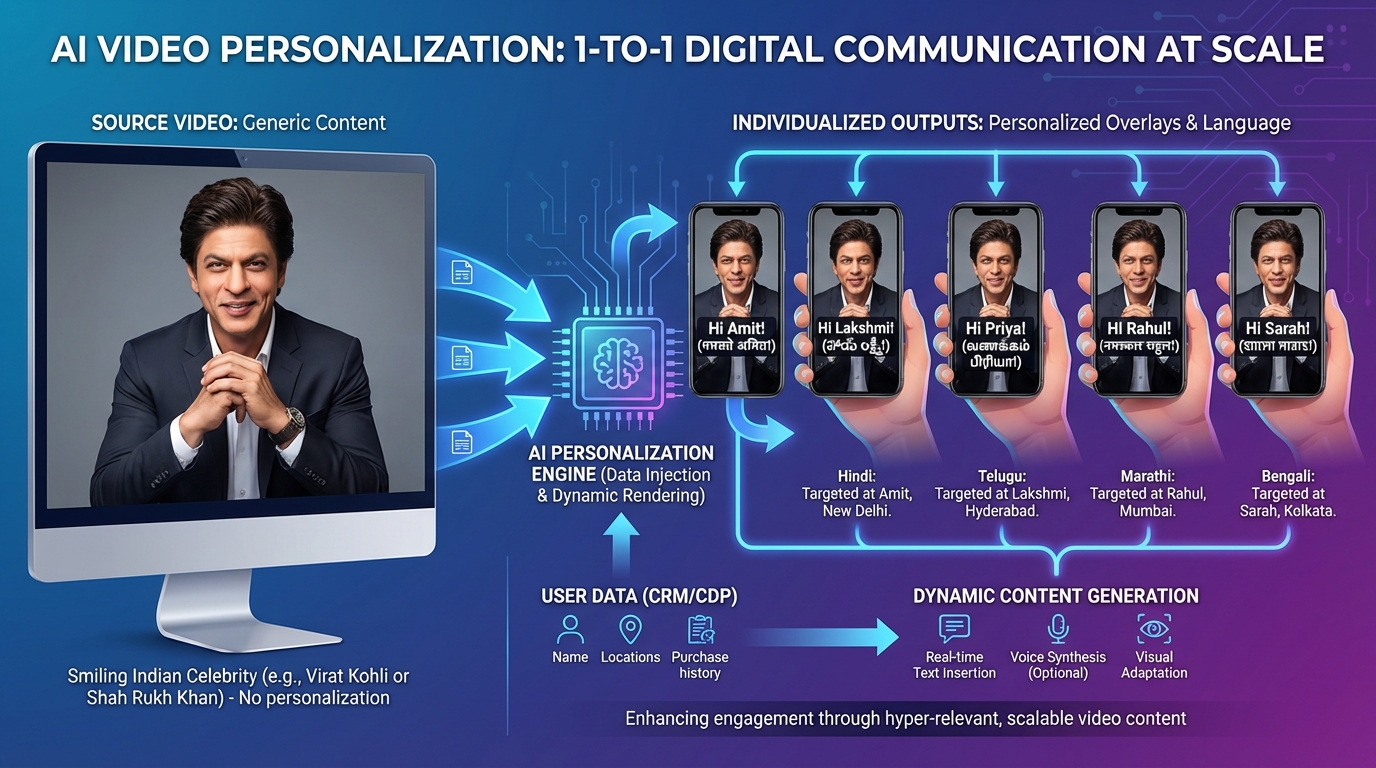
Made in India video campaigns have evolved into the most potent tool for enterprise customer acquisition in 2026. These campaigns leverage short-form and long-form video to showcase domestic manufacturing and local supply chains, personalized at an individual level. Platforms like TrueFan AI enable brands to transform a single celebrity shoot into millions of hyper-personalized videos that address customers by name, location, and preference.
The blueprint for a successful Republic Day offer video begins with a “pride moment”—a visual of a local factory or an artisan greeting the viewer. Dynamic fields such as the customer's first name, their nearest physical store, and a localized offer in their preferred language are then merged in real-time. TrueFan AI's 175+ language support and Personalised Celebrity Videos allow brands to speak to a customer in Tamil, Bengali, or Marathi with perfect lip-sync and voice retention, drastically increasing watch-through rates. Regional Language Video SEO
Personalization at this scale is no longer a luxury; it is a requirement for high-conversion January 26 sales activation. When a celebrity or brand ambassador mentions a user's specific city or loyalty tier, the emotional connection to the brand strengthens. This level of national pride personalization ensures that the message feels like a 1-to-1 conversation rather than a mass broadcast, driving significantly higher engagement than traditional static ads.
Source: TrueFan AI: Republic Day Strategy and ROI
Source: CleverTap: Republic Day Marketing Roundup
3. Offer mechanics: January 26 sales activation and national holiday flash sales
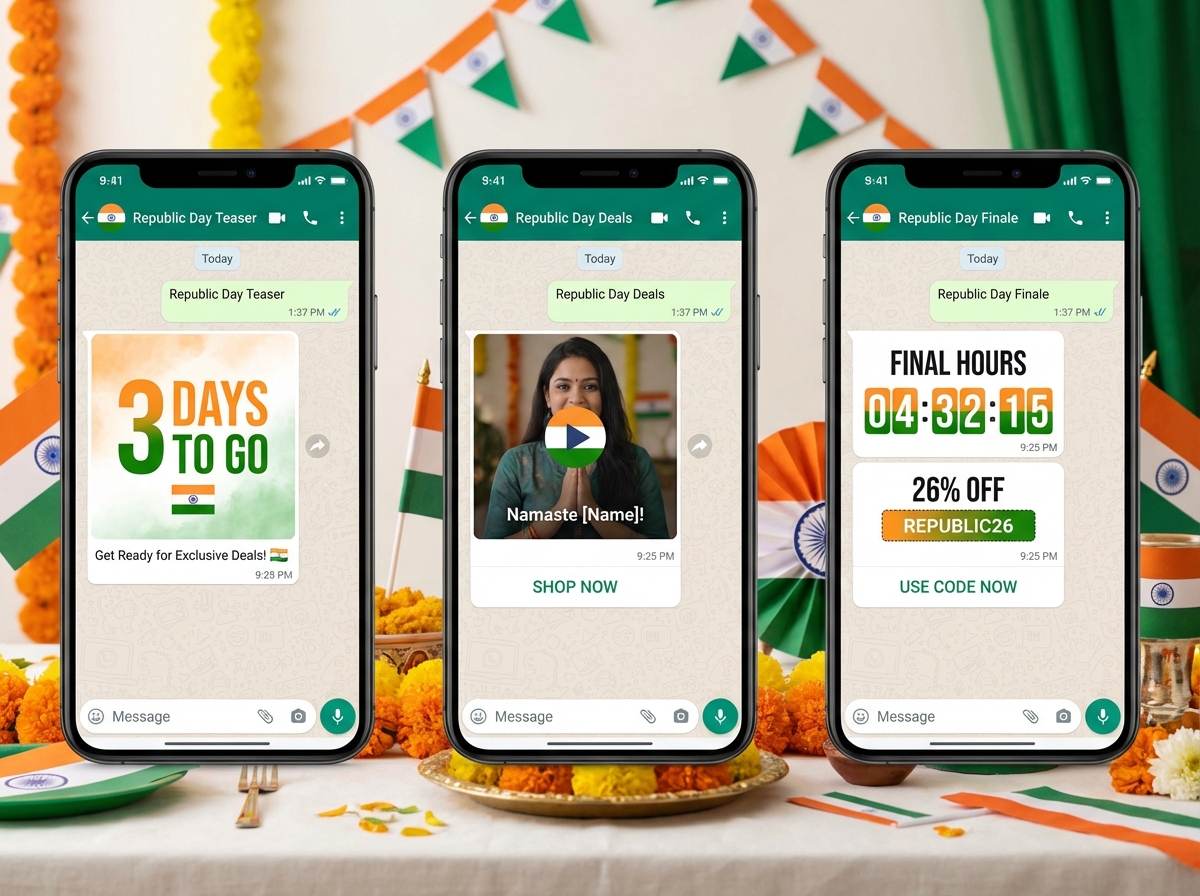
A successful January 26 sales activation requires a tightly orchestrated cadence of offers designed to maximize urgency and protect margins. Patriotic discount campaigns often utilize thematic pricing, such as “flat 26% off,” “2+6 bundles,” or “Save ₹2600 on orders above ₹10,000.” These offers should be time-gated to create a “national holiday flash sales” environment that encourages immediate action during peak traffic windows. Quick Commerce Festival Marketing 2026
The execution timeline for these activations should follow a strategic “Parade-Hour Blitz.” Starting at midnight on January 26, brands should launch their first wave of offers to capture early-bird shoppers. The primary surge occurs between 09:00 and 14:00, coinciding with national parade broadcasts when consumer sentiment is at its peak. During this window, shoppable video pushes and WhatsApp reminders should be deployed to drive traffic to high-margin Made-in-India SKUs.
To prevent margin erosion, enterprise brands must implement SKU-level caps and cart threshold offers. Using scarcity bars, countdown timers, and real-time inventory updates—tested via A/B variants—ensures that the “final hours” of the sale (20:00 to 23:59) maintain high conversion rates. This structured approach to patriotic discount campaigns ensures that the surge in Republic Day customer acquisition translates into profitable growth rather than just high volume.
4. Tricolor marketing automation and omnichannel orchestration
Tricolor marketing automation involves the rules-driven deployment of creative assets across web, app, and in-store screens. In 2026, this means using saffron, white, and green UI components—such as tricolor borders, confetti bursts on “add-to-cart,” and themed progress bars—to create a cohesive holiday experience. These elements should be automated to activate on January 24 and deactivate by January 27 to maintain relevance.
The core of this orchestration is national pride personalization. Automation rules should auto-serve content based on the user's region and language, switching celebrity voices or narrators to match local dialects. For instance, a user in Karnataka might see a video featuring a regional icon, while a user in Punjab sees a different localized version. This ensures that the Indian pride commerce marketing strategy feels locally relevant while maintaining a national brand identity. Rapid Fulfillment Personalization Strategies
Furthermore, exit-intent banners with personalized video thumbnails can be used to recover abandoned carts. By deep-linking these videos directly to the checkout page, brands can reduce friction and capitalize on the high-intent window of Republic Day 2026 marketing India. A/B testing different intensities of tricolor themes—subtle vs. bold—can help determine which visual style resonates best with specific customer segments, ensuring maximum impact for every automated interaction.
5. Republic Day WhatsApp campaigns: The high-conversion channel for 2026
Republic Day WhatsApp campaigns have become the primary driver of conversions in the Indian market, boasting open rates as high as 98%. In 2026, the most effective strategy involves a three-template flow. Three days before the holiday, brands should send an “Early Access” video to loyalty members. On the morning of January 26, a personalized Republic Day offer video is delivered, featuring interactive buttons like “View Offer” or “Locate Store.” Regional Language Voice Shopping
The final template, sent during the “Final Hours” (around 20:00), should include a countdown GIF and a personalized discount code to drive last-minute sales. Solutions like TrueFan AI demonstrate ROI through API-triggered personalized video rendering in under 30 seconds, allowing these videos to be delivered via WhatsApp Business API at a national scale. This ensures that the video content is not only personalized but also delivered exactly when the consumer is most likely to buy.
Best practices for these campaigns include using video-first templates and segmenting the audience by their last activity, such as site browsing or cart abandonment. By respecting template policies and providing easy opt-out options, brands can maintain high deliverability and trust. The integration of personalized video into WhatsApp flows represents the pinnacle of Republic Day customer acquisition, combining the intimacy of messaging with the power of celebrity-led storytelling.
6. Indian brand loyalty programs and retention levers
Beyond the immediate sales surge, Republic Day 2026 marketing India provides a unique opportunity to strengthen Indian brand loyalty programs. Brands should design “Pride Tiers” or loyalty bonuses that reward customers for purchasing Made-in-India SKUs. For example, offering double points on domestic products between January 24 and 27 can incentivize shoppers to choose local options over international competitors.
Post-purchase engagement is the key to long-term retention. Sending a personalized “Thank You” video that references the customer's local impact—such as how their purchase supported a specific community of artisans—creates a lasting emotional bond. These videos can also include an invite to visit the nearest physical store for a complimentary service or a “loyalty-only” Republic Day gift, driving offline footfall and deepening the relationship. Quick Commerce Video Personalization India
Lifecycle flows should continue well after the holiday. A “Pride Recap” message sent seven days later can highlight the collective impact of the Republic Day sale, while a 30-day follow-up can introduce member-exclusive “Made-in-India” drops. By consistently using national pride personalization in loyalty communications, brands can transform a one-time holiday shopper into a lifelong advocate for the brand's national mission.
7. Measurement, Governance, and the 2026 Quick-Start Plan
Measuring the success of Republic Day 2026 marketing India requires a multi-dimensional approach. Key Performance Indicators (KPIs) should include the percentage of new-to-file customers, the Customer Acquisition Cost (CAC) during the sale period, and the conversion lift generated by personalized videos. Engagement metrics such as video View-Through Rate (VTR) and WhatsApp Click-Through Rate (CTR) provide insights into the effectiveness of the creative strategy. Rapid Fulfillment Personalization Strategies
Governance is equally vital, particularly regarding cultural sensitivity and legal compliance. All visual systems must be reviewed against the Flag Code of India to ensure respectful depiction. Furthermore, WhatsApp campaigns must adhere to strict opt-in policies to avoid being flagged as spam. Brands should also conduct a “Cultural Sensitivity Review” to ensure that regional scripts and casting are inclusive and representative of India's diverse population.
To execute this playbook in under two weeks, brands should follow a structured timeline. By T-14, the offer matrix and personalization fields (name, city, language) must be locked. By T-9, the API integrations for real-time video rendering should be QA'ed. By T-5, the early-access opt-in campaigns should launch. This disciplined approach ensures that the enterprise is ready to handle the massive surge in traffic and engagement that defines the Republic Day season.
Frequently Asked Questions
How can brands use Republic Day 2026 marketing India to drive store footfall?
Brands can use geo-fencing and “Locate Nearest Store” CTAs within personalized videos to drive customers to physical locations. By offering exclusive in-store Republic Day gifts or service camps, brands can bridge the gap between digital engagement and offline commerce.
What are the legal restrictions for using the Indian flag in advertisements?
According to the Flag Code of India, 2002, the National Flag cannot be used for commercial purposes, advertisements, or as part of a costume. Brands should instead use tricolor-inspired palettes (saffron, white, green) and motifs to evoke patriotic sentiment without violating legal norms.
Why is patriotic video personalization more effective than static banners?
Personalized videos create an emotional connection by addressing the customer by name and mentioning their specific context. This 1-to-1 approach leads to significantly higher watch-through rates and conversion lifts compared to generic static banners that are often ignored by consumers.
How does TrueFan AI ensure celebrity consent for these campaigns?
TrueFan AI operates on a consent-first model where every celebrity likeness is used under a formal contract. The platform also includes built-in moderation filters to prevent the generation of unapproved or offensive content, ensuring brand safety for enterprise clients.
What is the ideal timing for a Republic Day WhatsApp campaign?
The most effective timing is a three-stage approach: an early-access teaser 3 days before, a primary personalized offer video on the morning of January 26 (during the parade), and a “final hours” urgency push on the evening of the 26th.
Source: Ministry of Home Affairs: Flag Code Guidelines