WhatsApp Business commerce automation 2026: AI Video, Flows, and One-to-One Personalization to 40%+ Conversions in India
Estimated reading time: ~12 minutes
Key Takeaways
- India’s 2026 inflection point makes WhatsApp the dominant channel, with near-100% delivery and high engagement outpacing SMS/email.
- LLM-driven assistants plus hyper-personalized video elevate discovery and resolve complex purchase intent in-chat.
- Chat-to-purchase funnels with WhatsApp Flows and in-chat UPI compress checkout to one interface, enabling 40%+ conversions.
- Post-purchase automation with order tracking personalization reduces WISMO and boosts retention via relevant cross-sells.
- A 90-day blueprint operationalizes broadcast personalization, community groups, and payment nudges for measurable ROI.
1. The 2026 Inflection Point: Why WhatsApp Commerce is Dominating India
In the rapidly evolving landscape of Indian digital commerce, WhatsApp Business commerce automation 2026 represents the definitive frontier for D2C brands seeking to transcend traditional friction points. As the Indian market pivots away from the diminishing returns of SMS and email, the integration of conversational AI shopping experiences has become the primary driver for sustainable revenue growth. This guide explores how the convergence of WhatsApp Flows, in-chat UPI payments, and hyper-personalized video content is enabling brands to achieve conversion rates exceeding 40% by removing every barrier between product discovery and final checkout.
The year 2026 marks a structural shift in how Indian consumers interact with brands, moving from passive consumption to active, chat-led participation. This transition is fueled by the maturity of the WhatsApp Cloud API, localized billing enhancements, and the ubiquity of UPI-integrated payment systems that allow for a seamless “chat-to-purchase” journey. For e-commerce growth leaders, the mandate is clear: automate or lose relevance in a market where 500 million users prefer messaging over browsing.
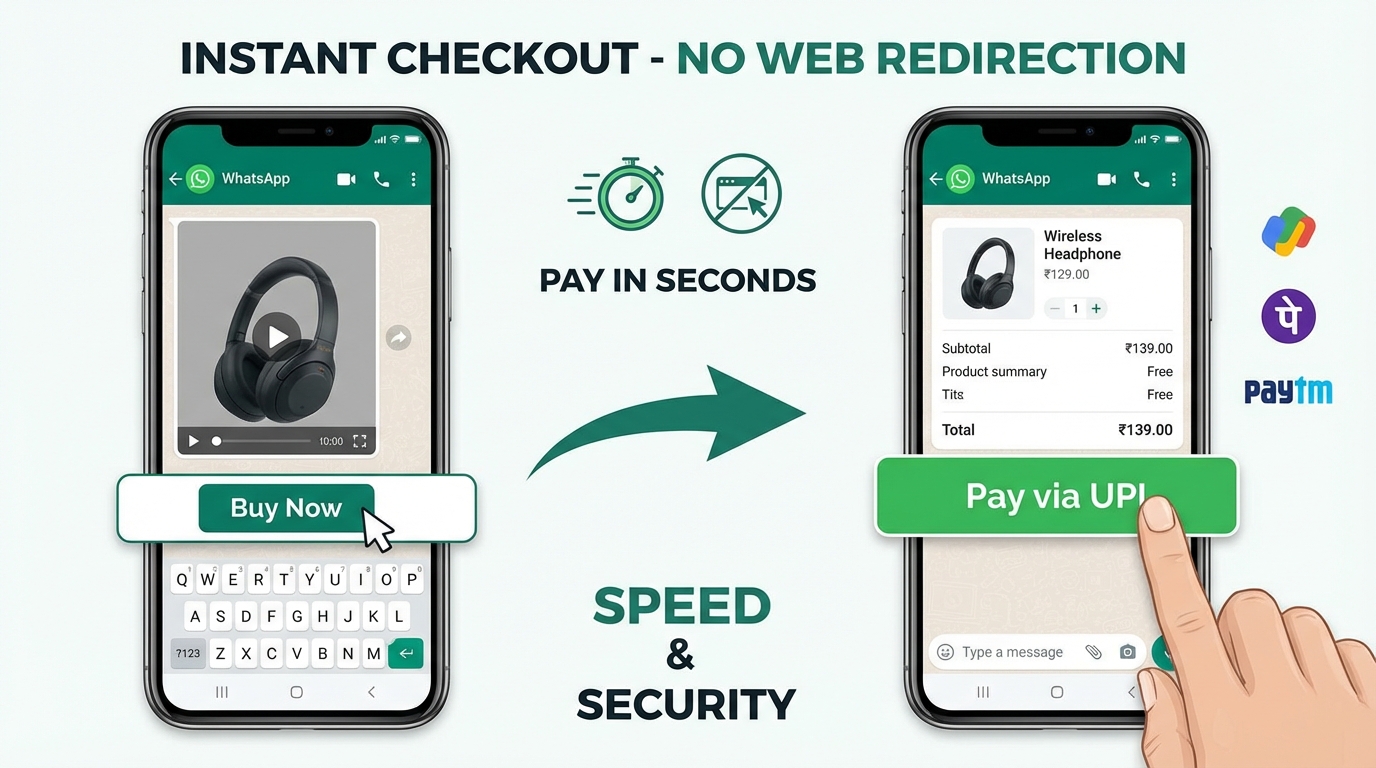
The platform's evolution has introduced sophisticated tools like WhatsApp Flows, which provide structured, interactive interfaces within the chat window. These interfaces allow users to complete forms, select product variants, and book appointments without ever leaving the application. By eliminating the high-latency “web redirection” phase, brands are seeing a significant reduction in drop-off rates. Furthermore, the expansion of the Cloud API has stabilized high-volume messaging, ensuring that automated journeys remain responsive even during peak festive sales.
India’s pivot from legacy channels is not merely a trend but a necessity driven by deliverability. While SMS often falls victim to DND filters and email open rates stagnate, WhatsApp maintains a near-100% delivery rate with engagement levels that traditional channels cannot replicate. Messaging commerce ROI optimization is now the core focus for performance marketers who recognize that the “conversation” is the new “conversion funnel.”
Sources:
2. Architecting Conversational AI Shopping Experiences and Interactive Discovery
Building conversational AI shopping experiences requires a departure from rigid, rule-based chatbots toward fluid, LLM-driven assistants that understand intent and context. In 2026, these experiences are defined by their ability to resolve complex queries—such as product fit, price comparisons, and regional availability—using natural language. Platforms like TrueFan AI enable brands to augment these text-based interactions with hyper-personalized video responses, creating a human-centric touchpoint at scale.
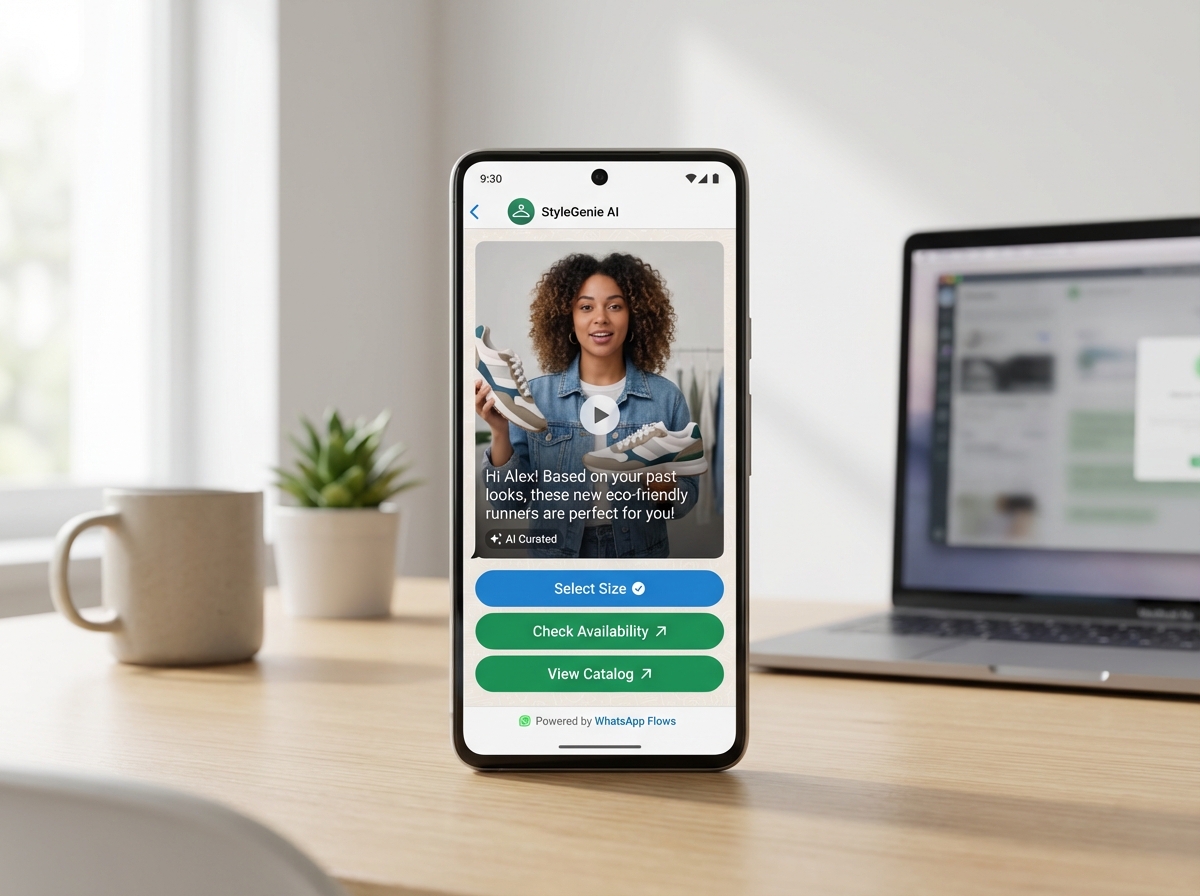
Interactive product discovery videos are the cornerstone of this new discovery layer. Instead of sending static images, brands now deploy dynamic video carousels where each asset is tailored to the user’s previous browsing behavior. For instance, a user inquiring about “running shoes” might receive a video featuring a brand ambassador mentioning them by name and highlighting the specific cushioning technology relevant to their stated fitness goals. This level of one-to-one marketing at scale ensures that the discovery phase is both engaging and highly relevant.
To implement this effectively, brands must integrate their product feeds directly into the conversational flow. This allows the AI to map user preferences captured during a “quiz-to-catalog” interaction to real-time inventory. By utilizing click-to-WhatsApp ads as the entry point, marketers can reduce the number of “hops” a customer takes, moving from an ad click to a personalized video recommendation in under 60 seconds. This streamlined approach minimizes cognitive load and accelerates the transition from interest to intent.
Sources:
- Omnichat: AI automation replacing legacy channels
- Typebot: Best WhatsApp automation tools 2026
- WANotifier: Scalable WhatsApp marketing automation
3. Engineering Chat-to-Purchase Conversion Funnels with Integrated Payments
The transition from mid-funnel engagement to a completed transaction is where chat-to-purchase conversion funnels prove their value. In 2026, a successful funnel is one that handles product selection, cart construction, address verification, and payment entirely within the WhatsApp interface. This is made possible through whatsapp catalog video marketing, where short, shoppable vertical videos are embedded into the chat, allowing users to “Add to Cart” directly from the video overlay.
A critical component of these funnels is the WhatsApp payment integration campaigns. By leveraging UPI and native payment links, brands can nudge users who have stalled at the checkout phase. For example, if a user adds an item to their cart but fails to pay, an automated trigger can send a personalized offer video with a “Pay Now” button that opens the user’s preferred UPI app instantly. This reduces the friction of manual data entry and significantly improves the “prepaid mix” for D2C brands, which is vital for managing cash flow and reducing Return-to-Origin (RTO) losses.
TrueFan AI's 175+ language support and Personalised Celebrity Videos can be strategically deployed here to provide high-value purchase reassurance. When a customer is considering a high-ticket item, a personalized video from a recognizable face explaining the warranty or assembly process can be the deciding factor. These videos are rendered in real-time (under 30 seconds), ensuring that the momentum of the conversation is never lost. By combining these visual assets with structured WhatsApp Flows for address capture, brands create a “one-click” shopping experience that rivals the efficiency of major marketplaces.
Sources:
4. Post-Purchase Excellence: Order Tracking and Conversational Support Automation
The customer journey does not end at the “Thank You” page; in fact, the post-purchase phase is where brand loyalty is cemented. WhatsApp order tracking personalization allows brands to send proactive, one-to-one updates that go beyond simple “shipped” notifications. In 2026, these updates include dynamic fields such as the customer’s name, real-time ETA, and even personalized video care guides for the specific product purchased. This proactive communication reduces “Where Is My Order” (WISMO) queries, which typically account for 50–60% of support volume.
Furthermore, conversational support automation India has evolved to handle 80% of repetitive queries through AI-driven deflection. Whether it is initiating a return, checking loyalty points, or seeking technical support, users can resolve their issues through automated threads that support multiple Indian vernacular languages. If a query becomes too complex, the system triggers a seamless live agent takeover, ensuring that the customer never feels abandoned.
Integrating cross-sell logic into these post-purchase flows is a high-ROI strategy. Once an order is marked as “delivered,” an automated business messaging offer video can be sent, recommending a complementary product based on the initial purchase. For instance, a customer who bought a premium coffee machine might receive a personalized video offering a discount on a specific blend of beans. This level of granular targeting ensures that retention efforts are as data-driven as acquisition campaigns.
Sources:
5. One-to-One Marketing at Scale: Broadcasts, Groups, and ROI Optimization
Scaling personalized communication without appearing spammy is the ultimate challenge for 2026 marketers. This is addressed through sophisticated broadcast list personalization strategies that segment users based on RFM (Recency, Frequency, Monetary) metrics and category affinity. Rather than sending a generic blast to the entire database, brands now deploy thousands of unique variants of a message, each tailored to the recipient's language, region, and past behavior.
WhatsApp group marketing automation has also emerged as a powerful tool for building micro-communities. Brands are using managed groups for VIP customers or UGC (User Generated Content) clubs, where automated polls, scheduled drops, and referral mechanics drive high levels of organic engagement. To maintain the visual appeal of these interactions, WhatsApp status offer videos are used to retarget users who have engaged with the brand but haven't made a recent purchase, creating a “surround sound” effect across the app’s various features.
Solutions like TrueFan AI demonstrate ROI through their ability to automate the creation of these visual assets. By conducting a single 15-minute shoot, a brand can generate thousands of personalized video variants for their broadcast campaigns. This eliminates the need for expensive, repetitive production cycles and allows for rapid A/B testing of different offer lines. Measuring the success of these initiatives requires a focus on metrics like CPConversation (Cost Per Conversation) and “reply-to-purchase” time, ensuring that every marketing rupee spent on WhatsApp is optimized for maximum revenue.
Sources:
- QuickReply.ai: India segmentation and broadcast alternatives
- Qmize: WhatsApp platform alternatives for 2026
- iThink Logistics: CRO with WhatsApp in India
6. Implementation Blueprint: A 90-Day Roadmap for WhatsApp Commerce Success
Transitioning to a fully automated WhatsApp commerce ecosystem requires a structured approach that balances technical integration with creative excellence. The following 90-day roadmap is designed for Indian D2C brands ready to lead the market in 2026.
Phase 1: Foundations (Weeks 0–2)
The initial phase focuses on the “plumbing” of the system. Brands must verify their WhatsApp Business Account (WABA) with a reputable Business Solution Provider (BSP) and integrate their product catalog feeds. This period is also used to map out customer cohorts within the CRM/CDP and prepare the initial set of message templates for opt-ins, welcome sequences, and cart recovery. Crucially, this is when the base video assets are produced—using a single-shoot approach to create the foundation for thousands of future personalized variants.
Phase 2: Pilot Flows and Funnels (Weeks 3–6)
During this phase, the brand launches its first end-to-end conversational funnel. This typically involves a click-to-WhatsApp ad leading to an AI assistant that guides the user through a product selection quiz. In-chat payments via UPI are enabled, and the “COD-to-prepaid” switcher logic is tested. Marketers should monitor the “reply-to-purchase” time closely, aiming for a window of under 8 minutes to maximize the impulse-buy nature of the platform.
Phase 3: Scale and Optimize (Weeks 7–12)
With the pilot successful, the brand expands the automation to all key product categories. Post-purchase reorder sequences and community-focused group automations are introduced. This is also the stage where “virtual reshoots” are utilized to update offer lines and creative assets without needing a new production day. By the end of day 90, the brand should have a self-sustaining ecosystem where WhatsApp payment integration campaigns and broadcast list personalization strategies work in tandem to drive a consistent 30–40% uplift in conversion rates.
Sources:
Sources:
- ActiveCampaign: WhatsApp compliance
- Webinterest: Reducing RTO with WhatsApp
- Flowcart: D2C WhatsApp funnels
Frequently Asked Questions
What are the typical template approval times in India for 2026?
Template approval times have significantly improved with the Cloud API expansion. Most templates are approved within minutes to a few hours. However, to avoid rejections, brands must ensure they strictly follow Meta’s commerce policies, particularly regarding prohibited categories and clear opt-out instructions. Using a structured service like TrueFan AI can help ensure that video-based templates meet all technical and compliance requirements for rapid approval.
How do I measure the ROI of video vs. text in WhatsApp marketing?
The most effective way is through a holdout methodology. Split your audience into two cohorts: one receiving text-only automated messages and the other receiving personalized video messages. Compare the CPConversation, conversion rate, and Average Order Value (AOV) between the two groups. In most 2026 benchmarks, video-first sessions show a 25–30% higher AOV due to the increased trust and clarity provided by the visual medium.
When should I use WhatsApp Groups vs. Broadcast Lists?
Broadcast lists are best for one-to-one marketing at scale, where the message needs to feel personal and private (e.g., abandoned cart reminders or personalized offers). Groups are better suited for community building, UGC harvesting, and high-engagement VIP clubs where peer interaction adds value. Always ensure you have explicit opt-in for group additions to remain compliant with India’s anti-spam guidelines.
How can I reduce RTO (Return to Origin) using WhatsApp automation?
RTO is a major challenge in India. Use WhatsApp Flows to trigger a “COD Confirmation” button immediately after an order is placed. You can also automate a “COD-to-prepaid” switcher campaign where a personalized video offers an additional 5–10% discount if the user switches to a prepaid UPI payment within the chat. This incentivizes the user to commit to the purchase, significantly lowering the likelihood of a return.
Is it possible to build a full chat-to-purchase conversion funnel without a website?
Yes. In 2026, many “WhatsApp-first” brands in India operate entirely within the app. By using WhatsApp Catalog for discovery, Flows for data capture, and integrated UPI links for payment, the entire transaction can be completed without the user ever visiting a traditional e-commerce website. This is particularly effective for mobile-first consumers in Tier 2 and Tier 3 cities.