Monsoon travel marketing 2026: The enterprise playbook to win April–May planners with personalized destination videos and weather-based offers
Estimated reading time: ~9 minutes
Key Takeaways
- Convert April–May planners into June–July bookings with IMD-triggered automation and weather-responsive offers
- Use personalized destination videos mapped to regional experiences and traveler personas
- Adopt safety-first guardrails to pivot creatives during heavy rain and ensure brand safety
- Scale efficiently with template-based DCO, multilingual rendering, and A/B testing
- Track watch-through, click-to-book, ROAS, and cancellation deltas to optimize ROI
Monsoon travel marketing 2026 is about converting April–May planners into June–July bookings using personalized regional videos and weather-based travel offers monsoon preparedness marketing 2026 guide across Kerala, Northeast India, and the Western Ghats. As the Indian travel landscape matures, the traditional “off-season” has been fundamentally redefined. Recent data indicates a staggering 46% year-on-year increase in monsoon bookings, primarily driven by Tier I city dwellers seeking respite from urban heat and the “revenge travel” fatigue of the summer peak. For enterprise travel leaders, the window to capture this demand is narrowing; the decision-making cycle for monsoon getaways now begins as early as mid-April, necessitating a sophisticated, data-driven approach to engagement.
The 2026 traveler is no longer satisfied with generic “rainy day” discounts. There is a profound shift toward “inward wanderlust” and regenerative tourism, where the journey is as much about mental restoration as it is about the destination. Gen Z and Millennial cohorts, in particular, are prioritizing short, 70-hour “micro-breaks” that offer high visual impact for social media and low-density environments. To win these high-intent segments, brands must move beyond static imagery. They must leverage regional monsoon experiences and early bird monsoon packages that are dynamically tailored to the individual’s context, language, and the real-time meteorological conditions of their desired destination.
Sources:
The Architecture of Rain Tourism Offer Automation and Weather-Based Triggers
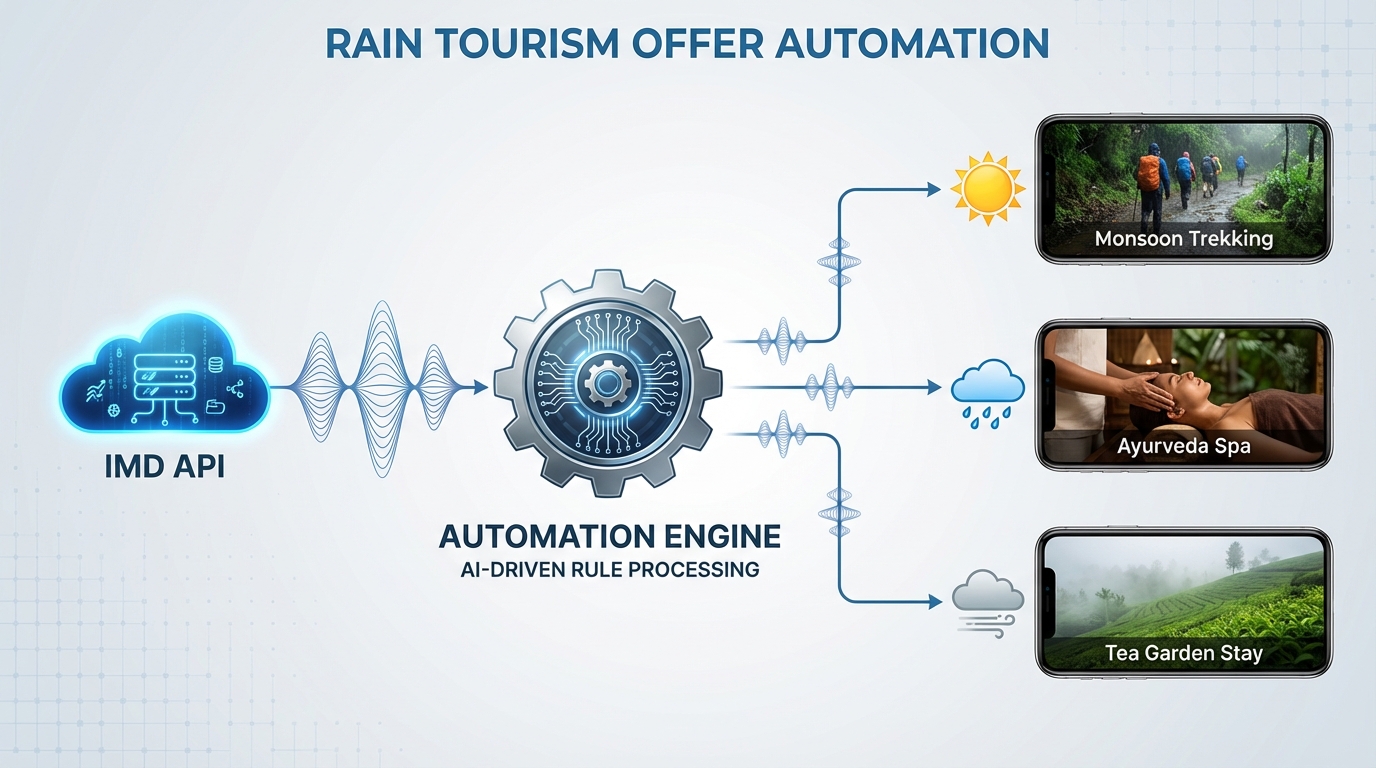
The cornerstone of a successful monsoon travel marketing 2026 strategy is the integration of real-time meteorological data into the marketing stack. This is achieved through rain tourism offer automation — monsoon preparedness marketing 2026 playbook — an end-to-end system that listens to India Meteorological Department (IMD) APIs and triggers specific creative assets or incentives based on forecasted conditions. By moving away from manual campaign launches, enterprises can respond to the inherent volatility of the monsoon season with surgical precision.
Weather-based travel offers are no longer just about “rainy day” coupons. In 2026, these are dynamic incentives programmatically served when specific thresholds are met. For instance, if the IMD 5-day rainfall forecast for Munnar indicates moderate precipitation (10-20mm/day), the system can automatically trigger a “Mist and Malabar” package. Conversely, if a red alert is issued, the automation engine can instantly swap trekking-focused ads for indoor wellness and Ayurveda-centric content, ensuring brand safety and traveler security.
Platforms like TrueFan AI enable this level of sophisticated orchestration by allowing brands to map these weather triggers directly to personalized video templates ONDC personalized video onboarding guide. When the API signals a “perfect rain” window, the system can generate thousands of unique videos addressing users by name, referencing their city of origin, and presenting a weather-optimized itinerary. This synchronization of environmental data and personalized creative content represents the pinnacle of modern travel performance marketing.
Sources:
Regional Playbook 1: Kerala Tourism Personalization Videos for High-Value Segments
Kerala remains the quintessential monsoon destination, but the 2026 market demands hyper-segmentation. Enterprise marketers must move beyond the “God's Own Country” trope and deliver Kerala tourism personalization videos that speak directly to the specific desires of couples, families, and wellness seekers. The goal is to de-risk the uncertainty of the rains by showcasing the unique allure of the monsoon while providing tangible value through early bird monsoon packages.
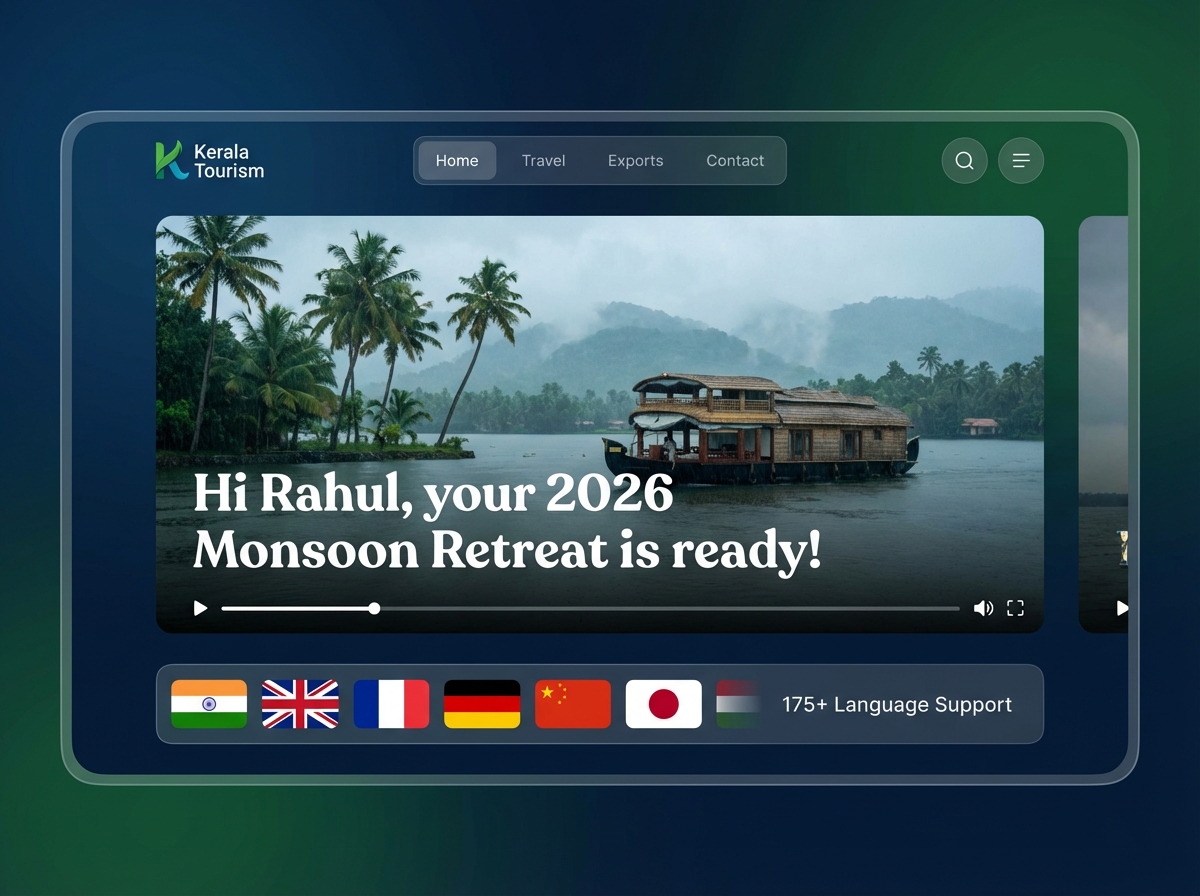
For the “Monsoon Honeymoon” segment, the creative focus should be on intimacy and seclusion. Scripts should emphasize private houseboats in Alleppey and the misty solitude of Munnar. A sample dynamic script might read: “Hi [FirstName], Kerala awaits your monsoon honeymoon. From private houseboats in Alleppey to mist-kissed Munnar, book your early bird monsoon packages for [TripWindow].” By injecting the user's name and preferred travel window, the video transforms from an advertisement into a personal invitation.
Wellness seekers represent a high-LTV (Lifetime Value) cohort that is particularly active during the monsoon. Monsoon healthcare marketing 2026 Ayurveda tourism marketing should highlight the traditional belief that the monsoon is the most effective time for rejuvenation treatments. TrueFan AI's 175+ language support and Personalised Celebrity Videos can be utilized here to deliver these messages in the user's native tongue—be it Malayalam, Hindi, or Arabic for inbound GCC travelers—enhancing the perceived expertise and trustworthiness of the brand.
Offer Logic and Safety Guardrails:
- Early Bird Tiering: Implement a D-60, D-45, and D-30 pricing structure to capture the April–May planning window.
- Weather-Responsive Creative: If rainfall exceeds 20mm/day, the automation engine should prioritize indoor spa and culinary experiences over outdoor excursions.
- Flexible Cancellation: Use “Weather-Safe” badges to reassure travelers that their booking can be rescheduled if extreme weather events occur.
Sources:
Regional Playbook 2: Northeast India Travel Campaigns and Rain-First Discovery
Northeast India offers a distinct value proposition for the 2026 monsoon traveler: the raw, untamed beauty of the world's wettest places. Northeast India travel campaigns should lean into the “Rain-First” discovery theme, targeting adventurous Gen Z travelers and nature enthusiasts who view the monsoon not as a deterrent, but as the primary attraction. The focus here is on the emerald tea estates of Assam and the dramatic rainscapes of Meghalaya.
Tea garden resort videos are a powerful tool for this region. They should capture the sensory experience of waking up to the sound of rain on tin roofs and the lushness of the plantations. A dynamic script for this segment could be: “Hi [FirstName], unwind at Assam’s tea gardens. Wake to rain on emerald estates—see our tea garden resort videos and book your early bird monsoon packages.” This approach appeals to the “slow travel” trend that is projected to dominate 2026 itineraries.
Furthermore, monsoon festival tourism marketing Bihu festival marketing 2026 guide is critical for the Northeast. From local harvest festivals to spiritual circuits, these events provide a cultural anchor for the trip. By integrating these dates into the campaign calendar, marketers can create a sense of urgency. For example, a campaign for Meghalaya could highlight the “Behdienkhlam” festival, using personalized videos to explain the cultural significance and offer exclusive access packages to travelers booking in May.
Technical Implementation for the Northeast:
- IMD Triggering: Use localized AWS (Automatic Weather Station) data to highlight “The Rainiest Day” experiences in Cherrapunji.
- Persona Toggling: For families, emphasize the interactive tea-plucking workshops and museums; for solo travelers, focus on guided rain trails and photography tours.
- Language Localization: Ensure content is available in Bengali and Assamese to capture the significant regional domestic market.
Sources:
Regional Playbook 3: Western Ghats Destination Marketing and Safety-First Adventure
The Western Ghats present a unique marketing challenge: balancing the allure of lush trekking trails with the necessity of safety. Western Ghats destination marketing in 2026 must be characterized by transparency and real-time responsiveness. The primary audience here is the weekend warrior from Mumbai, Pune, or Bangalore, looking for monsoon trekking campaigns that offer both adrenaline and security.
Monsoon trekking campaigns for locations like Rajmachi, Kudremukh, and Matheran should include clear difficulty ratings and safety overlays within the video creative. A sample script: “Hey [FirstName], the Western Ghats are calling—join our monsoon trekking campaigns to Rajmachi with expert guides. Book with weather-safe flexibility.” By explicitly mentioning “expert guides” and “weather-safe flexibility,” the brand addresses the primary friction point for monsoon trekkers: the fear of landslides or flash floods.
Goa also remains a critical component of the Western Ghats strategy. Beyond the beaches, the São João festival on June 24 offers a prime opportunity for monsoon festival tourism marketing. This festival, where locals jump into wells and streams to celebrate the rains, is a visual spectacle that resonates perfectly with the 2026 trend toward authentic, local experiences. Campaigns should pair these festival hooks with coastal heritage trails and rain-soaked culinary tours to diversify the Goa offering beyond the traditional summer sun.
Safety Guardrails and Automation:
- Threshold Alerts: If the IMD forecast monsoon preparedness marketing 2026 shows rainfall > 25mm/day or thunderstorm alerts, the system must automatically pause all trek-related creatives.
- Pivot Strategy: In the event of heavy rain alerts, the creative should instantly pivot to heritage, culinary, and wellness content, ensuring the traveler still sees value in their trip.
- Geo-Fencing: Use real-time location data to send safety alerts and alternative itinerary suggestions to travelers already in the region.
Sources:
The Creative Engine: Scaling Personalized Destination Videos for Enterprise
To execute these regional playbooks at scale, enterprise travel brands require a robust creative system. This involves moving away from bespoke video production for every campaign and toward a template-based model that allows for infinite variations. The 2026 standard for video marketing is “Dynamic Creative Optimization” (DCO) summer fashion video marketing, where every element of the video—from the spokesperson's greeting to the background scenery—is rendered in real-time based on user data.
The creative system should be built around four primary template families:
- Kerala: Honeymoon, Family, Ayurveda, and Photography.
- Northeast: Tea Gardens, Meghalaya Waterfalls, and Cultural Circuits.
- Western Ghats: Trekking, Festivals, and Rainy-Day Alternatives.
- Generic Monsoon: Early bird offers and flexible cancellation explainers.
Each template must be designed with dynamic fields for [FirstName], [OriginCity], [TripWindow], [PreferredLanguage], and [OfferTier]. This allows a single 15-minute celebrity shoot to be transformed into millions of unique assets. Solutions like TrueFan AI demonstrate ROI through this level of efficiency, saving thousands of man-hours in traditional editing and localization while maintaining a high standard of production quality.
Distribution and Formatting:
- Vertical First: 9:16 renditions for Instagram Reels and YouTube Shorts are non-negotiable for the Gen Z and Millennial segments.
- Multilingual Mastery: Content must be localized into at least 10 major Indian languages, ensuring the celebrity's voice and lip-sync remain perfectly natural.
- A/B Testing: Marketers should constantly test different hooks (e.g., “Save 20%” vs. “Free Spa Credit”) to see which resonates best with specific regional cohorts.
Measurement, Attribution, and ROI Targets for Monsoon 2026
In the enterprise environment, the success of monsoon travel marketing 2026 is measured by more than just “likes” or “views.” It requires a rigorous focus on bottom-line metrics and cohort analysis. Because the monsoon season is inherently volatile, attribution models must account for the impact of weather-triggered interventions on conversion and cancellation rates.
Key Performance Indicators (KPIs) for these campaigns include:
- Video Watch-Through Rate: A target of 75% watch-through for personalized videos, indicating high resonance.
- Click-to-Book Rate: The percentage of users who move from the personalized video landing page to a confirmed booking.
- Weather-Triggered ROAS: Comparing ROAS of IMD-triggered vs. always-on campaigns.
- Cancellation-Rate Delta: Measuring the reduction in cancellations for travelers who received “weather-safe” reassurances and alternative itineraries.
By analyzing these metrics across different regions (Kerala vs. Northeast) and personas (Family vs. Trekker), brands can refine their threshold logic for 2027. For example, if data shows that a 60% probability of precipitation (PoP) trigger leads to a higher conversion for wellness seekers than a 70% trigger, the automation engine can be adjusted mid-flight to maximize revenue.
Implementation Checklist and Frequently Asked Questions
For an enterprise to be “Monsoon Ready” by April, the following implementation steps are mandatory:
- Data Mapping: Ensure CRM fields (Name, Language, Past Bookings) are correctly mapped to the video generation API.
- IMD Integration: Connect the marketing automation platform to the IMD 5-day forecast and city-level AWS data.
- Creative Approval: Finalize all storyboards, celebrity scripts, and safety overlays by late March.
- Governance SOPs: Establish a clear escalation matrix for “Red Alert” scenarios where all outdoor promotions must be paused.
Frequently Asked Questions (FAQs)
What are the best early bird monsoon packages for couples and families?
The best early bird monsoon packages for 2026 focus on “weather-assured” experiences. For couples, this often includes monsoon honeymoon packages with private dining and spa credits. For families, the focus is on family monsoon vacation videos that highlight safe, indoor-outdoor activity mixes and flexible cancellation policies to de-risk the trip.
How to create Kerala tourism personalization videos at scale in 175+ languages?
Creating Kerala tourism personalization videos at scale requires a generative AI partner. By using a single celebrity shoot, platforms like TrueFan AI can render millions of personalized variants in 175+ languages with perfect lip-sync. This allows brands to execute a monsoon travel marketing 2026 strategy that feels hyper-local and personal to every potential traveler.
How to run monsoon trekking campaigns safely in the Western Ghats?
Running monsoon trekking campaigns requires a “Safety-First” creative approach. This involves integrating real-time weather-based travel offers that pivot to indoor activities during heavy rain. Marketers must use Western Ghats destination marketing to emphasize the presence of expert guides and provide real-time safety alerts via WhatsApp or SMS based on IMD data.
What is rain tourism offer automation and how do we integrate IMD data?
Rain tourism offer automation is a system that triggers specific marketing actions based on weather signals. Integration involves connecting to the IMD API to monitor rainfall intensity and probability. When specific thresholds are met, the system automatically serves weather-based travel offers, such as room upgrades during heavy rain or trekking discounts during clear windows.
How should Northeast India travel campaigns highlight tea garden resort videos and festivals?
Northeast India travel campaigns should use tea garden resort videos to tap into the “slow travel” and “nature-centric” trends of 2026. These should be paired with monsoon festival tourism marketing that highlights unique cultural events like the São João in Goa or regional harvest festivals, creating a compelling reason to visit during the rains.
Which regional monsoon experiences convert best by persona?
Data suggests that regional monsoon experiences involving wellness and Ayurveda convert best for older, high-income cohorts. Conversely, monsoon trekking campaigns and photography tours see the highest engagement among Gen Z and Millennial travelers. Tailoring the creative to these specific interests is key to maximizing ROI.
Conclusion: Winning the 2026 Monsoon Season
The 2026 monsoon season represents a significant revenue opportunity for enterprise travel brands that are willing to embrace technical and creative innovation. By moving away from static, one-size-fits-all marketing and toward a model of rain tourism offer automation and personalized destination videos, brands can capture the early-planning April–May audience with unprecedented precision.
The integration of IMD data, the use of sophisticated creative templates, and a relentless focus on safety and localization are the hallmarks of a market leader. As the demand for authentic, regenerative, and weather-responsive travel continues to grow, the ability to deliver the right message, in the right language, at the exact moment the rain begins to fall, will be the ultimate competitive advantage. Talk to TrueFan AI about enterprise personalized video for monsoon travel marketing 2026 and start building your weather-responsive playbook today.
Recommended Internal Links
- Monsoon Preparedness Marketing 2026: Weather-Triggered Wins
- Monsoon Preparedness Marketing 2026: Weather-Ready Wins
- ONDC Personalized Video Onboarding: 2026 Playbook Guide
- Monsoon Healthcare Marketing 2026: Proven Campaign Ideas
- Bihu festival marketing 2026: Northeast activation guide
- Summer Fashion Video Marketing: Weather-Triggered Wins
Frequently Asked Questions
What is IMD-triggered offer automation?
It is an orchestration system that listens to IMD forecasts and automatically serves weather-appropriate creatives and incentives when threshold conditions (e.g., rainfall intensity, PoP) are met.
How do personalized destination videos scale for enterprise needs?
By using template-based Dynamic Creative Optimization and a single celebrity shoot, platforms can render millions of variants with dynamic fields like name, origin city, trip window, language, and offer tier.
Which safety guardrails are essential for monsoon campaigns?
Set rainfall and thunderstorm thresholds to pause risky creatives, pivot to indoor or wellness content during alerts, and send geo-fenced safety notifications to travelers in-region.
What KPIs should we track to prove ROI?
Focus on video watch-through rate, click-to-book rate, weather-triggered ROAS versus always-on, and cancellation-rate deltas for cohorts exposed to “weather-safe” messaging.
How do we localize campaigns for regional audiences?
Render videos in multiple languages, align scripts to regional cultures and festivals, and use localized weather data (AWS stations) to highlight hyper-relevant experiences.