Back to school marketing India 2026: Personalised AI video and WhatsApp playbook for retention, re‑engagement, and offers
Estimated reading time: ~13 minutes
Key Takeaways
- Use AI-personalized video to deliver 1:1 messages across 175+ languages for superior engagement and conversions.
- WhatsApp-led orchestration with opt-ins, compliant templates, and rich media boosts CTR and ROI.
- Build vertical-specific plays for EdTech, schools, retail, and D2C with CRM-triggered re-activation and upsells.
- Scale with a 30–60–90 day launch plan: data mapping, creative pilots, A/B tests, and governance.
- Prioritize privacy, compliance, and security to protect PII and maintain platform trust.
The landscape of back to school marketing India 2026 has shifted from generic television spots and broad-based SMS blasts to a hyper-personalized, data-driven ecosystem. As June and July approach, marking the reopening of educational institutions across the subcontinent, brands are navigating a surge in parent research and student expectations. Success in this high-stakes season now hinges on the strategic integration of AI-driven video personalization and WhatsApp-led engagement to drive meaningful conversions.
For CMOs and Growth Heads at major EdTech players like PhysicsWallah or retail giants like FirstCry, the challenge is no longer just visibility; it is cut-through. With the Indian internet user base reaching 958 million in 2025, and rural users now accounting for 57% of that total, the demand for regional-language content has never been higher. Platforms like TrueFan AI enable brands to bridge this gap by delivering 1:1 video messages that resonate across diverse demographics and linguistic backgrounds.
1. Why back to school AI video marketing is the 2026 growth lever
In the current marketing climate, “personalization” has evolved beyond simply inserting a first name into an email subject line. Today, back to school AI video marketing represents the pinnacle of one-to-one communication, where dynamic videos feature a celebrity or faculty avatar addressing a learner by their specific name, grade, and city. This technology allows a single 15-minute shoot to be transformed into millions of unique variants, each localized into 175+ languages with perfect lip-sync and voice retention.
The 2026 trend indicates that Indian brands are kicking off their back-to-school offers as early as June, utilizing omnichannel promotions that blend digital urgency with physical retail presence. Global benchmarks, such as Apple’s student discounts and Amazon’s massive Back to School Sale in India, have set a high bar for consumer expectations. To compete, brands must leverage success drivers like product bundling, gamification, and hyper-targeted offers that speak directly to the core audiences: students, parents, and educators.
TrueFan AI’s 175+ language support and Personalised Celebrity Videos provide a unique competitive advantage by allowing for “virtual reshoots.” This means marketing teams can swap lines like “50% off” for “Buy 1 Get 1 Free” without ever needing to return to the studio. With sub-30-second rendering times and seamless CRM/CDP integrations, these videos become a scalable asset rather than a production bottleneck, ensuring that every touchpoint in the customer journey is optimized for maximum impact.
Sources:
- Netcore Cloud: Back-to-school marketing ideas
- Lotame: A marketer’s guide to back-to-school campaigns
2. Channel deep-dive: back to school WhatsApp video campaign that converts
WhatsApp has solidified its position as the primary communication channel for Indian households, boasting near-instant open rates and high engagement levels. A back to school WhatsApp video campaign leverages this intimacy, supporting rich media previews, quick replies, and deep links that lead directly to payment gateways or counselor booking slots. In 2026, the shift toward per-message charging in India necessitates a more disciplined, ROI-focused approach to messaging.
Current benchmarks for India marketing messages hover around ₹0.7846 per message, though rates vary based on the specific provider and message category. To maintain profitability, brands must focus on high-intent triggers and precise timing. Compliance is equally critical; obtaining explicit opt-ins via QR codes in-store or lead-gen ads on social media is the first step in building a sustainable WhatsApp ecosystem. Respecting first-touch timing—such as aligning messages with exam result dates—ensures that the brand remains helpful rather than intrusive.
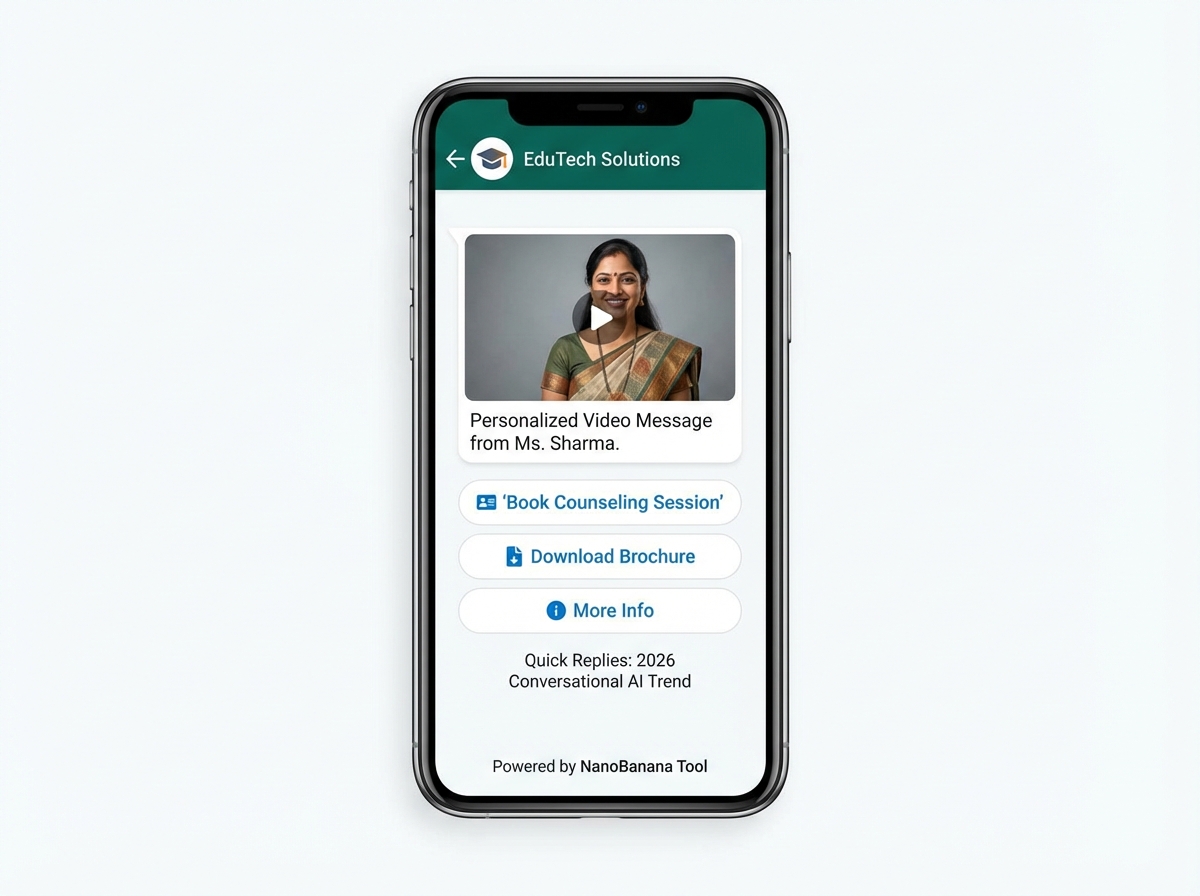
An effective execution blueprint involves a multi-stage cadence. It begins with a welcome message and preference capture, followed by a re-engagement prompt and an enrollment nudge featuring a personalized video thumbnail. The final stages include the “offer drop” with an urgency line and post-purchase cross-sells. A/B testing different thumbnails—such as a celebrity close-up versus a bold offer frame—can significantly impact click-through rates. Solutions like TrueFan AI demonstrate ROI through native WhatsApp orchestration and API-triggered renders that ensure the video is ready the moment the user interacts.
Sources:
- Flowcall: WhatsApp Business API pricing (2026)
- TeleCRM: WhatsApp pricing guide
- Meta: WhatsApp Business Platform pricing
3. Vertical 1: personalized video campaigns EdTech India for re-activation
The EdTech sector in India faces a dual challenge: high acquisition costs and the constant threat of learner churn. To combat this, personalized video campaigns EdTech India are being deployed to re-activate lapsed learners and upsell existing ones. By using CRM-triggered data, brands can send “win-back” videos where a faculty avatar cites the learner’s specific goal, the last course they touched, and a looming deadline for a special discount.
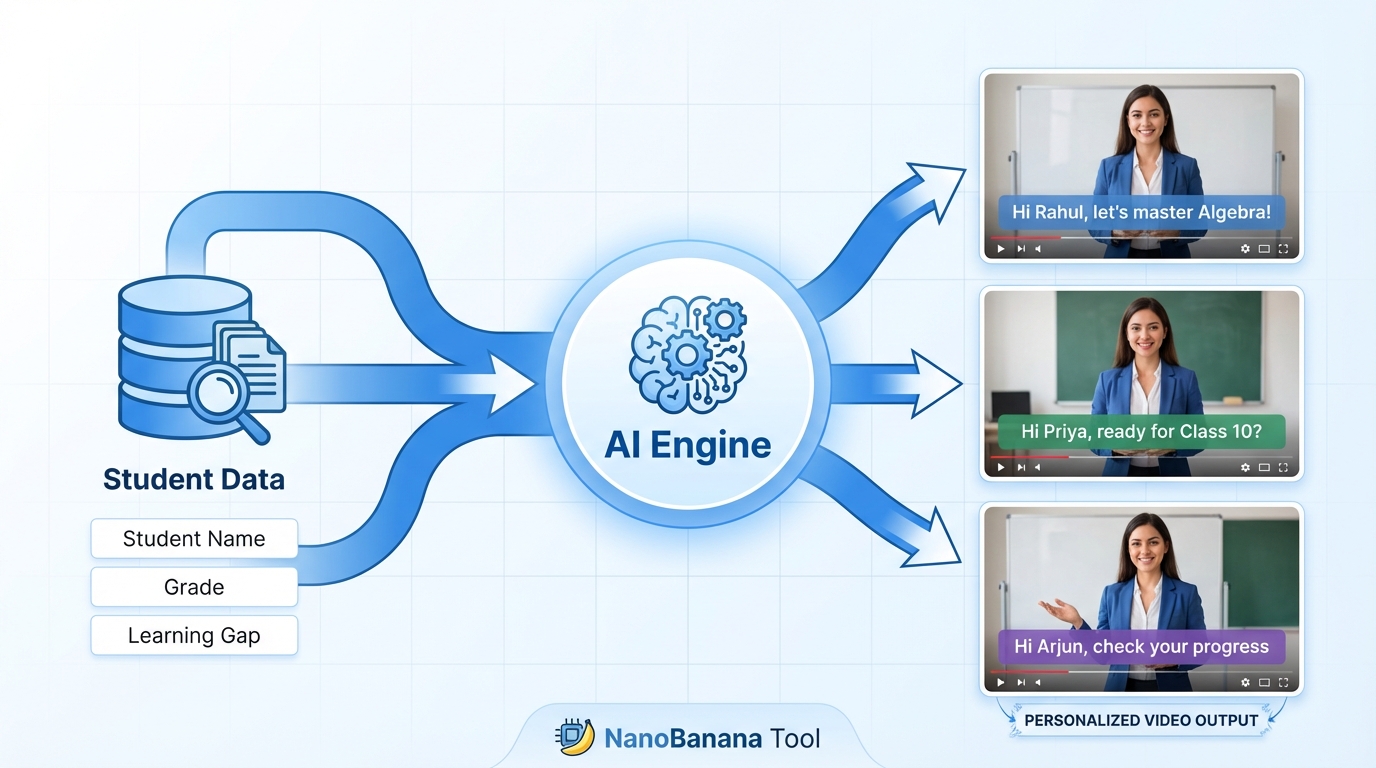
This level of EdTech re-engagement video campaigns India extends to upselling personalized bundles, such as a core course paired with a test series, highlighting specific syllabus gaps based on previous performance. For students transitioning between grades—such as moving from Class 9 to Class 10—milestone planners delivered via video can provide the necessary guidance to secure a renewal. The data schema for such personalization is comprehensive, including parent and learner names, board affiliation, city, and even test score snapshots.
Real-world evidence supports the efficacy of this approach. For instance, Goibibo observed a 17% higher WhatsApp read rate when incorporating celebrity-led personalized videos compared to standard text. Similarly, Dainik Bhaskar achieved 3.2x higher participation through personalized celebrity video invites. When scaled, the results are staggering; Zomato generated 354,000 personalized videos in a single day, while Hero MotoCorp delivered 2.4 million festive greetings. These cases prove that an EdTech retention video strategy India 2026 is not just a luxury, but a scalable necessity for market leaders.
Sources:
- GK Digital India: School marketing guide (2026)
- Ksystematics: Admissions with digital marketing (2026)
4. Vertical 2: school admission campaign personalization 2026
For traditional schools and test-prep centers, school admission campaign personalization 2026 is the key to converting leads into enrolled students. This involves a 1:1 content journey that guides a prospect from the initial inquiry to counselor booking, document completion, and finally, fee payment. By providing individualized timelines and center-specific information, institutions can reduce the friction often associated with the admissions process.
A student enrollment personalized video can feature the school principal or a popular faculty member welcoming the parent by name and mentioning the nearest center location. This “personalized enrollment nudge videos” approach creates an immediate emotional connection and establishes trust. Key performance indicators (KPIs) for these campaigns include the view-to-appointment rate and the speed of document checklist completion. By automating these nudges, admissions teams can focus on high-value interactions while the AI handles the repetitive follow-ups.
The personalization fields used in these campaigns are highly specific, ranging from the learner’s current grade and board to scholarship codes and counselor availability. In the Indian market, localized landing pages and community outreach remain vital, but the addition of a personalized video in the local language—be it Hindi, Tamil, or Marathi—serves as a powerful differentiator. This strategy ensures that the institution stands out in a crowded marketplace where parents are often overwhelmed by generic advertisements.
Sources:
- Sunil Pratap Singh: Marketing ideas for school admissions
- GK Digital India: School marketing guide (2026)
5. Vertical 3 & 4: Stationery, Retail, and D2C brand campaigns
The stationery and supplies sector sees its highest peak during the June-July reopening phase. Successful school supplies offer marketing India strategies involve the creation of “starter kits” tailored to specific school boards and grades. By using personalization schemas that include the child’s name and the nearest retail store, brands can drive footfall through unique QR-coded coupons delivered via WhatsApp. These videos can dynamically show the exact bundle available at the store closest to the parent’s pin code.
In the realm of retail and fashion, a kids fashion back to school campaign focuses on the “first-day look.” Personalized videos can include size and fit guides, dress code compliance checks, and the ability to reserve a specific size at a local outlet. This level of service is particularly effective for back to school D2C brand campaigns, where building a direct relationship with the parent is paramount. By embedding lookbook carousels within the video interface, brands can provide a seamless shopping experience that bridges the gap between inspiration and purchase.
Furthermore, a parenting brand summer marketing video can be used to pre-seed demand during the April-May “summer bridge” period. Content focusing on habit streaks, such as reading or nutrition, can transition into June offers for learning kits or wellness packs. Indian marketers have found that interactive CTAs and gamified challenges during the summer months significantly lift conversion rates when the school season officially begins. This proactive approach ensures that the brand is top-of-mind when parents begin their seasonal spending.
Sources:
6. Lifecycle, Retention, and the school season brand activation India
A robust EdTech retention video strategy India 2026 must cover the entire student lifecycle. The first 30 days are critical for celebrating “micro-wins” and providing progress nudges to reduce early churn. Between 30 and 60 days, the focus shifts to module-completion showcases and personalized upsells. By the 60-to-90-day mark, re-engagement efforts for declining activity become necessary, often involving faculty-led doubt-clearing invites or renewal offer previews.
Beyond digital channels, a school season brand activation India must incorporate “In Real Life” (IRL) touchpoints. Retail tie-ins, such as OOH (Out-of-Home) billboards with QR codes that lead to a personalized video, can bridge the gap between physical and digital worlds. Campus society collaborations and in-store counter opt-ins provide additional data points for the CRM. Attribution is managed through UTMs embedded in video CTAs and store-visit tracking, allowing marketers to see the direct impact of their video campaigns on physical sales.
Data privacy and compliance are the bedrock of any enterprise-grade campaign in India. Adhering to PII (Personally Identifiable Information) minimization, encryption, and consent-first celebrity workflows is non-negotiable. WhatsApp policy adherence, including template approvals and respecting “quiet hours” during exam windows, ensures that the brand maintains a positive reputation. TrueFan AI provides the necessary infrastructure, including ISO 27001 and SOC 2 certifications, to ensure that all data is handled with the highest level of security and transparency.
7. 30–60–90 Day Enterprise Launch Plan
Implementing a high-scale personalized video strategy requires a structured approach to ensure technical readiness and creative excellence.
Day 0–30: Foundation and Mapping
- Data Mapping: Identify and map required fields such as name, grade, city, and last activity date from your CRM or CDP.
- Script Development: Create a script kit covering re-engagement, enrollment nudges, and bundle upsells.
- Compliance Setup: Establish WhatsApp opt-in mechanisms and draft templates for Meta approval.
- Creative Pilot: Conduct a single 15-minute shoot with a chosen celebrity or faculty member to define the core visual assets.
Day 31–60: Pilot and Iteration
- Channel Launch: Roll out the pilot across WhatsApp, email, and in-app notifications.
- A/B Testing: Monitor read rates and view-through rates (VTR) for different opener lines and offer frames.
- Virtual Reshoots: Use AI capabilities to update offer lines or deadlines based on real-time performance data without needing new footage.
Day 61–90: Scaling and Optimization
- Cohort Expansion: Add regional languages and expand the strategy to include retail QR codes and OOH activations.
- Referral Integration: Introduce personalized referral videos to leverage the existing satisfied user base.
- Governance: Implement frequency caps and reporting cadences to align with finance and growth targets.
Sources for Evidence Pack:
Frequently Asked Questions
How does AI video personalization improve ROI compared to traditional video ads?
AI video personalization delivers millions of individualized videos instead of a single generic asset, lifting relevance and engagement. Brands have seen higher read and view rates (e.g., a 17% read-rate lift on WhatsApp), which compounds into better CTRs, lower acquisition costs, and higher lifetime value.
Is it difficult to integrate personalized videos with existing CRMs like Salesforce or HubSpot?
No. Modern platforms provide robust APIs and native connectors so videos can be triggered in real time from CRM/CDP events. This ensures the right creative variant reaches each user at the optimal moment without manual intervention.
How do you handle the linguistic diversity of the Indian market?
AI-driven voice retention and lip-sync localize a single master shoot into 175+ languages, so families in Tamil Nadu, Maharashtra, or Delhi receive natural, native-language experiences with consistent performance and brand voice.
What are the primary metrics to track for a back-to-school campaign?
Track click-to-view, view-through rate (VTR), reply rate on WhatsApp, and conversion to payment or enrollment. For strategy, monitor reactivation rate, cohort retention, and ROAS to guide offer design and frequency caps.
How does TrueFan AI ensure the security of student and parent data?
Enterprise-grade controls include PII minimization, encryption, consent-first workflows, and adherence to ISO 27001 and SOC 2. Policy compliance (e.g., WhatsApp templates and quiet hours) protects user trust and brand reputation.
Can these videos be used for physical retail stores?
Yes. QR codes on packaging, OOH, or in-store displays can trigger instant personalized videos with store-specific bundles or coupon codes, linking an offline moment to measurable digital conversions.