Pre-monsoon healthcare marketing 2026: Personalized preventive wellness campaigns in India that convert
Estimated reading time: ~10 minutes
Key Takeaways
- Time campaigns to regional health alerts (IMD, IDSP) for precision outreach at the moment of rising risk.
- Use a unified data layer to score pincode-level risk tiers and trigger automated, localized journeys.
- Deploy personalized video (name, location, risk) to lift completion, clicks, and preventive action.
- Build multi-stage playbooks for dengue, malaria, water safety, diagnostics, and OTC urgency.
- Ensure DPDP-compliant consent, data minimization, and secure handoff for sensitive health information.
The landscape of pre-monsoon healthcare marketing 2026 in India is defined by a critical shift from generic awareness to hyper-localized, data-driven intervention. As the March–April window approaches, healthcare providers and pharmaceutical brands must navigate a complex environment where seasonal health anxiety meets stringent data privacy regulations. This period represents India’s “prevention moment,” where the convergence of rising temperatures and impending rainfall creates a unique psychological trigger for family health protection.
By deploying preventive wellness campaigns India, organizations can transform this seasonal apprehension into proactive health outcomes. The strategy relies on integrating regional health alerts with sophisticated personalization to deliver the right message at the precise moment of risk. This blueprint outlines how to operationalize these campaigns to maximize engagement, clinical adherence, and preventive care ROI.
1. The Pre-Monsoon Opportunity and Regional Health Alerts
The March–April window in India serves as the definitive precursor to the annual monsoon, characterized by escalating risks of vector-borne and water-borne diseases. During this period, urban heat islands and intermittent pre-monsoon showers create ideal breeding niches for Aedes mosquitoes, significantly increasing the density of disease vectors before the first heavy rains. Healthcare marketers must monitor regional health alerts to time their outreach, ensuring that interventions coincide with local environmental shifts.
Data from the India Meteorological Department (IMD) indicates that 2026 will see a 15% increase in pre-monsoon heatwave frequency across the Indo-Gangetic plain. These extreme heat events exacerbate chronic conditions and drive dehydration, making heat stress a primary narrative for elderly and pediatric care. Simultaneously, coastal regions like Kerala and Tamil Nadu often experience early leptospirosis risks following initial showers, requiring immediate localized communication.
Strategic outreach must be grounded in real-time surveillance, utilizing the Integrated Disease Surveillance Programme (IDSP) to identify emerging outbreak signals. By mapping these signals to specific pincodes, brands can transition from national broadcasting to micro-regionalized alerts. This precision ensures that a family in a high-risk dengue cluster receives a different intervention than one in a drought-prone region facing water contamination.
Sources:
2. Data Architecture for Preventive Wellness Campaigns India
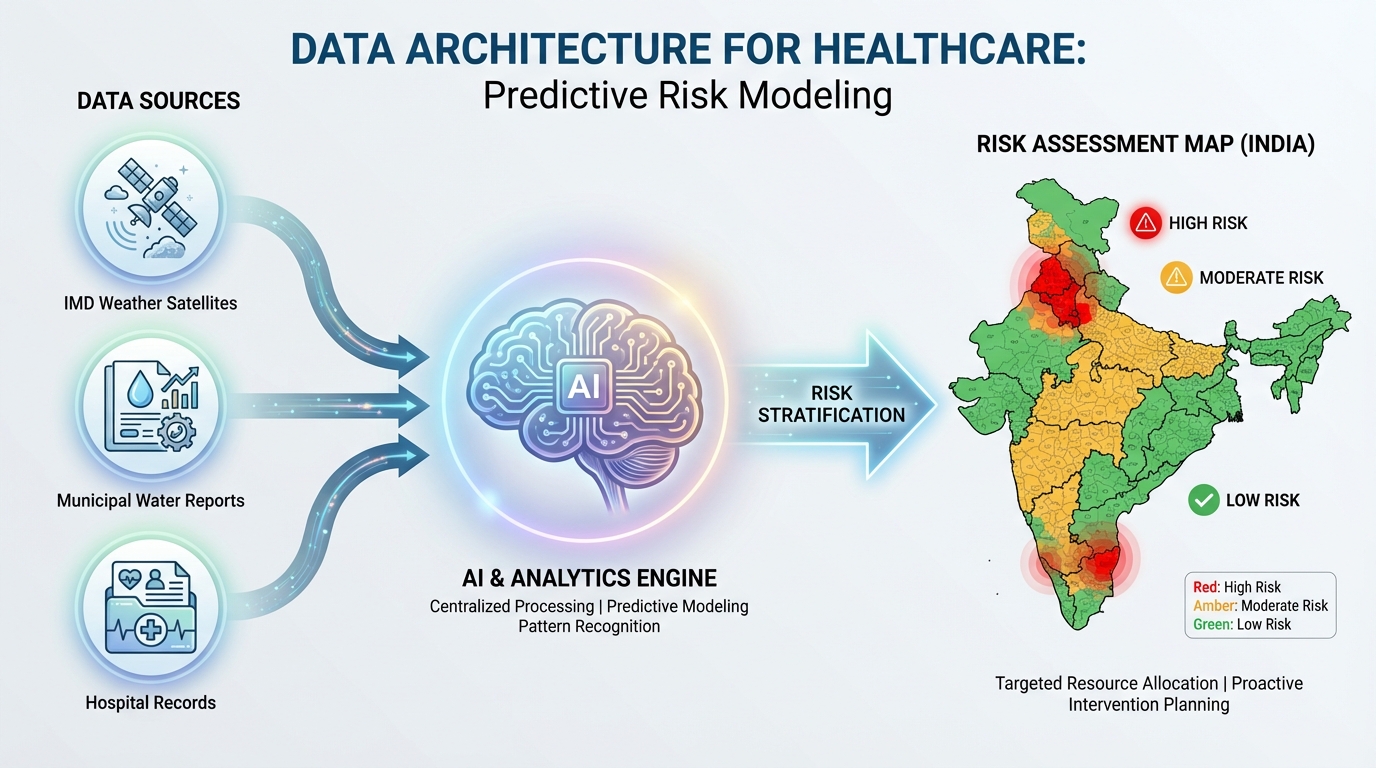
Operationalizing preventive wellness campaigns India requires a robust data ingestion architecture that merges public health signals with first-party consumer data. The objective is to create a “Who, Where, When” matrix that triggers automated workflows based on environmental risk tiers. This architecture must normalize disparate feeds—such as IMD rainfall forecasts and municipal water quality advisories—into a unified district-level risk score.
The ingestion engine should categorize regions into Green, Amber, and Red risk tiers, with a 7-day half-life for data recency to ensure relevance. When a specific pincode enters a “Dengue Amber” state, the system should automatically identify consented users within that geography. Platforms like TrueFan AI enable the seamless integration of these risk triggers with personalized video generation, ensuring that the creative content reflects the immediate local reality.
First-party data points, including language preference, family composition, and prior health history, are then overlaid onto the geographic risk tier. For instance, a household with children under 12 in a high-risk vector zone would be prioritized for mosquito repellent marketing and pediatric wellness checks. This level of granularity is essential for moving beyond “one-size-fits-all” marketing and achieving the high conversion rates required for 2026's competitive landscape.
Sources:
3. Personalization Strategy and Immunity Booster Personalization Videos
The core of a successful pre-monsoon strategy lies in the deployment of immunity booster personalization videos that address the viewer’s specific household needs. These videos utilize celebrity or doctor avatars to deliver evidence-based advice on nutrition, vitamin timing, and hygiene, personalized by the viewer’s name and location. TrueFan AI's 175+ language support and Personalised Celebrity Videos allow brands to maintain high production value while delivering micro-targeted content at scale.
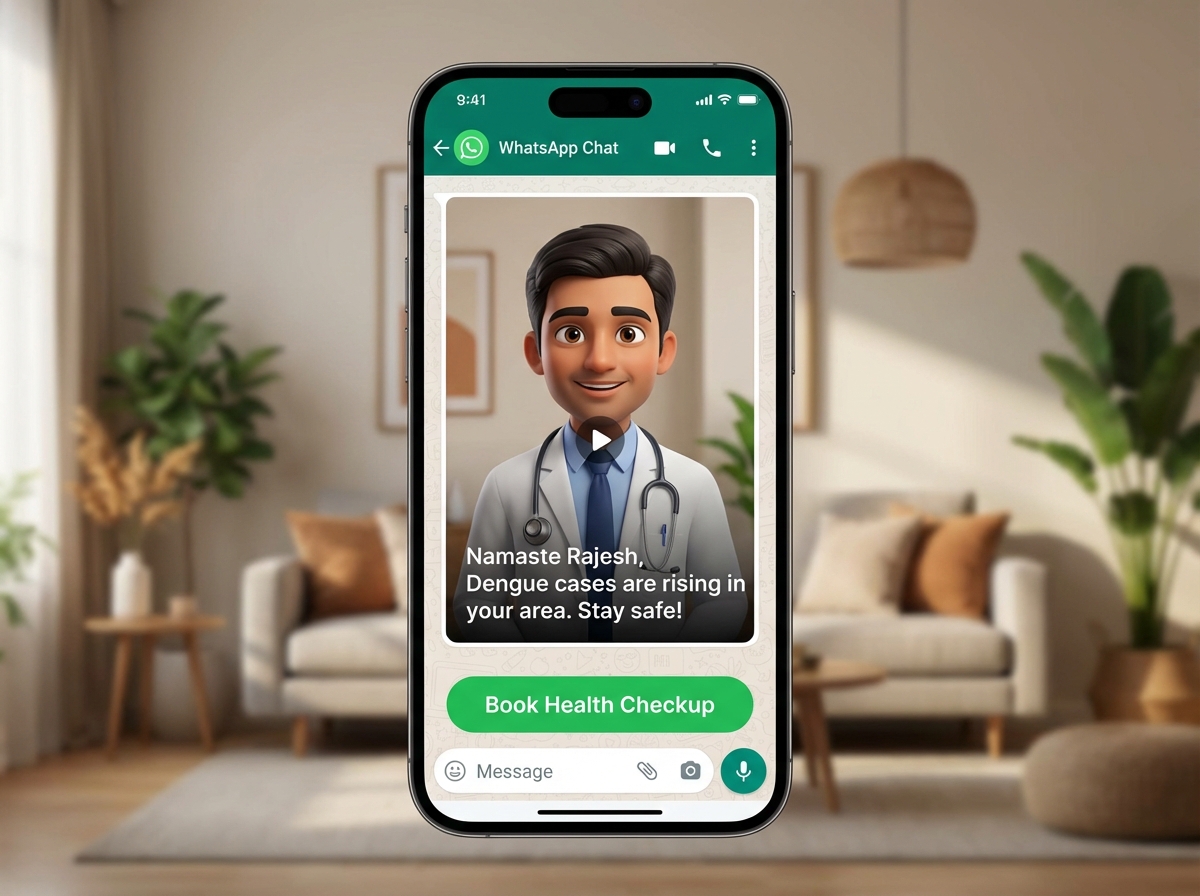
A high-converting video script follows a rigorous matrix: a 5-second hook addressing the viewer by name and referencing their local risk (e.g., “Namaste Rajesh, dengue cases are rising in Andheri East”). This is followed by 2–3 actionable household steps, such as checking for stagnant water or starting a specific immunity regimen. The video concludes with a time-boxed call-to-action (CTA), such as booking a baseline blood test before the monsoon peak.
Beyond the visual content, the delivery mechanism must be optimized for the Indian market, where WhatsApp Business API remains the primary engagement channel. By embedding these personalized videos within a WhatsApp flow, brands can achieve read rates exceeding 80%. This approach ensures that monsoon disease awareness videos are not just seen but acted upon, bridging the gap between awareness and clinical intervention.
Sources:
4. Dengue Malaria Prevention Marketing and Water Safety Playbooks
Dengue malaria prevention marketing must evolve into a multi-stage journey that guides the consumer from education to purchase. In 2026, successful campaigns will use dynamic “Red Zone” overlays in their creative assets to signify the urgency of vector control. These campaigns should be synchronized with the National Center for Vector Borne Diseases Control (NCVBDC) alerts, ensuring that mosquito repellent marketing reaches the consumer exactly when local vector densities spike.
Water-borne disease prevention requires a similarly localized approach, focusing on water purifier offer campaigns in districts prone to early flooding. Messaging should highlight local water quality issues and offer installation SLAs that guarantee protection before the monsoon arrives. Educational content, such as “boil-or-filter” guides, builds brand authority and trust, positioning the product as a necessary health safeguard rather than a discretionary purchase.
For pharmaceutical brands, the focus shifts to vitamin supplement urgency marketing, emphasizing the role of micronutrients in maintaining the mucosal barrier during high-humidity months. These campaigns must avoid curative claims and instead focus on scientifically-backed lifestyle advice. By bundling these products with diagnostic services—such as a “Monsoon Ready” kit—brands can increase average order value while providing comprehensive protection for the family.
Sources:
5. Medical Checkup Reminders and Wellness Subscription India
The pre-monsoon period is the optimal time to drive medical checkup reminders for baseline health assessments. Tests such as Complete Blood Count (CBC), Liver Function Tests (LFT), and Vitamin D/B12 levels provide a clinical baseline before seasonal illnesses strike. Automated journeys should be timed at T-45, T-21, and T-7 days relative to the regional monsoon onset, with reactivation flows for missed appointments.
To ensure long-term engagement, healthcare providers are increasingly adopting the wellness subscription India model. These subscriptions bundle seasonal diagnostic tests, teleconsultations, and home-delivery of preventive products like repellents and supplements. By framing these as “Family Health Protection” plans, providers can secure recurring revenue while improving the health outcomes of their patient base through continuous monitoring.
Family health protection automation plays a vital role in managing these subscriptions, handling everything from renewal reminders to personalized health tips based on the subscriber's profile. For example, a subscriber with a history of respiratory issues might receive a personalized video alert when local air quality or humidity levels reach a specific threshold. This proactive care model is the cornerstone of modern preventive healthcare in India.
Sources:
6. Health Insurance Seasonal Offers and OTC Monetization
Health insurance seasonal offers during the pre-monsoon window should focus on wellness riders and OPD add-ons that cover preventive care. In 2026, insurers are leveraging personalized videos to explain complex policy benefits, such as “no-claim bonus” protection during epidemic outbreaks. These campaigns must align with IRDAI’s “Wellness and Preventive Features” guidelines, ensuring that incentives are clearly linked to measurable health improvements.
The monetization of Over-the-Counter (OTC) products, such as immunity boosters and hygiene kits, requires a countdown-based urgency strategy. Creative assets should feature regional countdowns—“10 days to first rains in Mumbai”—to drive immediate action. This approach taps into the natural “prevention anxiety” of the season, encouraging consumers to stock up on essentials before supply chain disruptions or price hikes occur during the peak monsoon.
A 45-day execution calendar is essential for coordinating these diverse efforts. Early March should focus on data wiring and creative production, followed by regional pilots in mid-March. By April, the campaign should reach national scale, with intensified messaging tied to real-time IMD alerts. This phased approach allows for continuous optimization based on initial conversion data and shifting weather patterns.
Sources:
7. Preventive Care ROI, Compliance, and FAQ
Measuring preventive care ROI involves tracking incremental revenue from service bookings, product sales, and the long-term value (LTV) of retained subscribers. Solutions like TrueFan AI demonstrate ROI through significant lifts in video completion rates and direct-to-booking conversions compared to traditional static outreach. Organizations should utilize geo-split testing and holdout groups to isolate the impact of personalized interventions on district-level health outcomes.
Compliance with the Digital Personal Data Protection (DPDP) Act 2023 is non-negotiable for any healthcare campaign in 2026. This requires explicit consent for personalized outreach, clear notice of data usage, and easy opt-out mechanisms. Sensitive health data should never be displayed within a video; instead, videos should act as a secure gateway to encrypted landing pages where clinical information is handled.
Frequently Asked Questions (FAQ)
Q1: How does pre-monsoon healthcare marketing 2026 differ from previous years?
In 2026, the primary difference is the integration of real-time regional health alerts with hyper-personalized video delivery. While previous years relied on broad awareness, current strategies use pincode-level data to trigger specific interventions, significantly increasing the relevance and ROI of every message.
Q2: What role does TrueFan AI play in these preventive campaigns?
TrueFan AI provides the infrastructure for generating millions of personalized video variants in 175+ languages. This allows healthcare brands to deliver celebrity-led or doctor-led messages that address the viewer by name and local risk tier, which is critical for driving action in a crowded digital environment.
Q3: How can we ensure DPDP compliance while personalizing health videos?
Compliance is maintained by using only consented first-party data (like name and pincode) for the video content itself. Any sensitive medical history or diagnostic results are kept behind secure, authenticated portals. Every communication must also include a clear purpose notice and a simple way for the user to withdraw consent.
Q4: Which channels are most effective for delivering medical checkup reminders?
WhatsApp Business API is the most effective channel due to its high read rates and support for rich media like video. However, a multi-channel approach—including SMS fallbacks for low-connectivity areas and email for detailed educational content—ensures maximum reach across different demographic segments.
Q5: What metrics should we use to measure the success of a wellness subscription India campaign?
Key metrics include the subscription attachment rate, monthly active users (MAU) engaging with health content, and the reduction in emergency OPD visits among the subscriber base. Ultimately, the success is measured by the lift in Customer Lifetime Value (LTV) and the overall improvement in the population's health metrics.
Sources:
Frequently Asked Questions
When should pre-monsoon campaigns start?
Begin data wiring and creative production in early March, pilot regionally by mid-March, and scale nationally in April with messaging synchronized to real-time IMD and IDSP alerts.
What personal data is safe to use in videos?
Use only consented, low-sensitivity attributes like name, language, and location (pincode/city). Avoid embedding medical history or results in the video; hand off to secure, authenticated pages.
How do we measure preventive care ROI?
Track incremental bookings, OTC sales, subscription LTV, video completion and CTR, plus geo-split or holdout lift on district health outcomes. Tie KPIs to risk-tier exposure.
Which creative formats work best on WhatsApp?
Short, personalized videos with a 5-second hook, 2–3 actionable steps, and a clear, time-bound CTA outperform static assets. Use localized captions and thumbnails referencing the user’s area.