
Ramadan Quick Commerce Marketing 2026: India’s Playbook for Hyperlocal Iftar Deals and 10-Minute Growth
Key Takeaways
- Win the dual-peak Ramadan windows—Iftar and Sehri—with hyperlocal inventory and 10-minute SLAs.
- Design zone-specific bundles and Sehri automation to lock in recurring demand and boost AOV.
- Drive trust with pincode prayer-time personalization, language localization, and Halal transparency.
- Scale purpose-led growth via community iftar sponsorships and charity automation during the last 10 nights.
- Leverage TrueFan AI for enterprise-grade personalized video journeys that lift engagement across WhatsApp and app push.
The landscape of Indian retail is undergoing a seismic shift as we approach the first quarter of 2026. For quick commerce (q-commerce) giants and FMCG brands, the Ramadan season—projected to begin around February 18 and conclude with Eid-ul-Fitr on March 20, 2026—represents more than a religious observance; it is a high-velocity growth window defined by unique consumption patterns and ultra-fast fulfillment requirements. As the Indian quick commerce market is forecasted to reach a valuation of $3.65 billion by 2026, growing at a CAGR of 12.74%, the competition for “share of stomach” during Iftar and Sehri has never been more intense.
Ramadan quick commerce marketing 2026 is defined as the strategic deployment of hyperlocal, time-sensitive, and culturally resonant offers designed around the specific consumption peaks of the holy month. Unlike standard festive marketing, Ramadan requires a granular understanding of the 10-minute delivery promise, where the margin for error between a “on-time Iftar” and a “missed meal” is non-existent. In this competitive phase, platforms like Blinkit, Swiggy Instamart, and Zepto are moving beyond basic grocery delivery into specialized categories like gifting, beauty, and pharma, making a comprehensive Ramadan playbook essential for CMOs and growth heads.
The 2026 market context is particularly unique. We are entering a “super-expansion” phase where non-grocery categories are expected to drive significant basket-building. Media consumption during this period intensifies, with a marked surge in food, fashion, and family-centric narratives. To win, brands must prioritize hyperlocalism—leveraging dark stores and partner networks to meet 10–30 minute Service Level Agreements (SLAs) during the critical windows of Iftar (post-sunset) and Sehri (pre-dawn).
Source: Ummid.com Ramadan 2026 Dates, Mordor Intelligence Q-Commerce India 2026, Inc42 Quick Commerce 2026 Outlook
Demand Timing and Peak Windows: Optimizing Religious Occasion Quick Delivery
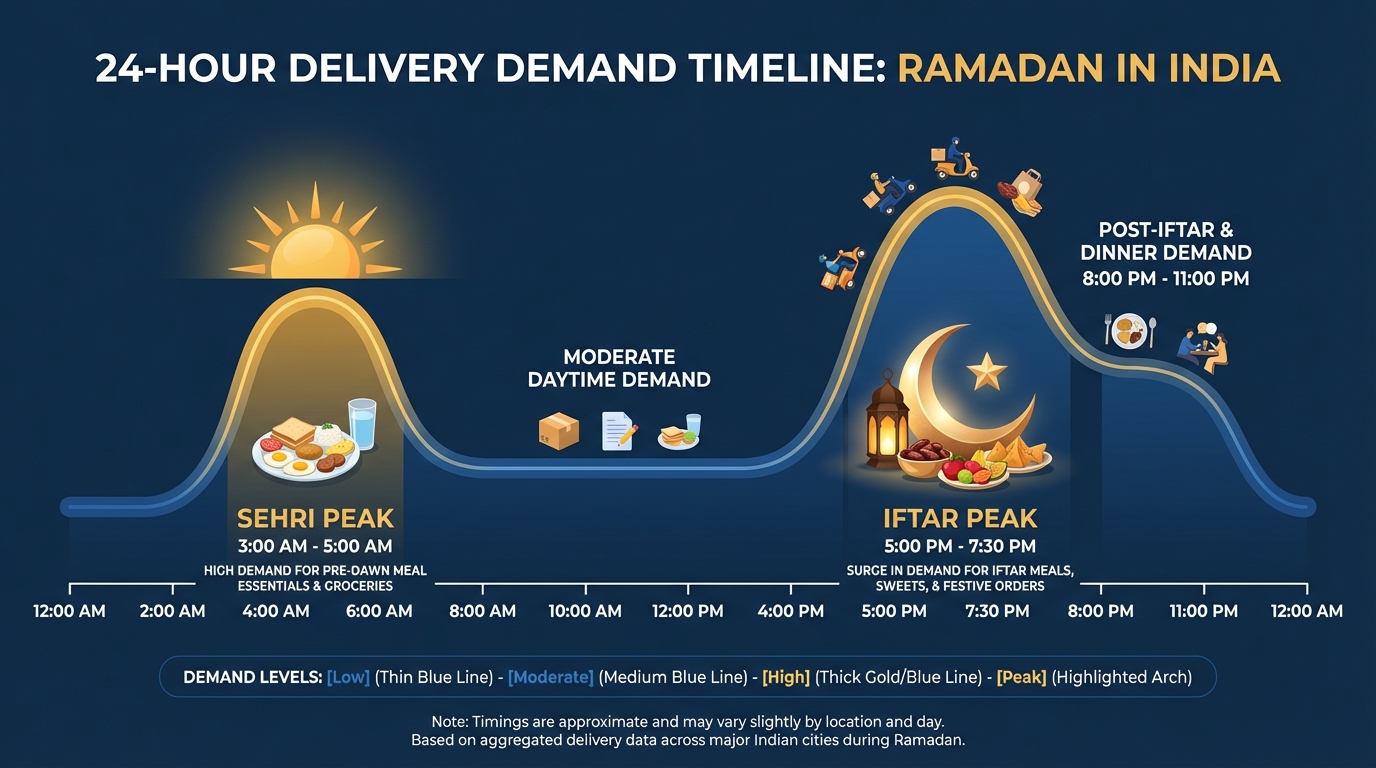
Successful execution in 2026 hinges on mastering the “dual-peak” demand cycle. Unlike typical retail days that peak in the evening, Ramadan introduces a secondary, high-urgency peak in the pre-dawn hours. Religious occasion quick delivery must be synchronized with local prayer calendars, as sunset (Maghrib) and dawn (Fajr) times vary significantly across Indian geographies—from Srinagar to Hyderabad.
The Iftar surge typically occurs within a 90-minute window before sunset and continues for 60 minutes after. During this time, the demand for ready-to-eat snacks, cooling beverages, and fresh fruits skyrockets. Conversely, the Sehri surge happens 2–3 hours before Fajr. This pre-dawn window is often underserved by traditional retail, creating a massive opportunity for q-commerce platforms to capture loyal users through automated Sehri meal solutions. Platforms must align inventory, pick-pack capacity, and rider availability to these specific windows to maintain their 10-minute promise.
Regional nuance is the third pillar of timing. A one-size-fits-all creative strategy will fail in a market as diverse as India. 2026 will see the rise of pincode-level calendars where “pre-Ramadan” teasers switch to “live” creatives based on real-time moonsighting validation. Conversational commerce via WhatsApp and RCS will be the primary drivers of engagement during these peaks, as personalization boosts both trust and conversion in high-intent moments.
Source: Infobip 2026 Ramadan Insights, Orquest Ramadan Retail Impact
Offer Architecture: Scaling 10-Minute Ramadan Offers
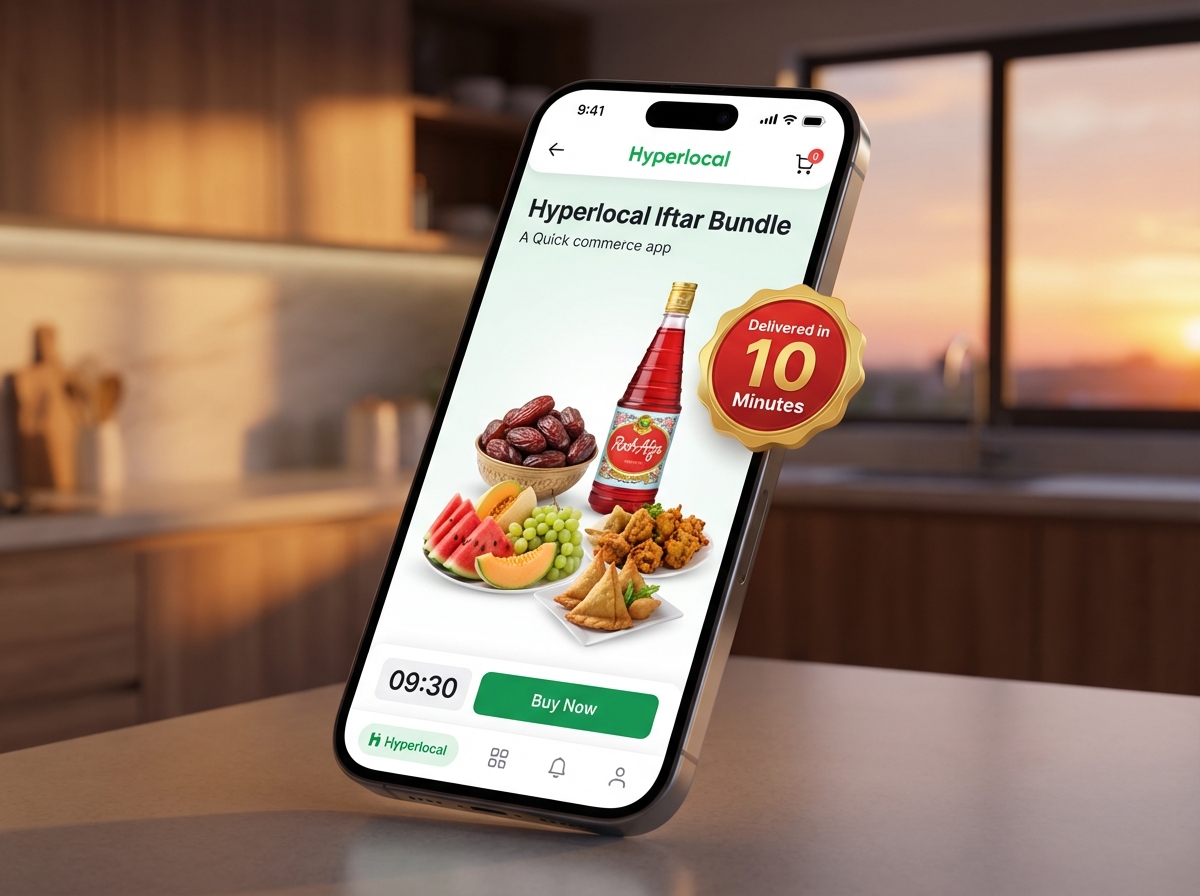
To convert high-intent traffic into transactions, the offer architecture must be both hyperlocal and automated. In 2026, the standard “discount banner” is insufficient. Instead, brands must deploy hyperlocal iftar deals that are zone-specific. For instance, a dark store serving the Jama Masjid area in Delhi should prioritize bundles of dates, samosas, and Rooh Afza, while a store in Hyderabad might focus on Haleem kits and specialized spices. These bundles should be auto-assembled based on top-selling SKUs per pincode and tagged with “delivered in 10 minutes” badges to reassure the fasting consumer.
Sehri meal automation represents a significant coverage gap that competitors often miss. By offering an opt-in program where users can pre-schedule suhoor kits (milk, eggs, parathas, and dates) for delivery between 3:30 AM and 5:00 AM, platforms can lock in 30 days of recurring revenue. This automation should be triggered by prayer-time calendars, with WhatsApp reminders sent at 8:00 PM the previous night to confirm the order. Adding “healthy swap” options like protein-rich muesli or Greek yogurt caters to the health-conscious segment of the 2026 consumer base.
Furthermore, Ramadan grocery flash sales should be utilized to drive urgency. These short-duration promos (15–60 minutes) on staples like atta, oil, and beverages are most effective when scheduled for Friday afternoons (Jumu’ah). As the month progresses, the focus should shift toward Ramadan gift delivery campaigns. Curated Eid hampers featuring dry fruits, personalized sweets, and decor—delivered with a same-day SLA—will dominate the final ten days of the month.
Source: NextBroadcast Media Q1 2026 Media Plan, NielsenIQ Festive Shelf Learnings
Personalization and Trust: Mastering Iftar Delivery Personalization India
In the 2026 digital ecosystem, personalization is the currency of trust. Iftar delivery personalization India involves more than just using a customer’s name; it requires tailoring offers by pincode prayer times, language preferences, and dietary rules. Creative assets should utilize local dialects and mention nearby landmarks to create a sense of community. For example, a push notification in Lucknow might reference “Iftar at Aminabad” to resonate with the local cultural fabric.
Halal product personalization is a critical subtopic that many mainstream platforms overlook. In 2026, consumers will demand higher transparency. This involves the automatic surfacing and badging of certified halal products on the app interface. Product Detail Pages (PDPs) must display certification info and ingredient transparency clearly. Surfacing verified supplier tags and community feedback for culturally appropriate items acts as a powerful trust signal that drives long-term retention.
Compliance and sensitivity are equally paramount. A robust checklist for 2026 includes validating moonsighting before launching “Eid Mubarak” creatives and avoiding the use of food imagery during daylight fasting hours in non-Iftar contexts. Platforms like TrueFan AI enable brands to navigate these sensitivities by creating hyper-personalized video messages that respect cultural nuances while maintaining high engagement. Offering users the ability to opt-out of religious messaging is also a best practice for maintaining a respectful brand image.
Source: Muslim Ad Network Ramadan 2026 Authenticity, CORQ Ramadan 2026 Content Resonance
Community-First Growth: Muslim Community Engagement Videos and Purpose
The most successful brands in 2026 will be those that prioritize community over commerce. Muslim community engagement videos are a powerful tool for this. These should be short-form, localized videos celebrating community recipes, Iftar preparation hacks, and charity drives. Collaborating with local micro-influencers and chefs to create authentic, “unpolished” content resonates more deeply than high-budget, generic advertisements. Data shows that food and family narratives will be the most resonant content themes during Ramadan 2026.
Community iftar sponsorship is another avenue for growth. Quick commerce platforms can sponsor neighborhood Iftar tables by providing water and date kits, co-branded with local NGOs or mosques. This can be integrated into the app via “sponsor a plate” modules, where users can donate a meal at checkout. Geotargeted impact counters can show users how many meals have been provided in their specific city, fostering a sense of collective purpose.
Ramadan charity campaign automation is a sophisticated way to integrate Zakat and Sadaqah into the user journey. By automating donation top-ups at checkout and showing a progress bar for verified partners, platforms can drive significant social impact. This messaging should reach a crescendo in the last ten nights of Ramadan (the most auspicious period). It is vital to separate these messages from other seasonal holidays to avoid a “commercialized” feel and ensure authentic engagement.
Source: CORQ Studio Insights, Muslim Ad Network Strategy
Platform Strategy: Zomato Swiggy Blinkit Ramadan Integrations
The “Big Three” of Indian delivery—Zomato, Swiggy, and Blinkit—will set the standard for Ramadan integrations in 2026. We expect to see co-branded storefronts dedicated to Ramadan essentials, featuring everything from prayer mats to premium dates. These platforms will utilize SLA badges for express windows, ensuring that users know exactly when their Iftar platter will arrive. Partnering with cloud kitchens to offer ready-to-eat Iftar platters with festive packaging will be a key differentiator for Zomato and Swiggy.
Operational excellence is the backbone of these platform plays. Dark stores must shift their assortment to prioritize high-velocity Ramadan items like beverages, bakery products, and fruits. Pre-kitted bundles and “heat-and-eat” SKUs can significantly reduce picking time, enabling the 10-minute delivery promise even during peak surges. Rider shift allocations must be dynamically adjusted to pre-Iftar and pre-Sehri windows, with batching rules optimized for high-density pincodes.
As the month draws to a close, the focus shifts to Eid preparation marketing. This involves a ramp-up of “Eid baskets” containing decor, sweets, and clothing accessories. Quick commerce platforms are uniquely positioned to handle the last-minute rush for gift wrap or festive ingredients on Eid morning. By offering guaranteed delivery slots for Eid morning, platforms can capture the final surge of festive spending, which is expected to see a significant uplift across both food and fashion categories in 2026.
Source: Inc42 Quick Commerce Competitive Phase, Orquest QSR and Grocery Prep
Implementation and Technology: Scaling with TrueFan AI
To operationalize this level of personalization at an enterprise scale, brands require advanced generative AI solutions. TrueFan AI’s 175+ language support and Personalised Celebrity Videos allow brands to create millions of unique interactions that feel intimate and authentic. For example, a brand can deploy a campaign where a celebrity like Kareena Kapoor Khan addresses a user by name, wishing them a “Blessed Iftar” in their native tongue—be it Urdu, Bengali, or Malayalam—with perfect lip-sync and voice retention.
The technical integration is seamless through APIs that connect to existing CRMs like HubSpot or Adobe. This allows for trigger-based campaigns where a video is rendered in under 30 seconds and delivered via WhatsApp the moment a user hits a specific milestone, such as completing their 10th Sehri order. Solutions like TrueFan AI demonstrate ROI through significantly higher engagement rates; for instance, travel brands have seen a 17% increase in WhatsApp read rates when using personalized celebrity nudges.
Security and compliance are built into the core of these AI tools. With ISO 27001 and SOC 2 certifications, and a consent-first model for talent usage, enterprises can scale their Ramadan marketing without the risk of deepfake controversies or data breaches. The ability to perform “virtual reshoots”—altering lines or offers in a video without a new physical shoot—provides the agility needed to iterate on 10-minute Ramadan offers in real-time.
6-Week Execution Timeline (Feb–Mar 2026)
- Weeks -2 to -1 (Pre-Ramadan): Finalize prayer calendars by pincode; stock Ramadan staples; QA halal badging; set up TrueFan video templates and MAP triggers.
- Week 1: Launch Iftar/Sehri push and WhatsApp journeys; open festive meal subscription offers; enable Ramadan grocery flash sales in the evenings.
- Weeks 2–3: Expand 10-minute Ramadan offers zones; roll out community iftar sponsorships; launch localized Muslim community engagement videos.
- Weeks 4–5 (Last 10 Nights): Intensify donations and Ramadan charity campaign automation; scale gifting SKUs; introduce premium express Eid preparation marketing slots.
- Eid Week: Ensure Eid morning delivery slots; deploy Ramadan gift delivery campaigns; send personalized thank-you videos; collect NPS.
Frequently Asked Questions
How do I set up Sehri meal automation for my platform?
Sehri meal automation requires integrating a pincode-based prayer calendar into your ordering system. Users should be able to opt-in for a 30-day recurring delivery window (typically 3:30 AM – 5:00 AM). Use automated WhatsApp triggers at 8:00 PM the night before to allow users to modify or skip their kit.
What are hyperlocal iftar deals and why are they effective?
Hyperlocal iftar deals are bundles of products (e.g., dates, snacks, drinks) tailored to the specific tastes and inventory of a particular neighborhood. They are effective because they reduce decision fatigue for fasting consumers and are optimized for 10-minute delivery from the nearest dark store. See the Ramadan quick commerce marketing 2026 approach.
How can I ensure my Ramadan marketing is culturally sensitive?
Avoid using food imagery during daylight hours in general ads. Ensure all products labeled as Halal have verifiable certifications. Use tools like TrueFan AI to create personalized messages that use respectful, localized language and avoid generic stereotypes.
What is the best way to integrate charity into the Ramadan user journey?
The most effective method is “at-checkout” automation, where users can round up their total or add a fixed “Sadaqah” donation. Use real-time progress bars to show the community’s collective impact and ensure all partners are transparently vetted.
How does TrueFan AI help in scaling Ramadan campaigns?
TrueFan AI allows you to create millions of personalized celebrity videos in 175+ languages with sub-30 second rendering. This enables you to send a unique, name-personalized greeting or offer to every customer, significantly boosting open rates and brand loyalty during the festive peak. For building the 10-minute experience, see the playbook here.
Source: TrueFan AI Enterprise Solutions, Goibibo Case Study, Zomato Mother's Day Case Study



