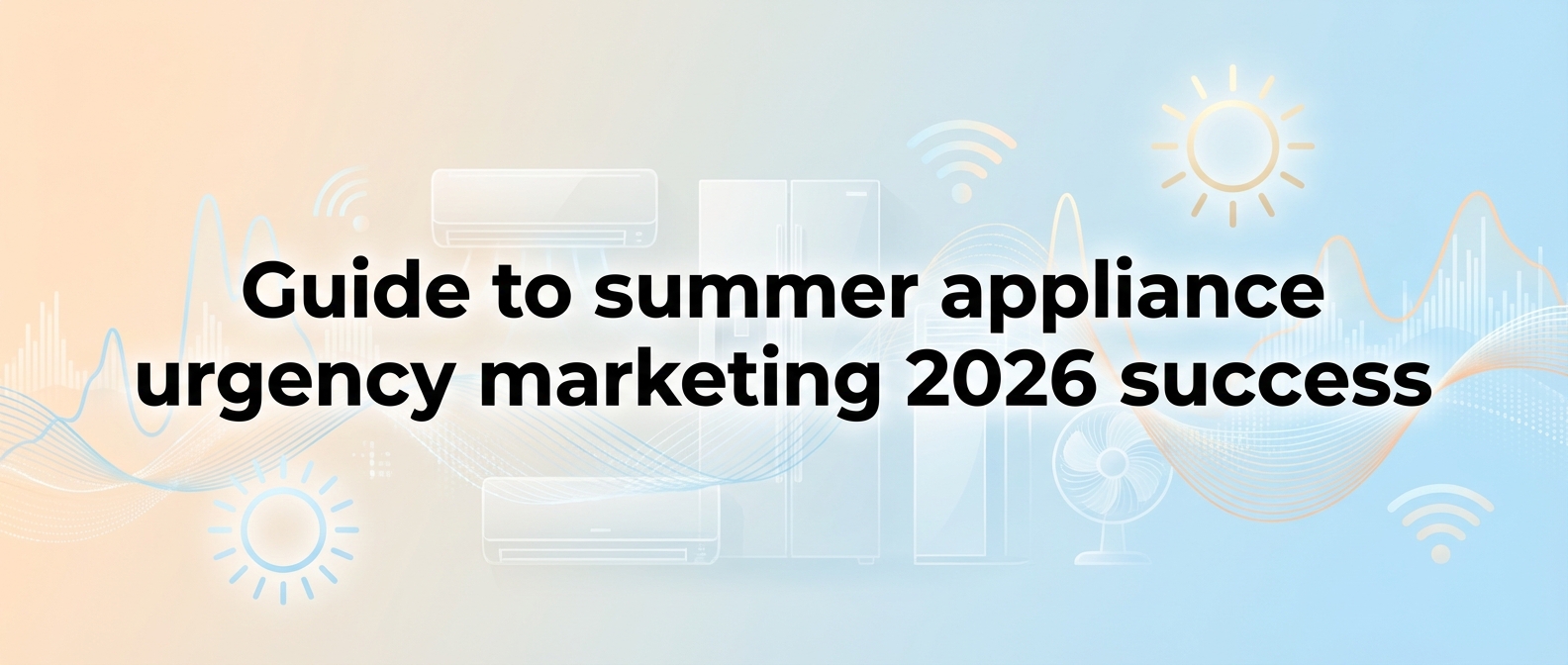
Summer Appliance Urgency Marketing 2026: AI Temperature Triggers, EMI Conversions, and Weather-Responsive Commerce Videos for India
Estimated reading time: ~9 minutes
Key Takeaways
- Leverage temperature-triggered automation from IMD feeds to align spend with heat spikes and maximize conversions.
- Drive purchases with EMI-led affordability and instant pre-approval to reduce friction during peak heat days.
- Use weather-responsive commerce videos with city, temperature, and inventory overlays to triple ad relevance.
- Localize for Tier-2 markets with vernacular creatives, exchange programs, and priority installation promises.
- Ensure DPDP compliance with consent, clear EMI disclosures, and ethical frequency capping on red-alert days.
The March–April purchase window in India has evolved from a seasonal peak into a high-stakes race against rising mercury levels. As the India Meteorological Department (IMD) signals an increasingly volatile seasonal outlook, the concept of summer appliance urgency marketing 2026 has become the definitive playbook for retail CMOs. With the IMD defining a “heat wave” as a maximum temperature of ≥ 40°C in the plains with an anomaly of ≥ 4.5°C above normal, the window for conversion is often dictated by the first major spike in the heat index.
For consumer durables marketers, 2026 represents a critical juncture where temperature-based marketing automation meets hyper-personalized affordability. Early summer heat is already driving massive surges in AC, cooler, and refrigerator sales, with industry experts projecting a 22% uplift in demand compared to previous cycles. To capture this “prep for heat” moment, brands must move beyond static banners and embrace weather-responsive commerce videos and cooling appliance EMI offers that resolve consumer anxiety in real-time.
Why “summer appliance urgency marketing 2026” is India’s heat-economy playbook
In the current retail landscape, summer appliance urgency marketing 2026 is defined as a growth strategy that synchronizes temperature-based marketing automation with EMI-led affordability mechanics. This approach leverages IMD city feeds and “feels-like” temperature spikes to trigger time-sensitive buying intent. By the time a city hits its first 38°C day, the consumer’s psychological state shifts from “research” to “urgent necessity,” making immediate availability and financial flexibility the primary conversion drivers.
Market proof points from early 2026 indicate that the cooling industry is warming up for a scorching summer, with retailers bracing for unprecedented demand. According to recent industry reports, EMI adoption for cooling appliances is expected to hit 68% in Tier-2 cities (Tier-2 festival commerce automation guide) this year, as consumers prioritize immediate comfort over upfront capital expenditure. This “heat-economy” playbook ensures that marketing budgets are not wasted on cool days but are instead surged during heat wave alerts to maximize ROI.
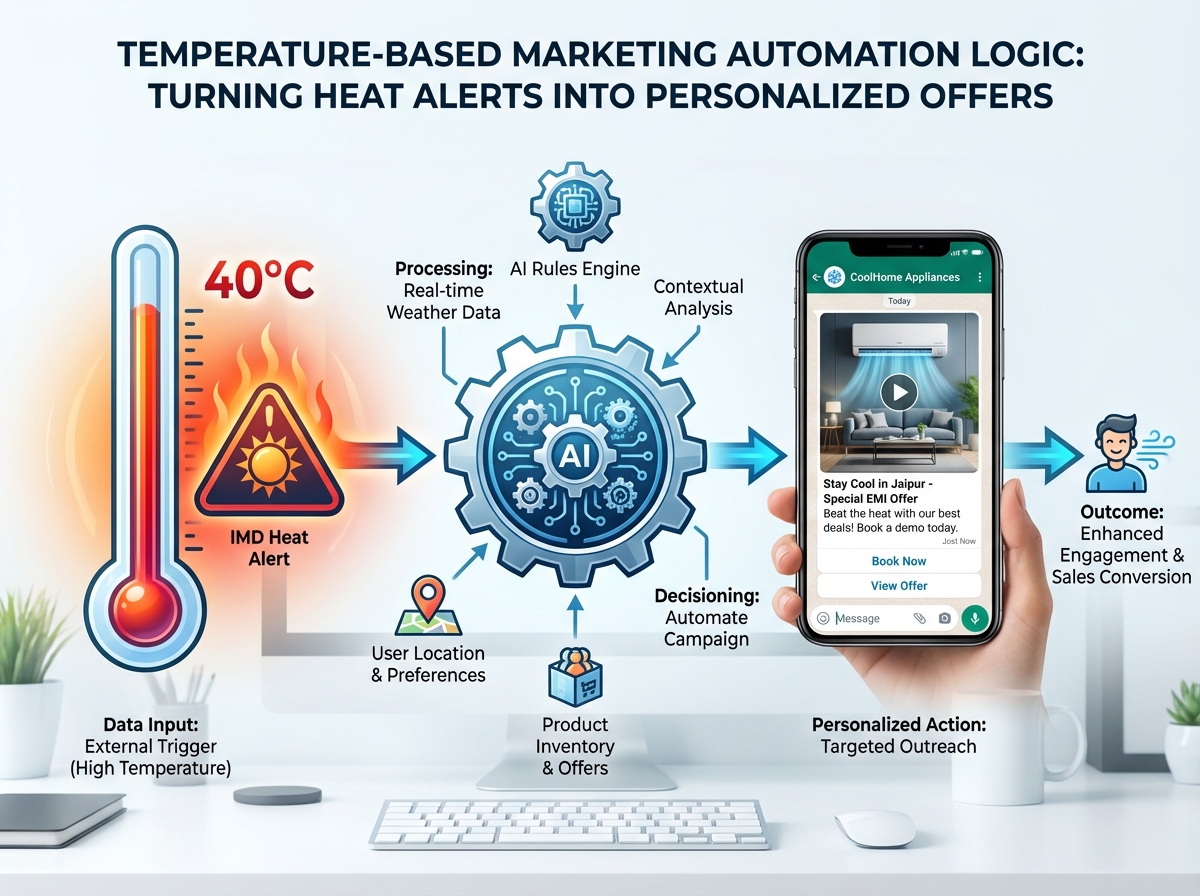
The integration of weather-responsive commerce videos allows brands to mirror the consumer's local reality. When a resident in Jaipur sees an ad that acknowledges the 41°C temperature outside their window, the relevance score of that communication triples. This level of contextual relevance is no longer a luxury; it is the baseline for competing in a market where e-commerce is expected to reach US$ 163 billion by 2026.
Sources:
- IMD Heat Wave Guidance
- ET BrandEquity: Early summer heat drives surge in AC, cooler and refrigerator sales
- IBEF: E-commerce in India
Temperature-based marketing automation: Deploying IMD-triggered campaigns
Deploying temperature-based marketing automation requires a sophisticated rules engine that ingests real-time IMD city feeds, including temperature, humidity, and heat wave alerts. This system matches environmental data with SKU-level inventory feeds to auto-trigger creative assets across WhatsApp catalog video marketing, Instagram, and programmatic display. The goal is to create a seamless transition from a weather alert to a personalized product recommendation.
A strategic trigger design blueprint for 2026 follows a tiered ladder approach. At 35–37°C, brands should deploy “pre-summer sale automation” focused on awareness and EMI education. Once the temperature crosses the 38°C threshold, or the “feels-like” index exceeds 40°C, the system switches to conversion-heavy campaigns featuring city-specific tags and limited-stock nudges. During official heat wave red-alert days, budgets are surged toward same-day installation promises and hydration-focused ethical communications.
Regional heat wave targeting via hyperlocal commerce videos is essential for a country as geographically diverse as India. While coastal cities like Vizag may require marketing focused on high-moisture removal rate ACs, arid regions like Indore respond better to desert cooler promotions and power-backup compatibility. By using vernacular creatives in Hindi, Marathi, Tamil, and Telugu, marketers can localize the urgency, ensuring that a “Jaipur at 40°C” message feels authentically urgent to the local resident.
Sources:
AC cooler personalization campaigns: Data-driven logic and EMI affordability
Effective AC cooler personalization campaigns in 2026 go beyond simple retargeting; they utilize data-driven product-matching flows. By mapping a consumer's home size, local humidity band, and budget to specific 3-star or 5-star inverter models, brands can reduce the “paradox of choice.” For instance, a user in a high-humidity coastal zone is shown ACs with superior dehumidification, while a user in a dry-heat tier-2 city is presented with energy-efficient desert coolers.
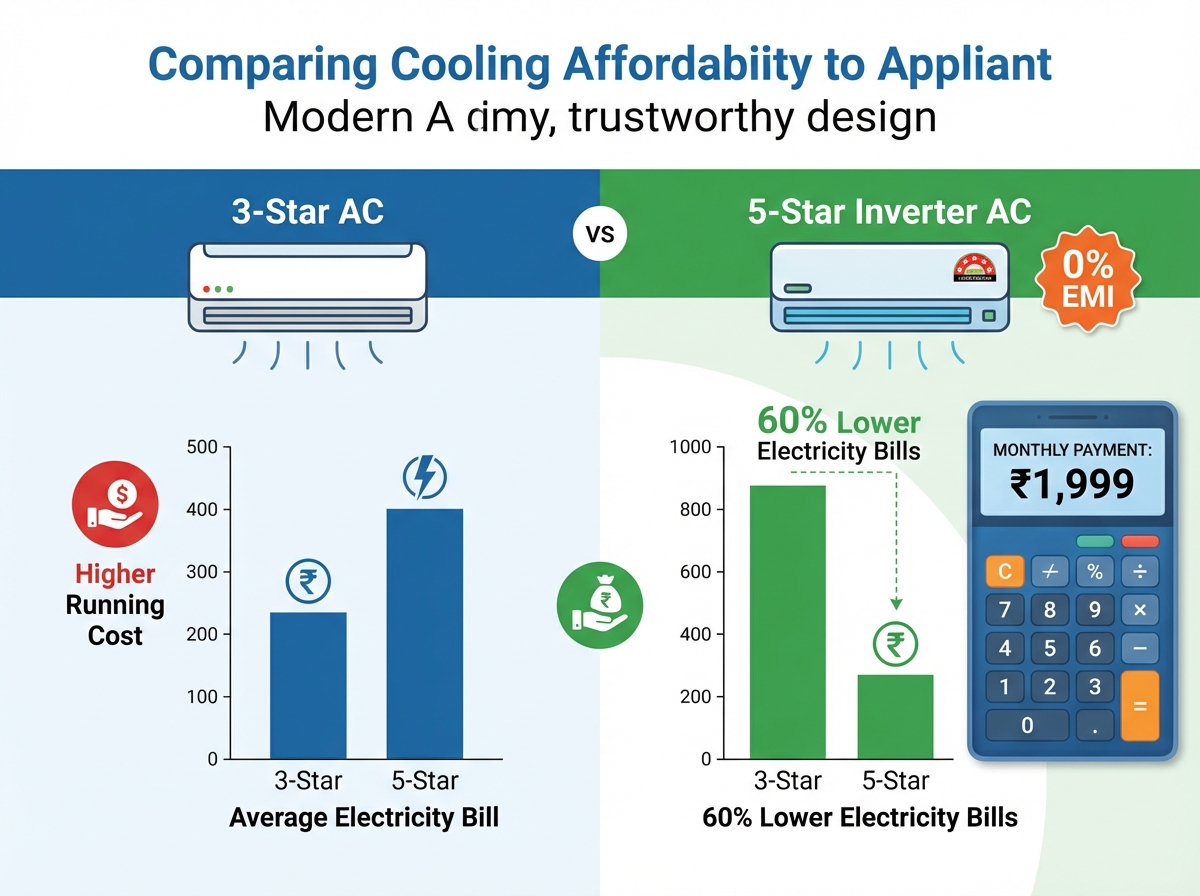
Affordability is the ultimate unlock in the summer appliance sector. Cooling appliance EMI offers, particularly 0-cost EMI with instant approval, have become the primary driver of high-ticket conversions. The psychological framing of “cool today, pay over 12 months” effectively lowers the barrier to entry during a heat wave. Marketers should integrate EMI eligibility checks directly into the initial ad interaction, allowing users to see their monthly outgoings before they even reach the product page.
To address “bill anxiety,” personalization logic should include energy-savings calculators. A video overlay showing the potential monthly savings of a 5-star inverter AC compared to a 3-star model provides a rational justification for a higher upfront purchase. This combination of emotional urgency (the heat) and rational affordability (the EMI and savings) creates a powerful conversion loop that is particularly effective in price-sensitive tier-2 markets.
Sources:
Weather-responsive commerce videos: The creative engine for 2026
The shift toward short-form video has made weather-responsive commerce videos the most potent tool in the marketer's arsenal. These are shoppable video guides for WhatsApp catalogs that feature dynamic overlays—such as the viewer's city name, live temperature, and remaining stock at the nearest warehouse. Platforms like TrueFan AI enable brands to generate these hyper-personalized assets at a scale that was previously impossible, ensuring that every “feels-like” spike is met with a relevant creative.
A high-converting creative blueprint for a 2026 summer product launch video starts with a 3-second hook: “Delhi feels like 41°C today—cool your home for just ₹1,999/month.” This is followed by a value proposition highlighting 5-star efficiency and a 48-hour installation guarantee. Social proof is then integrated via dynamic overlays showing real-time inventory levels, such as “Only 19 units left in Rohini,” before concluding with a clear “Check EMI Eligibility” call to action.
These videos are not just for top-of-funnel awareness; they are critical for seasonal inventory optimization. By connecting video overlays to real-time store feeds, brands can push stock in specific micro-markets where demand is peaking. This prevents the common pitfall of advertising out-of-stock items during a heat surge, thereby maintaining brand trust and optimizing media spend across high-demand corridors.
Sources:
- TrueFan AI: Social commerce video integration in India 2026
- Salesforce: Best time to send marketing emails
Pre-summer sale automation for tier-2 city summer offers
The growth engine for the cooling industry has shifted toward cities like Nagpur, Coimbatore, and Patna. Successfully executing pre-summer sale automation in these markets requires a deep commitment to localization. This involves more than just translating text; it requires vernacular voiceovers and cultural nuances that resonate with the local population. TrueFan AI's 175+ language support and Personalised Celebrity Videos allow brands to deploy these localized campaigns with the authority of a trusted face, speaking the consumer's language.
Offer design in tier-2 markets should focus on “upgrade” cycles. Exchange programs that allow users to trade in old air coolers for modern inverter ACs are highly effective when combined with stabilizer and AMC (Annual Maintenance Contract) bundles. Priority installation in heat-alert zones acts as a powerful non-monetary incentive, as the speed of relief often outweighs a marginal price discount during extreme weather events.
Beyond primary appliances, marketers should look at adjacent categories to lift Average Order Value (AOV). Summer fashion video marketing can pair breathable cotton fabrics with the same “feels-like” storytelling used for ACs. Similarly, beverage cooling campaigns for mini-fridges and water dispensers can be triggered during peak heat hours. Integrating hydration PSAs during red-alert days not only fulfills ethical marketing standards but also positions the brand as a partner in the consumer's well-being.
Sources:
- PwC India: How India spends — a deep dive
- Moneycontrol: Surge in demand for consumer durables as India braces for harsh summer
How TrueFan Enterprise powers summer appliance urgency marketing 2026
To execute the complex requirements of 2026's summer marketing, brands need a technology partner capable of hyper-personalization at an industrial scale. TrueFan Enterprise provides the infrastructure to ingest IMD feeds and inventory APIs, rendering personalized video variants in under 30 seconds. This speed-to-market advantage is crucial during the March–April window, where a two-day delay in campaign deployment can mean missing a significant heat-driven purchase spike.
The platform's virtual reshoot and AI editing capabilities allow marketers to swap localized offers—such as “0-cost EMI in Jaipur today”—without the need for expensive and time-consuming physical reshoots. This agility enables a “creative-learning loop” where brands can A/B test different temperature thresholds or EMI hooks in real-time. Solutions like TrueFan AI demonstrate ROI through significant uplifts in engagement, as seen in previous campaigns where personalized video nudges led to a 17% higher WhatsApp read rate and 3.2x higher participation in brand activations.
Furthermore, TrueFan’s dynamic creative video remarketing ensures that users who abandoned their carts are re-engaged with updated heat-triggered overlays. If a user in Lucknow viewed a refrigerator on a 36°C day but didn't buy, they could receive a personalized video the moment the temperature hits 40°C, reminding them of the urgent need for cooling and the available EMI options. This level of persistent, contextual relevance is what defines the next generation of consumer durables marketing.
Sources:
Measurement, DPDP compliance, and FAQs for cooling marketers
Success in summer appliance urgency marketing 2026 is measured through a blend of leading and lagging metrics. Marketers must track CTR and VTR alongside EMI pre-approval rates and city-level funnel drop-offs by temperature band. Understanding which “feels-like” threshold (e.g., 36°C vs 38°C) triggers the highest conversion rate allows for more efficient budget allocation. Additionally, monitoring installation lead time adherence during heat waves is vital for maintaining long-term customer satisfaction.
Compliance with the Digital Personal Data Protection (DPDP) Act (interactive video data capture and DPDP guidance) is non-negotiable. All personalized video campaigns must include clear consent banners, vernacular disclosures on EMI terms, and easy opt-out links. During extreme red-alert days, brands should implement frequency caps to avoid appearing opportunistic, instead pivoting toward helpful hydration and health PSAs. This ethical approach builds brand equity that outlasts the summer season.
Conclusion
The landscape of summer appliance urgency marketing 2026 is defined by the convergence of environmental data and generative AI. By aligning marketing triggers with IMD heat alerts, prioritizing EMI-led affordability, and deploying weather-responsive commerce videos, brands can transform seasonal demand into a precision-engineered conversion engine. In a market where the heat is both a challenge and an opportunity, the ability to deliver the right message at the exact moment the mercury rises is the ultimate competitive advantage.
Sources:
Recommended Internal Links
- WhatsApp catalog video marketing
- WhatsApp catalog video marketing guide
- Tier-2 festival commerce automation
- Interactive video data capture (DPDP)
- Hyperlocal community commerce videos 2026
Frequently Asked Questions
What is the most effective temperature trigger for AC marketing in 2026?
While 35°C is a good warm-up threshold, the most aggressive conversion spikes typically occur when the “feels-like” index (heat index) crosses 40°C. At this point, consumer anxiety peaks, and the focus should shift to immediate availability and EMI affordability.
How do weather-responsive commerce videos improve ROI?
By dynamically inserting the viewer's local temperature and city name, these videos achieve significantly higher relevance scores. This context-driven approach has been shown to increase click-through rates by up to 4.2x in high-humidity zones compared to static, non-personalized ads.
Why is EMI adoption so critical for summer appliance sales in Tier-2 cities?
In 2026, cooling appliances are viewed as essential health infrastructure rather than luxury items. 0-cost EMI plans lower the entry barrier for middle-income households in Tier-2 cities, allowing them to manage the high upfront cost of energy-efficient 5-star models over 9 to 12 months.
How does TrueFan AI handle the scale of national heat wave campaigns?
TrueFan AI utilizes a cloud-agnostic GPU farm and real-time APIs to render hundreds of thousands of personalized videos daily. This allows a national brand to send unique, localized video messages to every customer in an IMD-alerted city within minutes of a temperature spike.
Can personalized videos be used for post-purchase engagement?
Yes. Brands can use personalized videos to send installation updates, maintenance tips, and warranty reminders. For example, a celebrity can thank the customer by name for their purchase and introduce the technician who will be handling their 48-hour installation.