Tier-4 rural digital adoption 2026: A vernacular video playbook for fintechs, e-commerce, and government
Estimated reading time: ~10 minutes
Key Takeaways
- Rural growth outpaces urban in 2026, demanding vernacular, village-level strategies to close literacy and trust gaps.
- Short, task-focused videos in local dialects drive UPI, DBT, and ONDC adoption by reducing cognitive load.
- Trust-building content with testimonials and clear grievance explainers increases confidence and retention.
- Grassroots distribution via gram panchayats, CSCs, WhatsApp, and nano-influencers scales reach efficiently.
- Personalization at village level (name, pincode, crop, festival) boosts watch-through and conversions; platforms like TrueFan Enterprise operationalize this at scale.
The landscape of tier-4 rural digital adoption 2026 represents the most significant frontier for India’s digital economy, moving beyond urban saturation into the heart of Bharat. As active internet users cross the 950 million mark, the surge is no longer driven by metro cities but by villages where digital India village adoption is transforming local economies. For fintechs, e-commerce giants, and government agencies, the challenge is no longer about infrastructure—which is largely in place—but about bridging the literacy and trust gap through hyper-localized content.
The opportunity and challenge in tier-4 rural digital adoption 2026
The year 2026 marks a pivotal moment where rural internet usage has officially begun growing nearly four times faster than urban consumption. With approximately 62.5% of the population residing in rural areas, the "next billion" users are now online, yet their journey toward meaningful digital participation remains fragmented. Tier-4 contexts—defined by small towns and large villages with high cash dependency and lower per-capita income—require a departure from traditional "one-size-fits-all" digital marketing.
The sheer scale of the opportunity is reflected in the record-breaking 21.6 billion UPI transactions recorded in December 2025, valued at nearly ₹30 lakh crore. This mass adoption tailwind provides a unique window to convert first-time users who have a smartphone but lack the confidence to execute financial or commercial transactions. However, the barriers are steep: low functional literacy, shared family devices, and a profound lack of trust in English-centric or even standard Hindi interfaces. Platforms like TrueFan AI enable enterprises to overcome these hurdles by delivering content that speaks the user's specific dialect and addresses their unique local anxieties.
To succeed in this environment, organizations must move beyond simple translation. They must adopt village-level personalization strategies that treat each Gram Panchayat as a distinct market. The infrastructure is ready; BharatNet has made over 2.18 lakh Gram Panchayats service-ready by 2025, providing the last-mile connectivity needed for high-bandwidth video education. The goal for 2026 is to turn this connectivity into capability, ensuring that every rural citizen can navigate a UPI app or an ONDC storefront with the same ease as a physical mandi.
Sources:
- Business Standard: Rural India drives internet usage
- NewsKarnataka: India's internet users cross 950 million
- Datareportal: Digital 2026 India Report
- ET BFSI: UPI sets record with 21.6 billion transactions
- PIB: BharatNet Gram Panchayat Readiness
What works: village-level digital literacy videos that drive action
In the context of digital India village adoption, the medium is the message. For a user in a tier-4 town, a text-heavy manual is an immediate deterrent. Instead, village-level digital literacy videos have emerged as the gold standard for driving behavioral change. These are not high-production commercials; they are short, mobile-first, step-by-step guides that use regional dialects and familiar on-screen cues to demystify complex digital processes.
The effectiveness of video lies in its ability to simulate reality. By showing a finger physically tapping a button on a screen that looks exactly like the user’s phone, enterprises can eliminate the "fear of the unknown." These videos must be programmatically localized—shot once but adapted into hundreds of versions where the narrator mentions the specific village name or local landmarks. This level of detail transforms a generic tutorial into a trusted community recommendation.
Rural financial inclusion videos for UPI and DBT use-cases
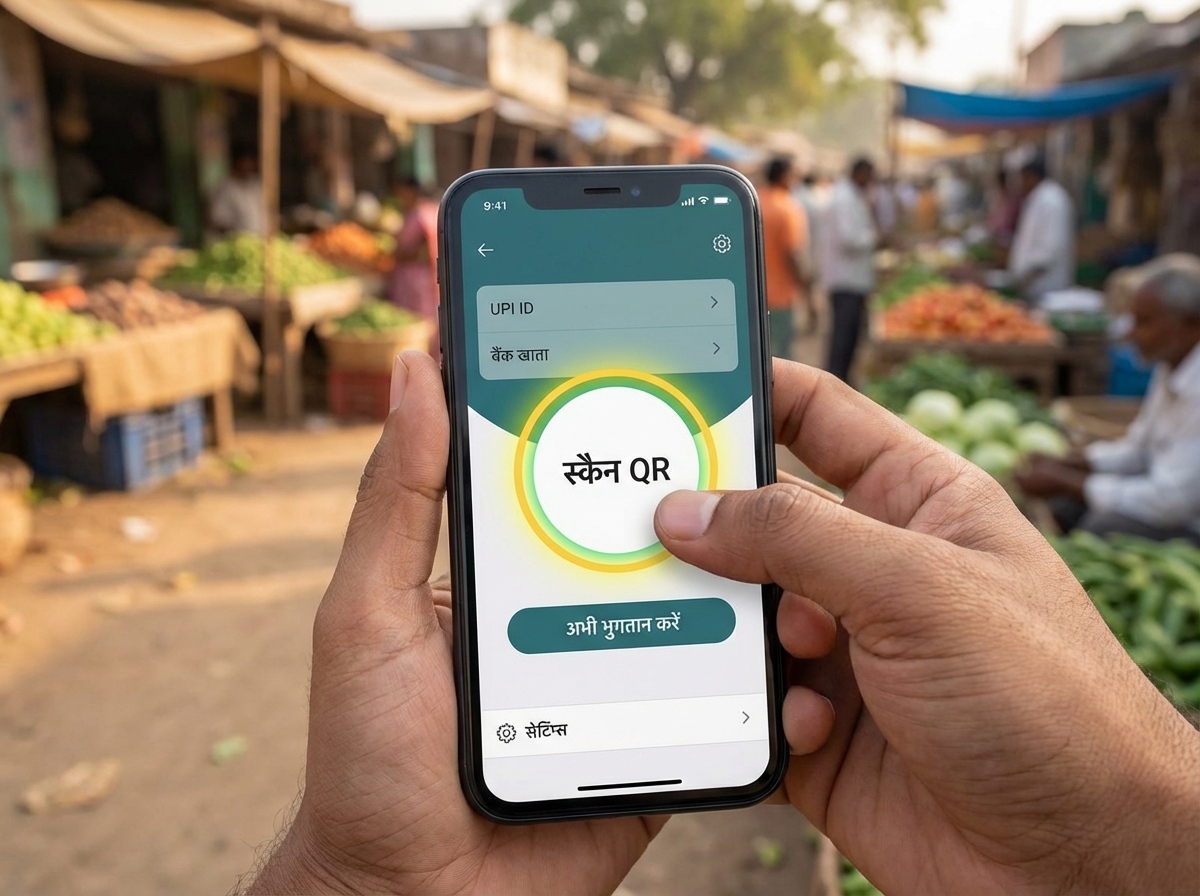
Financial services are the bedrock of rural digital growth. Rural financial inclusion videos must focus on the "first-mile" of the user journey: SIM binding, setting a UPI PIN, and making that first low-ticket transaction of ₹10 or ₹50. The script must prioritize safety, with repeated cues such as "Never share your PIN" and "QR codes are for paying, not receiving money."
As UPI adoption surges among rural youth, there is a secondary need to educate older demographics and women on Direct Benefit Transfer (DBT) tracking. Vernacular digital payment education should include modules on checking bank balances via apps and understanding transaction SMS alerts. By addressing the specific fear of "money disappearing into the air," these videos build the psychological safety necessary for habit formation.
Agricultural e-commerce videos for marketplace onboarding
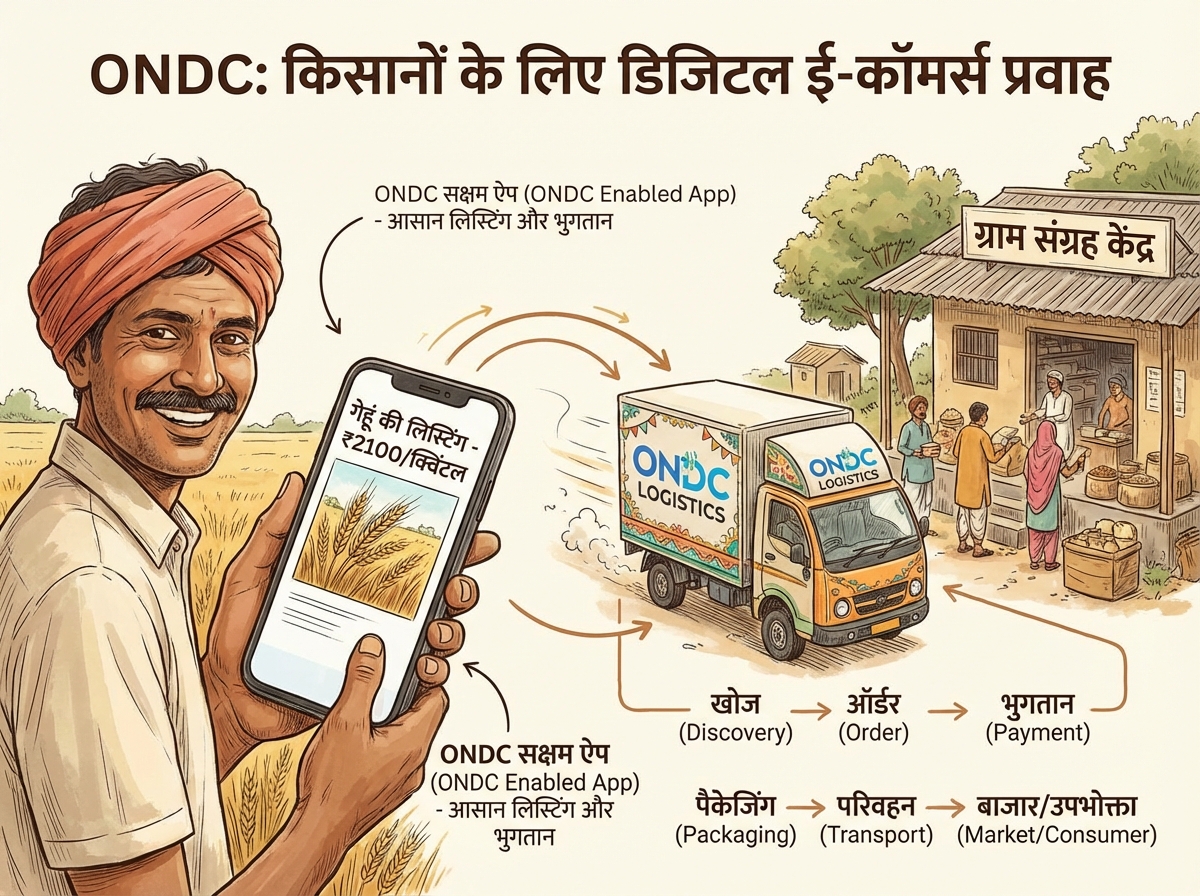
For the rural economy, e-commerce is synonymous with agriculture. Agricultural e-commerce videos are essential for onboarding both buyers and sellers onto platforms like ONDC, which expanded to over 616 cities by early 2025. For a farmer, the video must explain how to list a crop, track a payout, or order high-quality seeds at fair prices. Explore the ONDC personalized video onboarding guide.
These videos should be timed with the seasonal agricultural calendar—sowing, irrigation, and harvest. A video delivered in a local dialect that explains how to use an app to check mandi prices or order fertilizer creates immediate utility. By integrating rural e-commerce onboarding tutorials into the farmer's daily workflow, platforms can move from being "novelties" to "necessities."
Sources:
- LiveMint: UPI smashes records in 2025
- PIB: ONDC expansion and merchant growth
- IBEF: E-commerce Industry Report
From awareness to action: vernacular digital payment education and rural e-commerce onboarding
Moving a user from "knowing about an app" to "using the app" requires a granular approach to vernacular digital payment education. This involves creating 30–60 second micro-explainers that focus on a single task. In tier-4 regions, cognitive load must be kept to a minimum. A video should not try to explain the entire app; it should only explain how to pay a electricity bill or how to recharge a mobile phone.
Rural e-commerce onboarding faces the additional hurdle of logistics and returns. Many rural users are hesitant to order online because they don't understand how a delivery person will find their house or what happens if the product is faulty. Localized videos featuring a "delivery hero" who speaks the local language and explains the return policy can significantly lower these barriers.
Local language app tutorials for UPI and ONDC flows
The technical execution of local language app tutorials must account for the specific hardware used in rural India—often budget smartphones with limited storage and intermittent 4G/5G connectivity. Videos must be optimized for low-bitrate streaming and easy sharing via WhatsApp or Bluetooth. See the Voice Commerce in India 2026 guide.
Key tutorials should cover:
- UPI Sign-up: The SIM-binding process and bank account linking. UPI business account activation guide
- QR Scanning: How to position the camera and confirm the recipient's name.
- ONDC Discovery: How to find local kirana stores on the network. ONDC personalized onboarding guide
- Grievance Redressal: What to do if a transaction fails but money is deducted.
By using large fonts, high-contrast icon highlights, and audio repetition, these tutorials become accessible even to those with limited formal education.
Rural customer trust building via testimonials and grievance explainers
Trust is the currency of rural Bharat. Rural customer trust building is best achieved through social proof. Testimonials from Self-Help Group (SHG) leaders, local kirana owners, or respected teachers carry more weight than any celebrity endorsement. When a village elder explains how they saved two hours of travel time by paying a bill online, the community listens.
Furthermore, transparency in "what goes wrong" is vital. Explaining the refund process or showing how to contact a helpdesk in the local language reduces the perceived risk of digital transactions. This is particularly important for women, who often face higher social consequences for "losing money" in a digital experiment.
Sources:
- Women’s World Banking: eRupee and Women’s Financial Inclusion
- LightReading: Telco Rural Expansion and Digital Adoption
Go local to go fast: gram panchayat partnerships and grassroots digital marketing
To achieve tier-4 rural digital adoption 2026 at scale, enterprises must partner with the existing administrative and social fabric of the village. Gram panchayat partnerships are the most effective way to gain institutional trust. By signing MoUs with local councils, brands can use village halls, noticeboards, and even public announcement systems to distribute educational content.
Grassroots digital marketing in 2026 involves a hybrid of physical and digital touchpoints. It is not enough to run a Facebook ad; you must have a presence at the local haat (weekly market) or during village festivals. These physical gatherings are the perfect venues for screening village-level digital literacy videos on large wall screens or mobile vans.
CSCs, kiosks, and WhatsApp-led distribution
Common Service Centres (CSCs) and local kiosks act as the "human interface" of digital India. These centers should be equipped with video playlists that loop continuously, educating waiting citizens on new digital services. Grassroots digital marketing also leverages the power of WhatsApp. By creating "Panchayat-level" WhatsApp broadcast lists, enterprises can push personalized tutorials directly to the user’s pocket. Learn WhatsApp catalog video marketing tactics.
Another effective tactic is the use of IVR (Interactive Voice Response) callbacks. A user can give a missed call to a number seen on a poster, and receive a call back with a link to a video tutorial in their dialect. This "assisted onboarding" model ensures that no user is left behind due to a lack of technical confidence.
Rural influencer marketing automation
The next evolution of rural outreach is rural influencer marketing automation. Instead of high-profile influencers, the focus shifts to "nano-influencers"—the ASHA workers, village teachers, and progressive farmers who are the real opinion leaders. Programmatic tools now allow brands to collaborate with thousands of these local leaders simultaneously. Nano-influencer marketing for Tier-3 markets and micro-influencer automation in India 2026 show scalable models.
A teacher can record one master video, which is then AI-personalized to mention specific student names or local school events. This creates a hyper-local connection that is impossible to achieve with traditional media. TrueFan AI's 175+ language support and Personalised Celebrity Videos allow brands to scale this intimacy, making every village feel like the center of the campaign.
Sources:
- PIB: BharatNet Phase II and Gram Panchayat Connectivity
- TheSecretariat: Youth-led UPI Adoption in Rural India
Inclusion that compounds: rural women empowerment digital campaigns
Digital adoption is not gender-neutral. In many tier-4 households, the smartphone is a shared resource, often controlled by the male head of the family. Rural women empowerment digital campaigns must specifically address this dynamic. Content should be designed for "snackable" viewing during the small windows of time women have access to the device. See women empowerment video content approaches.
These campaigns should focus on safety, savings, and micro-entrepreneurship. For example, a video series could show how an SHG member can use UPI to manage group savings or how a home-based artisan can list products on ONDC. By framing digital tools as instruments for family prosperity and financial security, brands can overcome household resistance to women’s digital participation.
Safety, savings, and micro-entrepreneurship narratives
The narrative for rural women empowerment digital campaigns should be rooted in aspiration. Stories of "saving ₹10 a day" for a child’s education or "earning from home" resonate deeply. These videos must also double as rural customer trust building tools, emphasizing PIN privacy and the fact that digital money is just as "real" as cash.
Addressing "coverage gaps" that competitors often miss is crucial here:
- Shared Device Etiquette: Teaching users how to log out or use guest modes to protect financial privacy on a family phone.
- Offline-First Education: Providing content that can be shared via Bluetooth in areas where data costs are still a concern for women with limited personal budgets.
- Dialect Nuance: Using the specific sub-dialect of a region (e.g., Bundelkhandi vs. standard Hindi) to create an immediate sense of belonging.
Make every village feel seen: village-level personalization strategies
The ultimate goal of village-level personalization strategies is to make the user feel that the technology was built specifically for them. In 2026, this means personalizing video content by language, pincode, Gram Panchayat name, and even the local crop calendar. When a video says, "Namaste Ramesh ji, here is how you can pay your electricity bill in Dhamtari," the conversion rate skyrockets compared to a generic ad.
TrueFan AI's 175+ language support and Personalised Celebrity Videos provide the engine for this level of scale. By using AI to swap out variables like names, locations, and local festival greetings, a single campaign can be rendered into thousands of unique versions in under 30 seconds. This agility allows fintechs and e-commerce platforms to react to local events—like a sudden change in weather or a local market fair—in real-time.
Personalizing by crop, festival, and benefit eligibility
Personalization should extend to the utility of the content. For a farmer, the video should mention the specific crop they grow (e.g., "Tips for your cotton harvest in Vidarbha"). For a citizen eligible for a specific government scheme, the video should guide them through the DBT link for that exact benefit.
Testing these village-level personalization strategies is key. A/B testing can reveal whether a user responds better to a "name-only" personalization or a "name + village + crop" combination. The data from 2025 suggests that the deeper the personalization, the higher the "watch-through" rate, as rural users are less likely to skip content that feels personally relevant.
Sources:
- TrueFan AI: Enterprise Solutions for Hyper-Personalization
- TrueFan Blog: AI Video Analytics for India 2025
How TrueFan Enterprise executes this at scale
Executing a strategy for tier-4 rural digital adoption 2026 requires a sophisticated technological backbone. TrueFan Enterprise provides the end-to-end infrastructure needed to manage thousands of localized video assets. Solutions like TrueFan AI demonstrate ROI through significantly higher engagement rates and lower customer acquisition costs in rural markets.
The platform offers:
- Multilingual Personalization: Perfect lip-sync and voice cloning in 175+ languages, ensuring that the "celebrity" or "brand voice" sounds natural in every dialect.
- Real-time API Integration: Videos can be triggered by CRM events (e.g., a new sign-up) and rendered instantly for delivery via WhatsApp Business.
- Compliance and Security: ISO 27001 and SOC 2 certification ensures that user data is handled with the highest standards of privacy, which is critical for financial and government projects.
- Advanced Analytics: Dashboards that track not just views, but "view-through" rates and CTA clicks, allowing for continuous optimization of the educational funnel.
By automating the production of local language app tutorials and village entrepreneur success stories, TrueFan Enterprise allows organizations to focus on strategy while the AI handles the massive task of localization.
Conclusion: The path to 2026
The roadmap for tier-4 rural digital adoption 2026 is clear: it is a journey from connectivity to confidence. By leveraging village-level digital literacy videos, forming gram panchayat partnerships, and deploying village-level personalization strategies, enterprises can unlock the true potential of Bharat. The infrastructure of 2025 has laid the tracks; now, hyper-localized, vernacular video content will be the engine that drives the next billion users toward full digital inclusion.
Whether it is a fintech aiming for the next 100 million UPI users or a government agency streamlining DBT, the strategy remains the same: speak the language of the village, respect the local culture, and build trust one personalized video at a time.
Sources:
Frequently Asked Questions
Why is video more effective than text for rural digital adoption?
In tier-4 regions, functional literacy varies, and many users find complex app interfaces intimidating. Video provides a visual walkthrough that simulates real-world actions, reducing cognitive load and building confidence.
How do you handle low internet speeds in remote villages?
Content must be optimized for low-bitrate streaming. Additionally, grassroots strategies include offline distribution via Bluetooth, SD cards at CSCs, and local cable TV slots to ensure accessibility without high data costs.
What role does TrueFan AI play in rural education?
TrueFan AI's 175+ language support and Personalised Celebrity Videos allow brands to create hyper-localized educational content that speaks the user's dialect and mentions their specific village, which significantly boosts trust and retention.
How can we measure the success of a vernacular video campaign?
Key metrics include Video View-Through Rate (VTR), conversions from first view to first UPI transaction, and qualitative trust scores gathered through post-view surveys or NPS.
Is personalization safe for rural users?
Yes—when done with consent and privacy by design. Use non-sensitive data such as first names, village names, and crop types to build rapport without compromising security.