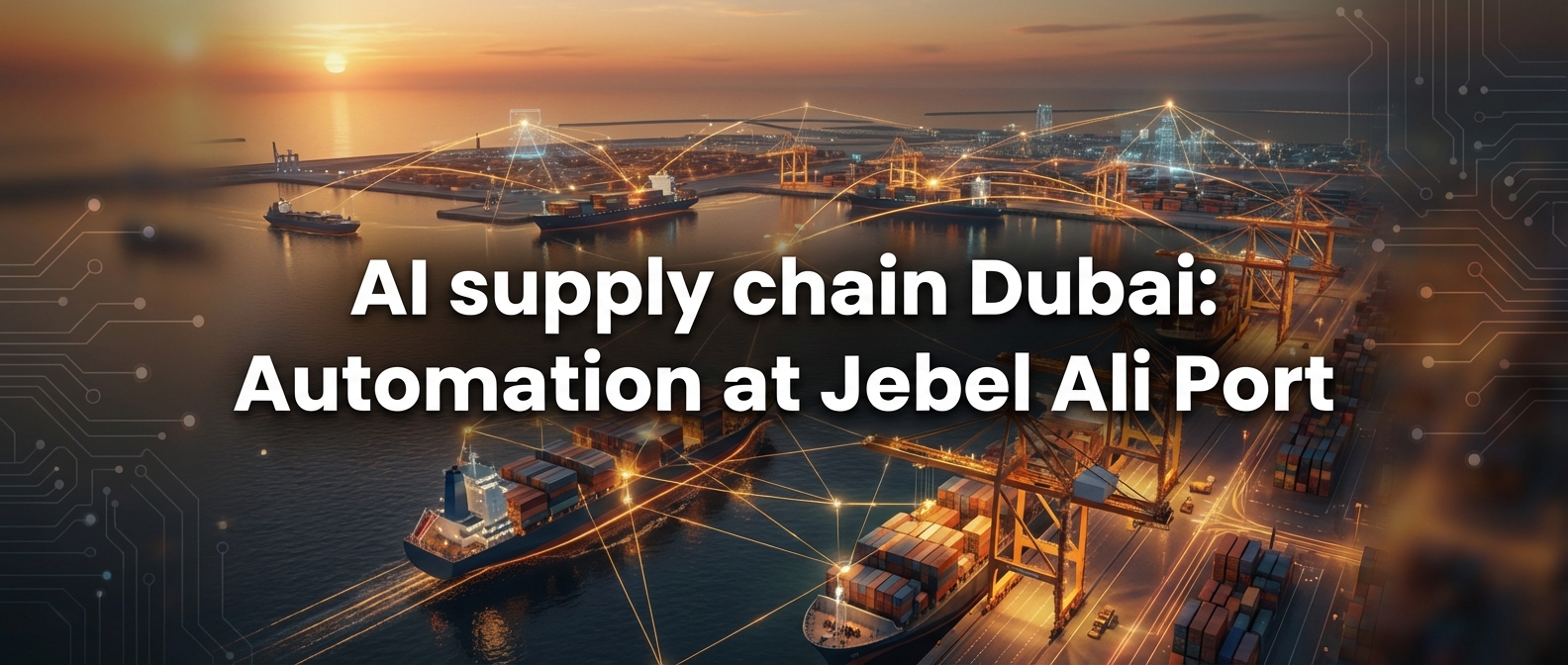
Logistics Tech UAE: Deploy AI Supply Chain Dubai and Jebel Ali Port Automation to Win Africa–UAE Corridors
Estimated reading time: ~9 minutes
Key Takeaways
- UAE logistics is shifting from reactive to proactive orchestration using AI, automation, and real-time visibility.
- Jebel Ali Port automation cuts dwell times, boosts reliability, and feeds enterprise systems with high-fidelity operational data.
- Predictive logistics software improves ETA accuracy, reduces costs-to-serve, and supports Scope 3 sustainability reporting.
- A 30/60/90-day deployment playbook accelerates ROI across integrations, pilots, and scale-up.
- Effective change management—amplified by TrueFan AI communications—drives adoption across Africa–UAE corridors.
Enterprises adopting Logistics Tech UAE are unlocking AI supply chain Dubai advantages, capturing faster throughput at Jebel Ali Port automation, and scaling across trade corridors Africa–UAE with predictive logistics software. As we navigate the complexities of 2026, the integration of artificial intelligence and automated port infrastructure has transitioned from a competitive advantage to a fundamental operational requirement for regional leaders.
The UAE’s logistics landscape is currently undergoing a radical transformation, driven by the D33 economic agenda and a relentless push toward digital sovereignty. For COOs and Heads of Supply Chain, the challenge lies in harmonizing disparate data streams from ports, customs, and inland transport into a single, predictive intelligence layer. This blog explores the strategic deployment of these technologies to ensure your enterprise remains at the forefront of global trade.
Why Logistics Tech UAE is Mission-Critical in 2026
In the current fiscal year, Logistics Tech UAE is defined as the integrated stack of AI-driven planning, port automation connectors, and multimodal visibility purpose-built for the region's hub-and-spoke model. The 2026 environment demands a shift from reactive logistics to proactive orchestration, where real-time optimization and sustainability compliance (Scope 3) are non-negotiable. Supply chain transparency videos (2026)
The operationalization of AI has reached a tipping point where hyperlocal data—such as Jebel Ali yard telemetry—is now being used to optimize global network flows. This level of granularity allows enterprises to normalize post-shock capacity and manage the volatility inherent in modern trade. By leveraging digital freight solutions, companies are not only improving efficiency but also aligning with the UAE’s broader sustainability initiatives.
Recent industry analyses indicate that AI and automation are the primary drivers of growth in the UAE logistics sector for 2026. These technologies enable real-time route optimization and digital twin modeling, which are essential for maintaining the UAE's status as a global logistics powerhouse. Furthermore, the normalization of visibility across major carriers ensures that data-driven operations are now the standard for regional connectivity.
Sources:
- Brightway Logistic: Innovations in UAE Logistics 2026
- Jeebly: 2026 Trends in UAE Logistics and Delivery
- Maersk Insights: Logistics Visibility Trends 2026
- PolymerInStock: GCC Logistics and Freight Forwarding Outlook 2026
Inside AI Supply Chain Dubai: Public and Private Enablers Accelerating ROI
The concept of an AI supply chain Dubai involves the application of machine learning across demand planning, ETA prediction, and exception automation. Supply chain transparency videos (2026) This ecosystem is deeply interlinked with Dubai’s customs digitization and smart mobility data feeds, creating a fertile ground for rapid ROI.
Customs and Trade Digitization
AI-led HS code classification and automated risk scoring are significantly shrinking clearance times. By utilizing RPA (Robotic Process Automation) for audit selection, enterprises can reduce penalties and ensure strict compliance with Dubai D33 trade facilitation goals. This digital layer acts as a catalyst for smoother trade flows, particularly when dealing with high-volume commodities.
Citywide and Port-Adjacent Data Feeds
Modern predictive logistics software now ingests traffic telemetry, weather patterns, and IoT yard sensors to enhance yard accuracy. These data feeds allow for precise dispatching and appointment scheduling, reducing the “dead time” trucks spend idling. When integrated with carrier APIs, these models provide a level of ETA precision that was previously unattainable.
Enterprises implementing these AI-driven strategies are reporting measurable outcomes, including a 10–20% improvement in forecast accuracy and an 8–15% faster truck turn time. Furthermore, the reduction in demurrage and detention costs—typically between 3–7%—directly impacts the bottom line, proving the efficacy of the Logistics Tech UAE framework.
Sources:
- India Shipping News: DP World and Customs Tech Hub
- DHL UAE: Smarter, Resilient Supply Chains 2026
- Logistica Group: Smart Logistics Trend Aggregation 2026

Jebel Ali Port Automation: Implications for Shippers, 3PLs, and Manufacturers
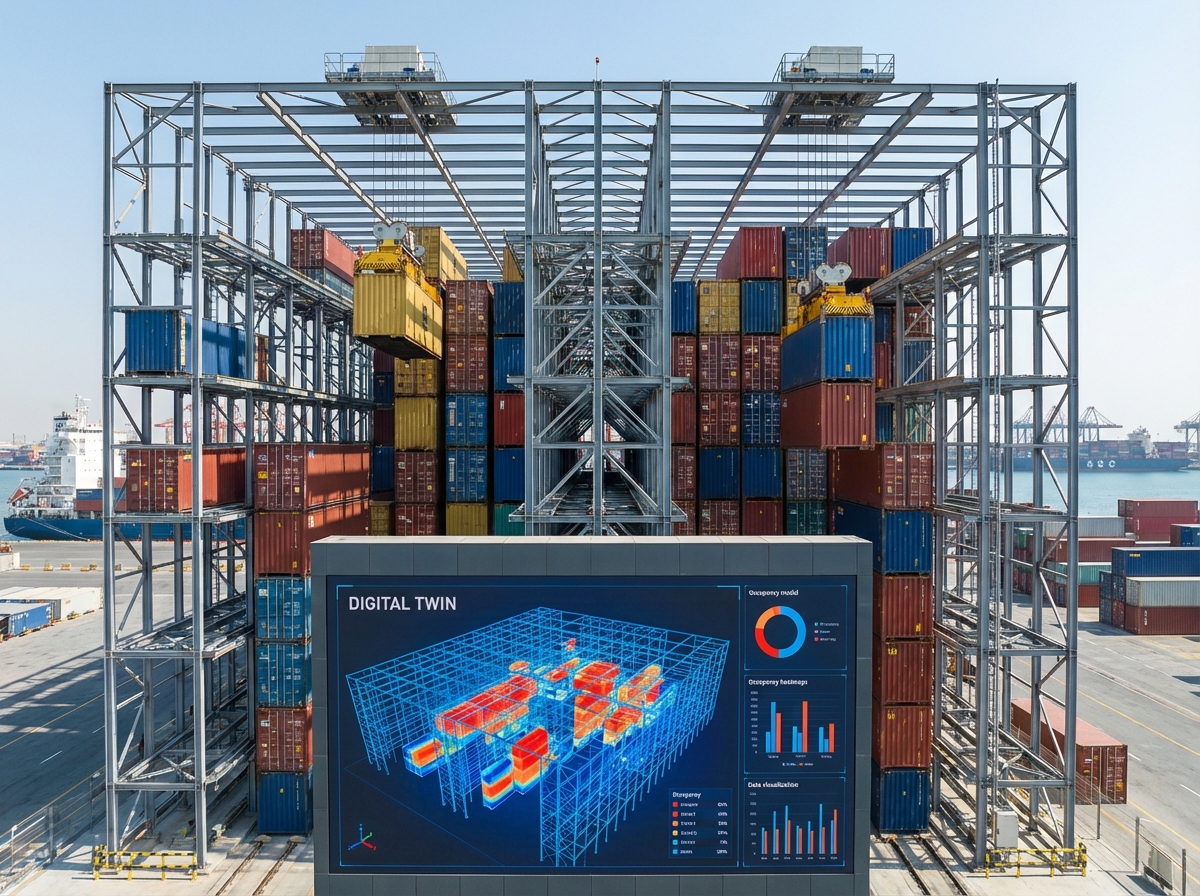
Jebel Ali Port automation represents the pinnacle of maritime technology, featuring advanced Terminal Operating Systems (TOS), automated stacking cranes (ASCs), and high-bay storage pilots like BOXBAY. For shippers and 3PLs, this automation stack translates into unprecedented reliability and speed.
The Automation Stack and Operational Enablement
The primary benefit of this automation is the reduction in yard rehandles and the improvement of yard density. By utilizing real-time berth and yard digital twins, port operators can minimize vessel turnaround times and lower dwell times for containers. This efficiency is critical for manufacturers who rely on just-in-time inventory models.
Plugging Enterprise Systems into Jebel Ali Data Flows
To fully capitalize on these advancements, enterprises must integrate their internal ERP, TMS, and WMS systems with Jebel Ali’s data streams. This involves utilizing API middleware to capture TOS event streams, such as gate-in/out events and berth schedules. A robust data architecture, often employing event-driven models like Kafka, ensures that this information is processed in real-time.
Implementing these integrations requires a focus on data residency and security, ensuring compliance with UAE regulations. By establishing a canonical shipment model, enterprises can maintain a single source of truth across their entire supply chain, further enhancing the value of Logistics Tech UAE.
Sources:
- Brightway Logistic: UAE Automation Innovations 2026
- India Shipping News: Jebel Ali Development Trackers
Building Competitive Advantage Across Trade Corridors Africa–UAE
The synchronization of physical and digital flows across trade corridors Africa–UAE is essential for regional expansion. These corridors link Jebel Ali with key African gateways like Berbera, Mombasa, and Dar es Salaam, requiring harmonized documentation and multimodal visibility.
Physical and Digital Corridor Integration
Physical upgrades, such as bonded road corridors and inland depots, are being matched by digital B2B platforms. These platforms enable seamless documentation, payment, and trade finance, reducing the friction traditionally associated with cross-border trade. This dual approach ensures that goods move as quickly as the data that accompanies them.
Corridor Constraints and Tech Mitigations
Operating in these corridors presents unique challenges, including variable customs regimes and hinterland infrastructure gaps. Predictive logistics software mitigates these risks through dynamic routing and offline-first mobile applications for drivers. By using smart document validation and proactive exception bots, enterprises can maintain corridor reliability even in volatile environments.
The strategic importance of these corridors is highlighted by the GCC's 2026 outlook on connectivity. As regionalization continues to shape supply chains, the ability to orchestrate flows between the UAE and Africa will be a defining characteristic of successful logistics enterprises.
Sources:
Predictive Logistics Software: The Enterprise Toolkit for Throughput and Resilience
Predictive logistics software serves as the intelligence engine for modern supply chains, utilizing AI/ML to forecast demand and optimize multimodal networks. Supply chain resilience marketing This toolkit is essential for managing the complexities of Logistics Tech UAE and achieving long-term resilience.
Demand Forecasting and Inventory Positioning
Advanced techniques, such as hierarchical time series and causal feature analysis (including promotions and port congestion), allow for precise demand forecasting. This enables enterprises to position inventory strategically across GCC–Africa routes, unlocking significant working capital. A 10–20% reduction in Mean Absolute Percentage Error (MAPE) is a common benchmark for these systems.
Predictive ETA and Dynamic Routing
By ingesting AIS data, port queue indices, and road telemetry, predictive logistics software can generate highly accurate ETAs. When delays are detected, the system can automatically re-slot yard appointments and notify carriers, reducing cost-to-serve by 5–10%. This proactive approach minimizes the impact of disruptions and improves customer satisfaction.
Yard and Berth Optimization
In the yard, AI-driven heatmaps and crane scheduling minimize rehandles and improve truck turn times. Predictive maintenance models for vehicles and equipment further enhance operational uptime, reducing unplanned outages by 20–30%. These efficiencies are vital for maintaining high throughput at major hubs like Jebel Ali.
Sources:
- DHL UAE: Smarter, Resilient Supply Chains
- Maersk: Data-Driven Operations 2026
- Jeebly: UAE Routing Efficiency 2026
Enterprise Deployment Playbook in the UAE (30/60/90 Days)
Successfully implementing Logistics Tech UAE requires a structured approach that balances quick wins with long-term scalability. This 90-day playbook provides a roadmap for enterprise-grade deployment of predictive logistics software and AI supply chain Dubai initiatives.
0–30 Days: Foundation and Assessment
The initial phase focuses on a comprehensive assessment of existing systems, data quality, and KPI baselines. Enterprises should prioritize quick wins, such as implementing ETA prediction on high-volume lanes or deploying a customs document validation bot. Establishing UAE data residency and robust governance frameworks is also a critical first step.
31–60 Days: Integrations and Pilots
During the second month, the focus shifts to integrating with TOS/port data feeds and internal ERP/TMS systems. This is the time to pilot predictive modules, such as dynamic routing and exception triage. Rolling out driver applications with offline caching capabilities ensures that the digital layer extends to the very edge of the supply chain.
61–90 Days: Scale and Change Adoption
The final phase involves expanding to additional trade corridors and turning on advanced features like predictive maintenance. This is also where change management becomes paramount. Training programs and updated SOPs ensure that the workforce is equipped to leverage the new technology, while continuous MLOps monitoring ensures the AI models remain accurate.
ROI Modeling (Indicative Ranges):
- Forecast Accuracy Lift: 10–20%
- Truck Turnaround Improvement: 8–15%
- Cost-to-Serve Reduction: 5–10%
- Exceptions Reduced: 20–30%
- Carbon Reduction: 5–12% via optimized dwell and deadhead cuts.
How TrueFan AI Accelerates Logistics Tech UAE Adoption
While the core optimization of a supply chain is driven by logistics platforms, the ultimate success of any digital transformation depends on stakeholder adoption. Logistics Tech UAE initiatives often fail not because of the technology, but because of a breakdown in communication and training across a multilingual workforce. Supply chain resilience marketing
Platforms like TrueFan AI enable enterprise leaders to bridge the communication gap between complex backend logistics data and the frontline personnel executing daily tasks. By transforming dry SOPs and technical updates into engaging, personalized content, TrueFan AI ensures that every member of the team—from the yard manager in Jebel Ali to the driver in Mombasa—understands their role in the new digital ecosystem.
TrueFan AI's 175+ language support and Personalised Celebrity Videos provide a scalable solution for training diverse workforces across the Africa-UAE corridor. For instance, when a new AI-driven yard slotting system is deployed, TrueFan AI can automatically generate and distribute personalized video messages to every truck driver in their native language, explaining the new appointment process and its benefits. This level of personalization significantly reduces resistance to change and accelerates the realization of ROI.
Solutions like TrueFan AI demonstrate ROI through accelerated change adoption and reduced operational errors during high-stakes digital transitions. By integrating with existing ERPs and WhatsApp Business APIs, the platform can trigger video generation in under 30 seconds, providing real-time, event-triggered alerts that keep the supply chain moving. Supply chain transparency videos (2026) This communication layer is the “connective tissue” that ensures predictive logistics software delivers on its promise.
FAQ: Navigating Logistics Tech UAE
Sources:
Recommended Internal Links
Frequently Asked Questions
What are the primary benefits of Jebel Ali Port automation for 3PLs?
Automation at Jebel Ali reduces yard rehandles and vessel turnaround times, allowing 3PLs to offer more reliable schedules and lower dwell times to their clients. It also provides real-time data feeds that can be integrated into enterprise visibility platforms.
How does AI supply chain Dubai impact customs clearance?
By using AI for HS code classification and risk scoring, Dubai Customs can process shipments much faster. For enterprises, this means reduced clearance times, fewer manual audits, and a significant decrease in potential penalties.
Can predictive logistics software help with sustainability goals?
Yes, by optimizing routes and reducing idle times (deadheading), predictive software directly lowers the carbon footprint per shipment. This supports compliance with Scope 3 emission standards.
What is the typical ROI timeline for Logistics Tech UAE?
While foundational work starts immediately, most enterprises see measurable ROI within 90 days, particularly in forecast accuracy, truck turn times, and reduced demurrage costs.
How does TrueFan AI assist in deploying new logistics technologies?
TrueFan AI facilitates change management by providing personalized, multilingual video training and real-time alerts. This ensures frontline teams are onboarded and informed, which is critical for successful adoption of complex logistics tech.



