DPDP Act compliance marketing 2026: A CMO + Compliance playbook for trust‑first video programs
Estimated reading time: ~13 minutes
Key Takeaways
- Trust-first video and multilingual notices turn DPDP requirements into higher opt-ins and loyalty.
- Granular consent and unbundled purposes are mandatory; withdrawal must be as easy as opt-in.
- Privacy by Design requires CMP/CDP sync, consent tokens, and immutable audit trails.
- Trust signal optimization links transparency engagement to KPIs like consent conversion and CLV.
- Automation at scale enforces compliance in real time across campaigns, channels, and languages.
The landscape of Indian digital engagement is undergoing a seismic shift as the enforcement of the Digital Personal Data Protection (DPDP) Act reaches its critical maturity phase. For Chief Marketing Officers (CMOs) and Legal/Compliance Officers, DPDP Act compliance marketing 2026 is no longer a future-dated checklist but an immediate operational imperative. By 2026, the grace periods for Significant Data Fiduciaries (SDFs) will have expired, making the integration of privacy-first video marketing and digital trust building campaigns the primary differentiator between market leaders and those facing heavy regulatory penalties.
The core challenge for 2026 lies in moving beyond "check-the-box" compliance toward a model of data handling transparency. Enterprises must now demonstrate that they are not just following the law, but actively empowering the "Data Principal" (the individual) through clear, multi-language communication. This requires a transition from dense, legalese-heavy privacy policies to interactive, visual, and accessible formats. Platforms like TrueFan AI enable enterprises to bridge this gap by delivering high-scale, personalized video content guides for compliant data capture that capture granular consent while maintaining the highest standards of data governance.
In this high-stakes environment, the goal is to achieve DPDP compliant personalization at scale. This involves a strategic pivot toward zero-party and first-party data strategies, where every customer interaction is governed by explicit, purpose-specific consent. By operationalizing trust signal optimization, brands can turn regulatory constraints into a competitive advantage, fostering deeper loyalty through radical transparency and superior customer education.
What 2026 enforcement means for enterprise marketers
As we move into 2026, the Ministry of Electronics and Information Technology (MeitY) has signaled that the "phased implementation" window is closing. For large-scale enterprises in banking, telecom, and e-commerce, this means the full weight of the DPDP Act’s penalty framework—up to ₹250 crore for significant breaches—is now a live risk. The focus has shifted from high-level readiness to the granular execution of consent management and the operationalization of the "Consent Manager" framework, a regulated intermediary unique to the Indian ecosystem.
Marketing in 2026 requires a fundamental redesign of the customer journey to ensure data handling transparency. Every creative asset must now be viewed through the lens of the "Notice and Consent" requirements. This means that generic opt-ins are obsolete; consent must be unbundled, specific, and provided in a clear, affirmative action. For instance, a user consenting to "product recommendations" does not automatically consent to "third-party data sharing" or "behavioral profiling." Each purpose must be clearly defined, and the withdrawal of consent must be as easy as the giving of it.
Furthermore, the 2026 enforcement landscape emphasizes the "Right to Information" in Indian languages. With over 60% of Indian internet users preferring content in their regional tongue, enterprises must provide privacy notices and consent interfaces in the languages specified in the Eighth Schedule of the Constitution. This is where regulatory compliance storytelling for Digital India becomes essential. Instead of a static text block, brands are using short-form videos to explain data usage, ensuring that even non-technical users understand their rights and the value exchange of their data.
Data handling transparency and digital trust building campaigns
In 2026, data handling transparency is the cornerstone of any successful digital strategy. It refers to the upfront, plain-language disclosure of data sources, processing purposes, retention periods, and the identity of the Data Protection Officer (DPO). To turn this into a brand asset, enterprises are launching digital trust building campaigns that use video to humanize the data relationship. A 30-second explainer video can effectively communicate why a brand needs location data (e.g., for delivery accuracy) versus why it needs purchase history (e.g., for loyalty rewards).
The measurement of these campaigns moves beyond traditional click-through rates to trust signal optimization. Marketers are now tracking "Transparency Completion Rates"—the percentage of users who watch a privacy explainer before opting in. High completion rates combined with high opt-in rates indicate a successful "Trust-to-Value" ratio. By embedding these transparency segments into the onboarding flow, brands reduce the "creepiness factor" associated with personalization and build a foundation of informed consent that is legally defensible and consumer-friendly.
Regulatory compliance storytelling as a brand advantage
Regulatory compliance storytelling is the art of transforming dry legal mandates into a compelling brand narrative. In the context of the DPDP Act, this means moving away from "we are compliant" to "we protect you." Storyboarding for these campaigns often follows a specific beat: identifying a common data fear (e.g., "Will my data be sold?"), introducing the DPDP policy as the solution, demonstrating the user's control through consent toggles, and showing the payoff of a safer, more relevant experience.
This approach allows brands to A/B test different tones and regional language nuances. For example, a financial services firm might use a formal, authoritative tone in a Marathi-language video for wealth management, while using a more conversational, "buddy" tone in a Hindi-language video for a UPI-linked credit product. This level of localization ensures that the message of privacy and control resonates across India’s diverse demographic landscape, turning a legal requirement into a powerful tool for brand affinity.
Sources:
- MeitY: Digital Personal Data Protection Rules 2025
- EY India: Steering DPDP compliance and readiness
- FirstLaunch: DPDP Act for marketers in 2026
Consent management personalization without creepiness
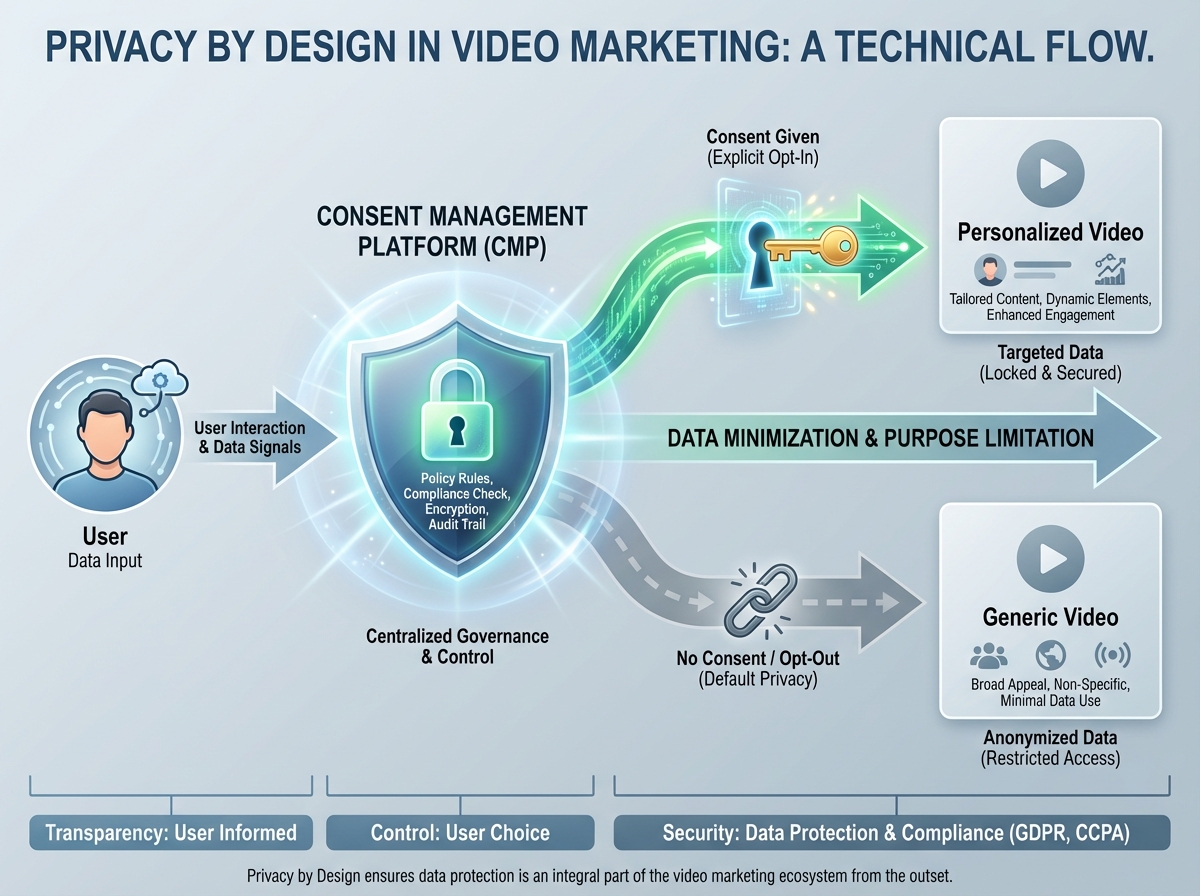
The most significant technical hurdle in 2026 is achieving consent management personalization. This is the practice of tailoring the user experience based strictly on the granular permissions granted by the Data Principal. In a post-DPDP world, "creepy" marketing—where a user sees an ad for something they discussed in a private message or searched for on an unrelated site—is not just a brand risk; it is a compliance violation. The 2026 standard requires a "Privacy by Design" architecture where the Consent Management Platform (CMP) acts as the "brain" of the marketing stack.
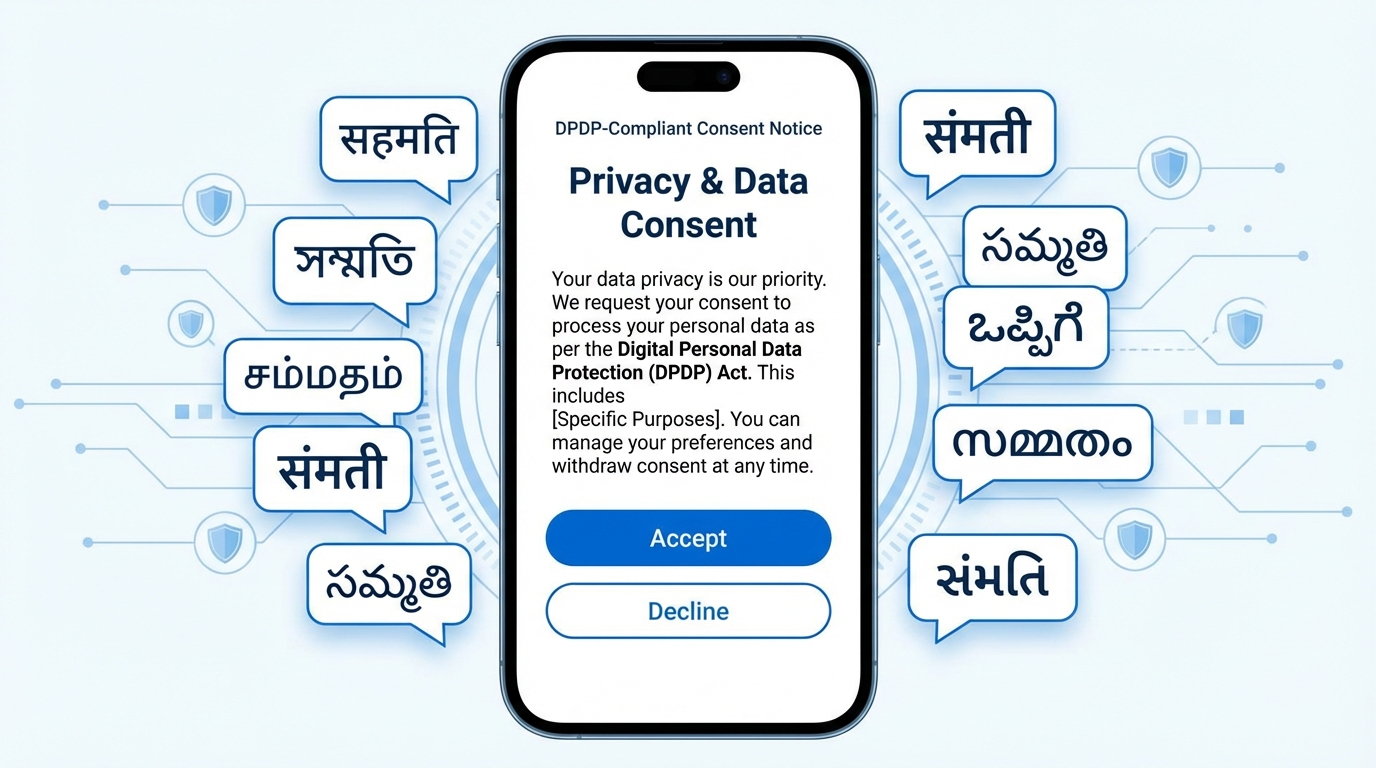
To operationalize this, enterprises are integrating CMPs into interactive video and web interfaces. When a user interacts with a video, the backend must instantly check the consent status for that specific user ID. If the user has not consented to "behavioral targeting," the video must serve a generic or context-based version instead of a personalized one. This real-time synchronization ensures that the brand never oversteps the boundaries of the granted consent, thereby maintaining the integrity of the DPDP compliant personalization strategy.
Privacy-first video marketing patterns that earn consent
Privacy-first video marketing involves designing content that prioritizes user agency from the first frame. One effective pattern is the "Ask with Value" overlay. Before a video begins or at a natural pause point, an interactive overlay appears, explaining the benefit of opting into data collection. For example: "Opt-in to see offers available in your specific city." This makes the data request a choice rather than a condition of service.
Another critical pattern is "Progressive Disclosure." Instead of overwhelming the user with a 10-page privacy policy, brands use short video snippets to explain one data category at a time. This reduces cognitive load and increases the likelihood of an informed opt-in. By defaulting all toggles to "Off" and requiring an affirmative "On" action, brands adhere to the DPDP Act's strict requirements while building a high-quality database of users who genuinely want to engage with the brand's personalized offerings.
Designing consent preference videos that clearly inform choices
Consent preference videos are short, visual guides that walk users through their privacy settings. In 2026, these are becoming a standard feature in the "My Account" or "Privacy Center" sections of enterprise apps. A well-designed preference video uses animation to show exactly what happens when a toggle is switched. For instance, it might show a "Personalized Feed" turning into a "Standard Feed" to illustrate the impact of withdrawing consent for profiling.
The UX checklist for these videos includes:
- Multi-language support: Ensuring the audio and captions are available in the user's preferred Indian language. See regional language video SEO strategies
- Frictionless "No": Ensuring the "Reject All" or "Withdraw Consent" path is as prominent and easy to navigate as the "Accept" path.
- Audit-ready logs: Every interaction with the video (views, pauses, toggle changes) should be logged as a "Consent Receipt," providing a clear audit trail for regulators.
Sources:
- AZB Partners: Consent Managers under India’s DPDP Act
- MediaNama: Explained — Consent Managers & DPDP Rules 2025
- Social Beat: Digital marketing trends 2026 in India
Educating customers on rights under India’s DPDP Act
The DPDP Act grants Indian citizens a robust set of rights: the right to access, the right to correction, the right to erasure, and the right to grievance redressal. In 2026, the challenge for enterprises is to make these rights actionable without overwhelming their support teams. This is where data protection customer education becomes a strategic function. By proactively teaching customers how to manage their data, brands reduce the volume of formal legal requests and build a reputation for being "privacy-forward."
Customer data rights videos are the most effective tool for this education. These videos provide a step-by-step walkthrough of the rights-request process. For example, a "Right to Erasure" video might explain that while a user can request their data be deleted, certain records must be kept for tax or regulatory purposes (e.g., banking transaction logs). By setting these expectations visually and clearly, brands minimize frustration and ensure that the customer feels in control of their digital footprint. Learn more about Digital India compliance marketing
Furthermore, the 2026 regulatory environment demands that grievance redressal be "efficient and effective." Enterprises are now embedding "Grievance Redressal" videos within their apps, introducing the Data Protection Officer (DPO) and explaining the timelines for response (typically 7-30 days depending on the nature of the request). This transparency prevents minor issues from escalating into formal complaints to the Data Protection Board of India (DPBI), which can trigger audits and significant fines.
Operationalizing customer data rights videos
To make customer data rights videos truly effective, they must be integrated into the self-service portal. When a user clicks on "Delete My Account," instead of a simple confirmation box, a short video can play to explain the consequences (e.g., loss of loyalty points) and the timeline for data purging. This ensures the user is making an informed decision.
Key elements of these videos include:
- Verification steps: Explaining why the brand needs to verify the user's identity before processing a data request.
- SLA transparency: Clearly stating how long the process will take.
- Post-deletion status: Explaining what data is retained under "Legitimate Use" versus what is permanently deleted.
Sources:
- ICLG: India Data Protection overview
- ECS Infotech: DPDP forensic readiness, compliance, penalties
- MeitY: DPDP Rules 2025
Operationalizing privacy by design marketing at enterprise scale
For a CMO, privacy by design marketing means that every campaign, from conception to execution, has privacy built into its DNA. In 2026, this is not just a philosophy but a workflow requirement. Large enterprises are adopting "Privacy-First Content Operations," where every marketing brief must include a Data Protection Impact Assessment (DPIA) trigger. If a campaign involves new types of data collection or high-risk processing (like AI-driven sentiment analysis), it must undergo a legal review before a single creative asset is produced.
This operational shift requires a high degree of privacy compliance marketing automation. Manual checks are no longer sufficient when dealing with millions of customers across multiple channels. Automation tools are now used to scan creative assets for PII (Personally Identifiable Information), manage tag governance on websites to prevent "shadow tracking," and ensure that every personalized video served is backed by a valid consent token. This creates a "Consent-Gated" marketing ecosystem where compliance is enforced by the tech stack, not just by policy. See interactive video data capture in action
Privacy compliance marketing automation: approvals and audit trails
The technical architecture of privacy compliance marketing automation in 2026 typically involves a "Consent Webhook" system. When a user updates their preferences in a CMP, a webhook fires to the Customer Data Platform (CDP) and the Marketing Automation platform. This ensures that the user is instantly moved into or out of specific segments. For example, if a user withdraws consent for "Email Marketing," the automation system must immediately suppress all outgoing emails, even those already in the queue.
Moreover, the system must maintain an immutable audit trail. In the event of a DPBI audit, the enterprise must be able to prove when consent was obtained, what notice was shown at that time, and how the data was used. Automated logging of these events, including the version of the data privacy transparency videos India that the user watched, provides the "Forensic Readiness" required to defend against allegations of non-compliance.
Enterprise data governance communication with legal sign-offs
Effective enterprise data governance communication requires a bridge between the Legal and Marketing departments. In 2026, this is often managed through a "Privacy-Marketing Council" that meets monthly to review upcoming campaigns and regulatory updates. The council uses a standardized sign-off checklist for all content, ensuring that:
- Notices are available in the required regional languages. Explore regional language video SEO
- Data minimization principles are applied (e.g., not asking for gender if it’s not needed for the service).
- Vendor Data Processing Agreements (DPAs) are in place for any third-party tools used in the campaign.
This structured communication ensures that the brand remains agile while staying within the legal guardrails. It also fosters a culture of "Accountability," one of the core pillars of the DPDP Act, where every team member understands their role in protecting the Data Principal's information.
Sources:
- EY India: Trust strategy and DPDP readiness
- Aufait Technologies: Understanding DPDP Rules
- Social Beat: 2026 marketing trends in India
Proving impact: trust signal optimization and safe personalization lift
One of the most common misconceptions is that DPDP compliance will kill marketing ROI. On the contrary, DPDP Act compliance marketing 2026 is proving to be a driver of higher-quality engagement. When users feel safe and in control, they are more likely to share accurate, high-intent data. This leads to a "Safe Personalization Lift," where conversion rates increase because the marketing is based on genuine interest rather than intrusive tracking.
To measure this, enterprises are adopting trust signal optimization. This involves tracking a new set of KPIs that correlate privacy transparency with business outcomes. For example, brands are measuring the "Consent Conversion Rate"—the percentage of users who opt-in after watching a data privacy transparency videos India. They are also tracking "Preference Completeness," which measures how many users have filled out their full preference center. These metrics provide a clear picture of how much "Digital Trust" the brand has earned, which is a leading indicator of long-term customer lifetime value (CLV).
Implementation roadmap for 2026: From Pilot to Scale
The journey to full DPDP maturity in 2026 follows a structured roadmap.
90-Day Pilot (Foundation):
- Data Mapping: Identifying all data flows and purpose categories.
- Transparency Assets: Creating 2-3 data privacy transparency videos India for the most common data collection points.
- CMP Integration: Deploying a CMP with basic consent overlays and regional language support.
- KPI Baseline: Establishing baseline metrics for consent and opt-out rates.
6-12 Month Scale-Up (Automation and Governance):
- Multi-Language Expansion: Localizing all privacy content into 10+ Indian languages. Strategies for regional language video SEO
- Automated Workflows: Implementing privacy compliance marketing automation for consent-gated campaigns.
- Advanced Personalization: Scaling DPDP compliant personalization across all digital touchpoints.
- Governance Rituals: Institutionalizing enterprise data governance communication and quarterly audits.
By following this roadmap, enterprises can ensure they are not only compliant by the 2026 deadlines but are also positioned to lead the market in the "Trust Economy."
Sources:
- FirstLaunch: 2026 DPDP playbook for marketers
- ECS Infotech: DPDP penalties and key trends
- MeitY: DPDP Rules reference
How TrueFan AI (Enterprise) helps you do this today
Navigating the complexities of DPDP Act compliance marketing 2026 requires a technology partner that understands both the creative and the legal requirements of the Indian market. TrueFan AI (Enterprise) provides the infrastructure needed to deliver high-impact, privacy-first video experiences at scale. By combining advanced AI-driven video generation with robust data governance features, TrueFan AI enables CMOs and Compliance Officers to work in harmony.
TrueFan AI's 175+ language support and Personalised Celebrity Videos allow brands to create regulatory compliance storytelling that resonates with every segment of the Indian population. Whether it’s a Marathi-speaking customer in Pune or a Bengali-speaking user in Kolkata, TrueFan AI ensures that your privacy message is delivered in the right language and the right tone. TrueFan AI's 175+ language support and Personalised Celebrity Videos ensure that no customer is left behind due to a language barrier, fulfilling the DPDP Act’s mandate for accessible notices. Learn how to scale regional language video SEO
Solutions like TrueFan AI demonstrate ROI through trust signal optimization, providing detailed analytics on how users interact with transparency and consent videos. By tracking completion rates and opt-in triggers within the video itself, enterprises can refine their messaging to maximize both compliance and conversion. Furthermore, TrueFan AI's enterprise-grade security (ISO 27001 and SOC 2) and real-time API integrations with CMPs ensure that every video served is fully aligned with the user's latest consent status. Explore the interactive video data capture guide
Recommended Internal Links
- Interactive Video Data Capture: DPDP-Compliant Guide 2026
- Interactive Video Data Capture: DPDP-Compliant 2026
- Digital India compliance marketing 2026: privacy-first video
- Regional Language Video SEO: Strategies for 2026 Growth
- AI Content Authenticity Certification for Trusted Video
Frequently Asked Questions
What is the primary goal of DPDP Act compliance marketing 2026?
The goal is to transition from passive compliance to active trust-building. By using privacy-first video marketing and data handling transparency, brands can empower users to control their data while enabling DPDP compliant personalization that drives business growth.
How do "Consent Manager" platforms work in the 2026 landscape?
A Consent Manager is a regulated entity that acts as a bridge between the Data Principal and the Data Fiduciary. It allows users to manage, withdraw, and track their consent across multiple brands in one place. Enterprises must ensure their marketing stacks are ready to sync with these intermediaries via APIs.
Why is video better than text for privacy notices?
Video is more accessible, especially in a multi-lingual country like India. Data privacy transparency videos India can simplify complex legal concepts, leading to higher "Informed Consent" rates and reducing the risk of "Dark Patterns" allegations.
Can I still personalize my marketing under the DPDP Act?
Yes, but it must be DPDP compliant personalization. This means the personalization must be based on explicit, purpose-specific consent. If a user opts out of "Profiling," you must serve them non-personalized content.
How does TrueFan AI ensure my marketing videos are compliant?
TrueFan AI provides interactive overlays for consent capture, multi-language localization for accessibility, and real-time API hooks to ensure that personalized content is only served to users who have granted the necessary permissions. TrueFan AI also maintains detailed audit logs for every interaction, supporting your privacy compliance marketing automation efforts. Explore the interactive video data capture guide.
What are the penalties for marketing-related DPDP violations in 2026?
Failure to provide clear notices, using data for unauthorized purposes, or failing to honor consent withdrawal can result in penalties of up to ₹250 crore. Proactive data protection customer education and transparent workflows are the best defenses against these risks.