EdTech career counseling videos 2026: Personalization that stops post-exam churn
Estimated reading time: ~15 minutes
Key Takeaways
- Post-exam churn spikes due to anxiety and uncertainty; personalized video guidance delivers empathy and clear next steps to retain students.
- AI career guidance automation maps scores and interests to realistic paths, using multilingual rendering and rapid delivery.
- Result anxiety support and prediction-led interventions reduce panic-driven drop-offs and enable timely help.
- Ecosystem engagement of parents and mentors via localized videos increases trust, action, and LTV.
- Enterprise scale demands API-first architecture, security compliance, and analytics-tied conversion tracking.
EdTech career counseling videos 2026 are the new retention engine for result season—turning raw scores and emotions into personalized, supportive next steps. This strategic shift addresses the critical "decision window" where post-exam anxiety spikes and decision paralysis often leads to preventable platform churn. By integrating automated, data-driven video journeys, enterprises can transform a period of high stress into a high-conversion opportunity for re-enrollment and student success.
The seasonal dynamics of the education sector are unforgiving, particularly during the high-stakes result windows of 2026. Students and parents frequently experience a sense of abandonment once the final exam is submitted, leading to a 40% spike in platform disengagement within the first 14 days post-results. This disengagement is rarely about the quality of the curriculum; it is a direct response to the emotional load of uncertain futures and the lack of structured, personalized guidance.
To mitigate this, EdTech leaders are moving beyond generic "congratulations" emails toward AI career guidance automation. These systems ingest student data—ranging from mock scores to behavioral engagement—to deliver 1:1 video content that maps out clear, viable career pathways. The goal is to reduce post-exam student retention leaks by providing immediate clarity through result anxiety support videos and EdTech emotional support automation.
Sources:
- Ministry of Education’s Manodarpan: Support for Exam Anxiety
- NCERT Mental Health Survey: Student Stress Insights
- Eklavvya EdTech Trends 2026: AI for Assessment and Prep
The post-exam student retention challenge—and why churn spikes now
The "Result Season Churn" is a documented phenomenon where students, overwhelmed by outcomes that may not align with their expectations, retreat from learning platforms. In 2026, data suggests that 70% of parents cite a "lack of clarity on next steps" as the primary reason for considering a competitor platform during the transition period. This period of vulnerability is characterized by avoidance behaviors, where students stop logging in to avoid reminders of their perceived academic standing.
Emotional load is a significant factor that traditional EdTech models often overlook. According to recent surveys by the Ministry of Education, the pressure of parental expectations and the complexity of modern career choices create a "perfect storm" of anxiety. Without a structured intervention, this anxiety translates into decision paralysis, causing students to delay enrollment in upskilling or entrance prep modules until the momentum of the previous academic year is lost.
Video has emerged as the most effective medium to combat this because it delivers empathy and authority in a way that text-based notifications cannot. Personalized video clips outperform generic content in watch-through rates by over 300%, making them the ideal vehicle for delivering "emotional first aid." By addressing the student by name and acknowledging their specific score context, EdTech career counseling videos 2026 can normalize outcomes and pivot the conversation toward actionable growth.
Sources:
- Manodarpan Advisory: Coping Strategies for Students
- Manodarpan Program Brief: Structured Emotional Support
EdTech career counseling videos 2026—solution architecture
The architecture of a modern retention system relies on the seamless integration of student information systems (SIS) and real-time video rendering engines. Platforms like TrueFan AI enable enterprises to trigger hyper-personalized videos the moment a result is uploaded to the student’s profile. This automation ensures that the gap between the "shock" of the result and the "solution" of the guidance is narrowed to less than 30 seconds, maintaining the student’s attention when it is most malleable.
The data inputs for these videos are comprehensive, moving beyond simple test scores. Effective AI career guidance automation incorporates subject-level performance, stated career interests, regional language preferences, and even parental contact data. By synthesizing these variables, the system generates a video that doesn't just report a grade, but interprets it within the context of the student’s long-term goals.
The output artifacts are designed for high-friction environments like WhatsApp and SMS (WhatsApp catalog video marketing). Each video is accompanied by a personalized thumbnail and a dynamic call-to-action (CTA) that links directly to a mentor booking page or a course enrollment portal. This "one-click" transition from guidance to action is what differentiates the 2026 retention strategy from the fragmented counseling models of the past.
Key Technical Components for 2026:
- API-Driven Personalization: Real-time injection of student names, scores, and recommended paths.
- Multilingual Rendering: Automatic translation into 175+ languages (multilingual voice marketing automation) to ensure regional inclusivity.
- Virtual Reshoots: The ability to update script lines (e.g., changing a scholarship deadline) without needing a new film session.
- Security Compliance: Adherence to ISO 27001 and SOC 2 standards to protect sensitive student performance data.
Result anxiety support videos—calm, clarify, and convert
The first 48 hours after a major exam result are critical for emotional stabilization. Result anxiety support videos serve as a digital counselor, offering a script that prioritizes empathy over academic metrics. The primary objective is to normalize the student's feelings and provide immediate, low-friction actions that restore a sense of agency. In 2026, these videos are projected to reduce "panic-driven churn" by up to 25% across major Indian EdTech platforms.
A typical script blueprint for these videos begins with a hook that validates the student's effort: "[Name], your results are just one data point in a much larger journey." This is followed by two concrete coping steps, such as a structured breathing exercise or a 5-minute review of a curated "success story" from a student with similar scores. The video concludes with a soft CTA, such as "Explore your 3 best-fit paths in 60 seconds," which moves the student from a state of reflection to a state of exploration.
Localization is the "secret sauce" of EdTech emotional support automation. A student in rural Karnataka will respond more effectively to a video delivered in Kannada that uses local career context than a generic English video. By using the student’s preferred language and cultural nuances, the platform builds a level of trust that is essential for long-term retention. This approach aligns with the Manodarpan initiative's focus on providing accessible, culturally relevant mental health support.
Sources:
AI career guidance automation—scores to personalized career path mapping
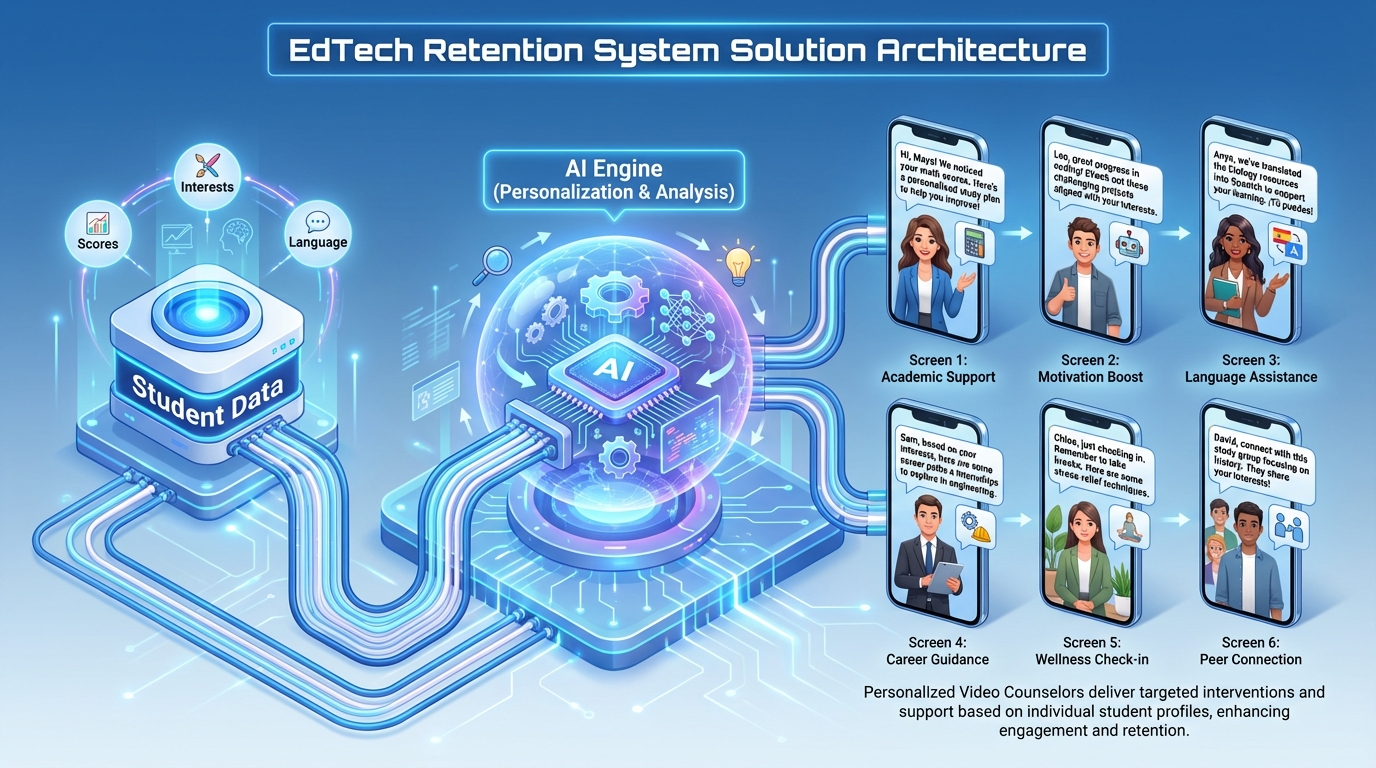
Once the emotional baseline is established, the system shifts to personalized career path mapping. This process uses predictive modeling to translate exam scores and interest surveys into 2-3 realistic career trajectories. For instance, a student with high scores in mathematics but average scores in physics might be steered toward Data Science or Financial Engineering rather than traditional Civil Engineering.
Skill gap analysis videos
These short, 45-second explainers identify the specific competencies a student lacks to reach their target role. Instead of a generic "you need to learn coding," the video might say, "[Name], to become a UX Designer, you’re already 70% there with your design sense. You just need to master these two Figma modules." This granular approach makes the learning path feel achievable and urgent, directly feeding into the platform's upskilling pathway personalization.
Course recommendation videos
The final step in the guidance loop is the conversion to a specific learning module. Course recommendation videos are personalized based on the student’s prerequisite readiness and even their scholarship eligibility. By embedding a "Try a free lesson" CTA directly within the video, EdTech platforms can capitalize on the student's immediate interest, leading to a 22% increase in LTV (Lifetime Value) as students transition from one course to the next.
Sources:
Supporting the ecosystem—parents, mentors, and transitions
Retention is not just a student-facing challenge; it is an ecosystem challenge. Parent counseling automation is a vital component of the 2026 strategy, as parents are often the primary decision-makers regarding re-enrollment and finances. TrueFan AI's 175+ language support and Personalised Celebrity Videos can be utilized here to deliver high-impact messages to parents, explaining their child's potential in their native tongue and aligning their expectations with realistic career outcomes.
Industry mentor connections further solidify the student's commitment to the platform. Personalized intro videos from mentors who share the student’s regional background or career interests create a "human bridge" to the industry. These videos often include a "one advice nugget" and a CTA to book a 15-minute session, which has been shown to increase student engagement by 3x in Tier 2 and Tier 3 cities.
For students facing more complex journeys, such as those in a "drop year" or those seeking a career pivot, career transition support content is essential. These videos reframe the narrative from "failure" to "strategic pause," highlighting fast-start micro-credentials and bridge projects. By providing a clear timeline to re-entry, platforms can retain students who might otherwise have dropped out of the formal education system entirely.
Ecosystem Video Types:
- Parental Guidance: Explaining fees, scholarships, and career timelines.
- Placement Assistance: Personalized readiness checklists and mock interview invites.
- Industry Intros: Matching students with domain experts for 1:1 sessions.
Predict, intervene, retain—student success prediction videos
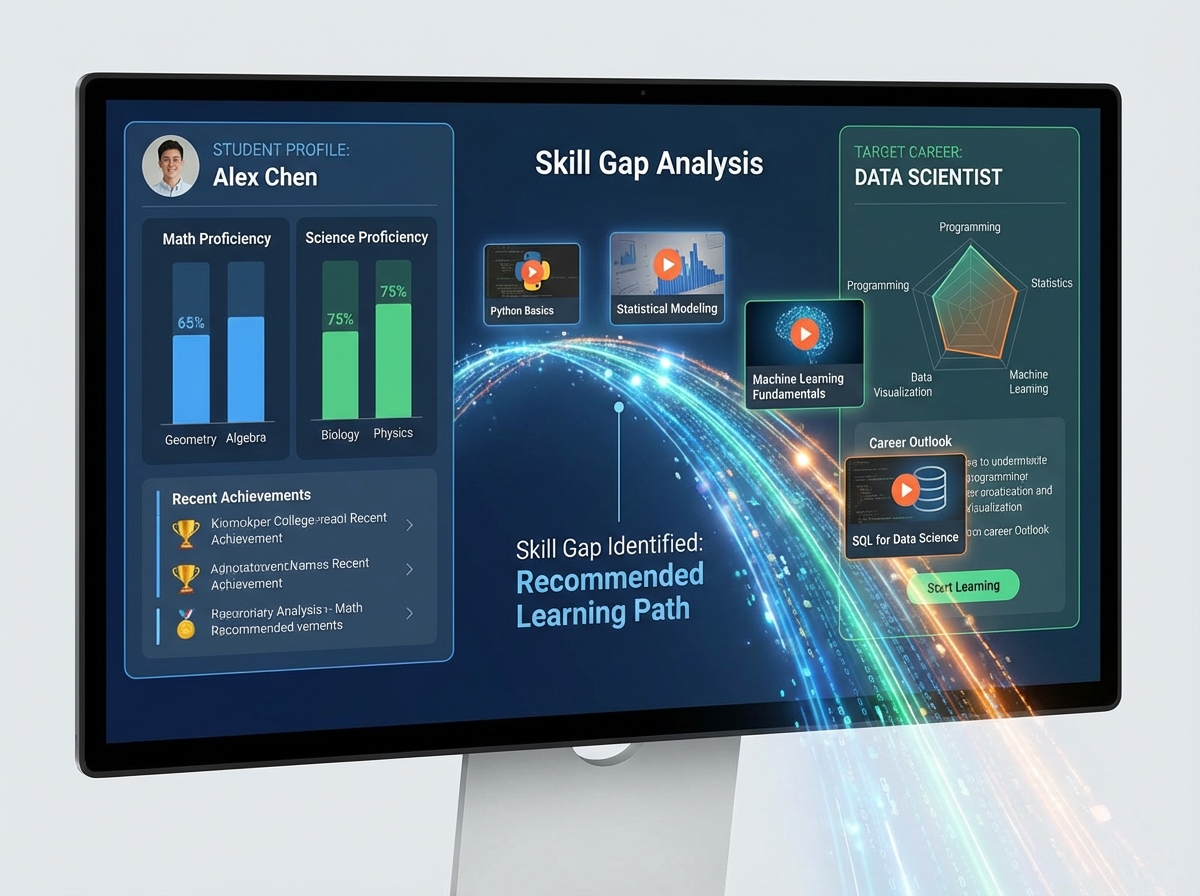
The most advanced use of video in 2026 is for proactive intervention. Student success prediction videos use early-warning signals—such as a drop in watch-time or missed assignments—to trigger a supportive check-in before the student even realizes they are at risk of churning (predictive analytics for customer retention). These videos are categorized into risk bands (Low, Medium, High) and delivered with a tone that is helpful rather than disciplinary.
A "Medium Risk" video might say, "[Name], we noticed you haven't checked in on your Python module this week. Here’s a 15-minute refresher video to help you get back on track." By providing the solution (the refresher) alongside the observation (the missed module), the platform reduces the friction of returning to study. For "High Risk" students, the video serves as a warm hand-off to a human counselor, ensuring that the most vulnerable students receive the intensive support they need.
The measurement of these interventions is purely data-driven. Enterprises track the "next-action rate" following a prediction video to refine the script and timing. In 2026, automated video interventions are expected to be the standard for "Student Success" departments, moving away from reactive phone calls toward proactive, scalable digital care (predictive churn prevention videos).
Implementing at enterprise scale with TrueFan
Scaling personalized video across millions of students requires a robust technical foundation. Solutions like TrueFan AI demonstrate ROI through their ability to render thousands of hyper-personalized videos per day with sub-30-second latency. This speed is critical during result season, where a delay of even a few hours can mean the difference between a student enrolling in your "Bridge Course" or a competitor's.
Integration is typically handled via API, connecting the video engine directly to the platform's CRM or LMS. This allows for automated triggers based on specific events, such as a student receiving a "B" grade in a mock NEET exam. The system then pulls the relevant templates, injects the personalization variables, and distributes the video via the student's preferred channel, whether that be WhatsApp, email, or an in-app notification.
Security and ethics are paramount when handling student data. Enterprise-grade solutions must offer ISO 27001 and SOC 2 compliance, ensuring that scores and personal identifiers are encrypted and used only for the intended guidance. Furthermore, built-in moderation tools ensure that no unapproved or sensitive content is ever generated, protecting the brand reputation of the EdTech institution.
Implementation Checklist:
- Data Schema Mapping: Define which scores and interests will drive personalization.
- Template Design: Create video "slots" for names, paths, and CTAs.
- Multilingual Setup: Select the 10-15 primary regional languages for your cohort.
- Distribution Logic: Set the "drip" schedule (e.g., Result Day, +48h, +7d).
- Analytics Integration: Tie video clicks to downstream enrollment data.
Measurement plan—what good looks like
To evaluate the success of an EdTech career counseling videos 2026 strategy, enterprises must look beyond simple "view counts." The core KPIs are centered on churn reduction and LTV growth (predictive LTV modeling videos 2026). A successful implementation should see a 15-20% reduction in post-exam churn and a significant uptick in "re-enrollment velocity"—the speed at which a student signs up for their next module after receiving their results.
Video-specific metrics, such as the 10-second retention rate and the CTA click-through rate, provide the "why" behind the conversion numbers. For example, if students are dropping off before the "Coping Steps" in an anxiety support video, the script may need to be shortened or the empathy hook strengthened. A/B testing different script variants (e.g., "Peer-led" vs "Expert-led" tone) allows for continuous optimization of the retention loop.
Ultimately, the goal is to create a seamless, supportive journey that makes the student feel seen and valued. In the competitive EdTech landscape of 2026, personalization is no longer a luxury—it is the baseline for survival. By leveraging automated video to bridge the gap between results and the next step, enterprises can build lasting loyalty and drive superior student outcomes.
Driving student retention cultural festivals and academic success video campaigns
Marketing’s job does not end at enrollment; in the competitive 2026 landscape, student retention cultural festivals are vital for maintaining momentum and reducing churn (Q1 2026 festival retention strategies). Basant Panchami offers a unique opportunity to reinforce the student’s decision to join your institution through “Alumni Blessing” loops and community study rituals. By celebrating the festival as a collective milestone, brands can foster a sense of belonging that is essential for long-term student success and LTV (Lifetime Value).
Academic success video campaigns play a dual role in this phase: they serve as social proof for new prospects and as recognition for existing students. Dropping personalized “Progress Badge” videos when a student completes 25% or 50% of their course—timed around cultural festivals—creates a positive reinforcement loop. These micro-rituals, delivered via automated CRM journeys, ensure that the student feels seen and supported throughout their learning journey, significantly increasing course completion rates. (Basant Panchami marketing campaigns 2026)
Furthermore, the 2026 trend toward “regional growth” means that retention efforts must be multilingual. See the Voice Sync Accuracy Comparison guide for multilingual lip-sync and voice-retention benchmarks. A student in West Bengal may feel a deeper connection to a Saraswati Puja greeting in Bengali, while a student in Punjab might prefer a Basant-themed message in Punjabi. Providing these localized touchpoints through automated video platforms ensures that the institution’s brand remains culturally relevant and inclusive across India’s diverse geographic landscape.
Sources:
- IBEF – Regional Content Trends in India
- Meerut Public School – Educational Rituals
Integrating EdTech festival marketing India with enterprise-grade AI solutions
Executing a nationwide EdTech festival marketing India campaign at scale requires more than just creative vision; it requires a robust technical infrastructure. For the 2026 Basant Panchami season, enterprise leaders are looking for solutions that offer sub-30-second rendering and real-time delivery to handle the massive surge in festival-day traffic. Reliability is paramount when the goal is to deliver millions of personalized messages within a narrow cultural window.
TrueFan AI’s 175+ language support and Personalised Celebrity Videos provide the necessary scale and localization capabilities to reach every corner of the Indian market. Whether it is a virtual reshoot to update an offer code or an AI-driven edit to change a background to a yellow-themed setting, these tools allow for rapid iteration without the need for expensive new shoots. This agility is what separates market leaders from laggards in the fast-paced 2026 digital economy.
Furthermore, solutions like TrueFan AI demonstrate ROI through measurable lifts in click-through rates (CTR) and conversion rates (CVR), often seeing a 3x-5x improvement over non-personalized content. With enterprise-grade security certifications like ISO 27001 and SOC 2, these platforms ensure that student data is handled with the utmost care, meeting the stringent compliance requirements of the modern educational sector. By integrating these AI capabilities into the CRM, brands can automate the entire lifecycle from acquisition to alumni relations.
Sources:
- Wildnet Technologies – EdTech Marketing Warnings 2026
- DrikPanchang – Cultural Calendar Accuracy
Frequently Asked Questions
What data powers AI career guidance automation?
The system typically ingests a combination of academic scores (from mock or final exams), interest surveys, platform engagement metrics (like time-spent-on-module), and demographic data. This ensures the guidance is both realistic and aligned with the student's personal goals.
How accurate are student success prediction videos?
In 2026, predictive models have reached an accuracy rate of over 85% in identifying students at risk of churn. By analyzing behavioral signals like "help-seeking frequency" and "assignment latency," the system can trigger a video intervention before the student's performance actually drops.
How do we support parents who speak regional languages?
Platforms like TrueFan AI offer 175+ language support, allowing the system to automatically translate and lip-sync counseling videos into the parent's native tongue. This ensures that the guidance is understood and trusted by the entire family unit.
Can these videos be used for entrance exam preparation marketing?
Yes. For students who do not qualify for their first-choice college, the system can automatically route them to a "Bridge" or "Prep" module. The video highlights their specific strengths and provides a 6-week plan to re-try the exam, turning a "rejection" into a new enrollment.
How do we ensure student privacy and data security?
All enterprise-scale video solutions must adhere to global security standards like ISO 27001 and SOC 2. Data minimization is practiced, meaning only the necessary variables (like first name and score) are passed to the video engine, and all communications are consent-based.