
Financial year-end marketing 2026: AI urgency playbook to drive ELSS, NPS, and insurance conversions before March 31
Key Takeaways
- Leverage AI-personalized videos and real-time countdowns to compress consideration-to-conversion during the March 31 rush.
- Prioritize ELSS and NPS (80CCD(1B)) messaging with clear deadlines, regime checks, and transparent risk disclosures.
- Automate last-mile actions via WhatsApp flows, 1-click renewals, and instant delivery of tax certificates to minimize friction.
- Build HNI loyalty with portfolio review videos, RM-led concierge journeys, and tax-loss harvesting prompts.
- Harden the stack with ISO 27001/SOC 2 practices, orchestration latency planning, and measurement beyond CTR (e.g., 80C Utilization Lift).
Financial year-end marketing 2026 in India peaks in the final 2–3 weeks leading to March 31. This playbook shows BFSI leaders how to compress consideration-to-conversion cycles with AI-personalized videos, countdown timers, and tax planning reminder automation for ELSS, NPS, and insurance. By leveraging hyper-personalization, brands can navigate the March 31 tax saving campaigns and year-end compliance marketing with unprecedented precision.
1. The March 31 Urgency & Fiscal Framework for 2026
The Indian fiscal cycle, running from April 1 to March 31, creates a unique high-velocity window for the BFSI sector. For the 2025–26 financial year, the transition between the old and new tax regimes has reached a critical maturity point, requiring marketers to deploy highly segmented messaging. While the new regime is the default, a significant cohort of salaried professionals and HNIs still utilize the old regime to claim deductions under Section 80C and 80CCD(1B).
By March 2026, digital investment accounts in India are projected to hit 250 million, with over 85% of tax-related filings expected to be mobile-first. This digital maturity means that “blanket” email reminders are no longer sufficient to break through the noise of year-end compliance marketing. Marketers must account for the “Bank Holiday Contingency”—with March 31, 2026, falling on a Tuesday, the preceding weekend and potential clearing house holidays necessitate that final investment pushes happen no later than March 26 to ensure NAV allotment.
Strategic escalation is mandatory: March 1 should focus on awareness and 80C gap analysis, while the final 72 hours must pivot to high-urgency, low-friction execution. Failure to communicate the T+2 settlement realities for ELSS or the specific cut-off times for NPS Tier I contributions can lead to significant customer dissatisfaction and lost AUM.
Source: ClearTax 80C overview and ₹1.5 lakh limit
Source: NPS Trust tax benefits
Source: eMarketer India outlook 2026
2. ELSS & NPS: Accelerating Decision Cycles via Video
Equity Linked Savings Schemes (ELSS) remain the most popular 80C instrument for wealth creation due to their shortest lock-in period of three years. However, the market-linked nature of ELSS requires a delicate balance of “tax-saving” urgency and “risk-disclosure” transparency. Platforms like TrueFan AI enable BFSI brands to generate personalized ELSS investment urgency videos that dynamically display a user’s specific 80C gap, such as: “Arjun, you are just ₹45,000 away from maximizing your tax savings.”
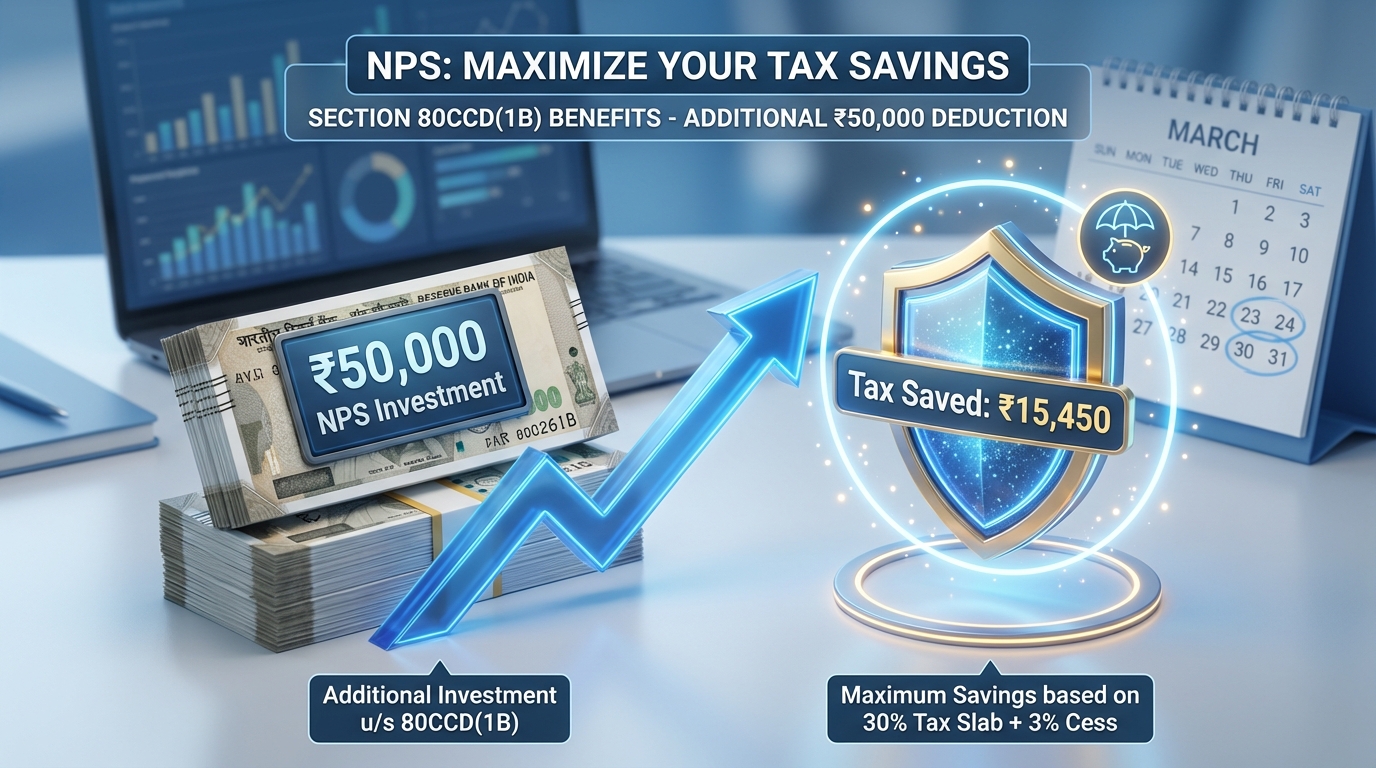
For the National Pension System (NPS), the narrative shifts toward the exclusive ₹50,000 deduction under Section 80CCD(1B). In 2026, AI-driven personalization is expected to increase conversion rates by 45% in the BFSI sector by simplifying complex tax illustrations. A personalized video can visually demonstrate how a ₹50,000 NPS contribution translates to an immediate ₹15,450 tax saving for those in the 30% bracket, effectively reducing the “perceived cost” of the investment.
NPS enrollment deadline marketing must also address the “Regime Transition Fatigue.” Many investors are confused about whether NPS benefits apply to them under the new regime; therefore, videos must include a dynamic “Regime Checker” or a clear disclaimer. By integrating investment deadline countdown videos directly into WhatsApp flows, AMCs can reduce the friction of KYC and e-sign processes, which are often the primary bottlenecks in the final week of March.
Source: ClearTax 80C instruments and limits
Source: TrueFan FY-end 2026 playbook
Source: Exchange4Media 2026 execution trend
3. 80C Calculators & Last-Minute Insurance Automation
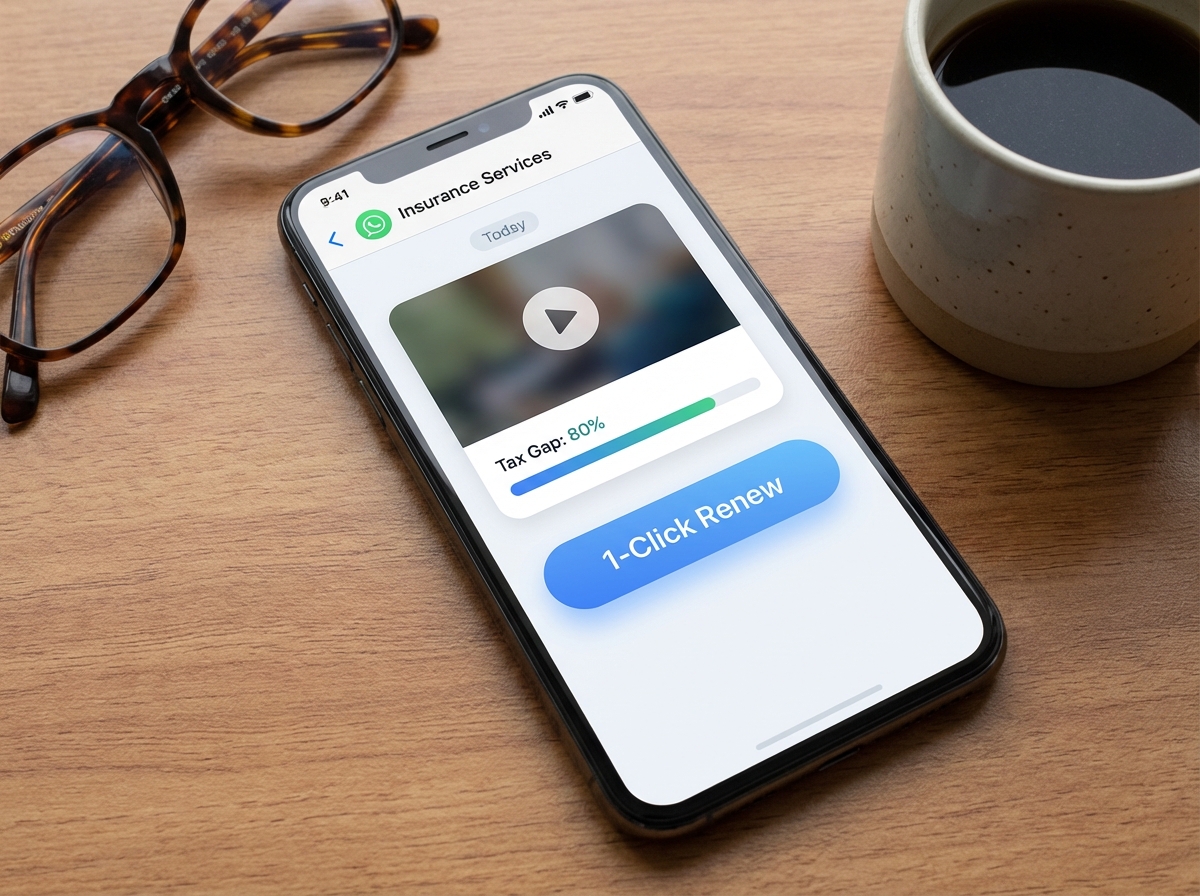
The 80C tax benefit calculator videos represent the next evolution of interactive lead magnets. Instead of a static web form, users engage with a video that asks for their EPF, PPF, and insurance premiums, then renders a real-time “Tax Gap” visual overlay. This reduces the cognitive load on the investor, moving them from “calculating” to “transacting” within a single session.
Last-minute insurance purchase automation is particularly critical for term and health insurance renewals. In 2026, mobile-first tax planning reminder automation will leverage WhatsApp's 70% open rate to send “1-Click Renewal” videos. These videos don't just remind; they provide a direct deep link to the payment gateway, followed by an automated delivery of the Section 80C/80D tax certificate—a coverage gap often missed by competitors who leave the user to hunt for receipts in April.
It is vital to distinguish between life insurance (80C) and health insurance (80D) in these automated flows to maintain year-end compliance marketing standards. Misleading a customer into thinking a health premium fills their 80C gap is a significant regulatory risk. Automation should also include “Post-Investment Proofing,” where the system automatically pings the user once the insurer issues the policy, ensuring they have the documentation ready for their HR portal before the March 31 deadline.
Source: ClearTax 80C scope
Source: TrueFan Enterprise capabilities
Source: Social Samosa India 2026 marketing trends
4. HNI Wealth & Portfolio Retention Strategies
For High-Net-Worth Individuals (HNIs), the March 31 deadline is less about “saving tax” and more about “portfolio optimization.” HNI wealth management campaigns in 2026 will focus on tax-loss harvesting and strategic asset reallocation. Personalized fiscal year-end portfolio review videos can show an HNI their YTD performance, unrealized gains, and specific opportunities to offset capital gains before the clock strikes midnight on March 31.
Retention is equally important during this period; BFSI March retention strategies must address the risk of “lapse” in insurance or “pause” in SIPs. Solutions like TrueFan AI demonstrate ROI through higher engagement rates—specifically, personalized video content generates 3.5x higher engagement than static banners in wealth management. A video from a dedicated Relationship Manager (RM), even if AI-generated for scale, creates a “white-glove” experience that encourages the HNI to book financial advisory video consultations.
These consultations can be seamlessly integrated into the video itself via a “Book Now” CTA. This “Concierge Marketing” approach ensures that the HNI feels advised rather than sold to. Furthermore, offering tax consultant referral programs within the HNI journey adds a layer of value-add that differentiates a bank from a mere transaction platform. By solving the HNI's broader tax-filing anxiety, the brand secures long-term loyalty and a higher share of wallet.
Source: Campaign Asia 2026 trends
Source: TrueFan ROI metrics and optimization
Source: Deloitte 2026 banking outlook
5. Corporate Drives & Conversion Mechanics
Corporate employee tax saving drives represent a massive, yet often underutilized, channel for BFSI growth. By partnering with HR departments, financial institutions can deploy co-branded, hyper-personalized videos to thousands of employees simultaneously. These videos can pull data from the employee's “Form 12BB” to show exactly how much more they need to invest in ELSS or NPS to avoid a heavy TDS (Tax Deducted at Source) hit in their March salary.
TrueFan AI's 175+ language support and Personalised Celebrity Videos allow these corporate drives to resonate across diverse workforces, from tech hubs in Bengaluru to manufacturing plants in Gujarat. When a celebrity or a trusted brand ambassador explains the benefits of the “Old vs. New Regime” in the employee's native tongue, the trust barrier is lowered significantly. This is crucial for conversion mechanics, as “regime confusion” is a primary reason for investment paralysis.
To close the loop, brands must deploy investment deadline countdown videos that reflect real-time AMC cut-offs. For example, if an ELSS fund's NAV cut-off is 2:00 PM on March 31, the video timer should reflect this precisely. Integrating “Tax Consultant Referral Programs” into these corporate microsites provides employees with the professional validation they need to make a final decision, effectively turning a marketing campaign into a comprehensive financial wellness program.
Source: Social Samosa 2026 India trends
Source: TrueFan FY-end 2026 corporate drives
Source: NPS Trust rules and benefits
6. Compliance, Tech Integration & Data Blueprints
Executing a high-decibel campaign for financial year-end marketing 2026 requires a robust technical and compliance foundation. Year-end compliance marketing is not just about disclaimers; it’s about ensuring that every personalized data point—from PAN-masked IDs to salary bands—is handled with ISO 27001 and SOC 2 certified security. As BFSI sector AI spending is projected to grow at a CAGR of 32.5% through 2026, the ability to render personalized videos in under 30 seconds via real-time APIs becomes a competitive necessity.
The data blueprint for a successful March campaign must include “Orchestration Latency” planning. This means having fail-safes for when payment gateways slow down on March 31 or when KYC APIs face high traffic. Marketers should use “Progressive Tax Planning Reminder Automation,” where the frequency of nudges increases as the deadline nears, but the “friction” of the journey decreases (e.g., moving from a 5-minute calculator to a 1-click “Invest Again” button).
Finally, the measurement of these campaigns must go beyond simple click-through rates. BFSI leaders should track “80C Utilization Lift”—the percentage increase in a customer's tax-saving investments compared to the previous year. By analyzing completion-to-conversion correlations, brands can refine their creative templates for the following year, ensuring that the 2026 playbook becomes a repeatable engine for growth.
Source: TrueFan Enterprise security and compliance
Source: ClearTax 80C overview
Source: J.P. Morgan 2026 Market Outlook
Conclusion: Mastering the 2026 Year-End Sprint
Success in financial year-end marketing 2026 requires a shift from “reminder-based” marketing to “action-oriented” orchestration. By integrating AI-personalized videos, real-time 80C calculators, and high-urgency countdowns, BFSI brands can guide customers through the complexities of ELSS, NPS, and insurance with ease. The 2026 landscape demands a vernacular-first, mobile-heavy approach that respects the customer's time while solving their tax-saving anxieties.
As the March 31 deadline approaches, the winners will be those who reduce friction, provide expert-grade advisory through digital channels, and maintain the highest standards of year-end compliance marketing. Whether through corporate employee tax saving drives or HNI wealth management campaigns, the goal remains the same: to turn the annual tax-saving rush into a seamless, value-driven experience that builds lasting financial trust.
Frequently Asked Questions
Is March 31, 2026, the absolute last date to invest in ELSS for tax savings?
Yes, for the financial year 2025–26, all investments must be completed by March 31 to qualify for deductions under the old tax regime. However, due to T+2 settlement cycles and bank holidays, it is highly recommended to complete your ELSS transactions by March 26, 2026, to ensure the NAV is allotted within the fiscal year.
How much additional tax can I save by investing in NPS Tier I?
Under Section 80CCD(1B), you can claim an additional deduction of up to ₹50,000, which is over and above the ₹1.5 lakh limit of Section 80C. For an individual in the 30% tax bracket, this can result in an extra tax saving of approximately ₹15,450 (including cess).
Can AI-personalized videos help me choose between the Old and New Tax Regimes?
Yes, advanced platforms like TrueFan AI can power interactive videos that act as a “Regime Comparison Tool.” By inputting your income and planned deductions, the video can visually demonstrate which regime offers a lower tax liability for your specific financial profile.
Do insurance premiums paid on March 31 count for the 2025–26 tax year?
Generally, the date of payment is considered for tax deduction purposes. However, if the payment is made late on March 31 and the insurer processes it on April 1, you might lose the benefit for the current year. It is safer to automate your last-minute insurance purchase at least 3–4 days before the deadline.
What happens if I miss the March 31 deadline for my tax-saving investments?
If you miss the deadline, you cannot claim those specific investments as deductions for the FY 2025–26. They will instead be counted toward the FY 2026–27. This is why many BFSI brands now use investment deadline countdown videos to ensure customers take action while the window is still open.



