ONDC hyperlocal commerce marketing: The enterprise playbook to democratize digital retail for MSMEs
Estimated reading time: ~10 minutes
Key Takeaways
- ONDC unbundles e-commerce to enable democratic marketplace positioning for MSMEs across multiple buyer apps.
- Vernacular, WhatsApp-native onboarding reduces time-to-first-sale and improves seller activation at scale.
- Geo-targeted, neighborhood discovery campaigns and phygital QR flows bridge offline-to-online journeys.
- Conversational commerce with trust nudges boosts conversion and buyer confidence in first-time digital shoppers.
- A full-funnel ONDC ROI framework and Tier-2 vernacular ops are essential for scalable enterprise impact.
Meta Description: An enterprise guide to ONDC hyperlocal commerce marketing—MSME seller onboarding, WhatsApp ONDC integration, buyer trust-building, and ONDC ROI measurement in Tier-2 India.
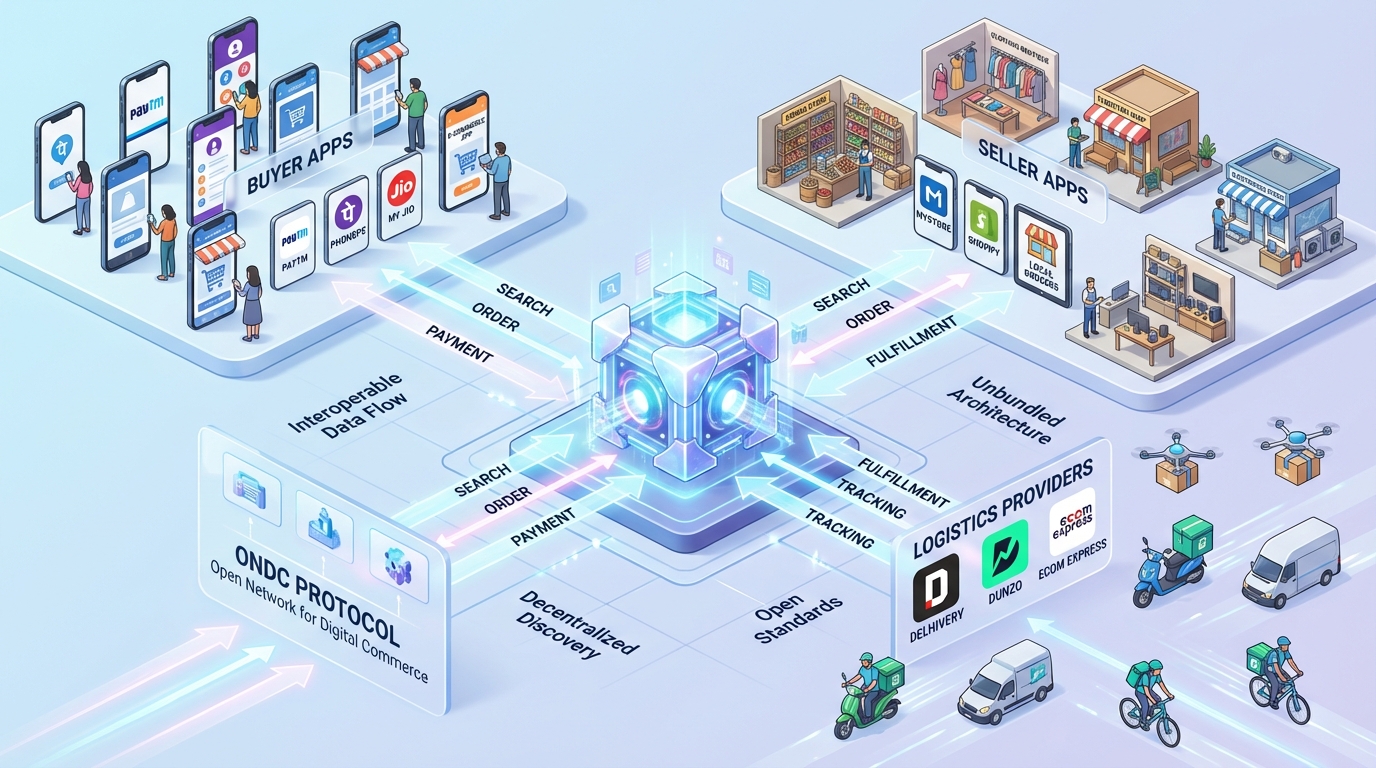
ONDC hyperlocal commerce marketing is redefining how MSMEs reach nearby buyers through democratic marketplace positioning and conversational commerce at scale. As the digital landscape shifts toward decentralized protocols, the Open Network for Digital Commerce (ONDC) serves as a government-backed, open protocol that unbundles e-commerce into interoperable buyer apps, seller apps, and logistics. This ensures any MSME can be discovered and transacted with across the network without being tethered to a single proprietary platform (Source: Protean eGov: How ONDC Works).
By 2026, the momentum of government marketplace adoption has reached a fever pitch, catalyzed by the MSME TEAM (Trade Enablement and Marketing) initiative. This program actively funds onboarding, cataloging, and marketing support for over 5 lakh MSMEs via ONDC Seller Network Participants (Source: PIB: Revolutionizing Digital Commerce). Simultaneously, the integration of multilingual WhatsApp buyer apps has made hyperlocal discovery and checkout intuitive for first-time digital buyers in Bharat (Source: ONDC Blog: Gupshup Multilingual Chatbot).
For digital commerce leaders and enterprise program heads, the promise of ONDC lies in its ability to activate neighborhood commerce through a vernacular-first, video-led, and WhatsApp-native approach. This playbook provides a strategic framework for achieving measurable ONDC ROI measurement while driving Tier-2 ONDC expansion.
1. Democratic marketplace positioning and MSME seller onboarding strategies
Democratic marketplace positioning represents a fundamental shift in market design where discovery, pricing, and fulfillment are no longer locked within a single “walled garden” marketplace. Instead, ONDC’s unbundled architecture allows local merchants to appear across multiple buyer interfaces, enabling them to compete based on service quality, proximity, and authentic customer ratings rather than platform-specific algorithms (Source: Protean eGov: How ONDC Works).
The core of this transformation is MSME seller onboarding, the end-to-end process of digitizing a micro-merchant’s presence. This involves rigorous KYC, GST verification, and the creation of high-quality digital catalogs. For enterprises, the challenge is reducing the “time-to-first-sale” for thousands of small merchants who may have limited digital literacy.
To accelerate this, the MSME TEAM scheme provides a standardized framework for Seller Network Participants to offer training and cataloging support (Source: PIB: MSME TEAM Initiative). By 2026, successful onboarding requires vernacular ONDC education. Short, regional-language video modules delivered via WhatsApp are essential for teaching merchants how to manage inventory, handle returns, and optimize their digital storefronts.
Sources:
2. Neighborhood commerce activation through local merchant discovery campaigns
Neighborhood commerce activation relies on surfacing the right merchant to the right buyer at the precise moment of intent. In 2026, local merchant discovery campaigns utilize geo-targeted, pincode-level marketing to bridge the gap between physical proximity and digital convenience. Platforms like TrueFan AI enable enterprises to deploy hyper-personalized video ads that mention specific neighborhoods or landmarks, significantly increasing local relevance.
Tactics such as geo-fenced video ads and micro-influencer bumpers in local languages provide the social proof necessary for buyers to trust a nearby “kirana” or restaurant they may not have previously frequented online. Furthermore, the “phygital” journey—where offline QR codes at physical stores funnel users into WhatsApp buyer flows—is becoming the standard for urban and Tier-2 behavior (Source: Jungleworks: Hyperlocal Delivery Trends 2026). See hyperlocal community execution approaches.
By 2026, quick-commerce expectations have permeated all levels of retail. Buyers now expect 30–45 minute delivery windows even from small local sellers. Marketing content must therefore emphasize delivery ETAs and real-time availability to meet these heightened consumer demands (Source: Shiprocket: 2026 E-commerce Trends).
Sources:
3. Conversational commerce and WhatsApp ONDC integration playbooks
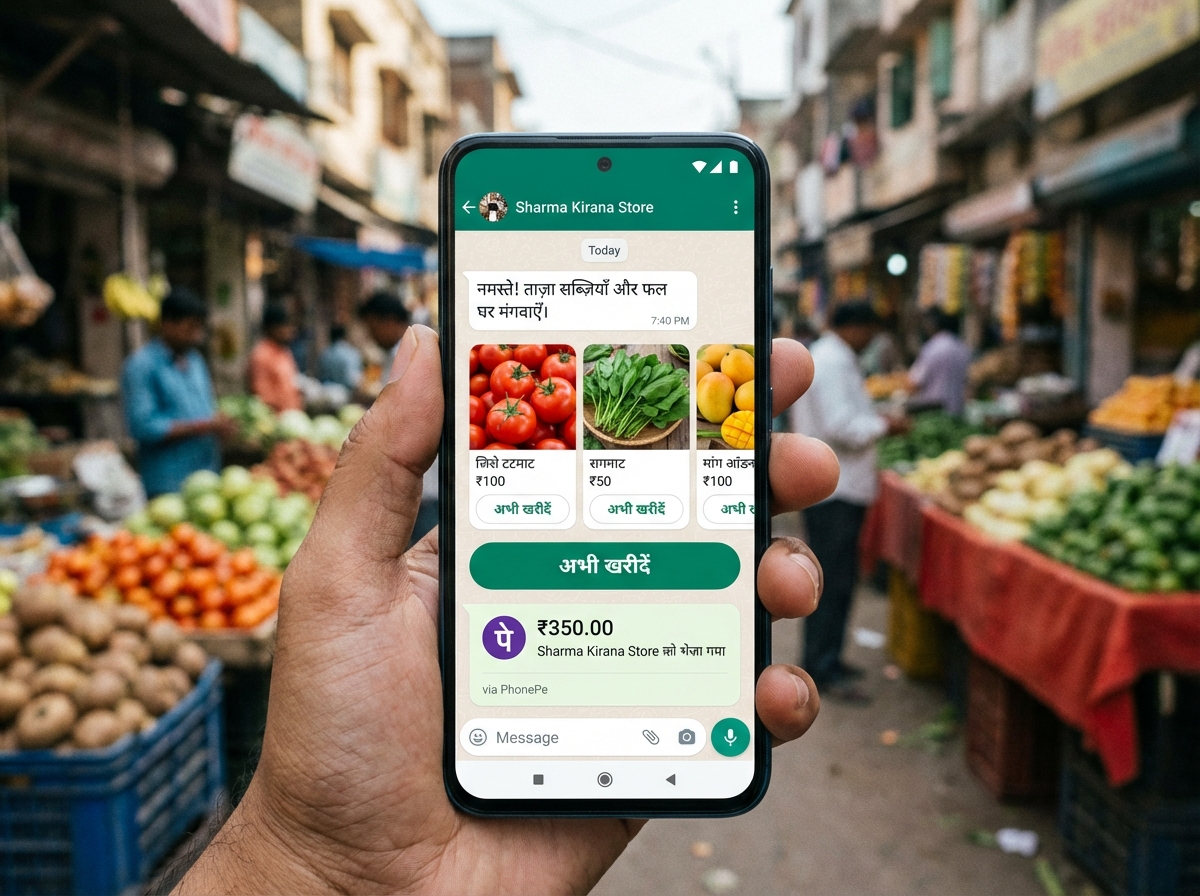
The integration of WhatsApp ONDC integration has emerged as the most effective way to reach the next 200 million shoppers in India. By enabling the entire buyer journey—from discovery and catalog browsing to payment and post-purchase support—within a single chat interface, enterprises can eliminate the friction of app downloads.
The ONDC x Gupshup multilingual buyer app is a prime example of this evolution, allowing users to browse and buy in their native tongue (Source: ET Govt: Gupshup Conversational Buyer App). A robust buyer flow blueprint includes Ad-to-WhatsApp entry points, carousel-based SKU discovery personalized by pincode, and UPI-integrated checkout.
To further enhance conversion, enterprises must utilize “trust nudges”—short vernacular explainers that clarify return policies and delivery SLAs. These snippets, often 6–20 seconds in length, address the specific anxieties of first-time digital buyers. By automating the delivery of these personalized video variants via API, brands can ensure that every interaction feels tailored to the individual’s locality and language.
Sources:
4. Hyperlocal delivery personalization and buyer trust-building frameworks
Hyperlocal delivery personalization is the final frontier in securing buyer loyalty on the ONDC network. This involves tailoring communication based on the buyer’s specific pincode and the local logistics partner's capabilities. In 2026, transparency is the primary driver of trust; buyers want to see who is delivering their package and exactly when it will arrive.
Building buyer trust-building frameworks requires a combination of transparent policies and consistent post-purchase communication. Standardized grievance redressal and visible ratings across all network participants are critical (Source: Protean eGov: ONDC Standardization). Enterprises are now adopting trust labels, such as the Confidex framework, to signal quality and reliability to the end consumer.
Content plays a vital role here. Short videos showing a local merchant packing an order or a delivery partner’s badge can significantly reduce “order anxiety.” When these updates are delivered in the buyer's preferred language, the perceived reliability of the ONDC ecosystem increases, leading to higher repeat purchase rates and lower dispute frequencies (Source: Retail ET: Nurturing Hyper-local Ecosystems).
Sources:
5. Tier-2 ONDC expansion and vernacular content operations
The next phase of growth for the network is Tier-2 ONDC expansion, targeting cities like Indore, Coimbatore, and Patna. This requires a systematic rollout that aligns supply-side MSME onboarding with demand-side vernacular marketing. Success in these markets is predicated on understanding regional nuances and cultural calendars.
Vernacular content operations must go beyond simple translation. By 2026, AI-driven lip-syncing and cultural adaptation are standard requirements for digital retail democratization videos. Content must be synchronized with regional festivals—such as Pongal, Onam, or Durga Puja—to resonate with local audiences (Source: MyStore: 2026 E-commerce Trends).
TrueFan AI's 175+ language support and Personalised Celebrity Videos allow enterprises to create thousands of city-specific video variants instantly. For instance, a campaign for “Makar Sankranti specials in Indore” can be generated and deployed across WhatsApp and social media with minimal manual intervention, ensuring that the marketing message is always timely and locally relevant.
Sources:
6. ONDC ROI measurement and enterprise campaign playbooks
To justify the investment in decentralized commerce, enterprises must implement a rigorous ONDC ROI measurement framework. This involves tracking the full funnel—from the initial video impression to the final repeat purchase. Key metrics include the time-to-first-order (TTF1O) for sellers and the customer lifetime value (CLV) for buyers.
Solutions like TrueFan AI demonstrate ROI through detailed dashboards that track video completion rates, language variant lifts, and the specific impact of personalization tokens like the buyer's name or city. By instrumenting every step of the WhatsApp conversation—from opt-in to payment completion—brands can identify and fix drop-off points in real-time.
Enterprises should utilize specific playbooks to scale their efforts:
- The Onboarding Accelerator: A vernacular video series covering KYC and cataloging to reduce seller drop-offs.
- The Discovery Sprint: Geo-fenced campaigns using neighborhood-specific triggers to drive local GMV.
- The Trust Engine: Automated post-purchase videos and policy explainers to reduce returns and disputes.
- The Advocacy Loop: Sharing ONDC seller success stories via peer-to-peer WhatsApp messages to encourage organic network growth.
Sources:
- TrueFan AI: Enterprise ROI Dashboards (Internal Documentation)
- Shiprocket: Metrics for 2026 E-commerce
Conclusion
The era of centralized e-commerce dominance is evolving into a more inclusive, democratic, and hyperlocal future. For enterprises, the Open Network for Digital Commerce is not just a new channel; it is a fundamental shift in how they engage with the vast MSME ecosystem of India. By focusing on vernacular education, WhatsApp-native journeys, and hyper-personalized video content, brands can unlock the true potential of Tier-2 and Tier-3 markets.
Launch your ONDC hyperlocal commerce marketing program with TrueFan AI—book a 30-minute blueprint session to stand up vernacular WhatsApp journeys, digital retail democratization videos, and dashboards within 30 days.
Frequently Asked Questions
What is ONDC hyperlocal commerce marketing and why does it matter for MSMEs?
ONDC hyperlocal commerce marketing is a strategy that leverages the Open Network for Digital Commerce to connect local sellers with nearby buyers through decentralized discovery. It matters because it breaks the monopoly of large platforms, giving MSMEs “democratic marketplace positioning” where they can compete on proximity and service rather than high ad spends (Source: Protean eGov: How ONDC Works).
How do MSME seller onboarding and vernacular ONDC education reduce time-to-first-sale?
By providing training and cataloging support in the merchant's native language, enterprises can lower the barrier to entry. The MSME TEAM scheme specifically funds these efforts, ensuring that small merchants understand the digital workflow quickly, which leads to a faster “time-to-first-order” (Source: PIB: MSME TEAM Initiative).
What are effective local merchant discovery campaigns and neighborhood commerce activation ideas?
Effective campaigns use geo-fencing to target buyers within a specific radius of a store. Ideas include “near-me” video ads that name the local neighborhood, QR code placements in Resident Welfare Associations (RWAs), and micro-influencer content that highlights the freshness and speed of local delivery (Source: Retail ET: Nurturing Hyper-local Ecosystems).
How do WhatsApp ONDC integration flows improve conversion and buyer trust-building?
WhatsApp integration meets users where they already spend their time, removing the friction of navigating new apps. By providing a familiar interface for browsing, UPI payments, and real-time ETA updates, it builds trust and simplifies the path to purchase for non-tech-savvy users (Source: ONDC Blog: Gupshup Multilingual Chatbot).
How can TrueFan AI help enterprises measure ONDC ROI and scale seller success stories?
TrueFan AI provides the infrastructure to create and track personalized, multilingual video content at scale. By integrating with enterprise CRMs, it allows brands to see exactly how personalized “digital retail democratization videos” impact conversion rates and seller activation, while also turning successful merchants into brand advocates through automated video caselets.