Gen Alpha Influence Marketing 2026: Winning the IPL Season and Summer Vacation with Gamified Family Journeys
Estimated reading time: ~11 minutes
Key Takeaways
- Gen Alpha will shape India’s family spending in 2026—brands must design youth-first, co-viewing journeys.
- Use micro-moment triggers during IPL and summer quests to convert attention into action.
- Build parent-approved experiences with screen-time negotiation, co-viewing, and privacy-first consent.
- Drive value via gamified edutainment—financial literacy and family subscription decision videos.
- Measure success with family-centric KPIs like co-view completion and bundle ARPU uplift.
As we approach the mid-point of the decade, the Indian consumer landscape is undergoing a seismic shift driven by the oldest members of Generation Alpha. By 2026, these digital natives—born from 2010 onwards—will not only command their own screens but will also dictate the “family share of wallet” with unprecedented authority. For CMOs and brand strategists, Gen Alpha influence marketing 2026 is no longer a peripheral experiment; it is the core engine for driving growth during India’s two most critical commercial windows: the IPL season and the summer vacation period. Explore the IPL 2026 marketing strategy.
To succeed in this high-stakes environment, enterprises must transition from static broadcasting to digital native marketing strategies that prioritize interactivity, personalization, and parental trust. This guide provides a comprehensive blueprint for engaging the “Alpha-Parent” dyad through gamified journeys that convert casual viewers into lifelong brand advocates.
- Who this is for: CMOs and brand strategists in India targeting Gen Alpha as the primary catalyst for household purchase decisions.
- The Promise: A practical, parent-approved execution plan for IPL 2026 and summer vacation that optimizes family entertainment bundles and subscription conversions.
- Key Focus: Leveraging teen family purchase influence through ethical, high-value engagement that earns parent approval marketing tactics.
1. The Rise of Gen Alpha: India’s New Household Decision Makers
Generation Alpha in India represents a demographic powerhouse that is fundamentally different from the Gen Z cohort that preceded them. These children have never known a world without high-speed 5G, ubiquitous UPI payments, and generative AI. By 2026, Gen Alpha’s direct and indirect influence on household spending in India is projected to reach a staggering $150 billion, as they move from being passive observers to active co-pilots in the family’s digital journey.
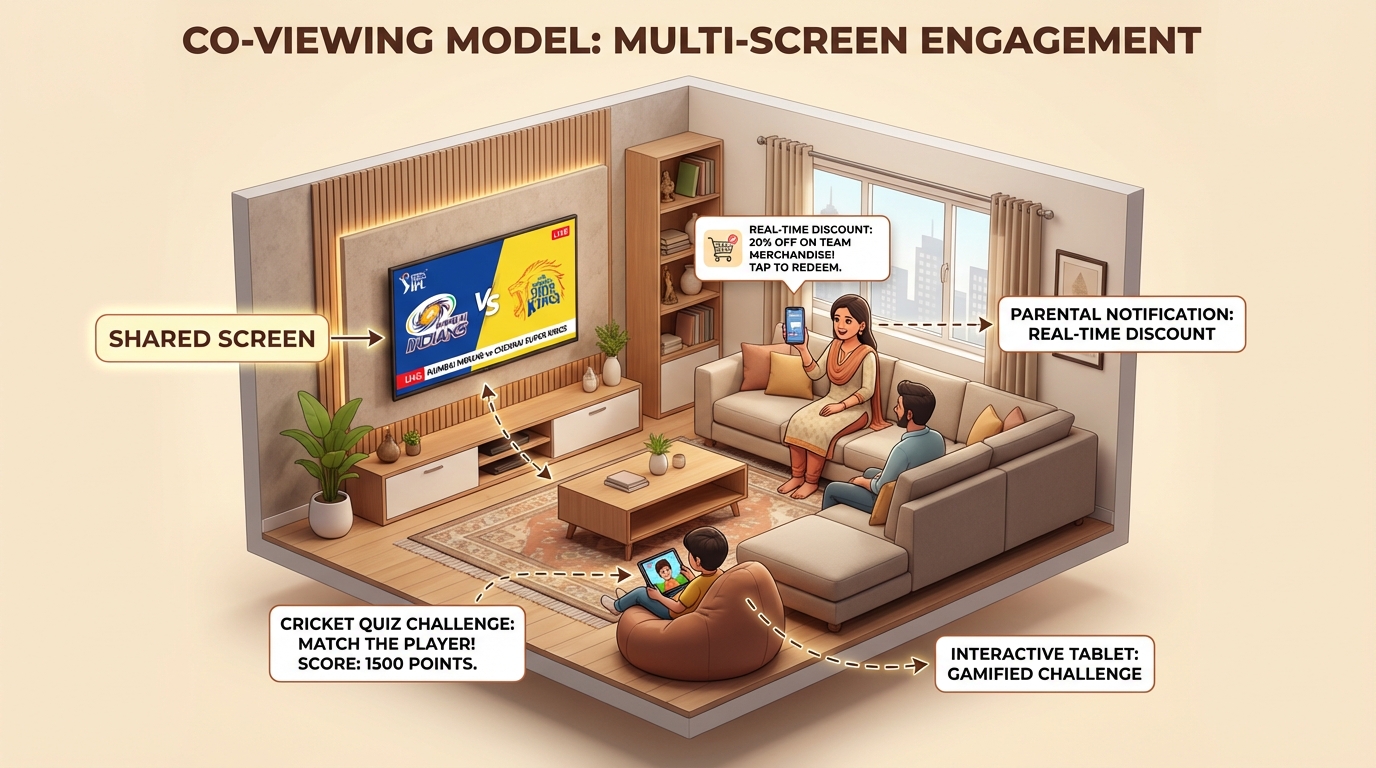
The media reality in India has shifted toward a “digital-first, co-viewing” model. During the IPL, the living room screen is often a shared experience, but the secondary and tertiary screens—tablets and smartphones—are where the real engagement happens. Recent data indicates that JioCinema’s reach for the IPL has already crossed the 600 million mark, with a significant portion of that growth coming from regional markets and younger demographics. By 2026, this digital reach is expected to shatter records, hitting an estimated 720 million viewers as connected TV (CTV) penetration deepens in Tier 2 and Tier 3 cities.
For brands, this means that youth cricket engagement IPL strategies must account for the “pester power” evolved into “consultative power.” Gen Alpha kids are tech-literate advisors to their parents, often researching products, comparing family entertainment bundles, and setting up the very apps the family uses for entertainment. They expect content to be multilingual, hyper-personalized, and instantly gratified.
Sources:
- RIL Annual Report 2022–23: Media & Entertainment
- Network18 Q1 FY2024–25 Investor Update
- EY India Media & Entertainment 2025
2. Seasonal Power Plays: IPL 2026 and Summer Vacation Windows
The intersection of the IPL season (March–May) and the summer vacation (May–June) creates a unique “super-season” for Indian brands. This is the window where household consumption peaks across categories like travel, electronics, F&B, and edtech. To capture this, brands must deploy IPL gaming engagement kids can participate in, while simultaneously offering value that appeals to the budget-conscious parent.
IPL-Season Micro-Moment Triggers
During a live match, the window of attention is measured in seconds. Brands can no longer rely on 30-second TV spots alone. Instead, they must leverage micro-moment triggers—such as a wicket falling, a massive six, or a strategic timeout—to push instant, personalized challenges to families. Learn more about IPL micro-moments marketing 2026. Imagine a scenario where a child receives a 30-second video challenge on WhatsApp immediately after a milestone, inviting them to predict the next over's outcome to unlock a discount on a family meal combo. See the Conversational Cricket Commerce WhatsApp playbook.
Summer Vacation Family Marketing
As the IPL concludes and the heat intensifies, the focus shifts to summer vacation family marketing. This is the prime time for “family entertainment bundles” that combine OTT subscriptions, gaming passes, and data packs. Explore IPL 2026 live commerce tactics. Enterprises should use this period to launch “Summer Quests”—gamified journeys where kids complete educational or sustainability-themed tasks to earn travel vouchers or “unlock” more watch-time for the family’s favorite shows.
Platforms like TrueFan AI enable brands to bridge the gap between passive viewing and active participation through real-time video rendering that makes every child feel like the protagonist of the IPL season. By integrating celebrity-led nudges with real-time match data, brands can achieve a level of relevance that traditional media cannot match. TrueFan AI's 175+ language support and Personalised Celebrity Videos allow enterprises to speak to every Indian household in their mother tongue, ensuring cultural relevance across diverse regions. Dive deeper into multilingual voice marketing automation.
Sources:
3. The "Parent-Approved" Framework: Building Trust and Consent
The biggest barrier to Gen Alpha marketing is not the child’s lack of interest, but the parent’s concern over screen time and data safety. To win in 2026, brands must adopt parent approval marketing tactics that position the brand as an ally in the child’s development rather than a distractor.
Screen Time Negotiation Marketing
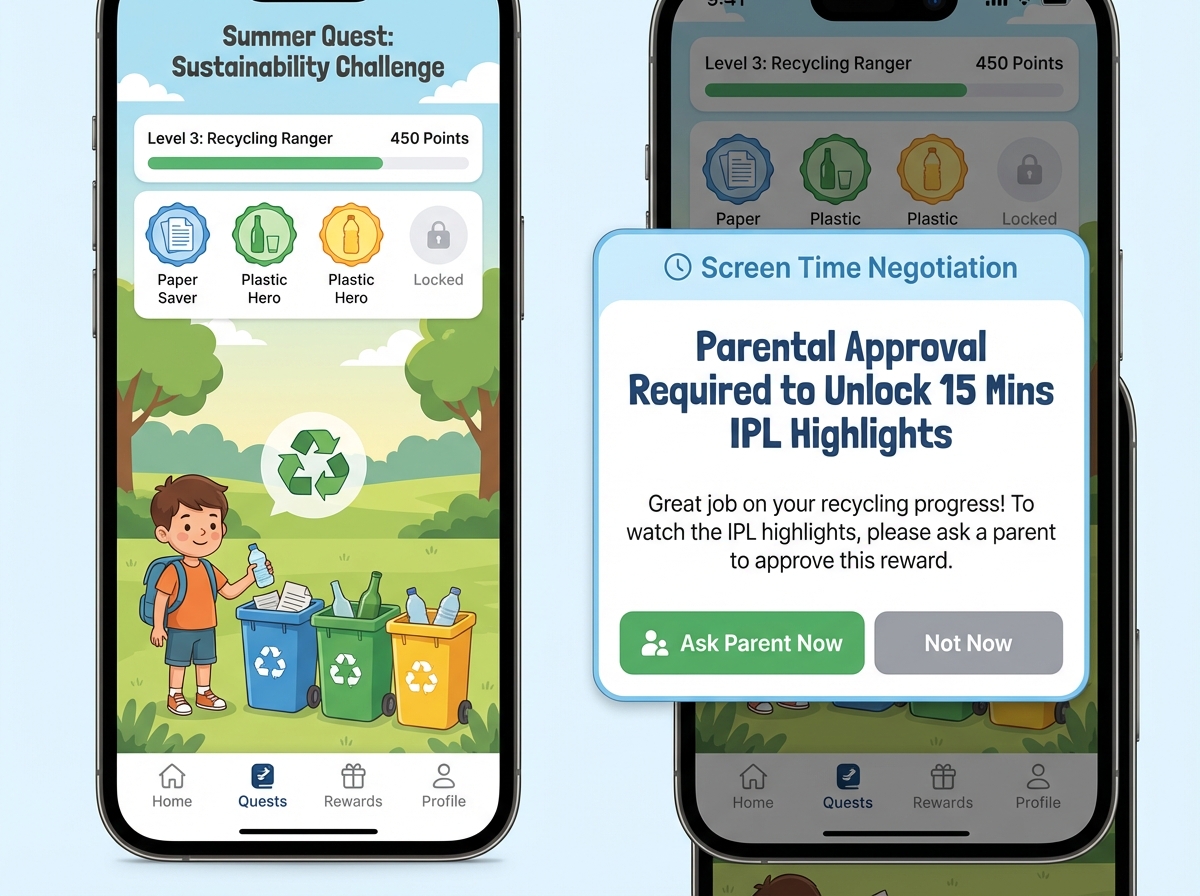
One of the most innovative strategies for 2026 is screen time negotiation marketing. This involves creating opt-in mechanics where children “earn” their entertainment through positive behaviors. For instance, a brand could offer a “Sustainability Quest” where a child learns about waste segregation or energy saving. Upon completion, the parent receives a notification to “approve” 15 minutes of bonus IPL highlights or a gaming credit. This turns the brand into a facilitator of healthy digital habits.
Parent-Child Co-Viewing Campaigns
Marketing should move toward parent-child co-viewing campaigns. These are dual-address videos designed to be watched together. A personalized video might feature a celebrity saying, “Hey Arjun, tell your Dad that if you both finish this cricket quiz, you get a special offer on your next family vacation!” This approach respects the Indian Academy of Pediatrics (IAP) guidelines, which emphasize active mediation and co-viewing as essential for healthy digital engagement.
Sustainable Consumption Education for Youth
Gen Alpha is the first generation to be truly “climate-conscious” from birth. Brands that integrate sustainable consumption education youth can participate in—such as “green cheering” digital badges or eco-friendly “pack smart” tips for summer travel—will see higher levels of parent approval. Transparency is key: clearly labeling content as educational and providing easy-to-use parental controls (like PIN-protected unlocks) builds the necessary trust for long-term loyalty. To operationalize this at scale with privacy safeguards, see Digital India privacy-first playbooks.
Sources:
4. Gamified Edutainment: Financial Literacy and Subscription Decisions
In 2026, the most successful brands will be those that fill the “value gaps” in a child's life. Two major opportunities exist: financial literacy and simplified family decision-making.
Teen Financial Literacy Videos
Despite being digital natives, many Indian teens face a significant money skills gap. Brands in the BFSI or Fintech sectors can deploy teen financial literacy videos that use the IPL as a backdrop. For example, a gamified module could ask a child to “manage the budget” for a fantasy cricket team, teaching concepts like “needs vs. wants,” savings goals, and UPI safety. By aligning with the National Centre for Financial Education (NCFE) goals, brands provide a service that parents actively want their children to consume.
Educational Gaming Personalization
Educational gaming personalization involves adapting the difficulty and content of these modules to the child’s age and responses. A 10-year-old might learn about basic savings, while a 15-year-old explores the basics of compounding or digital security. This level of customization ensures that the content remains engaging and age-appropriate, reducing the “bounce rate” of educational initiatives.
Family Subscription Decision Videos
When it comes to high-value purchases like OTT bundles or insurance, the decision is often a joint one. Family subscription decision videos are short, personalized clips that summarize the benefits of a product for both the parent (value for money, safety) and the child (exclusive content, gaming perks). By sending these “co-sign” CTAs to the parent’s device after the child has expressed interest, brands reduce the friction in the conversion funnel.
Sources:
5. Execution Blueprint: Orchestrating the Youth-First Journey
Launching a successful Gen Alpha campaign for IPL 2026 requires a 30-day disciplined approach to strategy, technology, and compliance. The goal is to create a seamless journey from the first “tease” to the final “advocacy” loop.
The 30-Day Launch Checklist
- Week 1: Strategy & Compliance. Define your segments (Kid-first vs. Parent-first) and lock in your celebrity talent. Conduct a Data Privacy Impact Assessment (DPIA) to ensure all digital native marketing strategies comply with minor-protection laws.
- Week 2: Integration. Configure your APIs to trigger personalized videos based on real-time IPL events. Ensure your rendering pipeline can deliver content in under 30 seconds to maintain the “micro-moment” magic. For WhatsApp-led delivery flows and template tactics, see WhatsApp Catalog Video Marketing.
- Week 3: Pilot & Localize. Test your parent-child co-viewing campaigns with a small panel. Use virtual reshoots to A/B test different messaging hooks. TrueFan AI's 175+ language support and Personalised Celebrity Videos allow enterprises to speak to every Indian household in their mother tongue, ensuring cultural relevance across diverse regions.
- Week 4: Scale. Go live with daily IPL micro-moment schedules. Monitor “trigger-to-view” latency and co-view completion rates.
Case Study Insights
Enterprises like Goibibo and Zomato have already demonstrated the power of this approach. Goibibo saw a 17% higher read rate on WhatsApp when using personalized videos of Rishabh Pant to nudge travelers. Zomato’s “Maa ke liye” campaign generated 354,000 unique videos in a single day, proving that generative AI can handle massive consumer engagement without sacrificing the personal touch. For IPL 2026, brands can take this further by using kids brand advocacy automation—governed workflows that invite children to create safe, moderated UGC (User Generated Content) with their favorite stars, which can then be shared within private family circles. Explore Cricket Fantasy Gamification Videos.
Sources:
6. Measurement, Ethics, and the Future of Alpha Engagement
To justify the investment in Gen Alpha influence marketing 2026, CMOs must look beyond simple “likes” and “views.” The KPI matrix for 2026 should focus on “depth of engagement” and “family unit conversion.”
The KPI Matrix for 2026
- Co-view Completion Rate: What percentage of videos were watched by both parent and child?
- Trigger-to-View Latency: How quickly did the user engage after a match event? (Target: < 60 seconds).
- Educational Proficiency Gain: Did the child actually learn the financial literacy or sustainability concept?
- Bundle ARPU Uplift: Did the campaign lead to a higher take-up of family entertainment bundles?
Solutions like TrueFan AI demonstrate ROI through significantly higher engagement rates compared to static display ads, often seeing a 3x lift in conversion for family-oriented offers. By providing detailed analytics dashboards that track element-level lift, enterprises can optimize their scripts in real-time, swapping out underperforming offers or celebrities via virtual reshoots.
Ethics and Compliance
Finally, ethics must be the foundation. Brands must practice data minimization—collecting only what is necessary for personalization—and ensure that every interaction is “consent-by-design.” Learn more about DPDP-compliant personalization strategies. By aligning with the IAP’s ethos of digital wellness and the NCFE’s mission for literacy, brands can move from being “advertisers” to becoming “trusted household partners.”
Recommended Internal Links
- IPL 2026 marketing strategy: Data-driven fan growth
- IPL micro-moments marketing 2026: Real-time video triggers
- Conversational Cricket Commerce India: WhatsApp Playbook
- IPL 2026 Live Commerce India: Real-Time Cricket Shopping
- Multilingual voice marketing automation: tactics for 2026
- WhatsApp Catalog Video Marketing: Tactics for 2026
- Cricket Fantasy Gamification Videos: Boost IPL Engagement
- Digital India compliance marketing 2026: privacy-first video
- DPDP Compliant Personalization: Privacy-First Marketing
Frequently Asked Questions
How does Gen Alpha influence household purchases differently than Gen Z?
Gen Alpha acts as a “digital consultant” to the family. While Gen Z influenced through social trends, Alpha drives decisions through tech enablement—setting up family accounts, researching specs, and co-viewing content that leads to joint subscription decisions.
What are the best parent approval marketing tactics for the IPL season?
The most effective tactics include screen time negotiation marketing where entertainment is earned through educational tasks, transparent parental controls, and dual-address co-viewing videos designed for parent-child participation.
How can brands ensure child safety in personalized video campaigns?
Adopt consent-first, guardian-approved flows; minimize data collection; use platforms with robust moderation; and ensure that assets and celebrity rights are legally cleared with auditable logs.
Why is multilingual support important for Gen Alpha in India?
Children may be comfortable with English, but parents and grandparents often prefer regional languages. Multilingual content ensures the entire family can co-view, understand offers, and make confident purchase decisions.
What is a “Family Subscription Decision Video”?
It’s a personalized clip that addresses both parent and child, highlighting value-for-money, safety, and perks. It often includes a “co-sign” call to action requiring both parties to confirm the purchase, reducing friction in the funnel.



