Predictive Wellness Marketing 2026 for HR Tech: AI Health Risk Assessment + Personalized Videos
Key Takeaways
- Predictive wellness uses AI health risk assessment to personalize preventive care and close screening gaps.
- Hyper-personalized corporate employee health videos drive engagement and steer members to in-network, high-value care.
- Behavioral nudges via wellness challenge gamification videos improve participation and measurable productivity.
- DPDP Act–aligned consent, security, and bias testing are essential for ethical data use in HR tech.
- Programs prove value with ROI dashboards and workplace wellness videos that correlate engagement with outcomes.
Predictive wellness marketing 2026 represents the strategic convergence of data science, behavioral economics, and hyper-personalized communication. In the modern enterprise landscape, this practice utilizes advanced AI health risk assessment models to stratify employee populations by modifiable risks, such as cardiometabolic health, musculoskeletal (MSK) issues, and mental health. By delivering preventive care personalization through corporate employee health videos and mental health support automation, organizations can significantly reduce avoidable insurance claims, absenteeism, and burnout.
The primary objective for HR and wellness buyers in 2026 is to move beyond generic wellness perks toward a model of health insurance optimization. This involves steering employees toward in-network, high-value care and closing critical gaps in preventive screenings. Through employee productivity campaigns powered by wellness challenge gamification videos, companies are now able to generate CFO-grade reporting via workplace wellness ROI videos and real-time dashboards.
1. The Evolution of Predictive Wellness Marketing 2026
Predictive wellness marketing 2026 is defined as the enterprise-grade application of consented data to deliver risk-triggered, hyper-personalized video education. Unlike the static wellness programs of the past decade, this approach aligns calls-to-action (CTAs) directly with benefit design, Employee Assistance Program (EAP) resources, and specific care networks. For B2B providers, this means shifting from “one-size-fits-all” newsletters to dynamic, video-first interventions that capture attention in an increasingly distracted, mobile-first workforce.
The urgency for this shift is driven by several 2026 macro-trends. Research indicates that by 2026, the global wellness market will exceed $7 trillion, with a massive pivot toward “mental fitness” and automated preventive care. In India, where the workforce is predominantly young and mobile-centric, video content has proven to outperform static text nudges by over 300% in engagement metrics. Employers now require measurable ROI, demanding that wellness initiatives directly correlate with reduced healthcare spend and improved human capital performance.
Furthermore, the integration of preventive healthcare marketing B2B strategies allows wellness providers to offer “snackable” content that fits into the flow of work. As hyper-personalization becomes the baseline expectation, the ability to deliver culturally localized and linguistically accurate content is no longer a luxury but a requirement for inclusive employee productivity campaigns.
Source: McKinsey: The Future of Wellness Trends.
Source: Nutraceutical Business Review: Trend Predictions 2026.
Source: Circana: Consumer Marketing Trends 2026.
Source: Hummingbird Agency: Health and Wellness Marketing.
2. The Technical Core: AI Health Risk Assessment and Stress Prediction
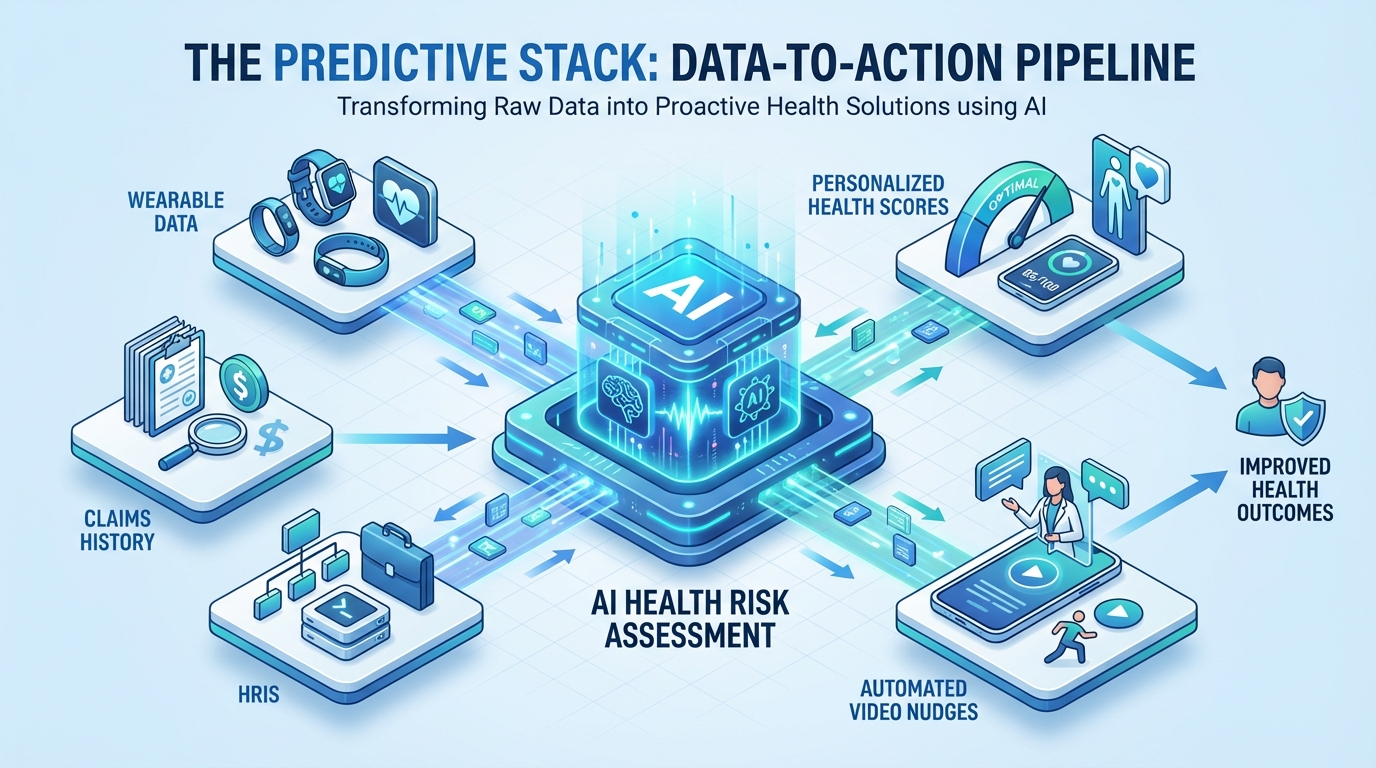
The engine of predictive wellness marketing 2026 is the “predictive stack,” which transforms raw data into actionable health interventions. This stack begins with multi-source data ingestion, including HRIS demographics, attendance patterns, and role-based risk factors. With explicit employee consent under the DPDP Act, organizations also integrate wearable data, claims history, and self-reported health scores to create a comprehensive view of population health.
An AI health risk assessment functions as a supervised learning model that combines these clinical risk factors with utilization patterns. The output is a dynamic health score personalization for every employee. These scores categorize individuals into risk cohorts, such as high cardiometabolic risk or preventive gap risk. For instance, if an employee’s data indicates a missed HbA1c test or an elevated LDL threshold, the system automatically triggers a “close gap” corporate employee health video.
Stress prediction intervention models have also become sophisticated by 2026. By detecting patterns such as spikes in after-hours digital activity or absenteeism, the AI can trigger burnout prevention automation sequences. These sequences escalate from educational micro-content to direct EAP referrals. In the Indian context, these triggers are mapped to IRDAI-compliant wellness benefits, ensuring that all interventions remain within the legal framework of insurance-linked wellness features.
Source: IRDAI: Guidelines on Wellness and Preventive Features.
Source: Taxmann: IRDAI Fresh Guidelines on Wellness Features.
Source: TeamLease RegTech: IRDAI Revised Guidelines Summary.
3. Operationalizing Personalization through Corporate Employee Health Videos
To effectively scale these interventions, organizations are turning to automated video production. Corporate employee health videos serve as plain-language explainers that demystify health scores and provide clear paths to care. These videos are not generic; they are name-personalized and localized, featuring the employee’s specific plan network logos and in-network lab booking CTAs. This level of detail ensures that the employee feels seen and supported rather than just “managed.”
Platforms like TrueFan AI enable enterprises to operationalize this hyper-personalization at scale via API. By inserting dynamic fields such as the employee's name, city, and specific benefit tier, the system can render personalized videos in under 30 seconds. This is critical for delivering just-in-time nudges via WhatsApp or internal HR apps. For example, a corporate fitness program video might be triggered when an employee's step count drops below a certain threshold for three consecutive days, offering a 2-minute low-impact workout tailored to their MSK risk profile (see WhatsApp catalog video marketing).
TrueFan AI's 175+ language support and Personalised Celebrity Videos further enhance this by allowing organizations to retain a consistent “talent voice” while providing accurate lip-sync in languages like Hindi, Tamil, or Bengali. This is essential for the diverse Indian workforce. Additionally, mental health support automation uses stigma-safe scripts to normalize help-seeking behavior, providing direct links to EAP tele-counseling slots. The use of virtual reshoots and AI editing allows HR teams to A/B test different CTAs or update benefit information without the need for expensive new video shoots.
4. Engagement Mechanics: Wellness Challenge Gamification Videos for Productivity
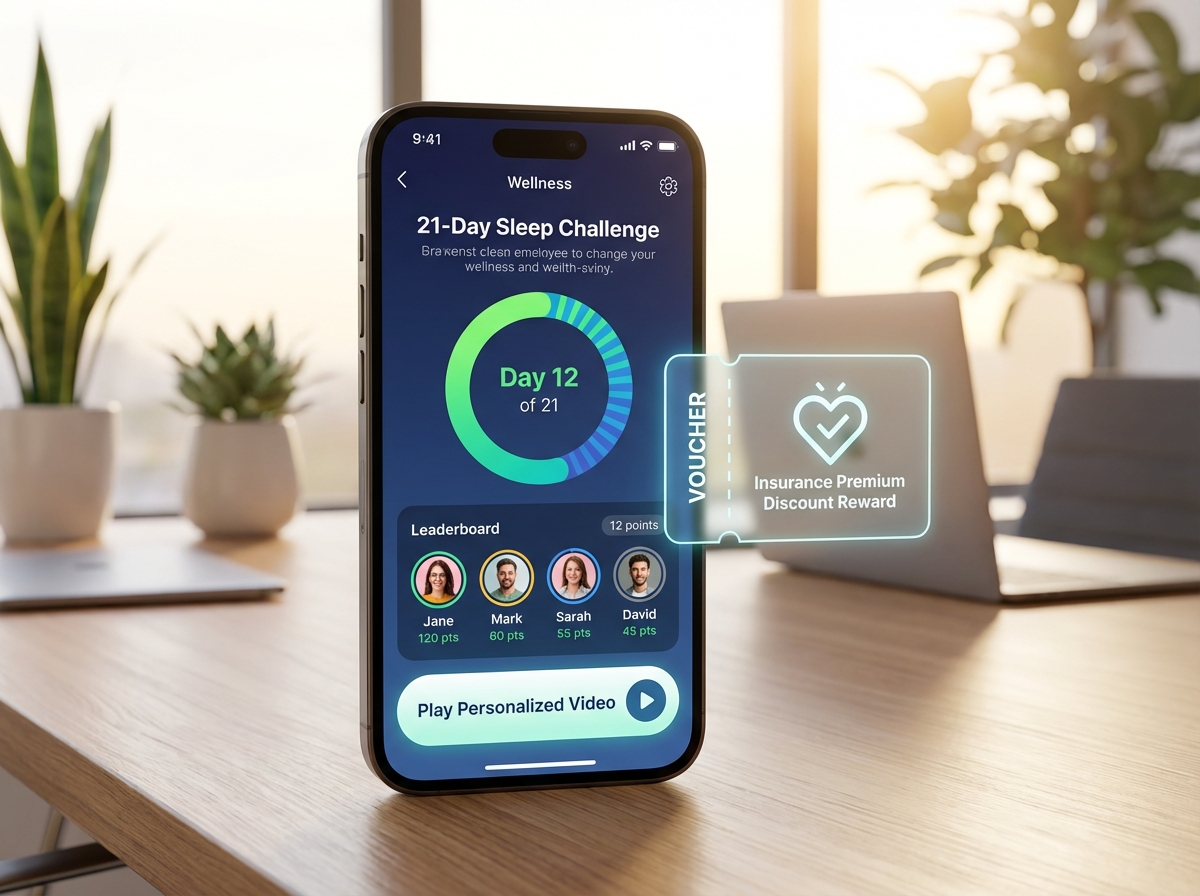
Engagement is the bridge between predictive insights and actual health outcomes. Wellness challenge gamification videos are the primary tool for driving this engagement. These videos announce initiatives like 21-day sleep challenges or team-based step competitions, featuring leaderboards and weekly recaps. By tying these challenges to IRDAI-compliant wellness benefits—such as insurance premium discounts or fitness device vouchers—companies create a tangible incentive for participation.
The microlearning cadence is another vital component of employee productivity campaigns. Instead of long, mandatory training sessions, employees receive 60–90 second “snackable” videos 2–3 times per week. These videos follow behavioral best practices: a single, clear CTA, social proof from peers, and a small, achievable next step. For instance, a corporate yoga meditation video might be sent during commuting hours, offering a 2-minute guided pranayama session to reset before the workday begins (see employee wellness video campaigns 2025).
In the Indian market, aligning these rewards with insurer-provided wellness credits is a key strategy for preventive healthcare marketing B2B. By documenting these actions in insurer wellness portals, companies can demonstrate a direct reduction in risk profiles, which can lead to better group policy rates during renewal cycles. This creates a virtuous cycle where employee health improvements directly fund the wellness program itself.
Source: PolicyBazaar: Decoding Wellness Benefits in Health Insurance.
Source: SBI General: Common Wellness Benefits of Health Insurance.
5. Financial Impact: Health Insurance Optimization and ROI
The ultimate justification for predictive wellness marketing 2026 is its impact on the bottom line. Health insurance optimization is achieved by closing care gaps and steering members toward high-value providers. Dynamic video CTAs can pre-fill appointment bookings for essential screenings like mammographies or lipid panels. By tracking these completed screenings, HR teams can quantify the number of chronic conditions managed before they escalate into high-cost emergency room visits.
Solutions like TrueFan AI demonstrate ROI through their ability to track granular engagement metrics, such as video completion rates and CTA clicks, which are then correlated with health outcomes. A workplace wellness ROI video can be automatically generated for leadership each month, summarizing program reach and financial impact. This narrative-driven reporting pairs with deep-dive dashboards to show lagging indicators like reduced MSK surgery rates or improved HbA1c control across the population.
The financial framing of these programs often uses a “difference-in-differences” approach, comparing pilot cohorts against control groups. By 2026, data suggests that for every $1 invested in predictive mental health support automation, companies see a $4.50 return in the form of reduced absenteeism and improved productivity. This is particularly relevant in Asia, where mental health-related productivity loss is a significant concern for multinational corporations.
Source: Aon + TELUS Health: Asia Mental Health Index (India Report).
Source: Aon + TELUS Health: Asia Mental Health Index (Regional Context).
6. Ethics and Compliance: DPDP Act and Preventive Healthcare Marketing B2B
As organizations collect more sensitive health data, compliance with the Digital Personal Data Protection (DPDP) Act 2023 becomes paramount. Predictive wellness marketing 2026 must be built on a foundation of granular, revocable consent. Employees must understand exactly how their data is being used—for example, to provide personalized health nudges—and must have the right to access, correct, or erase their data at any time (see insurance renewal automation guidance).
Data fiduciaries must implement strict security safeguards, including encryption in transit and at rest, to protect sensitive health information. It is a critical ethical boundary that AI health risk assessment scores are never used for HR disciplinary decisions or employment termination. Transparency notices should clearly state that wellness data is segregated from general HR files. Furthermore, AI governance requires regular bias testing to ensure that health score personalization does not unfairly disadvantage any specific demographic group.
In the context of preventive healthcare marketing B2B, building trust is the most important “feature” of any platform. This involves providing clear opt-out channels and ensuring that employees who choose not to participate are not penalized in their core benefits eligibility. By adhering to ISO 27001 and SOC 2 standards, wellness providers can reassure both the enterprise and the individual employee that their data is handled with the highest level of integrity.
Source: PRS India: Digital Personal Data Protection Bill Summary.
Source: MeitY: Digital Personal Data Protection Act Official Text.
7. Implementation Roadmap: 2026 Trends and Execution Blueprint
Launching a predictive wellness marketing 2026 initiative requires a structured 90-day blueprint. The first two weeks focus on governance and data readiness, ensuring DPDP-compliant consent flows are in place and aligning with insurer partners for incentive structures. Weeks three through six involve the technical setup, where video templates for core use cases—such as mental health support and MSK strengthening—are developed and integrated via API for real-time delivery.
The pilot phase, occurring in weeks seven through ten, typically targets high-risk or high-stress cohorts. During this time, HR teams use virtual reshoots to iterate on messaging based on initial engagement data. By week eleven, the program scales to the broader population, and the first workplace wellness ROI video is presented to the CFO. This phased approach allows for the refinement of the AI health risk assessment models and ensures that the content remains relevant and impactful. (Ensure omnichannel delivery readiness, including WhatsApp Business integration for nudges — see WhatsApp catalog video marketing guide.)
Looking toward the future, the roadmap for wellness marketing includes expanding into specialized areas like women’s health cycles, chronic disease coaching, and financial well-being. As hyper-personalization becomes mainstream, the focus will shift toward even more “snackable” and science-backed content. Organizations that embrace these 2026 trends today will be positioned as employers of choice, fostering a resilient, healthy, and highly productive workforce for years to come.
Frequently Asked Questions
How accurate is the AI health risk assessment in predicting future claims?
By 2026, these models have achieved over 85% accuracy in identifying individuals at high risk for chronic conditions like Type 2 diabetes or hypertension within a 12-month window. This is achieved by combining historical claims data with real-time behavioral signals, allowing for interventions long before a clinical event occurs.
Does health score personalization violate employee privacy?
No, provided it is implemented under the DPDP Act 2023 framework. Personalization is based on consented data and is used solely to provide relevant health support. Platforms like TrueFan AI ensure that identifiers are segregated and that the data is never shared with HR for disciplinary purposes.
How do workplace wellness ROI videos attribute financial impact?
ROI is calculated using a “difference-in-differences” methodology. We compare the healthcare spend and productivity metrics of the engaged cohort against a matched control group of non-participants. This allows us to isolate the impact of the wellness program from other external factors.
Can employees opt out of the personalized video nudges?
Yes. Granular consent is a core requirement of modern wellness programs. Employees can opt out of specific channels (like WhatsApp) or the entire predictive program at any time through their HR portal without affecting their standard insurance coverage.
How does this align with IRDAI wellness guidelines in India?
The program is designed to map specific healthy actions—like completing a preventive screening or hitting a step target—to “wellness credits” defined by the insurer. These credits can then be redeemed for premium discounts or other approved benefits, fully adhering to the IRDAI’s framework for preventive features in health insurance.