URL to Video AI Generator: Turn Any Product URL Into E‑Commerce Product Videos in 30 Seconds
Estimated reading time: ~16 minutes
Key Takeaways
- URL-to-video AI converts product or landing page URLs into on-brand, high-converting videos in under 30 seconds.
- A hybrid of template automation and foundation models delivers speed and quality for scaled testing.
- API-driven personalization and CSV bulk jobs enable million-scale video generation tied to CRM and inventory triggers.
- Locked Brand Kits ensure consistency and platform compliance across Shopify PDPs and Amazon listings.
- Structured content repurposing playbooks turn blogs and feeds into multichannel video engines that lift ROAS.
URL to Video AI Generator for Shopify and Amazon: API‑Driven Video Creation Without Filming
In the hyper-competitive landscape of 2026, performance marketers and growth teams are facing a critical bottleneck: content velocity. Traditional video production—involving scripts, filming, and weeks of editing—is no longer compatible with the rapid-fire demands of multi-channel digital commerce. To maintain a competitive edge, brands are pivoting toward a URL to video AI generator workflow. This technology allows teams to achieve 10x content velocity by transforming existing product detail pages (PDPs) or landing pages into high-converting, on-brand video assets in under 30 seconds.
By leveraging automated video creation from URL, businesses can bypass the logistical nightmares of physical production. Whether you are managing thousands of SKUs on Shopify or optimizing Amazon India listings, the ability to paste a link and receive a platform-optimized video is the fastest path from a product concept to a live, multichannel creative. This approach ensures total brand control and compliance while meeting the rigorous standards of modern ad platforms.
What is a URL to Video AI Generator?
A URL to video AI generator is a sophisticated artificial intelligence system designed to ingest a public product or landing page URL and autonomously transform it into a professional video. Unlike basic slideshow tools, these generators crawl the target page to extract high-value assets, including product titles, real-time pricing, high-resolution images, technical specifications, customer reviews, and unique selling propositions (USPs). The system then synthesizes these elements into a cohesive video structure using pre-approved brand kits—incorporating specific logos, fonts, and color palettes—to ensure every output is "on-brand" without human intervention.
This technology is the cornerstone of web content video automation. It bridges the gap between static web pages and the dynamic video formats required for TikTok, Instagram Reels, and YouTube Shorts. By automating the conversion of collection pages or blog posts into video, brands can repurpose their existing digital footprint into a library of evergreen video content.
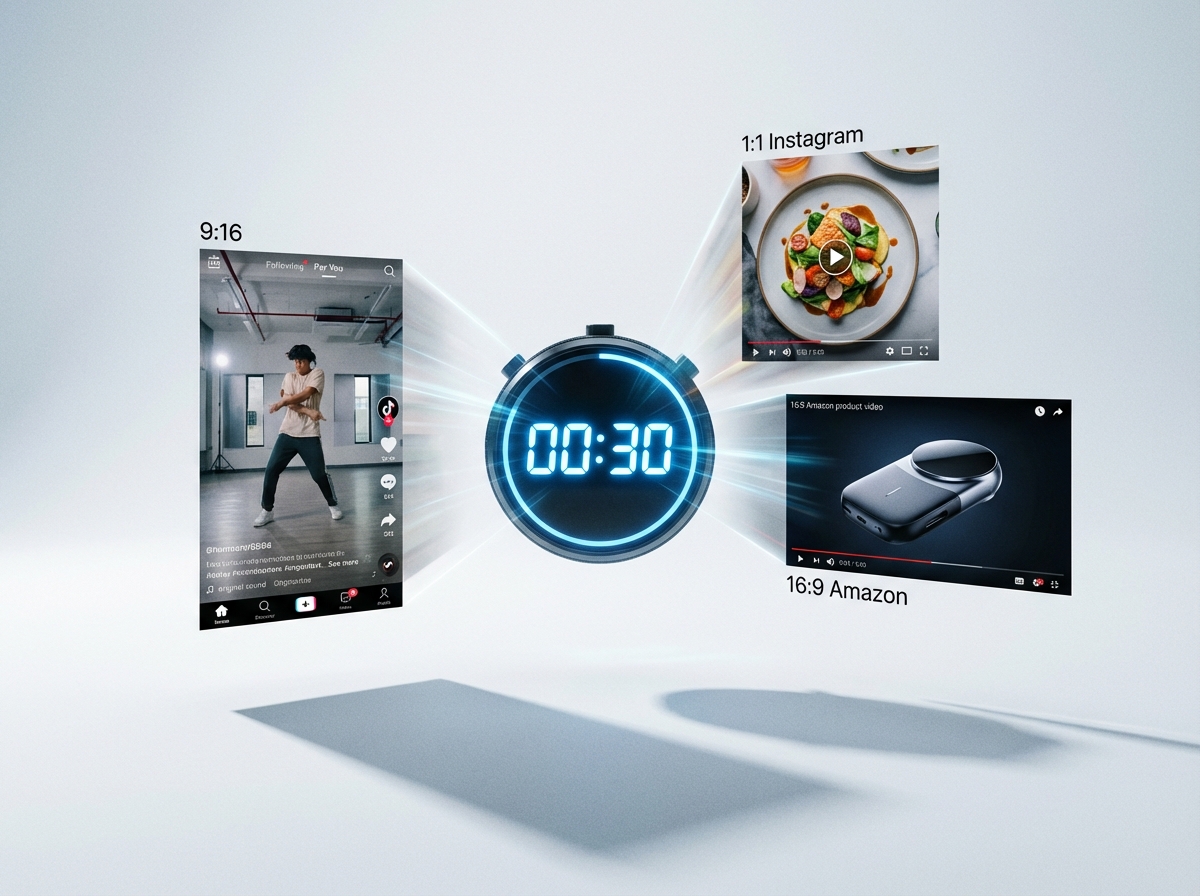
Furthermore, a specialized product page video converter focuses on the nuances of e-commerce. It doesn't just "make a video"; it creates a conversion-focused asset. This involves generating multiple aspect ratios—such as 9:16 for vertical social feeds, 1:1 for Meta ads, and 16:9 for Amazon PDPs—while ensuring that critical overlays like price tags, star ratings, and limited-time offers are perfectly positioned and legible. This level of landing page video generation ensures that every video is not just a visual treat but a functional sales tool.
Sources:
- Rocketium: Automated Personalized Video Maker Patterns
- SellersCommerce: 71+ Video Marketing Statistics for 2026
The 2026 Shift: Why 30-Second Rendering is the New Standard
The year 2026 marks a definitive shift in the AI video infrastructure. According to recent industry reports, 37% of marketers plan to significantly increase their investment in video marketing this year, driven by the fact that 87% of businesses now report video as a primary driver of business growth. However, the challenge has shifted from "how to make video" to "how to make video fast enough."
In the current ecosystem, there is a clear distinction between foundation-model generation and template-driven automation. While generative models like OpenAI’s Sora or Google’s Veo can create stunning cinematic clips, they often require significant compute time—sometimes taking up to 12 minutes to generate a single minute of high-resolution video on NVIDIA H100 clusters. For e-commerce brands needing to refresh hundreds of ads daily, this latency is unacceptable. This is where 30-second rendering becomes a competitive necessity.
Template-driven e-commerce product videos leverage pre-rendered motion graphics and real-time data injection to hit sub-30-second output cycles. This allows for dynamic content generation where a brand can refresh its entire creative catalog in response to a flash sale or a sudden shift in market trends. In India, the industrialization of AI video operations is accelerating, with platforms integrating directly with NVIDIA’s compute pipelines to ensure reliability and scale for enterprise marketers.
The 2026 trend is moving toward "multi-model pipelines." Creators are mixing foundation models for high-end visual hooks with automated template systems for the informative, data-heavy sections of a product video. This hybrid approach ensures both aesthetic quality and the throughput required for multivariate testing. As ad fatigue rates climb, the ability to ship daily refreshes is the only way to maintain a stable Return on Ad Spend (ROAS).
Sources:
- Analytics India Magazine: Sora Alternatives and 2026 AI Video Landscape
- Analytics India Magazine: Compute Demands for Generative Video
- HubSpot: 2026 Marketing Statistics and Trends
The Anatomy of Automated Video Creation from URL
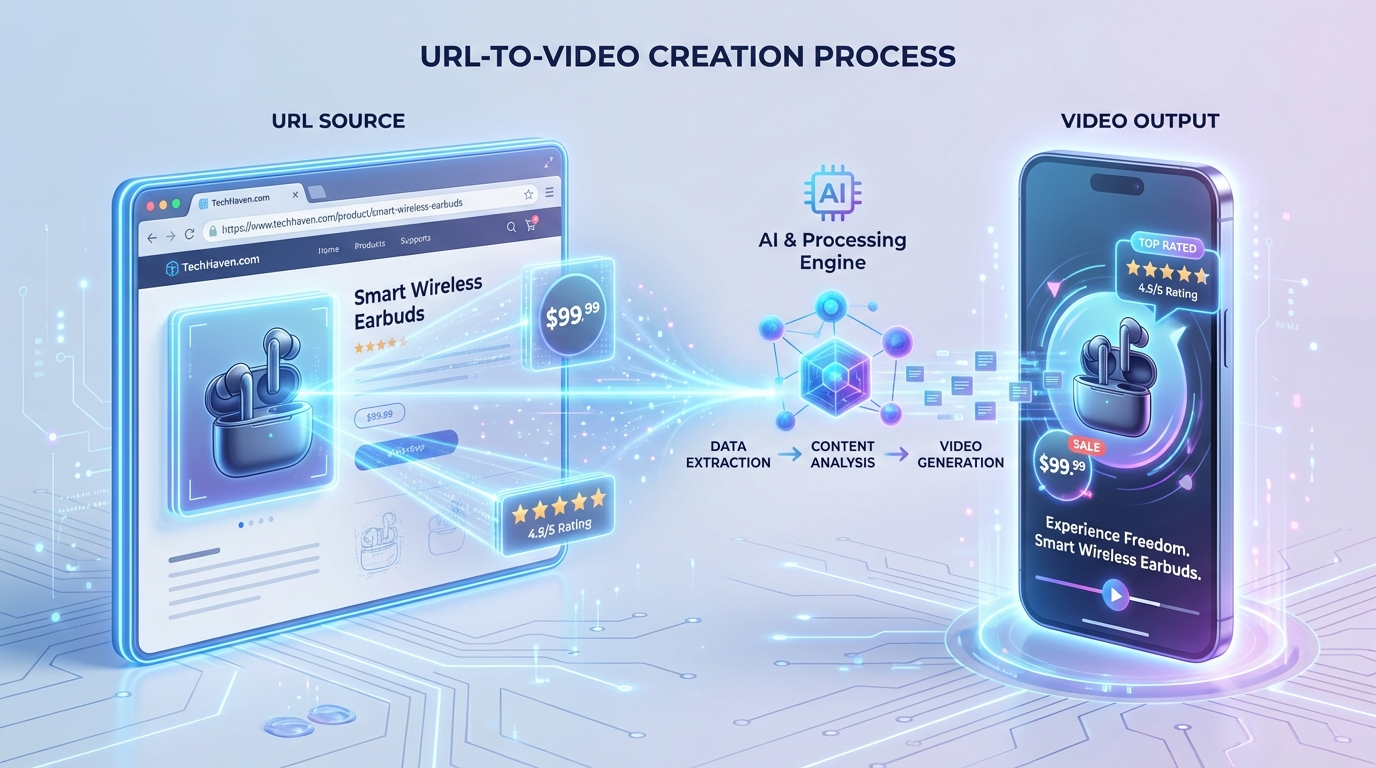
Understanding how automated video creation from URL works end-to-end is essential for growth teams looking to integrate these tools into their tech stack. The process is a seamless orchestration of web scraping, asset normalization, and cloud rendering.
- Crawl and Parse: The system begins by fetching the HTML and JSON-LD schema of the provided URL. It extracts critical metadata such as the
product_name,price,currency, andavailability. Advanced parsers also look for Open Graph tags to identify the best "hero" images and lifestyle shots. - Asset Normalization: Once the data is pulled, the AI deduplicates images and selects the highest resolution assets. It then applies the brand's specific "Brand Kit," which includes pre-defined hex codes for overlays, specific typography, and logo placement rules to ensure the product page video converter maintains brand integrity.
- Script and Layout Generation: The AI generates a caption script based on the extracted USPs and customer reviews. It structures the video with an attention-grabbing hook, followed by three key product benefits, and concludes with a clear Call to Action (CTA).
- Audio and Multilingual Support: The system automatically selects background music and generates a voice-over (VO). In 2026, this often includes multilingual VO options to cater to regional markets, with subtitles burned-in for silent autoplay on social feeds.
- Render and QA: The video is batch-rendered across multiple aspect ratios. Automated QA checks for spellcheck, safe-area compliance (ensuring text isn't hidden by UI elements like the "Like" button on TikTok), and platform-specific compliance.
- Distribution: The final assets are delivered via a dashboard or pushed directly to a Shopify video integration or Amazon Seller Central via API.
This workflow enables landing page video generation at a scale that was previously impossible. By automating the "busy work" of video editing, creative teams can focus on high-level strategy and hook testing rather than manual timeline adjustments.
Sources:
- Analytics India Magazine: InVideo x NVIDIA Pipeline News
- Amazon Seller Central India: Add Product Images and Video Guide
Scaling with API-Driven Video Creation and Personalization
For enterprise-level brands, manual URL pasting is only the beginning. To truly achieve content dominance, API-driven video creation is required. This allows for the programmatic generation of thousands of unique videos triggered by CRM events or inventory changes. Platforms like TrueFan AI enable these high-scale workflows by providing robust REST APIs that can handle million-scale throughput.
One of the most powerful applications of this technology is REST API video personalization. Instead of a generic ad, brands can generate videos where the content changes based on the viewer's data. For example, a video could greet a customer by name, mention their city, and show a product they recently viewed—all rendered in real-time. TrueFan AI's 175+ language support and Personalised Celebrity Videos take this a step further, allowing a celebrity or brand ambassador to address a customer personally in their native tongue with perfect lip-sync.
CSV to video bulk generation is another essential tool for e-commerce. Marketing teams can upload a spreadsheet containing hundreds of product URLs and custom variables (like "Discount %" or "Sale End Date"). The system then processes the entire list, outputting a library of videos ready for a seasonal campaign in minutes. This is particularly effective for "Virtual Reshoots," where a brand can update a single line of dialogue or a price overlay across an entire video catalog without ever returning to a studio.
Enterprise-grade solutions also prioritize security and compliance. With ISO 27001 and SOC 2 certifications, these platforms ensure that customer data used for personalization is handled with the highest standards of privacy. Built-in moderation tools also prevent the generation of off-brand or non-compliant content, providing a safety net for large-scale automated campaigns.
Sources:
- TrueFan AI: Enterprise Generative AI Video Solutions
- Rocketium: API and Bulk Video Patterns for Business
Maximizing Shopify Video Integration and Amazon Listing Videos
Integrating automated videos into your primary sales channels is the final step in the conversion journey. For Shopify merchants, a Shopify video integration allows for the automatic embedding of generated videos on PDPs and collection pages. This is crucial because 78% of retail website visits now occur on smartphones, where video is the preferred medium for product discovery.
When implementing video on Shopify, it is recommended to place a short (6–15 second) explainer video above the fold to capture immediate attention. A longer, lifestyle-oriented cut can be placed lower on the page to provide deeper context. Automated systems can even schedule video refreshes based on stock levels—for instance, switching to a "Limited Stock" overlay when inventory drops below a certain threshold.
For those selling on Amazon, adhering to Amazon listing videos guidelines is paramount. Amazon India Seller Central requires specific specs for video uploads to ensure a high-quality customer experience. Solutions like TrueFan AI demonstrate ROI through these integrations by ensuring every video meets Amazon's strict compliance standards, including aspect ratio, duration (typically 15–45 seconds), and the exclusion of prohibited claims.
Using e-commerce product videos within Amazon’s A+ Content modules can significantly boost conversion rates. By providing a clear product demo and including captions for silent viewing, brands can reduce return rates and improve customer trust. The key is to ensure that the video metadata—such as the title and description—is optimized for Amazon’s internal search engine, further enhancing the product's visibility.
Sources:
- Amazon Seller Central India: A+ Content Video Modules Guide
- Shopify India: Product Media and Video Handling
Growth Playbooks for Content Repurposing Automation
To maximize the value of your AI video tools, growth teams should implement structured playbooks centered around content repurposing automation. This isn't just about making one video; it's about creating a "content engine" that feeds every stage of the marketing funnel.
Playbook 1: Rapid Ad Iteration
Performance marketers can use a URL to video AI generator to create 50 different "hooks" for a single product. By testing variations that focus on price, social proof (reviews), or specific features, teams can identify the winning creative in days rather than weeks. This "fail fast" approach is the only way to combat the rising costs of customer acquisition in 2026.
Playbook 2: Feed-Driven Dynamic Creative
Connect your product feed directly to the video generator. When a price drops or a new promotion begins, the system can automatically re-render the offer overlays across all active ads. This ensures that your creative is always accurate and timely, which is especially effective for flash sales and holiday events.
Playbook 3: The "Blog-to-Video" Pipeline
Use web content video automation to turn high-performing blog posts into short-form video snippets. A "Top 10 Summer Essentials" blog can be transformed into a 9:16 video for Instagram Stories, driving traffic back to the site and extending the lifecycle of your written content.
Playbook 4: Multichannel Pack-outs
Every time a new product is launched, the system should automatically generate a "pack-out" of assets: 9:16 for TikTok, 1:1 for Meta, 4:5 for Instagram Feeds, and 16:9 for the website. This ensures that the brand has a presence on every platform without increasing the workload of the creative team.
By treating video as a dynamic data point rather than a static file, brands can achieve a level of agility that was previously reserved for the world's largest advertising agencies.
Sources:
- 336 Productions: 2026 Video Marketing and Advertising Trends
- Lambda Films: Essential Video Marketing Statistics for 2026
Conclusion
The transition to a URL to video AI generator workflow is no longer a futuristic concept—it is a 2026 business imperative. By automating the production of e-commerce product videos, brands can finally match the speed of their creative output to the speed of digital commerce. Whether you are looking to scale your Shopify video integration, optimize your Amazon listing videos, or implement hyper-personalized API-driven video creation, the tools are now available to make it happen in under 30 seconds.
As the digital landscape continues to evolve, the winners will be those who can leverage web content video automation to build deeper, more personal connections with their customers at scale. The era of manual video editing is ending; the era of automated, data-driven video storytelling has begun.
Frequently Asked Questions
How is brand consistency maintained with automated video creation from URL?
Consistency is maintained through "Locked Brand Kits." Before any video is generated, the brand defines its logo placement, font styles, and color palettes within the system. The AI then applies these rules to every video it creates. Additionally, enterprise solutions often include an approval workflow where a human can review and greenlight videos before they go live, ensuring that automated video creation from URL never compromises the brand's visual identity.
Can we really achieve 30-second rendering at scale?
Yes. While fully generative AI (like Sora) takes minutes to create a scene from scratch, template-based 30-second rendering works by injecting data into pre-built motion graphics structures. This allows the system to assemble the video rather than imagine it, resulting in near-instantaneous output. This speed enables million-scale campaigns where hundreds of thousands of videos are delivered in a single day.
How does REST API video personalization work with our CRM?
The process involves mapping CRM variables (like first_name or last_purchase) to the video template's dynamic fields. When a trigger occurs—such as a customer abandoning their cart—the CRM sends a POST request to the video API. The API then renders a personalized video and returns a URL that can be automatically sent to the customer via email or WhatsApp. TrueFan AI handles these triggers with low latency to ensure the video reaches the customer while the intent is still high.
Is Shopify video integration and Amazon listing videos setup complex?
Not at all. Most modern AI video tools offer direct connectors or apps for Shopify that handle the embedding process automatically. For Amazon, the process involves downloading the compliant MP4 file and uploading it through the Product Media Manager in Seller Central. The AI ensures the file meets all technical specs (bitrate, resolution, etc.) so there are no rejections during the Amazon review process.
How do we handle multilingual and regionalization?
Advanced platforms support over 175 languages. The AI doesn't just translate the text; it uses voice cloning and lip-sync technology to ensure the spokesperson appears to be speaking the local language naturally. This allows brands to run national campaigns in India across Hindi, Tamil, Bengali, and more, without the need for multiple regional shoots.
How does TrueFan AI ensure the security of our data?
TrueFan AI is ISO 27001 and SOC 2 certified, which are the gold standards for data security. All data used for personalization is encrypted in transit and at rest. Furthermore, the platform operates on a consent-first model, ensuring that all celebrity or ambassador media is used legally and ethically, protecting the brand from potential legal risks associated with synthetic media.