Festival shopping fraud prevention India 2026: A CISO playbook for UPI, OTP, fake websites, and phishing scam prevention this Holi and Eid
Estimated reading time: ~11 minutes
Key Takeaways
- Festive surges demand a proactive, education-led defense against UPI, OTP, and phishing scams.
- Vernacular, hyper-personalized videos on high-trust channels like WhatsApp drive higher comprehension and action.
- Adopt a structured 7-module security education framework to cover core scam vectors and responses.
- Measure effectiveness with clear KPIs: knowledge uplift, incident reduction, engagement latency, and trust delta.
- Ensure governance and accessibility (RBI/NPCI alignment, WCAG) with elderly-focused content.
The landscape of digital commerce in India has reached an unprecedented scale, with transaction volumes during festive peaks like Holi and Eid projected to hit record highs in 2026. For Chief Information Security Officers (CISOs) and fraud prevention teams, this surge presents a dual-edged sword: massive revenue opportunities coupled with an aggressive escalation in sophisticated cyber-attacks. Implementing a robust strategy for festival shopping fraud prevention India 2026 is no longer a seasonal checkbox but a mission-critical imperative to safeguard the bottom line and maintain consumer confidence.
As transaction velocities spike, so do the complexities of the threat vectors. Scammers are increasingly leveraging generative AI to create high-fidelity brand clones and hyper-realistic impersonation scripts, making traditional static warnings obsolete. This playbook provides a comprehensive, data-driven framework for deploying hyper-personalized, vernacular digital payment security videos across high-trust channels like WhatsApp and banking apps. By shifting from reactive mitigation to proactive, education-led defense, enterprises can effectively neutralize threats ranging from UPI collect-request scams to the psychological coercion of “digital arrest” frauds.
The core thesis of this strategy is simple: hyper-personalized, vernacular education that explains “what to do next” for specific scam patterns—distributed via trusted channels and measured with enterprise analytics—is the highest-ROI lever for festival shopping fraud prevention India 2026.
Cyber security festival season: Navigating the 2026 India fraud landscape
The cyber security festival season in India is characterized by a perfect storm of high transaction volume, discount-seeking consumer behavior, and the rapid adoption of UPI in Tier-2 and Tier-3 cities. In 2026, the fraud landscape has evolved beyond simple phishing emails into a multi-channel ecosystem of deception. Data indicates that transaction volumes during Holi and Eid 2026 are expected to rise by 45% compared to previous years, with a corresponding 30% spike in reported cyber-fraud incidents during these windows.
Phishing scam prevention Holi Eid
During Holi and Eid, seasonal lures such as “exclusive color sales” or “Eid travel combos” are weaponized via WhatsApp, SMS, and social media. These phishing scam prevention Holi Eid efforts must address the rise of malicious APKs and cloned login pages that mimic popular e-commerce platforms. Scammers use these sites to harvest credentials or install keyloggers, often utilizing countdown timers to create a false sense of urgency that bypasses a user's critical thinking.
The evolution of OTP and UPI fraud
OTP fraud remains a persistent threat, where criminals socially engineer users into sharing one-time passwords under the guise of “verifying a prize” or “updating KYC.” Similarly, UPI fraud has pivoted toward the “collect request” mechanism. Users are often tricked into approving a request to receive money, only to find their accounts debited. In 2026, the use of fraudulent QR codes in physical marketplaces has also surged, where “refund” pretexts are used to drain digital wallets.
The rise of “Digital Arrest” scams
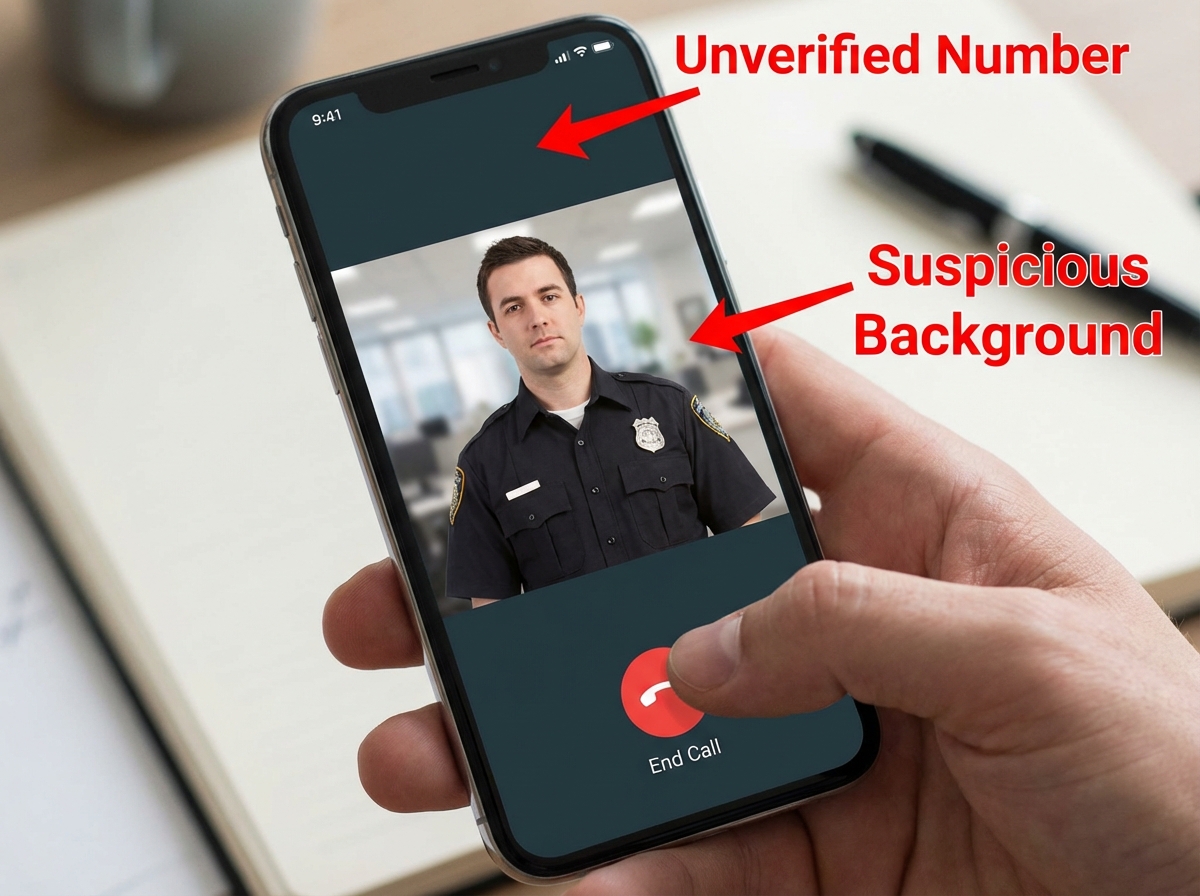
One of the most damaging trends in 2026 is the “digital arrest” scam. Fraudsters impersonate officials from the Police, Enforcement Directorate (ED), or TRAI via high-definition video calls. They coerce victims into staying on the call for hours—effectively a “digital arrest”—while demanding “verification payments” to settle fabricated legal issues. This psychological warfare requires specific digital arrest scam awareness training that empowers users to terminate calls and report incidents immediately.
Sources:
- ET Edge Insights: India’s cyber fraud surge during festival peaks
- EcommerceNews.in: Festive-season cyber-fraud surges with discount hunting
- Indian Express: Safeguards against “digital arrest” scams
Vernacular fraud awareness content: The key to customer trust building security
To combat the sophisticated threats of 2026, generic security warnings are insufficient. The efficacy of customer trust building security lies in its ability to resonate with a diverse, multilingual audience. Vernacular fraud awareness content—scripted and localized in Hindi, Hinglish, Bengali, Tamil, Marathi, and other regional languages—significantly improves comprehension and recall, particularly for cohorts in non-metro regions who are often the primary targets of seasonal scams.
Personalization as a trust catalyst
Personalization goes beyond just using a customer's name. It involves tailoring the security message to the user's specific context, such as their city, preferred language, and recent transaction history. Platforms like TrueFan AI enable enterprises to generate these hyper-personalized videos at scale, ensuring that a user in Coimbatore receives a safety alert in Tamil that references local festival traditions, while a user in Lucknow receives a similar alert in Hinglish. This level of relevance transforms a standard notification into a high-trust intervention.
Elderly customer protection videos
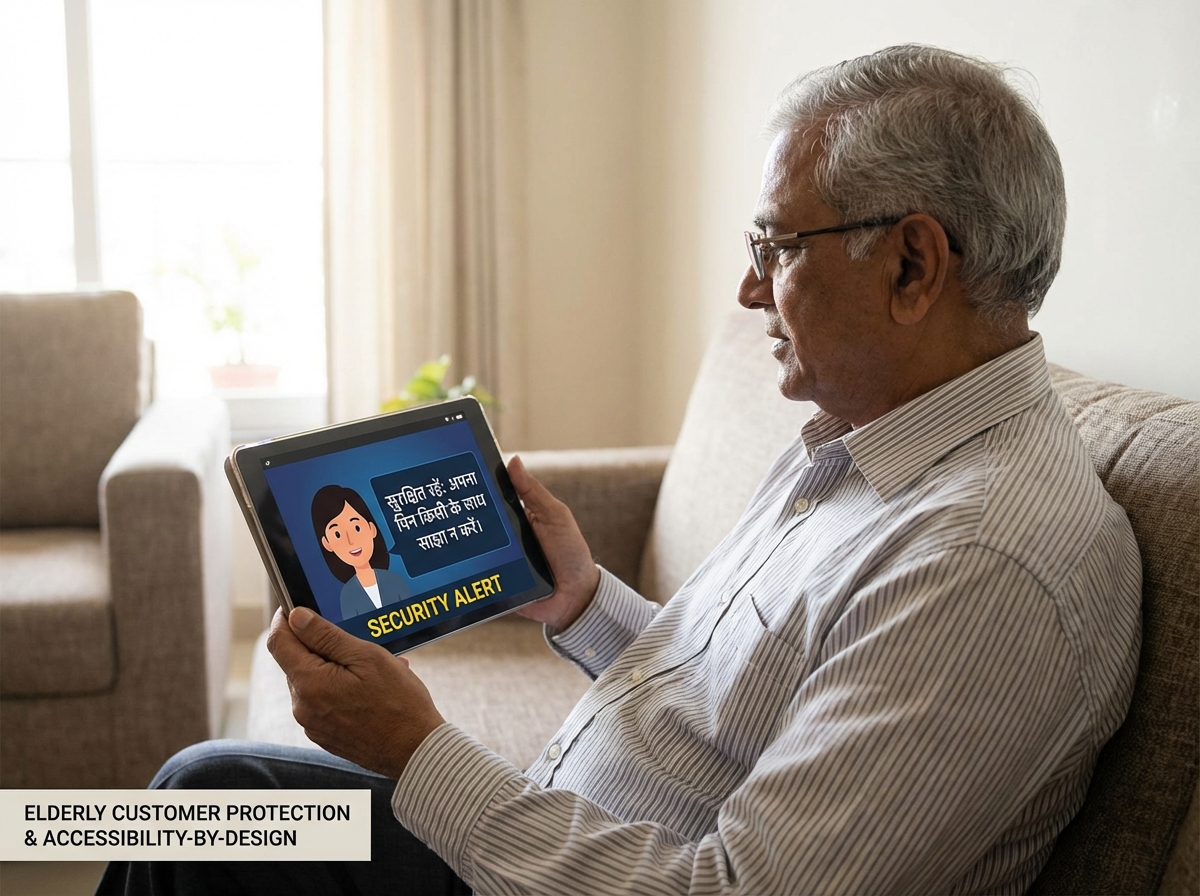
The elderly demographic remains disproportionately vulnerable to social engineering. Elderly customer protection videos must be designed with accessibility-by-design principles: large fonts (18–24pt), high-contrast color palettes, and a slower voice-over speed (120–140 wpm). These videos should not only educate the senior citizen but also provide actionable tips for their caregivers. By reducing the cognitive load required to process security information, banks and fintechs can significantly lower the success rate of “digital arrest” and OTP scams within this segment.
Channel-specific trust: WhatsApp vs. SMS
In 2026, the perceived authenticity of the delivery channel is as important as the message itself. Verified WhatsApp Business accounts carry a significantly higher trust weight than generic SMS, which is often cluttered with spam. By delivering digital payment security videos via WhatsApp, brands can leverage the platform's multimedia capabilities to show, rather than just tell, how a scam works. This visual storytelling is essential for explaining complex concepts like the difference between a UPI “Pay” and “Collect” request.
Sources:
- Amazon India x I4C: Scam-free festive shopping initiative
- Dvara Research: UPI fraud-awareness effectiveness
The 7-module secure payment education campaigns: A blueprint for CISOs
A structured approach to education is the most effective way to build long-term resilience. This 7-module framework for secure payment education campaigns provides a comprehensive blueprint for festive season readiness.
Module 1: UPI fraud awareness campaigns
The primary goal here is to demystify the “Collect vs. Pay” mechanic.
- The Rule: “Collect” means you are sending money; “Pay” means you are initiating a transaction. Never enter your UPI PIN to receive a refund or prize.
- Checklist: Verify the beneficiary name, check the UPI ID, and never use screen-sharing apps like AnyDesk during a transaction.
- Video Storyboard: A user clicks a “Holi Cashback” link, which triggers a UPI collect request. The video pauses, highlights the “Collect” button in red, and shows the user clicking “Decline.”
Module 2: OTP fraud prevention marketing
This module focuses on the sanctity of the One-Time Password.
- The Rule: No bank or merchant will ever ask for your OTP, CVV, or UPI PIN over a phone call or DM.
- Checklist: Enable two-factor authentication (2FA) within all shopping apps; never install APKs sent via WhatsApp.
- Video Storyboard: A fake “Bank Officer” calls asking for an OTP to “unblock an Eid discount.” The video shows the user hanging up and reporting the number.
Module 3: Fake website detection education
Teaching users to spot cloned domains is critical for fake website detection education.
- The Rule: HTTPS and the padlock icon do not guarantee safety; they only mean the connection is encrypted.
- Checklist: Look for misspellings (e.g., “amaz0n.in”), check for unusually steep discounts (90% off), and avoid clicking short links (bit.ly/xyz).
- Visual: A side-by-side comparison of a legitimate checkout page versus a clone, highlighting the subtle URL differences.
Module 4: Festival offer verification videos
Scammers exploit the “fear of missing out” (FOMO) during sales.
- The Rule: If an offer seems too good to be true, it is. Always verify offers within the official app.
- Checklist: Cross-check WhatsApp forwards with the brand's verified social media handles; never pay a “delivery fee” or “tax” to claim a prize.
- Video Storyboard: A user receives a “Free Eid Gift” message. Instead of clicking the link, they open the official app, see no such offer, and delete the message.
Module 5: Digital arrest scam awareness
This module addresses the most psychologically taxing scam of 2026.
- The Rule: Government agencies do not conduct “arrests” via Skype or WhatsApp video calls.
- Response Play: Hang up immediately. Do not share your screen or ID proofs. Alert your bank to freeze accounts and report on cybercrime.gov.in.
- Video Storyboard: A victim is shown on a video call with a “police officer.” An overlay appears: “Real police don't call like this. Hang up now.”
Module 6: WhatsApp scam alert personalization
Leveraging real-time data to send localized alerts.
- The Strategy: Use WhatsApp scam alert personalization to send alerts based on trending scams in specific cities (e.g., “New QR scam reported in Mumbai markets”).
- Design: A 20-second video in the local language with a 3-point safety checklist and a direct link to the app's secure help center.
Module 7: Evergreen digital payment security videos
Maintaining a persistent library of micro-learning content.
- The Strategy: A playlist of 10–12 short videos covering device hygiene, how to report a dispute, and setting transaction limits.
- Checklist: Keep OS updated; use biometric locks for UPI apps; review bank statements weekly.
Sources:
- CXOToday: How to stay safe from online shopping scams
- Moneycontrol: Scammers on the prowl during the festival season
WhatsApp scam alert personalization: Distribution and measurement strategies
The success of a festival shopping fraud prevention India 2026 initiative is measured not just by the quality of the content, but by the precision of its delivery. In 2026, the distribution strategy must be multi-layered and context-aware.
High-trust delivery channels
Verified WhatsApp Business accounts serve as the primary delivery vehicle for digital payment security videos. These should be supplemented by in-app inbox messages and push notifications that appear at the moment of friction—such as when a user initiates a high-value transaction to a new beneficiary. Solutions like TrueFan AI demonstrate ROI through their ability to integrate directly with these enterprise communication stacks, ensuring that personalized safety nudges are delivered in real-time.
KPIs for customer trust building security
To evaluate the impact of these campaigns, CISOs should track a specific set of metrics:
- Knowledge Uplift: Pre- and post-video quizzes to measure comprehension of scam patterns.
- Incident Reduction: A measurable drop in OTP-sharing incidents and UPI “collect” fraud within the targeted segments.
- Engagement Latency: The time taken for a user to report a suspicious link after receiving a personalized alert.
- Trust Delta: Net Promoter Score (NPS) improvements specifically related to “security and safety” perceptions.
By segmenting these KPIs by language, city, and age cohort, fraud teams can refine their scripts in real-time to address emerging threats. For instance, if data shows a surge in fake website clicks in West Bengal during Eid, the team can immediately deploy a Bengali-language alert focused on domain hygiene.
Sources:
Elderly customer protection videos: Governance and accessibility standards
Operating at the intersection of finance and security requires strict adherence to governance and compliance standards. All secure payment education campaigns must be aligned with the latest RBI and NPCI guidelines to ensure that the messaging is accurate and legally sound.
Compliance guardrails
Content must avoid providing prescriptive legal or financial advice. Instead, it should focus on behavioral heuristics—teaching users how to think about security rather than just giving them a list of rules. Audit trails for all personalized content are essential, ensuring that every video generated meets the brand's safety and moderation standards.
Accessibility-by-design
In 2026, accessibility is a regulatory requirement. Elderly customer protection videos must conform to WCAG standards, featuring high-contrast visuals and screen-reader compatibility. For regional content, providing dual-language subtitles (e.g., Tamil audio with English subtitles) helps caregivers assist elderly family members in understanding the risks.
The implementation roadmap (T–60 to T+30)
A successful festive campaign requires a 90-day lifecycle:
- T–60 to T–30: Risk mapping and script development. Define the WhatsApp opt-in strategy and conduct SME reviews.
- T–30 to T–7: Production of multilingual assets and A/B testing with control groups.
- T–7 to T+7 (The Peak): Go-live with real-time alerts. Monitor surge patterns and deploy incident-specific communications.
- T+8 to T+30: Post-mortem analysis. Transition successful festive content into the evergreen library and plan for the next cycle.
Festival shopping fraud prevention India 2026: Implementation and TrueFan AI integration
The scale of India's festive season requires an enterprise-grade solution that can handle millions of personalized interactions without compromising on speed or quality. This is where the integration of advanced AI video technology becomes a competitive advantage.
TrueFan AI's 175+ language support and Personalised Celebrity Videos allow brands to create a level of engagement that traditional security training cannot match. Imagine a popular regional celebrity addressing a customer by name in their native tongue, explaining the latest UPI scam. This “celebrity authority” significantly increases the likelihood that the user will pay attention and retain the information.
Why TrueFan AI for fraud-awareness at scale
- Hyper-Personalization: Generate 1:1 videos that reference the user's name, city, and specific risk profile in under 30 seconds via API.
- Voice Retention & Lip-Sync: Maintain perfect cultural and linguistic nuances across 175+ languages, ensuring the vernacular fraud awareness content feels authentic.
- Virtual Reshoots: When a new scam pattern emerges (e.g., a new “Digital Arrest” tactic), the AI can swap lines in existing videos without the need for expensive re-shoots, allowing for near-instant response.
- Enterprise Security: With ISO 27001 and SOC 2 compliance, the platform ensures that customer data used for personalization is handled with the highest level of security.
By combining these technological capabilities with the 7-module framework, CISOs can build a formidable defense against the evolving threats of the 2026 festive season.
Frequently Asked Questions
How do I report a “Digital Arrest” scam if I have already shared my details?
Immediately contact your bank to freeze all accounts and credit cards. Lodge a formal complaint on the National Cyber Crime Reporting Portal at cybercrime.gov.in or call the national helpline at 1930. Preserve all evidence, including call logs and screenshots of the video call.
What is the most important thing to check before approving a UPI request?
Always check if the request is a “Collect” or “Pay” request. If you are expecting to receive money, you should never have to enter your UPI PIN. Verify the beneficiary's name and UPI ID carefully before taking any action.
Can TrueFan AI help reduce OTP fraud through personalized videos?
Yes. TrueFan AI enables the creation of hyper-personalized videos where a trusted brand voice or celebrity explains exactly why an OTP should never be shared. By delivering these videos via WhatsApp at the moment a user is most at risk, it creates a high-impact educational intervention that significantly reduces the likelihood of a user falling for social engineering.
Why is vernacular content more effective for festival shopping fraud prevention India 2026?
Vernacular content reduces the cognitive friction involved in understanding complex security concepts. During the high-stress environment of a festive sale, users are more likely to process and remember information delivered in their primary language and cultural context.
How can I tell if a festival discount website is fake?
Look for red flags such as misspellings in the URL, prices that are 80–90% lower than market rates, and the absence of a physical address or legitimate contact details. Always try to access the store through its official mobile app rather than clicking on links in SMS or WhatsApp messages.
Research Roundup & Citations:
- India’s Cyber Fraud Surge: Why Festivals are Prime Time for Hackers (ET Edge Insights): Read the analysis
- Festive Season Cyber-Fraud Surges as Shoppers Seek Discounts (EcommerceNews.in): Report overview
- AI-Powered Cyber Frauds Surge During Diwali Festivities (ET CISO): News coverage
- Stay Calm, Preserve Evidence: Legal Experts on Safeguards Against Digital Arrest (Indian Express): Legal guidance
- NPCI UPI Product Statistics & Safety Circulars: Official statistics