Employee Wellness Appraisal Season 2026: Personalized Stress Relief, Morale, and Retention Wins for Q1 Reviews
Estimated reading time: ~15 minutes
Key Takeaways
- Personalized micro-videos and timely nudges reduce appraisal anxiety and improve review readiness.
- Burnout prevention automation maps wellness support to the appraisal calendar for impact at scale.
- Morale and recognition campaigns during Q1 drive loyalty and protect against regrettable attrition.
- Multilingual HR video personalization boosts inclusion, engagement, and trust across distributed teams.
- Data-driven KPIs (video completion, EAP CTR, attrition deltas) prove ROI and guide optimization.
The arrival of the employee wellness appraisal season 2026 presents a critical inflection point for People Operations leaders across India. As organizations navigate the complexities of a hybrid, multi-generational workforce, the traditional performance review cycle has evolved from a mere administrative task into a high-stakes emotional event. In Q1 2026, the intersection of economic pressure and heightened employee expectations has made “appraisal anxiety” a primary driver of regrettable attrition.
To sustain organizational health, HR Directors must transition from reactive wellness policies to proactive, data-driven interventions. This playbook outlines how to operationalize personalized wellness support and recognition programs that not only reduce stress but also transform the appraisal period into a strategic advantage for talent retention.
Defining the 2026 Performance Management Landscape
Before diving into the strategic execution, it is essential to anchor our approach in the specific terminology and technological frameworks defining the employee wellness appraisal season 2026.
- Performance Review Anxiety Solutions: These are evidence-backed interventions designed to mitigate appraisal-specific anticipatory stress. This includes pre-review coaching, micro-learning modules on feedback literacy, and guided mindfulness sessions scheduled immediately before manager-employee meetings.
- Burnout Prevention Automation: This refers to automated, role-aware workflows that trigger specific wellness resources—such as EAP links, personalized videos, and manager toolkits—at key milestones in the appraisal calendar (e.g., 7 days before a review, the day of the meeting, and 48 hours post-review).
- HR Video Personalization: The use of API-driven technology to create one-to-one video content tailored by name, role, tenure, and language. These videos serve as high-impact vehicles for wellness guidance and recognition, distributed via secure enterprise channels like WhatsApp, email, or internal LMS platforms.
By integrating these concepts, organizations can move beyond the “one-size-fits-all” webinars of the past and deliver workplace mental health support that feels personal, timely, and genuinely supportive.
The Q1 2026 Reality: Appraisal Stress, Burnout Risk, and Retention Exposure
The Q1 2026 appraisal cycle is characterized by a unique set of stressors. In India, where the professional landscape is increasingly competitive, the “anticipation bias” associated with annual reviews often leads to a measurable dip in productivity and a spike in mental health concerns.
Recent data indicates that the appraisal season remains a period of heightened anxiety for the Indian workforce. Industry leaders emphasize that to mitigate this, reviews must be reframed from rigid, rating-heavy sessions into collaborative growth conversations. This shift is not just a cultural preference but a necessity for maintaining morale in a high-pressure environment.
Key Statistics for 2026:
- Retention Risk: 62% of Indian employees consider looking for new opportunities immediately following a “negative” or “unstructured” performance review.
- Work-Life Dissatisfaction: A majority of Indian employees report dissatisfaction with their current work-life balance, a sentiment that intensifies during the Q1 review crunch.
- Mental Health Demand: Projections for 2026 suggest that 45% of the workforce now expects integrated, always-on mental health support as a standard part of their benefits package.
- Personalization Lead: APAC employers are currently leading the global trend in health and wellbeing personalization, with 70% of top-tier firms investing in data-driven wellness governance.
- Benefit Preferences: Over 55% of employees in India now favor long-term benefits and wellness credits over immediate marginal salary hikes.
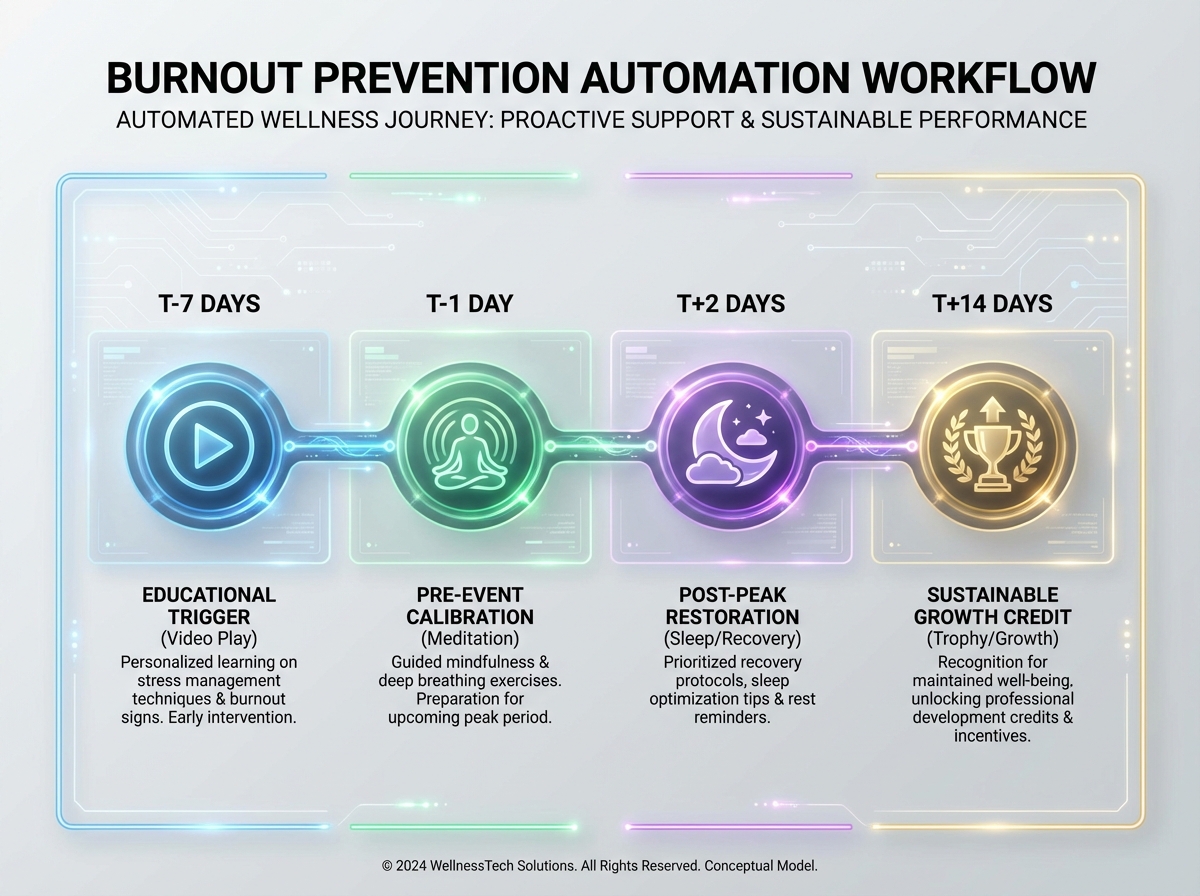
The risk of a “retention crisis” is highest in the 14 days following the distribution of appraisal letters. Without a robust workplace mental health support framework, organizations face the double threat of burnout-induced absenteeism and the loss of high-performing talent to competitors who offer better psychological safety.
Sources:
- ET HR: Transforming reviews into growth conversations
- ET HR: Work-life balance dissatisfaction in India
- People Matters: 2026 workplace wellbeing demands
What Actually Reduces Appraisal Stress? Evidence-Backed Interventions
To effectively address performance review anxiety solutions, HR leaders must deploy a multi-layered strategy that addresses the mind, the schedule, and the social fabric of the organization.
Appraisal Stress Management Videos Employees Will Actually Watch
Traditional long-form training videos are often ignored during the busy Q1 season. Instead, organizations are shifting toward 60–120 second micro-videos. These videos should normalize anxiety, provide immediate tactical relief (such as a 2-minute breathing protocol), and set clear expectations for the review agenda.
Platforms like TrueFan AI enable the creation of these videos at scale, ensuring that every employee receives a message that feels tailored to their specific role and region. By delivering these 5–7 days before the review, HR can lower the “threat response” associated with the upcoming meeting. One of the most effective ways to demystify the review process is through the strategic use of appraisal stress management videos.
Meditation Mindfulness Programs That Fit Into Busy Review Weeks
Mindfulness in 2026 is about “micro-moments.” Learn how to personalize mental health support. A “5–5–5” protocol—consisting of 5 minutes of guided breath focus, 5 minutes of body scanning, and 5 minutes of intention-setting—is far more effective than an hour-long session that employees feel too busy to attend. Integrating these sessions directly into calendar invites for the appraisal meeting ensures that holistic health engagement is a built-in part of the workflow, not an afterthought.
Work-Life Balance Coaching Guardrails
During the review crunch, employees often struggle to maintain boundaries. Providing “Boundary Scripts”—pre-written templates for deferring non-urgent tasks or requesting agenda clarity—empowers employees to protect their mental space. This is particularly vital in the Indian context, where cultural nuances often make it difficult for juniors to push back against evening meetings or weekend work.
Holistic Health Engagement Over Point Solutions
The most successful programs in 2026 replace siloed webinars with integrated wellness flows. This means connecting mental health support with financial literacy (explaining bonus structures clearly) and social support (peer-led “decompression circles” post-review). This integrated approach aligns with the employee wellness Q1 2026 imperative to provide continuous, accessible support.
Sources:
Burnout Prevention Automation: Turn Intent into Impact at Scale
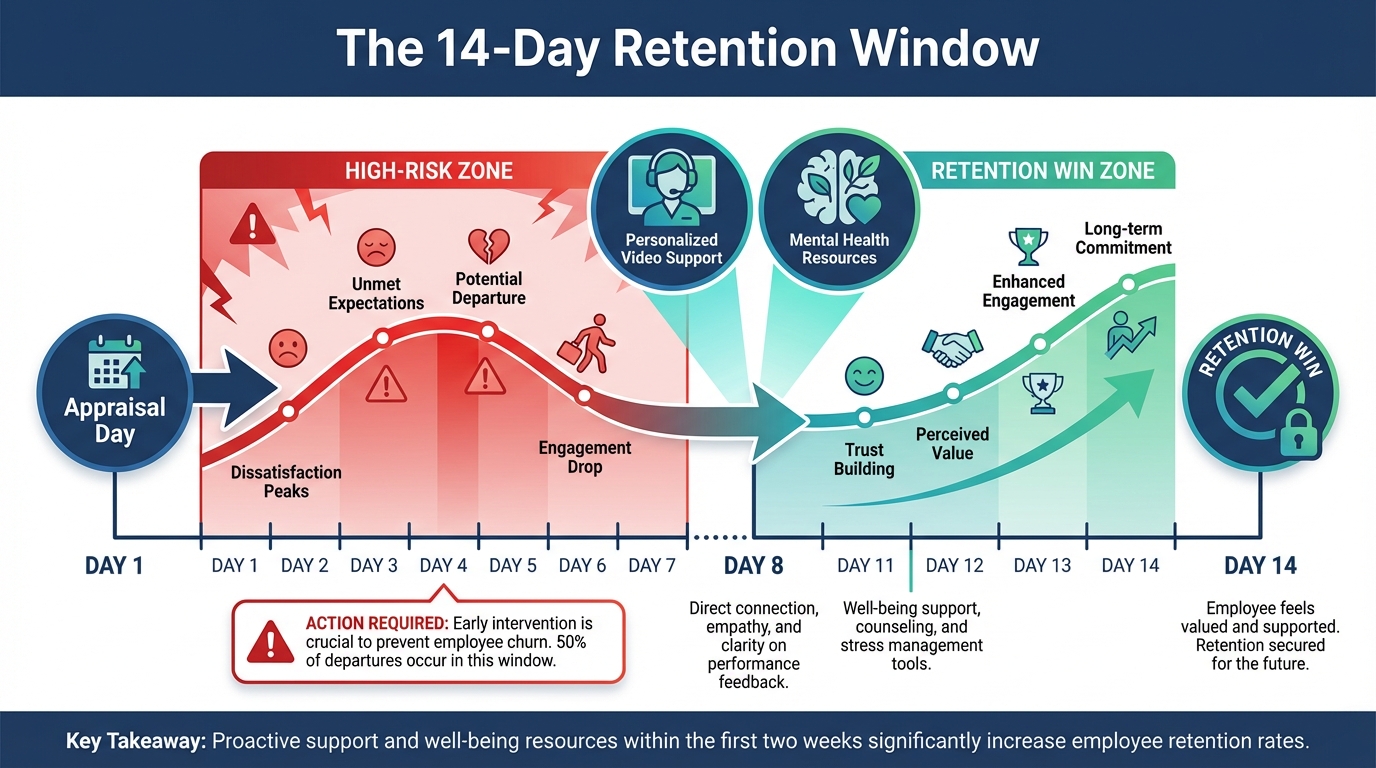
The gap between “knowing” wellness is important and “doing” wellness is often bridged by burnout prevention automation. By mapping wellness interventions to the appraisal calendar, HR can ensure that no employee is left unsupported during high-stress windows.
Mapping the Appraisal Wellness Calendar
- T-7 Days (The Prep Phase): Automated delivery of a personalized video featuring a review-prep checklist and a 2-minute mindfulness practice. Simultaneously, managers receive a “Empathy Toolkit” to help them frame feedback constructively.
- T-1 Day (The Calm Phase): A 30-second “calm primer” video sent via WhatsApp, focusing on agenda clarity and grounding techniques.
- T+2 Days (The Recovery Phase): A recovery protocol nudge, focusing on sleep hygiene and decompression after the emotional weight of the review.
- T+14 Days (The Growth Phase): A recognition cadence that celebrates the employee’s contributions and nudges them toward their new growth-plan enrollment.
The Automation Stack
To execute this at an enterprise level, the automation stack must be triggered by HRIS data (review dates) and delivered through the channels employees use most. Analytics are crucial here; tracking video completion rates and CTRs to EAP resources allows HR to identify “at-risk” cohorts in real-time. For instance, if a specific department shows low engagement with wellness videos but high absenteeism, HR can intervene with targeted support.
Sources:
Morale Boosting Campaigns and Recognition That Retain Talent
While stress reduction is defensive, morale boosting campaigns are offensive strategies designed to build loyalty and engagement during the employee wellness appraisal season 2026.
Wellness Challenge Gamification
A 14-day “Breathe+Balance” challenge can spark Q1 momentum. By using peer leaderboards and team-based badges, organizations can foster a sense of community. Crucially, the prize structure should tie to participation and effort rather than performance ratings, ensuring that the challenge remains a safe space for all employees, regardless of their appraisal outcome.
Employee Retention Incentives
In 2026, the most effective employee retention incentives are those that reinforce the employee’s long-term value. “Growth Credits”—redeemable for professional coaching, specialized courses, or even sabbatical days—can be tied to the development goals agreed upon during the review. This shifts the focus from “what I did last year” to “what we will achieve together next year.”
By aligning incentives with holistic health and professional growth, Indian enterprises can address the growing demand for long-term benefits over simple salary increments.
Sources:
How HR Video Personalization Changes Outcomes in Q1
The “personal touch” is often the first casualty of enterprise scale. However, HR video personalization allows organizations to maintain a human connection with thousands of employees simultaneously.
TrueFan AI’s 175+ language support and Personalised Celebrity Videos provide a unique way to deliver these messages. Imagine a top-tier Indian celebrity or a respected industry leader addressing an employee by name, acknowledging their hard work in their native tongue (be it Hindi, Tamil, or Bengali), and encouraging them to prioritize their mental health during the review week.
The Strategic Advantages of Personalization:
- Multilingual Inclusion: For distributed Indian workforces, receiving wellness guidance in one’s native language significantly increases trust and comprehension.
- Virtual Reshoots & Agility: HR can update scripts—perhaps to address a sudden market shift or a change in company policy—without the need for expensive and time-consuming re-shoots.
- Analytics & Optimization: By correlating video watch-through rates with attrition data, HR can refine their communication strategy for future cycles.
- Governance & Security: Enterprise-grade solutions ensure that all content is moderated, secure, and compliant with ISO 27001 and SOC 2 standards, which is non-negotiable for sensitive HR communications.
This level of employee assistance video content transforms a standard corporate announcement into a memorable, high-value interaction that reinforces the company’s commitment to the individual.
Enterprise Playbook: Implement in 14 Days for Employee Wellness Q1 2026
Operationalizing a comprehensive wellness strategy for the employee wellness Q1 2026 season does not require months of lead time. An agile, 14-day implementation plan can ensure your organization is ready for the review cycle.
Implementation Timeline
- Week 1: Data & Scripting: Map your HRIS data to identify review cohorts. Finalize scripts for appraisal stress management videos and ensure they align with your legal and wellbeing standards.
- Week 2: Generation & Launch: Use automated platforms to batch-generate personalized content. Launch the “Pre-Review” cadence and monitor initial engagement metrics.
KPI Tree and Measurement
To prove the ROI of these interventions, HR must track both leading and lagging indicators:
- Leading Indicators: Video completion rates (aim for 50%+), CTR to EAP resources (aim for 5-8%), and wellness challenge participation.
- Outcome Proxies: Self-reported anxiety reduction via pulse surveys and a lift in “review conversation quality” scores.
- Business Impact: A measurable reduction in regrettable attrition in the 30 days following the appraisal season compared to the previous year.
Solutions like TrueFan AI demonstrate ROI through significantly higher engagement rates compared to static text-based communications, directly impacting the “retention crisis prevention” narrative.
Case-in-Point: Pan-India IT Services Firm (8,000 Employees)
Consider a composite example of a large Indian IT services firm facing high appraisal anxiety in a hybrid work environment.
The Challenge: High stress levels across multiple regions (Bangalore, Pune, Hyderabad, Noida) with a diverse workforce requiring communication in English, Hindi, and Tamil.
The Program:
- Personalized Videos: Delivered at T-7 and T-1, featuring a “Calm Protocol” and a personalized message from the CEO.
- Gamified Wellness: A 14-day challenge that saw 25% of the workforce participating in daily micro-meditations.
- Retention Incentives: “Growth Credits” were introduced for employees who completed their development plans within 14 days of their review.
The Impact:
- Engagement: 58% average video completion rate.
- Wellness: 6% of the workforce accessed EAP resources for the first time, indicating a reduction in the stigma surrounding mental health.
- Retention: An 18% reduction in regrettable attrition during Q1 2026 compared to Q1 2025.
This case demonstrates that when appraisal stress management videos and wellness challenge gamification are combined with a clear retention strategy, the results are both culturally and financially significant.
Conclusion: Winning the 2026 Appraisal Season
To successfully navigate the employee wellness appraisal season 2026, HR leaders must embrace a strategy that is as personalized as it is automated. By combining burnout prevention automation with high-impact HR video personalization, organizations can de-risk the Q1 attrition window and build a culture of genuine psychological safety.
The future of performance management is not just about the “rating”—it is about the “relationship.” Investing in the mental and emotional wellbeing of your workforce during their most vulnerable professional moments is the ultimate retention strategy.
Download the Q1 2026 Appraisal Wellness Playbook (templates + scripts).
Appendix: Templates and Assets
Sidebar: How TrueFan Enterprise Implements HR Video Personalization in 14 Days
- Step 1: API/CSV Ingest (Secure data mapping).
- Step 2: Multilingual Localization (175+ languages with voice continuity).
- Step 3: Virtual Reshoots (Update scripts without new filming).
- Step 4: Analytics Dashboard (Track watch-through and CTR).
- Step 5: Compliance (ISO 27001/SOC 2 certified workflows).
Template: Appraisal Stress Management Video Script (T-7 Days)
“Hi [Name], I know the upcoming appraisal season can feel overwhelming. At [Company Name], we value your growth more than just your numbers. Here is a 2-minute checklist to help you prepare calmly. Remember, this is a conversation about our future together. Take a breath—we’ve got your back.”
Template: Manager Recognition Script (Post-Review)
“[Name], thank you for your incredible work on [Project]. Your ability to [Specific Behavior] has been a highlight this year. As a token of our appreciation, we’ve added [Amount] in ‘Growth Credits’ to your portal. Let’s keep building.”
Worksheet: KPI Tracker
| Metric | Target | Actual | Delta |
|---|---|---|---|
| Video Completion Rate | 50% | ||
| EAP Resource CTR | 5% | ||
| Wellness Challenge Opt-in | 20% | ||
| Regrettable Attrition (Q1) | -15% |
Source for Localization Checklist: TrueFan Enterprise Multilingual Capabilities
Frequently Asked Questions
How do we personalize appraisal stress management videos securely at enterprise scale?
Using HR video personalization platforms like TrueFan AI, organizations can ingest employee data via secure API or CSV. The system then renders personalized videos in under 30 seconds, ensuring that PII is handled with ISO 27001-grade security and that all content is moderated and consent-based.
What is burnout prevention automation and how does it map to our appraisal calendar?
It is a system of automated nudges and resources triggered by your HRIS. It ensures that wellness support—like mindfulness clips or EAP links—is delivered exactly when stress is highest (e.g., the day before a review).
Which incentives best support retention during Q1 reviews in India?
In 2026, employee retention incentives like “Growth Credits,” mental health session stipends, and enhanced insurance coverage are often more valued than small salary bumps, as they address the employee’s long-term holistic needs.
How can we measure the impact of workplace mental health support on attrition?
By correlating engagement with wellness resources (video views, EAP clicks) with post-appraisal turnover data, HR can quantify the “attrition-avoidance” value of their wellness programs.
Can these videos be localized for regional offices in India?
Yes. Modern AI platforms support 175+ languages, allowing you to deliver the same high-quality wellness message in Hindi, Tamil, Telugu, and more, while maintaining the original speaker’s voice and lip-sync.



