Monsoon health subscription boxes: Predictive, personalized, and powered by AI videos
Estimated reading time: ~12 minutes
Key Takeaways
- Monsoon health subscription boxes pair AI-driven personalization with hyperlocal disease forecasts to prevent seasonal illnesses.
- Predictive risk scoring blends family health history with real-time weather and outbreak data to tailor kits per household.
- Personalized seasonal health kit videos improve adherence with localized instructions and timely alerts.
- Healthcare subscription automation scales 1:1 engagement via triggers, APIs, and rapid video rendering in multiple languages.
- Clear compliance and measurement practices ensure data privacy, clinical relevance, and ROI tracking.
The emergence of monsoon health subscription boxes represents a paradigm shift in preventive care, moving from reactive treatment to proactive, data-driven wellness. These preventive, AI-personalized wellness kits adapt to family health history and local disease patterns, delivered with seasonal health kit videos and regional health risk videos to drive adherence through predictive health marketing. By integrating real-time environmental data with individual health profiles, healthcare startups are now able to mitigate seasonal risks with unprecedented precision.
As we navigate the 2026 healthcare landscape, the demand for “monsoon health subscription boxes” has surged, driven by a consumer base that prioritizes hyper-localization and convenience. The Indian preventive healthcare sector is projected to expand to $30 billion by 2026, reflecting a broader trend toward subscription-based wellness models that leverage automation. This evolution is not merely about convenience; it is about the strategic orchestration of seasonal ailment prevention through advanced technology.
The Science of Seasonal Ailment Prevention: Navigating India’s Monsoon Risks
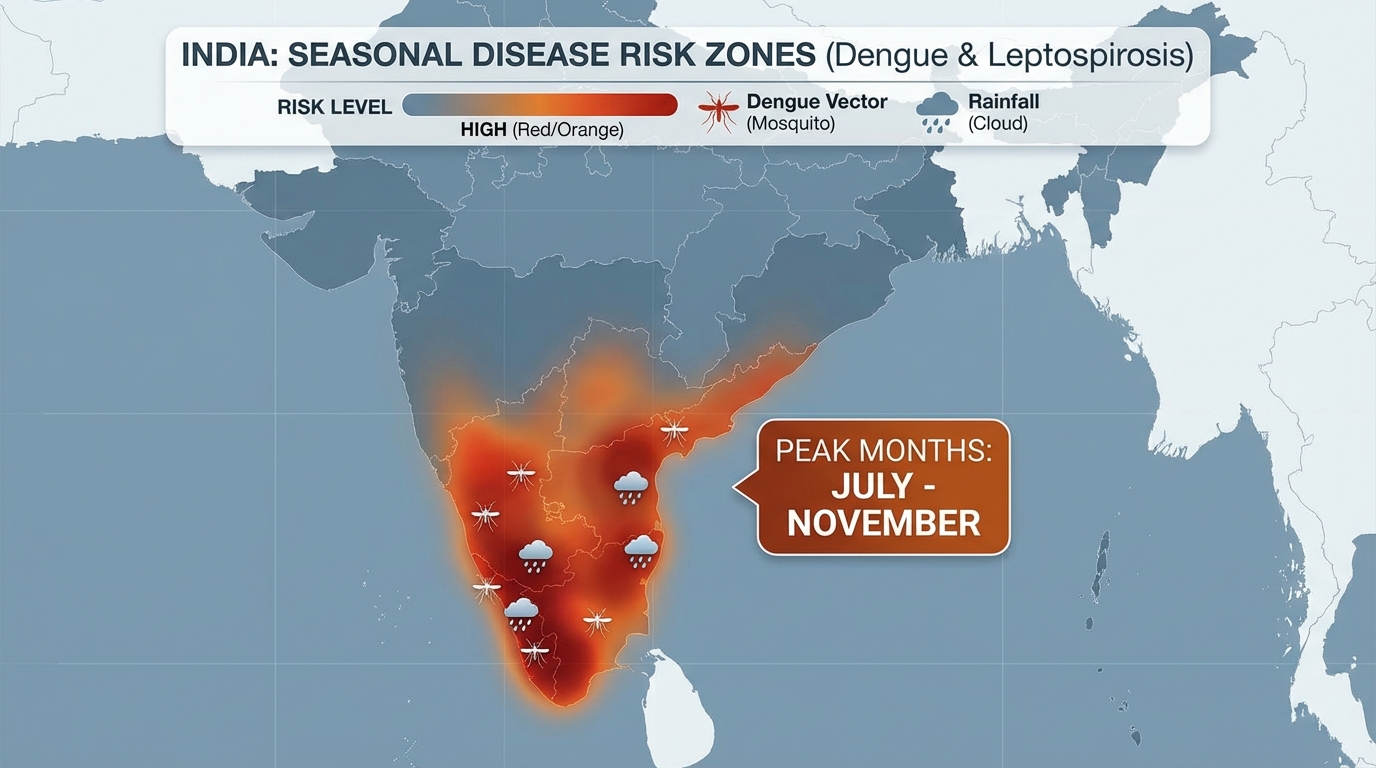
Seasonal ailment prevention in the context of the Indian monsoon requires a sophisticated understanding of vector-borne and water-borne disease dynamics. Proactive mitigation involves timed guidance and the distribution of medical supplies before rainfall windows trigger outbreaks. Research indicates that dengue outbreaks strongly correlate with monsoon seasons, with South Indian states like Tamil Nadu, Karnataka, and Andhra Pradesh historically accounting for approximately 60% of cases during peak cycles.
National health guidance emphasizes that the maximum number of dengue cases typically occurs in the post-monsoon window between July and November. This cyclical pattern necessitates a “predictive health marketing” approach where intervention begins weeks before the first raindrop. Furthermore, the Aedes mosquito, the primary vector for dengue, thrives in stagnant water, making household-level elimination of breeding sources a critical component of any monsoon-focused health strategy.
In states like Kerala, the onset of the monsoon brings recurring surges in both dengue and leptospirosis, requiring region-specific risk planning. By 2026, early-warning models in India have advanced to predict dengue risk up to two months in advance. These models utilize rainfall and humidity data to identify high-risk zones, allowing wellness brands to time their “monsoon immunity boosters” and educational nudges with surgical accuracy.
Sources:
Predictive Wellness Personalization: The Architecture of Family Health History AI
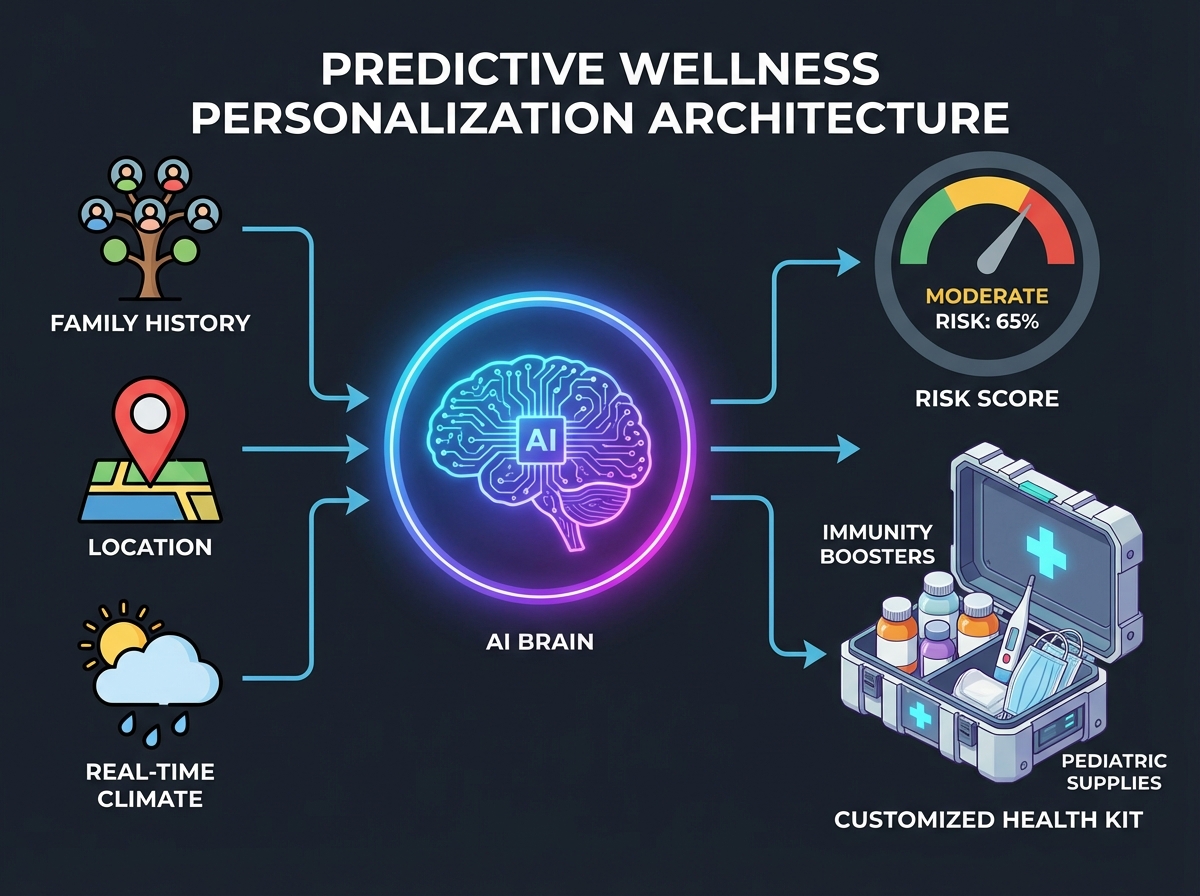
Predictive wellness personalization is the engine that transforms a standard subscription box into a life-saving medical tool. This architecture relies on Machine Learning (ML) models that synthesize family health history AI with real-time location-based health recommendations. By analyzing hereditary risks—such as asthma or type-2 diabetes predisposition—alongside pediatric and geriatric flags, the system generates a unique risk score for every household.
The personalization process begins with data inputs that include rolling 4–8 week local incidence trends for diseases like leptospirosis and malaria. Location-based health recommendations are then refined using PIN/postcode data, district-level alerts, and micro-climate indices. For instance, a household in a high-humidity coastal region with a history of respiratory issues will receive a kit variant focused on antifungal care and nebulizer supplies.
Risk scoring rules are applied to determine the specific “wellness box customization” profile. A high dengue risk score combined with a pediatric flag triggers the inclusion of enhanced repellents and larvicide awareness inserts. Conversely, a water-borne risk score paired with a geriatric flag prioritizes ORS, antifungal foot care, and specialized wound-care antiseptics, ensuring that the most vulnerable family members are protected.
By 2026, the integration of AI in healthcare has reached a tipping point, with 40% of Indian clinicians now utilizing AI-driven tools for patient discovery and risk assessment. This technological maturity allows wellness brands to move beyond generic “one-size-fits-all” kits. Instead, they offer dynamic subscriptions where the contents of the box evolve in real-time based on the shifting environmental and biological landscape of the subscriber.
The AI Video Content Engine: Driving Adherence through Seasonal Health Kit Videos
The primary challenge in preventive healthcare is not the lack of tools, but the lack of adherence. AI video strategies solve this by providing engaging, personalized education that guides users through their monsoon wellness journey. Seasonal health kit videos serve as digital unboxing experiences, demonstrating how to use specific SKUs, such as pediatric dosing tools or specialized repellents, based on the user's actual kit contents.
Preventive care subscription videos take this a step further by recapping family risk profiles and establishing daily habit routines. These videos might include vaccine reminders or “adherence streaks” to encourage consistent use of immunity boosters. By using “predictive health marketing” tokens—such as the user’s name, city, and local weather alerts—these videos achieve significantly higher engagement rates than traditional text-based instructions.
Regional health risk videos provide hyperlocal outbreak explainers, often featuring map overlays that show district-level risk tiers. These videos can be triggered by sudden spikes in local disease patterns, providing immediate precautions and directions to the nearest clinics or labs. In 2026, 78% of Indian consumers prefer these video-based health instructions over printed manuals, citing better clarity and trust.
The storyboard for a typical seasonal health kit video begins with a local weather risk line, such as “Pune’s monsoon peaks next week; dengue risk is elevated.” It then transitions to a tailored SKU demonstration, showing exactly how to apply the provided antifungal powder or set up a mosquito net. The video concludes with a “when-to-seek-care” checklist and a WhatsApp tap-to-reorder CTA, closing the loop between education and action.
Healthcare Subscription Automation: Scaling with TrueFan AI
Scaling a personalized health service to millions of households requires a robust healthcare subscription automation stack. This involves a seamless pipeline from Customer Data Platform (CDP) segmentation to real-time video rendering and delivery. Platforms like the TrueFan AI Enterprise AI Video Platform enable healthcare startups to bridge the gap between generic advice and hyper-personalized engagement by automating the creation of millions of unique video messages.
The technical integration involves triggering webhooks based on lifecycle events, such as a pre-monsoon alert or a shipment notification. Once a trigger is received, the system passes user data—including name, risk tier, and language preference—to the video engine. TrueFan AI’s 175+ language support for vernacular video automation and personalised celebrity video campaigns allow brands to deliver localized health warnings that resonate with diverse regional demographics, ensuring that a user in rural Kerala receives advice in Malayalam while a user in Delhi hears it in Hindi via the Hindi AI video marketing guide.
Solutions like TrueFan AI demonstrate ROI, as summarized in the AI Impact Summit 2026 findings, through increased subscription retention and higher adherence to preventive health protocols. By delivering personalized videos in under 30 seconds, brands can respond to emerging health threats in real-time. This agility is crucial during the monsoon, where a sudden rainfall surge can change the risk profile of a district within hours, necessitating immediate and localized communication.
Furthermore, the automation stack ensures that all communications are compliant with data privacy standards like ISO 27001 and SOC 2, detailed in the Enterprise AI Video Platform guide. By segregating PII (Personally Identifiable Information) and using consent-first models, healthcare brands can build trust using best practices such as C2PA watermarking in AI video marketing. The ability to perform “virtual reshoots”—updating video lines for shifting health advisories without new filming—further accelerates the speed-to-market for critical health information.
Wellness Box Customization & Family Wellness Subscription Marketing
A successful “family wellness subscription marketing” strategy hinges on the perceived value of the customization. Monsoon health subscription boxes are categorized into archetypes based on the household profile. Core SKUs typically include monsoon immunity boosters like Vitamin C, Zinc, and probiotics, alongside essential repellents and antiseptics. However, the true value lies in the add-ons tailored to specific demographics.
For pediatric profiles, kits include child-safe repellents, illustrated hygiene cards, and precise dosing syringes. Geriatric profiles, on the other hand, focus on skin barrier creams, antifungal foot care, and fall-safe bath mats to prevent injuries on slippery monsoon floors. Chronic condition add-ons might include diabetic-friendly lozenges or salt-balanced hydration solutions, ensuring that the kit addresses the subscriber's entire health history.
The go-to-market strategy for these subscriptions often involves regional influencers who can explain the kits in local languages, building a bridge of trust. Community health groups and pharmacy partners also play a vital role in distribution. By 2026, predictive health marketing spends are forecasted to increase by 40%, as brands realize that localized, profile-specific messaging drives significantly higher conversion rates than broad-spectrum advertising.
Retention is managed through “streak rewards” for video completion and referral credits for family sign-ups. By gamifying the preventive care process, wellness brands can maintain high engagement levels throughout the four-month monsoon window. The ultimate goal is to move the consumer from a one-time purchase to a longitudinal health partnership, where the subscription box becomes an indispensable part of the family’s seasonal preparation.
Compliance, Measurement, and Strategic FAQs
In the highly regulated world of healthcare, compliance and data safety are non-negotiable. Every “monsoon health subscription box” must be accompanied by clear disclaimers stating that the content is educational and not a substitute for professional medical diagnosis. Data minimization practices, such as rotating tokens and encrypting data at rest, are essential for maintaining the integrity of family health history AI.
Measurement of success involves tracking both commercial and clinical proxy metrics. Personalization metrics, such as the match rate of family health data, are analyzed alongside video engagement stats like 50% and 100% completion rates. Commercial metrics include subscription conversion and the first-90-day adherence rate. Clinical proxy metrics, such as a reduction in urgent consultations during peak monsoon weeks among subscribers, provide the ultimate validation of the service's efficacy.
As we look toward the future of “healthcare subscription automation,” the focus will remain on refining the predictive models and expanding the reach of personalized education. By 2026, the digital health technology market is estimated to reach over $300 billion, with AI-powered clinical decision support at its core. This growth reflects a global shift toward a more resilient, proactive, and personalized healthcare system.
Disclaimer: This content is for educational purposes only and does not constitute medical advice, diagnosis, or treatment. Always seek the advice of your physician or other qualified health provider with any questions you may have regarding a medical condition. Dosing and clinical guidance should be reviewed by medical professionals before application. Data protection is managed via ISO 27001/SOC 2 compliant processes.
Recommended Internal Links
- Enterprise AI Video Platform: Real-Time API for Scale
- Vernacular Video Automation India: Scale Multilingual Reach
- AI Celebrity Video Marketing India
- AI Impact Summit 2026 TrueFan: Enterprise AI Video ROI
- Enterprise AI Video Platform: Secure, Scalable Solutions
- C2PA Watermarking in AI Video Marketing: Enterprise Guide
- Hindi AI Video Marketing: Vernacular Growth Strategies
Frequently Asked Questions
How do monsoon health subscription boxes determine my specific risk level?
The system uses a combination of your family health history AI (including age and pre-existing conditions) and location-based health recommendations. By analyzing real-time data on local disease patterns and weather forecasts, the platform assigns a risk score that dictates which “monsoon immunity boosters” and educational videos are included in your kit.
Is my family's health data kept private and secure?
Yes, data security is a top priority. All personal and medical information is handled according to ISO 27001 and SOC 2 standards. The platform uses a consent-first model, ensuring that your data is only used to personalize your health videos and is never shared with unauthorized third parties.
Can I customize the contents of my wellness box?
While the core components are determined by predictive wellness personalization, most services allow for “wellness box customization.” You can add specific items for pediatric or geriatric care, or include additional SKUs based on your family's unique needs, such as chronic condition management tools.
What languages are the seasonal health kit videos available in?
To ensure maximum reach and understanding across India, the videos are available in over 175 languages. For more details on vernacular creation, see the Hinglish and multilingual video creation guide.
What should I do if I experience symptoms despite using the kit?
The kit and its accompanying preventive care subscription videos are designed for education and prevention, not treatment. Every video and box insert includes a “when-to-seek-care” checklist. If you or a family member experience emergency signs or persistent symptoms, consult a qualified medical professional immediately.
How does predictive health marketing benefit me as a subscriber?
Predictive health marketing ensures that you receive the right information and supplies at the right time. Instead of generic ads, you receive regional health risk videos that alert you to local outbreaks before they reach your neighborhood, allowing you to take immediate preventive action.
Are the products in the monsoon health subscription boxes doctor-reviewed?
Yes, all SKUs and clinical guidance provided in the videos are reviewed by medical affairs teams. This ensures that the “monsoon immunity boosters” and hygiene protocols meet current medical standards and are safe for the intended demographic profiles.