Nano-influencer marketing Bharat 2026: The enterprise playbook for festival-led tier-3/4 growth
Estimated reading time: ~12 minutes
Key Takeaways
- Tier-3/4 growth in 2026 hinges on nano-influencer trust and vernacular relevance during regional festivals.
- Grassroots automation enables orchestration of 10,000+ creators with multilingual briefs, moderation, and payouts.
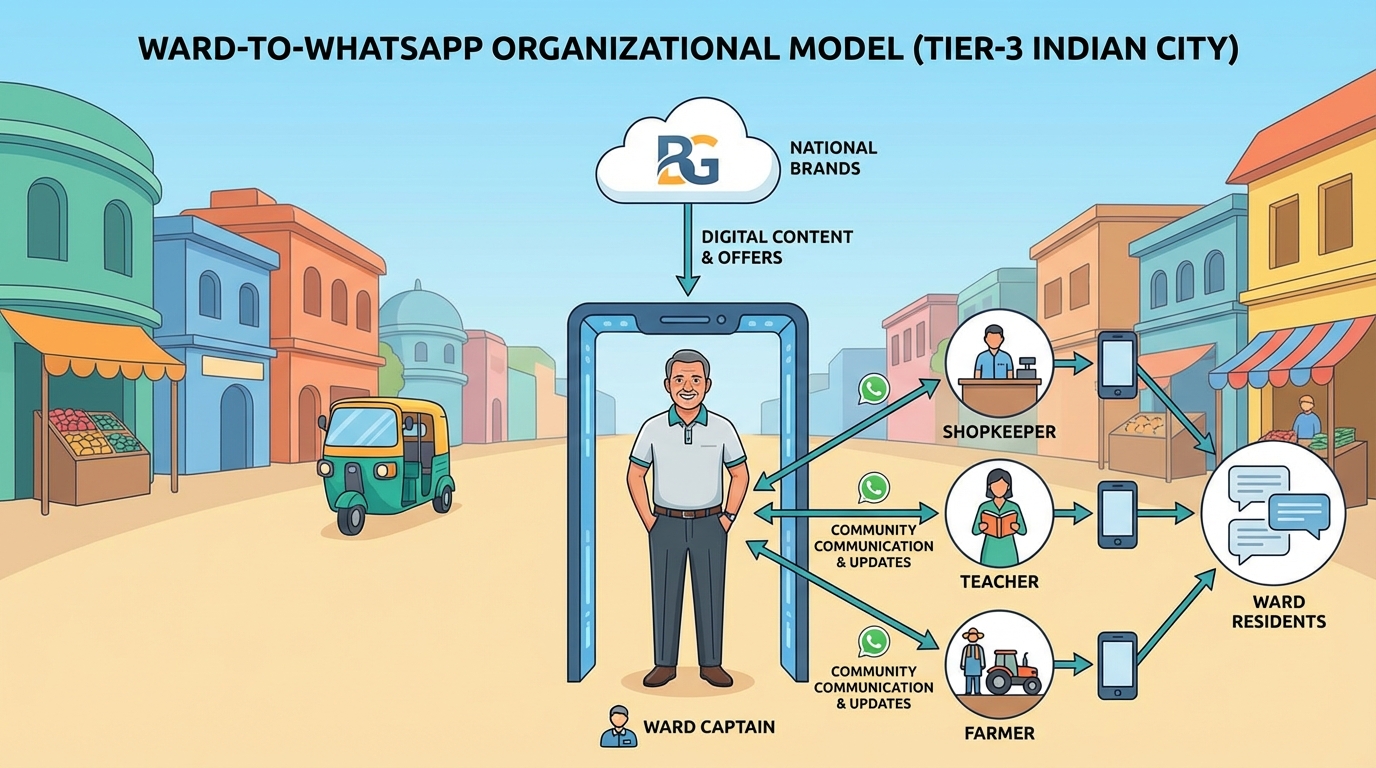
- Adopt a ward-to-WhatsApp model with local captains to recruit, brief, and activate hyperlocal creators.
- Measurement must tie content to retail via geo-holdouts, creator codes, and WhatsApp deep links.
- Use a festival-first content playbook with dialect hooks, micro-benefits, local social proof, and clear CTAs.
Meta Description: Scale authentic local content with 10,000+ nano-influencers. Learn tier-3 city influencer activation, grassroots marketing automation India, vernacular videos, and grassroots ROI measurement.
URL Slug: /blogs/nano-influencer-marketing-bharat-2026
The landscape of Indian digital commerce has undergone a seismic shift as we move into 2026. For regional marketing teams and rural expansion leaders, the challenge is no longer just “reaching” the next billion users, but earning their trust within a fragmented, vernacular-first ecosystem. Nano-influencer marketing Bharat 2026 has emerged as the definitive strategy for brands aiming to penetrate tier-3 and tier-4 markets during high-stakes regional festivals. Explore our nano-influencer tier-3 marketing 2026 guide.
Nano-influencers—creators with 1,000 to 10,000 followers—are the new gatekeepers of community-driven brand adoption. Unlike celebrity endorsers, these creators command neighborhood-level trust, delivering authentic local content creation that resonates with the specific cultural nuances of a district or ward. In Bharat, trust travels neighbor-to-neighbor; during festivals like Pongal, Bihu, or Chhath, vernacular nano voices are the primary drivers that convert passive attention into measurable retail action. This playbook provides the enterprise-grade framework required to orchestrate 10,000+ creators, automate complex operations, and prove grassroots ROI.
Sources:
- Web Marketing Academy India – Influencer Marketing in 2026
- IAMAI Media – India’s Internet User Base 2025-26
Why Bharat’s nano-influencers win trust in 2026
In the 2026 marketing ecosystem, the “relatability gap” between macro-influencers and rural consumers has widened. Data indicates that nano-influencers in India now drive engagement rates of 3.4% to 4%, significantly outperforming the 1.5% to 2% seen among macro-influencers. This is not merely a statistical anomaly; it is a reflection of the structural shift toward local language content marketing. Consumers in tier-3 and tier-4 cities are 5x more likely to engage with content delivered in their specific regional dialect, featuring rituals and landmarks they recognize from their daily lives.
The dominance of short-form video platforms like YouTube Shorts, ShareChat, Moj, and Josh, coupled with the ubiquity of WhatsApp Channels, has created a “hyper-local discovery” engine. In these environments, a nano-influencer is not a distant star but a “mohalla” (neighborhood) authority—a local teacher, a successful farmer, or a respected shopkeeper. This proximity allows for a level of social proof that traditional advertising cannot replicate. Furthermore, the cost-efficiency of nano-influencers is unparalleled; enterprises can often activate a network of 100 nano-creators for the same investment as a single mid-tier influencer, achieving 10x the geographic and cultural spread.
As India’s internet user base crosses the 950 million mark, the growth is predominantly led by rural markets where vernacular preference is absolute. Platforms like TrueFan AI enable enterprises to bridge this gap by providing the infrastructure to manage thousands of these localized relationships simultaneously. By focusing on nano-influencers, brands are not just buying impressions; they are embedding themselves into the social fabric of Bharat through authentic local content creation.
Sources:
- Harnium – Marketing on Steroids: Nano Influencers
- Brandly Global – 10 Best Influencer Marketing Trends India 2026
- Adgully – Tier-2/3 Creators Scale Opportunity
- Benchmark Company – Structural Shift in India Marketing 2026
Tier-3 city influencer activation: Mapping the ward-level strategy
Executing a successful tier-3 city influencer activation requires a departure from centralized, metro-centric planning. It demands a “ward-to-WhatsApp” organizational design. See the detailed tier-3 activation guide. The first step is mapping the target geography not just by city, but by district, ward, and neighborhood clusters. This granular approach allows brands to identify “neighborhood influencer partnerships” that align with local commerce hubs, such as kirana clusters, tuition centers, and coaching institutes.
To operationalize this at scale, enterprises are adopting a “Captain” model. By appointing 1–2 ward captains—individuals with high local connectivity—brands can manage the recruitment and compliance of dozens of nano-creators within a specific radius. These captains serve as the bridge for weekly briefs, field activations, and ensuring that content reflects the local “bol-chaal” (vernacular nuance). This structure is essential for small town engagement strategies that aim to link digital content with on-ground reality, such as store-front QR journeys or local sponsorships at village melas.
The activation process involves:
- District Mapping: Identifying high-potential rural hubs using pin-code level sales data.
- Cluster Identification: Pinpointing specific wards where community leaders (SHG members, ASHA workers, or local entrepreneurs) hold sway.
- Hyperlocal Influencer Onboarding: Recruiting creators who already command trust within these clusters.
- O2O (Online-to-Offline) Loops: Creating content that drives users to a specific local dealer or kirana store, often using WhatsApp as the primary distribution and conversion channel.
Sources:
Grassroots marketing automation India: Scaling to 10,000 creators
The primary barrier to nano-influencer marketing has historically been the “management tax”—the sheer operational overhead of managing thousands of individual creators. This is where grassroots marketing automation India becomes a critical enterprise requirement. To manage 10,000+ creators across 20+ states and 175+ dialects, brands need an automated stack that handles everything from discovery and brief generation to vernacular localization and payouts. Learn about tier-2 festival commerce automation and the regional new year commerce playbook.
TrueFan AI's 175+ language support and Personalised Celebrity Videos provide a glimpse into how AI-driven automation is solving the localization challenge. For a pan-India festival campaign, an enterprise can create a single master video template. The automation engine then uses APIs to mass-personalize these videos, updating local store mentions, specific offer lines, and even dialect-specific greetings. Virtual reshoots allow brands to update offer details or CTAs across thousands of videos without requiring the creators to film new footage, drastically reducing the “time-to-market” during fast-moving festival windows.
An enterprise automation blueprint for 2026 includes:
- Automated Briefing: Generating thousands of unique scripts based on the creator's location and the specific festival ritual being celebrated.
- Multilingual Localization: Using AI to ensure that a creator in rural Tamil Nadu and a creator in North Bihar are delivering the same brand message, but in their respective native tongues with perfect lip-sync.
- Real-time Delivery: Integrating with WhatsApp Business API to push personalized creator content directly into neighborhood WhatsApp groups within seconds of generation.
- Compliance Guardrails: Automated moderation tools that ensure every piece of content meets ASCI guidelines and brand safety standards before it goes live.
Sources:
- TrueFan AI – Enterprise Solutions
- TrueFan – Micro-Influencer Video Automation India 2026
- Brandly Global – Automation Trends 2026
Local language content marketing: The 9-festival playbook
In Bharat, commerce is deeply tied to the calendar of regional festivals. A “one-size-fits-all” Hindi or English campaign will fail to trigger the emotional resonance required for community-driven brand adoption. Effective local language content marketing requires a state-by-state, festival-by-festival strategy that respects local proverbs, rituals, and consumer behavior. Explore the regional new year commerce guide, Ugadi marketing campaigns 2026, and Baisakhi marketing campaigns 2026.
| Festival | Region | Key Creative Angle | Recommended Format |
|---|---|---|---|
| Pongal | Tamil Nadu | Focus on “Harvest & Prosperity”; kitchen/home upgrades. | 45s Demo: Using product in traditional cooking. |
| Makar Sankranti | North/West | “New Beginnings”; focus on health and family gifting. | 30s Greeting: Neighborhood offer for local retail. |
| Bihu | Assam | Community celebration; focus on apparel and FMCG. | 15s Referral: “Tag a neighbor” for festive discount. |
| Gudi Padwa | Maharashtra | High-value purchases (Gold, Auto, Tech). | 60s Testimonial: “Why I bought X this Padwa.” |
| Ugadi | KA/TS/AP | Traditional rituals; focus on food and home decor. | 30s How-to: Preparing for the festival with Brand X. |
| Onam | Kerala | Grand feasts and homecoming; focus on electronics. | 45s Unboxing: Local language review of festive SKU. |
| Durga Puja | West Bengal | Pandal hopping; focus on fashion and beauty. | 15s Short: “Get Puja-ready” with ward-level store link. |
| Chhath Puja | Bihar/UP | Purity and devotion; focus on staples and essentials. | 30s Trust Video: Local leader endorsing brand quality. |
| Diwali | Pan-India | Gifting and light; focus on everything. | Multi-variant: Personalized greetings via WhatsApp. |
Each of these campaigns must follow a strict script architecture: a greeting hook in the local dialect, a micro-benefit aligned with the specific ritual, social proof from a recognizable local figure, and a clear CTA linked to a WhatsApp order or a local store visit.
Sources:
- TrueFan – Regional Festival Marketing Playbook
- Buzzinly – India Creator Economy 2026
- Benchmark Company – Structural Shift in India
Rural trust building videos: Formats and distribution
Creating rural trust building videos is an exercise in radical simplicity and technical optimization. In tier-4 villages, data bandwidth is often limited, and feature phones are still prevalent. Content must be designed for a “low-bandwidth reality.” This means vertical 9:16 videos, 720p resolution, and a target file size of less than 8MB to ensure seamless sharing over WhatsApp.
The most effective formats for rural market penetration videos include:
- The Neighbor Testimonial (30–45s): A peer-led video where a local resident explains how a product solved a specific problem (e.g., a new fertilizer increasing yield or a fintech app simplifying milk payments).
- The Ritual Demo (45–60s): Showing the product in use during a local festival or daily routine. This grounds the product in the user's reality.
- The Ward-Only Offer (15–30s): A time-bound festive discount that is only valid at a specific local kirana store, creating a sense of exclusivity and urgency.
- The Community Service Recap: Brands that sponsor local cleanliness drives or school events can use nano-influencers to document these acts, building long-term brand equity.
Distribution must be multi-channel but WhatsApp-centric. While YouTube Shorts and ShareChat are excellent for discovery, the “conversion” happens in the WhatsApp inbox. Using WhatsApp deep links with pre-filled CTAs allows a rural user to click a link in a video and immediately start a chat with a local dealer, bypassing the friction of a complex website. Learn more about WhatsApp catalog video marketing.
Sources:
- Harnium – Nano Influencer Advantages
- Web Marketing Academy India – Authenticity and Format Guidance
- IAMAI Media – Rural Internet Growth
Grassroots ROI measurement: Proving value to the enterprise
For the modern CMO, the success of a Bharat campaign cannot rest on “vanity metrics” like likes or views. Grassroots ROI measurement requires a framework that connects top-of-funnel creator content to bottom-of-funnel retail outcomes. This is achieved through a “KPI Ladder” that tracks the user journey from a vernacular video view to a verified purchase. See micro-moments marketing automation 2026.
The enterprise measurement framework includes:
- Geo-Holdout Designs: Withholding influencer activity in specific “control” wards to measure the incremental sales uplift in “test” wards.
- Coupon Code Splits: Assigning unique, ward-level or creator-level coupon codes that are tracked at the point of sale (POS) in local kirana stores.
- WhatsApp Attribution: Using unique deep-link variants for every creator to track which nano-influencer is driving the most inquiries or “Add to Cart” actions on WhatsApp commerce bots.
- Statistical Rigor: Solutions like TrueFan AI demonstrate ROI through integrated analytics dashboards that provide real-time visibility into per-creator and per-ward performance, allowing for rapid iteration of scripts and creative assets.
By moving beyond national-level averages and focusing on district-level incrementality, enterprises can justify the scale of 10,000-creator programs. This data-first approach ensures that every rupee spent on grassroots marketing automation India is tied to a measurable increase in market share within Bharat's emerging clusters.
Sources:
- Brandly Global – Data-First Influencer Strategies 2026
- Adgully – Scale via Micro/Nano in Bharat
- ASCI – Privacy & Progress Report
Conclusion
The future of brand growth in India lies in the heart of Bharat, but winning this market requires more than just a presence—it requires a localized, trust-based strategy. By leveraging nano-influencer marketing Bharat 2026, enterprises can break through the noise of traditional advertising and build genuine connections within local communities. When these efforts are powered by grassroots marketing automation India, the result is a scalable, efficient, and highly effective engine for community-driven brand adoption.
As regional festivals continue to be the primary catalysts for consumer spending, the ability to deploy 10,000+ authentic, vernacular voices at the right moment is a significant competitive advantage. Success in 2026 belongs to the brands that can think globally but act hyper-locally, ward by ward.
CTA: Ready to scale your Bharat strategy? Book a TrueFan AI Enterprise Demo to see how we can help you orchestrate your 10,000-creator regional plan with precision and speed.
Secondary CTA: Download the Bharat 2026 Nano-Influencer Festival Playbook (PDF) for a detailed state-by-state breakdown of creative strategies and compliance checklists.
Frequently Asked Questions
What is nano-influencer marketing Bharat 2026?
It is the enterprise-grade orchestration of creators with 1,000–10,000 followers across tier-3 and tier-4 cities. The goal is to deliver vernacular, trust-led, short-form video content tied to regional festivals, managed through automation to drive measurable ROI and community-driven brand adoption.
How do I run a tier-3 city influencer activation?
The process involves mapping target geographies at the ward level, recruiting local “captains” to manage creator clusters, deploying vernacular briefs via WhatsApp, and ensuring all content includes clear ASCI-compliant disclosures in the local language.
What is grassroots marketing automation India?
This refers to the use of AI and API-driven platforms to automate the discovery, onboarding, content generation, and payout of thousands of nano-influencers. It allows a central marketing team to manage a 10,000-creator network with the same effort previously required for a dozen macro-influencers.
How can I ensure ASCI compliance for vernacular nano-influencer content?
Every video must include clear disclosures like #ad or #collab in the same regional language as the content. For voice-only or audio-heavy formats, the disclosure must be spoken. Platforms like TrueFan AI provide built-in moderation guardrails to ensure these standards are met across every piece of content.
How do you measure grassroots ROI?
Measurement is done through a combination of geo-holdout tests, unique ward-level coupon codes, and WhatsApp deep-link tracking. This allows brands to attribute specific sales uplifts and lead generation to individual creators or geographic clusters.