
Post-purchase validation videos: The AI playbook to prevent buyer’s remorse and cut returns
Estimated reading time: ~9 minutes
Key Takeaways
- Post-purchase validation videos neutralize cognitive dissonance and reduce buyer’s remorse before it triggers returns or COD refusals.
- Hyper-personalized, context-aware videos (SKU, location, ETA) deliver emotional and logical reassurance that boosts CSAT.
- WhatsApp-led channel orchestration in the first 72 hours (T+10m, T+24h, T+48–72h) maximizes open rates and impact.
- High-impact formats—order celebration, social proof, and unboxing anticipation—reinforce purchase confidence.
- Enterprises can scale with TrueFan AI integrations, achieving measurable ROI via return-rate and RTO reductions.
1. The Purchase Validation Psychology: Neutralizing Cognitive Dissonance
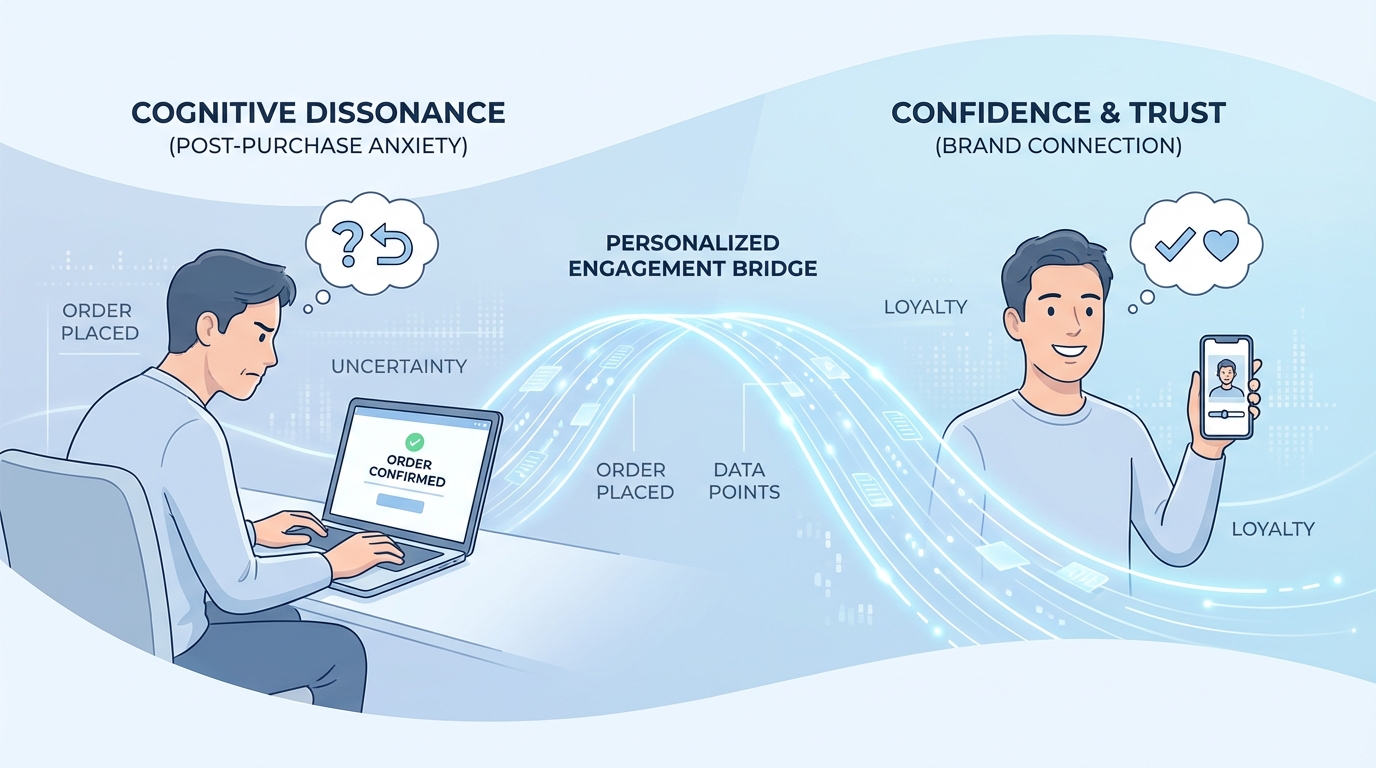
The “confidence gap” in Indian e-commerce is a multi-billion dollar leak that most brands fail to plug until it is too late. By implementing post-purchase validation videos, enterprise leaders can finally address the psychological dissonance that occurs the moment a customer hits the “buy” button. This proactive strategy uses hyper-personalized AI content to reinforce purchase decisions, effectively neutralizing buyer’s remorse before it manifests as a return request or a cancelled Cash-on-Delivery (COD) order.
In the high-stakes landscape of 2026, where Indian online retail has matured into a behavior-led growth phase, the post-checkout experience is the new frontier for competitive advantage. As high-ticket categories like premium electronics and luxury fashion dominate festive GMV, the risk of cognitive dissonance has never been higher. Platforms like TrueFan AI enable brands to bridge this gap by delivering tailored video messages within minutes of a transaction, ensuring the buyer feels celebrated rather than skeptical.
The moment a transaction is completed, a buyer enters a state of heightened emotional vulnerability known as post-purchase dissonance. This psychological phenomenon is characterized by the internal conflict between the desire for the product and the fear of a poor financial decision. In the Indian context, this is exacerbated by price sensitivity and the prevalence of COD, where the “moment of payment” is deferred, allowing doubt to fester for days.
Purchase validation psychology focuses on stabilizing this emotional state through immediate, authoritative affirmation. By using cognitive dissonance marketing automation, brands can trigger personalized videos that mirror the buyer’s excitement while providing logical justifications for the purchase. This dual-track approach—addressing both the heart and the head—is essential for converting a “shoppers’ high” into long-term brand loyalty.
Furthermore, emotional validation e-commerce strategies recognize that a purchase is often an extension of a buyer’s identity. When a customer in a Tier-3 city invests in a high-AOV smartphone, they aren’t just buying hardware; they are buying a status upgrade. Validation videos that acknowledge this milestone—using the buyer’s name and specific product variant—provide the social and emotional “seal of approval” required to prevent the order from being rejected at the doorstep.
Sources:
- Unicommerce: 10 Backend Operational Strategies to Power E-commerce Festive Sales 2025
- Redseer: Festive Season 2025 - What to Expect and Action
2. Defining Post-Purchase Validation Videos and Personalization Scope
To understand the impact of this technology, one must define the scope of post-purchase validation videos beyond simple “Thank You” notes. These are dynamic, AI-generated assets that integrate real-time order data to create a one-to-one communication channel. Unlike generic brand films, these videos are context-aware, referencing the exact SKU, the buyer’s location, and the estimated delivery timeline to create a sense of transparency and control.
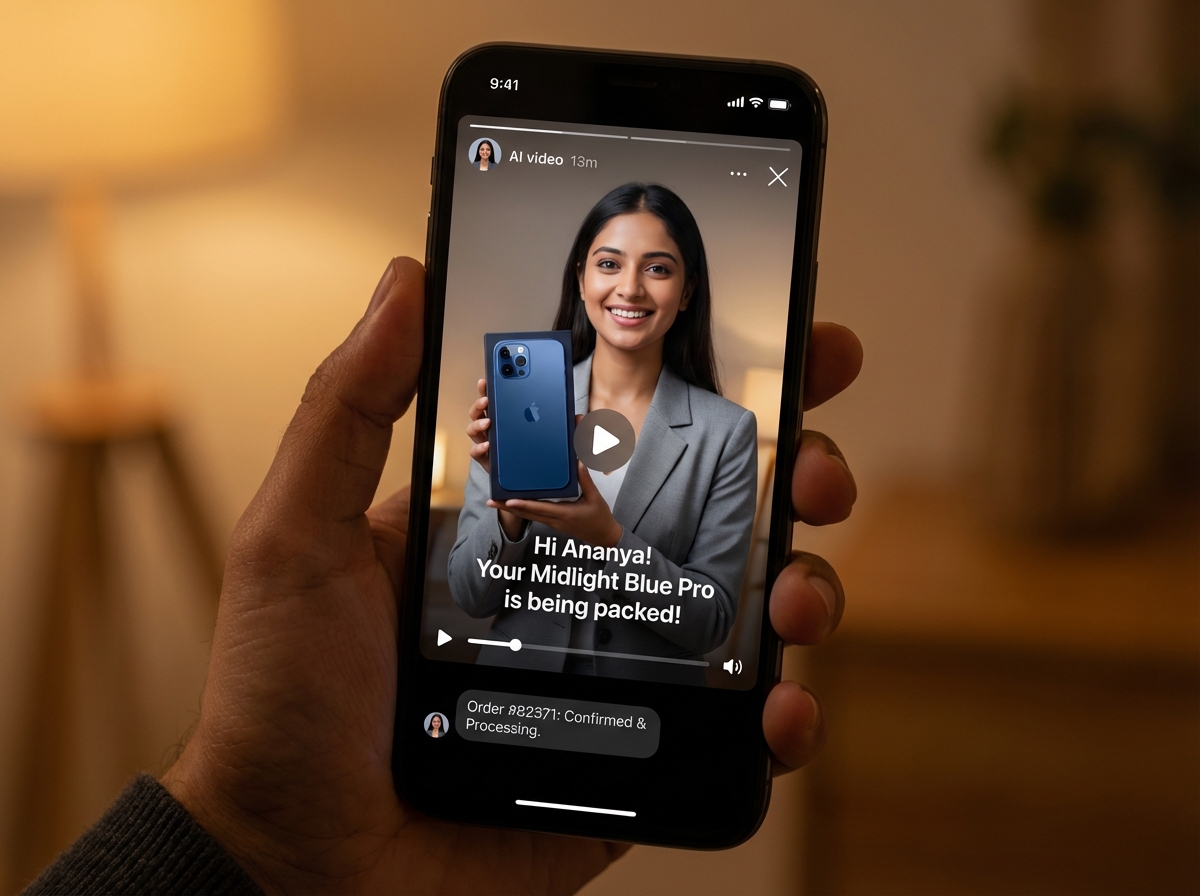
Purchase confirmation personalization is the engine behind these videos. By pulling data from the Order Management System (OMS), the AI can generate a video where a brand ambassador or a celebrity mentions the customer by name and confirms their specific choice. For instance, “Hi Rajesh, your Midnight Blue 512GB Pro Max is being prepared for delivery to Indore,” carries significantly more weight than a standard automated email.
Beyond confirmation, order celebration videos serve to anchor the dopamine hit of the purchase. These videos frame the transaction as a “win” for the customer, using high-energy visuals and congratulatory scripts. Simultaneously, purchase justification content is woven in, providing technical specifications, durability proof, or sustainability credentials that the buyer can use to defend their purchase to themselves—or to skeptical family members—during the waiting period.
Sources:
3. Why Return Rate Reduction AI is Critical for India 2026
By 2026, the Indian e-commerce market is projected to surpass $160 billion, with Tier-2 and Tier-3 cities accounting for over 50% of new shoppers. This demographic shift brings a unique set of challenges, specifically a higher reliance on COD and a lower threshold for delivery anxiety. Return rate reduction AI has become a mandatory operational pillar for enterprises looking to maintain margins in this environment.
The reality of Indian retail is that return rates often hover between 15% and 20%, spiking to 25% during major festive sales like Diwali or Republic Day. A significant portion of these returns are “preventable”—driven by size uncertainty, color mismatch fears, or simple cold feet. By deploying post-purchase validation videos, brands can provide “anticipatory guidance,” showing the product in a real-world context that calibrates the buyer’s expectations before the package arrives.
Moreover, emotional validation e-commerce acts as a buffer against the “RTO (Return to Origin) Bulge.” When a customer receives a personalized video explaining how to set up their new device or how to style their new garment, the perceived value of the item increases. This “Endowment Effect,” triggered digitally, makes the customer feel as though they already own the item, making them far less likely to refuse the delivery or initiate a return.
Sources:
4. High-Impact Formats: From Order Celebration to Social Proof
Effective post-purchase strategies require a variety of video formats tailored to different stages of the 72-hour “remorse window.” The most immediate is the order celebration video, delivered within 10 minutes of checkout. This format focuses on purchase confidence reinforcement, using a warm, high-energy tone to congratulate the buyer. The script should restate the product’s top benefit, ensuring the buyer remembers exactly why they chose it in the first place.
The second critical format is social proof post-purchase. This video is typically sent 24 hours after the order, featuring User-Generated Content (UGC) or testimonial data that matches the buyer’s cohort. For example, if a buyer in Bangalore purchases a premium air purifier, the video might highlight that “95% of Bangalore households who bought this model reported better sleep within a week.” This validates the buyer’s logic by showing they are part of a successful, satisfied community.
Finally, customer satisfaction videos and unboxing anticipation videos prepare the buyer for the physical arrival of the product. These videos include setup checklists, safe handling tips, and a direct line to a “concierge” support channel. By offering a one-tap exchange or alteration path within the video, brands can deflect a full return. Instead of the customer thinking “This might not fit, I’ll just return it,” they think “If this doesn’t fit, I already know how to get it exchanged easily.”
Sources:
- Redseer: Festive Season 2025 - High-Ticket Demand and Reassurance
- TrueFan AI: Case Study on Goibibo +17% Read Rate Uplift
5. Channel Orchestration and Post-Transaction Engagement
The success of post-purchase validation videos depends heavily on timing and channel selection. In India, WhatsApp Business API is the undisputed leader for post-transaction engagement, boasting open rates of over 90%. A multi-channel blueprint for the first 72 hours should look like this:
- T+10 Minutes: WhatsApp and Email delivery of the order celebration video. This provides instant emotional validation and a clear confirmation of the order details, reducing immediate “accidental purchase” cancellations.
- T+24 Hours: Delivery of social proof post-purchase content. This reinforces the rationale behind the purchase just as the initial excitement begins to dip.
- T+48 to 72 Hours: The unboxing anticipation video. This is sent just before the estimated delivery date, providing a “how-to” guide and setting the stage for a positive first-use experience.
This sequence is powered by cognitive dissonance marketing automation, which ensures that the right video reaches the right customer at the moment they are most likely to feel doubt. For high-risk cohorts—such as first-time buyers or those purchasing high-AOV items via COD—the frequency and depth of these touchpoints can be increased. TrueFan AI’s 175+ language support and Personalised Celebrity Videos allow for this level of granular orchestration, ensuring that a buyer in Tamil Nadu receives a message in Tamil that feels culturally and linguistically authentic.
Sources:
6. Implementation Blueprint: Scaling with TrueFan AI
For an enterprise to implement post-purchase validation videos at scale, the infrastructure must be robust enough to handle millions of unique renders without latency. Solutions like TrueFan AI demonstrate ROI through their ability to integrate directly with existing CRM and OMS triggers, allowing for “T+10 minute” delivery SLAs. This speed is crucial; a validation video sent three hours late is often too late to stop a cancellation.
The implementation process begins with a single short shoot—either with a brand mascot, a founder, or an approved celebrity. Using TrueFan’s virtual reshoot technology, this single session can be transformed into infinite variants. The AI swaps names, product details, and even languages with perfect lip-sync and voice retention. This eliminates the need for expensive, recurring production cycles while maintaining a high standard of customer satisfaction videos.
Furthermore, the measurement of these campaigns must move beyond vanity metrics. While video play rates (targeting 60–70% on WhatsApp) are important, the true KPIs are the delta in return rates and the reduction in RTO for COD orders. By A/B testing purchase justification content against social proof, brands can refine their scripts to see which psychological lever most effectively keeps the product in the customer’s hands.
Sources:
Conclusion: The Future of Retention is Personalized and Visual
As we move into 2026, the ability to manage the “post-click” experience will separate the market leaders from the laggards in Indian e-commerce. Post-purchase validation videos are no longer a luxury; they are a strategic necessity for any brand dealing with high return rates and the complexities of a diverse, multi-lingual shopper base. By leveraging purchase validation psychology and AI-driven personalization, enterprises can transform the period between checkout and delivery from a time of doubt into a time of anticipation.
The data is clear: when customers feel seen, celebrated, and supported, they are far less likely to return their purchases. By integrating these automated video flows into the customer journey, brands can protect their margins, boost their NPS, and build a foundation of trust that lasts long after the first unboxing.
Final Research Citations:
- Unicommerce: 2026 Republic Day Trends
- Redseer: Festive Season 2025 Report
- Shiprocket: AI Commerce 2025
- TrueFan AI: Case Studies and Enterprise Capabilities
Recommended Internal Links
- Post-Purchase Engagement Automation: Predictive Video Wins
- Post-Purchase Lifecycle Optimization 2026: Proven Strategies
- Post-purchase loyalty automation India: boost repeat sales
- WhatsApp Business Commerce Automation 2026: Growth Playbook
- Predictive Video Trigger Automation for Post-Purchase CX
- AI Celebrity Video Marketing India: Scalable, Personalized Endorsements
Frequently Asked Questions
How fast can a personalized post-purchase validation video be delivered after checkout?
Using TrueFan AI’s high-performance GPU farms, videos can be rendered in under 30 seconds. This allows enterprises to deliver a personalized message via WhatsApp or email within 10 minutes of the transaction, which is the critical window for preventing immediate buyer’s remorse.
Which customer cohorts see the biggest reduction in return rates?
The most significant impact is seen in high-risk cohorts: first-time buyers, customers purchasing high-AOV items (electronics, luxury fashion), and those opting for Cash-on-Delivery. In these segments, the buyer’s remorse prevention AI provides the necessary reassurance to ensure the delivery is accepted and kept.
Can these videos be delivered in regional Indian languages?
Yes. TrueFan AI supports over 175 languages and dialects. The AI ensures perfect lip-sync and maintains the original speaker’s voice characteristics, allowing brands to connect with Tier-2 and Tier-3 audiences in their native tongue, which significantly boosts trust and CSAT.
How do post-purchase validation videos handle data security and privacy?
TrueFan AI adheres to enterprise-grade security standards, including ISO 27001 and SOC 2 compliance. The system uses consent-first talent pipelines and minimizes data retention, ensuring that customer PII (Personally Identifiable Information) is used only for the specific purpose of video personalization.
What is the typical ROI for implementing AI-driven post-purchase sequences?
Brands typically see a 10–20% relative reduction in return rates on high-risk SKUs within the first 8 weeks. Additionally, there is a measurable uplift in WhatsApp read rates (often +15–20%) and a significant reduction in support tickets related to “order anxiety” or “product mismatch” fears.



