Answer Engine Optimization Video: How SEO Directors Win AI Overviews, Featured Snippets, and Voice Search in 2026
Estimated reading time: ~10 minutes
Key Takeaways
- Answer-first videos with clear, concise openings and structured transcripts win AI Overviews and Suggested Clips.
- Use schema markup (VideoObject, Clip, seekToAction) and timestamps to make key moments easily extractable by search engines.
- Zero-click optimization builds authority by satisfying queries directly in SERPs while boosting brand recall.
- Prioritize multilingual voice search with localized transcripts and natural, conversational scripts.
- Strengthen E-E-A-T with on-camera experts, credible citations, and consistent entity signals across platforms.
In the rapidly shifting landscape of digital discovery, answer engine optimization video has emerged as the definitive operating system for AI-driven search. As we navigate 2026, the traditional “page-first” SEO model has been superseded by an “answer-first” architecture where visibility is dictated by a brand’s ability to provide immediate, structured, and authoritative solutions. Answer engine optimization video is the strategic practice of engineering video content, transcripts, and schema so that AI Overviews, featured snippets, and voice assistants can extract and cite precise timestamps as the primary answer.
The 2026 search reality in India is defined by the dominance of AI Overviews (AIOs), which now appear in over 85% of informational queries. This shift has elevated the importance of AEO, forcing brands to move beyond simple keyword targeting toward entity-based authority and multimodal clarity. By optimizing for the “moment of truth”—the exact second a user’s question is answered—enterprise SEO directors can capture over 50% of eligible zero-click queries, ensuring their brand remains the cited authority in an increasingly conversational search ecosystem.
Sources:
1. The Evolution of Search: Why Answer Engine Optimization Video is the New Standard
The fundamental shift in 2026 search behavior is the transition from browsing a list of links to receiving a synthesized, multimodal response. Answer engine optimization video addresses this by ensuring that video assets are not just “discoverable” but “extractable.” When a search engine can pinpoint the exact 10-second window where a complex question is answered, that video becomes the cornerstone of the AI Overview.
For enterprise brands in India, this means prioritizing clarity in the first 12 seconds of every video. Indian agencies now highlight AI Overviews as a critical ranking layer, where AEO elevates brands that deliver structured, answer-centric content supported by clean, verbatim transcripts. Success is no longer measured solely by site traffic, but by visibility in AIO citations, Suggested Clips, and People Also Ask (PAA) inclusions.
To achieve E-E-A-T video authority, content must be mapped to specific entities and user intents. In 2026, Google’s algorithms are highly sensitive to the “Experience” and “Expertise” signals found within video frames—such as the presence of recognized subject matter experts and the use of on-screen data visualizations. This technical depth ensures that the AI perceives the video as a primary source of truth rather than a secondary media asset.
Sources:
- Techmagnate (India): AI SEO trends for 2026
- Deftsoft (India): Ranking in AI Overviews with structured answers
2. Mastering AI Overviews Video SEO and Zero-Click Optimization Strategies
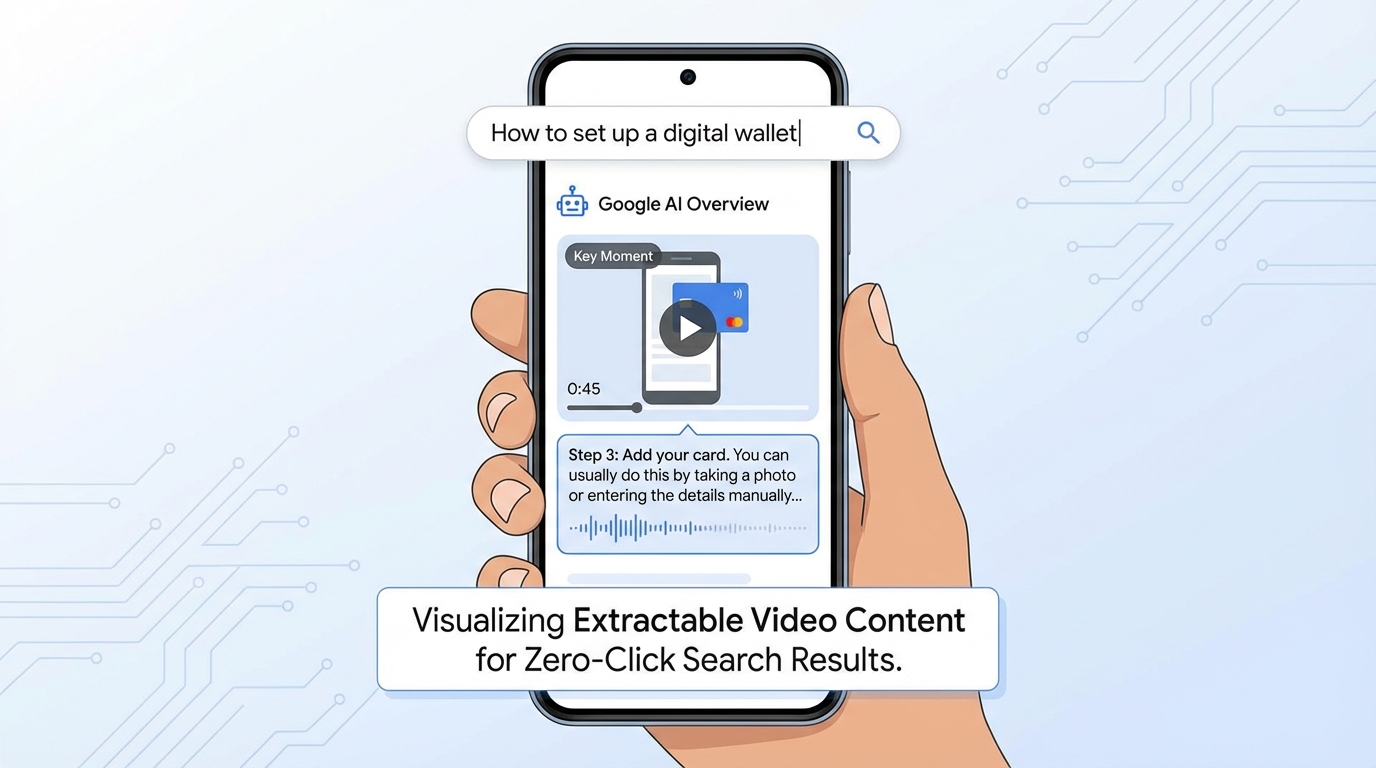
Google’s AI Overviews frequently cite YouTube and web-hosted videos that utilize clear chapters and answer-first structures. To win in AI Overviews video SEO, your production workflow must align with how Google composes these answers. The system often starts playback at the specific timestamp that matches the user’s intent, effectively creating a “Suggested Clip” on the fly.
Implementing zero-click optimization strategies requires a counter-intuitive approach: satisfying the user’s need entirely within the search results page. While this may seem to reduce site traffic, it builds massive brand recall and trust. In 2026, over 65% of mobile searches result in zero clicks, making it imperative that your brand is the one providing the answer, even if the user never visits your domain.
To maximize AIO citation likelihood, publish to YouTube first to leverage Google’s native indexing, then mirror that content on-site with identical transcripts and schema. Ensure the first 200 characters of your video description contain a concise, one-sentence answer to the primary query. This “summary-first” approach allows AI models to quickly parse the relevance of the video without needing to process the entire audio file.
Sources:
- 360 Digital Idea (India): Practical tips for AI Overview citations
- ResultFirst (India): Video optimization strategies
3. Engineering Featured Snippets and Suggested Clips for Maximum Visibility
The “Suggested Clip” is the ultimate prize in featured snippet video content engineering. This occurs when Google auto-selects a segment of your video to answer a “How-to” or “What is” query. To trigger this, your video must be chaptered with names that mirror user phrasing exactly, such as “How to set up a digital wallet” or “Pros and cons of EV charging.”
Effective People Also Ask targeting involves mining the PAA ecosystem for your target topics and producing micro-clips that address each question in under 60 seconds. In 2026, Google’s multimodal extraction capabilities allow it to “read” on-screen text; therefore, adding a lower-third graphic that displays the answer verbatim significantly increases your chances of being featured.
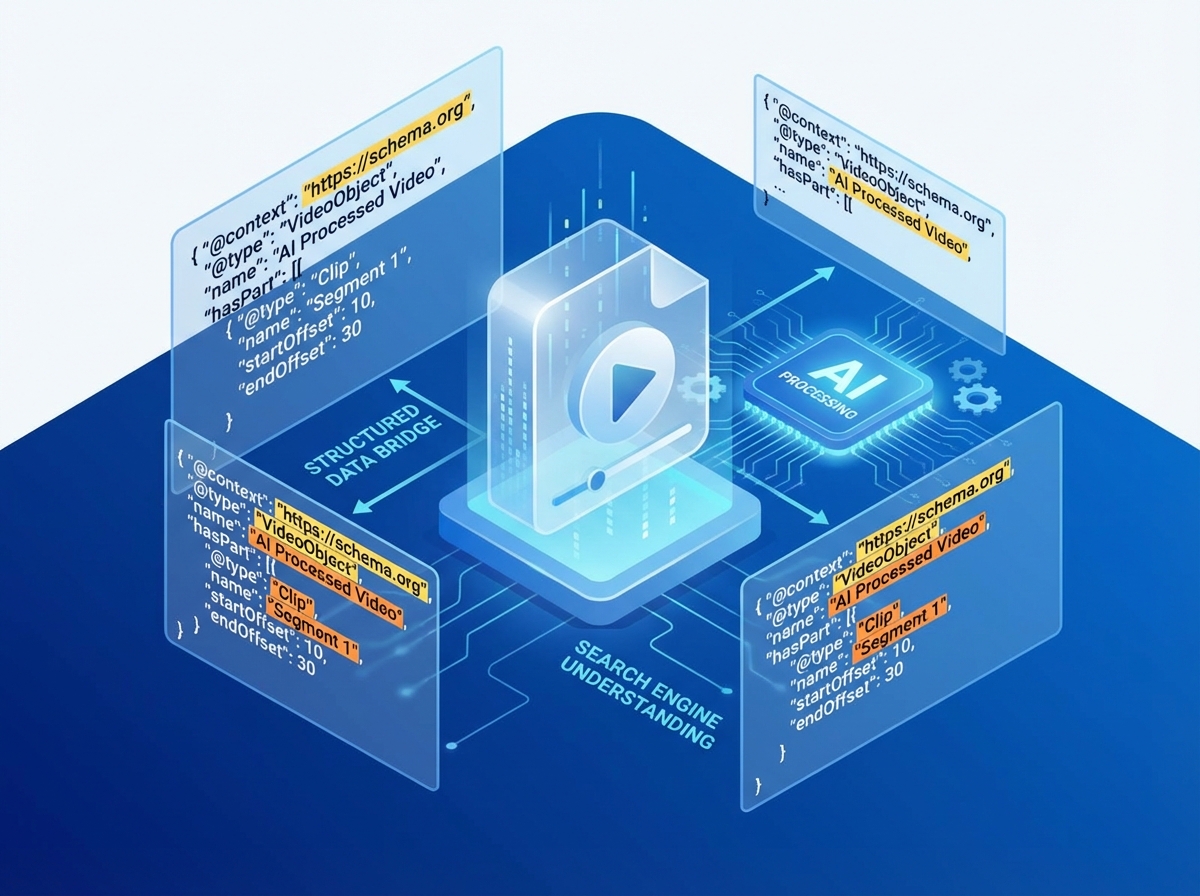
Technical schema markup video implementation is the bridge between your content and the AI’s understanding. Using the Clip property within your VideoObject schema allows you to define the startOffset and name for every key moment. This explicit data tells the search engine exactly where the “answer” begins, removing the guesswork and ensuring your video is cited for the correct queries.
Sources:
- Google Search Central: Video structured data official documentation
- Deftsoft (India): PAA-aligned strategies for AIO visibility
4. Voice Search Video Marketing and Multilingual Conversational SEO
In the Indian market, voice search video marketing is no longer an outlier; it is a core requirement. Voice search in regional languages like Hindi, Tamil, and Telugu is growing three times faster than text-based search. This necessitates a shift toward conversational SEO videos that use natural language and regional phrasing rather than formal, stilted scripts.
To capture this audience, your video transcripts must be localized with high precision. TrueFan AI’s 175+ language support and Personalised Celebrity Videos allow enterprise brands to scale this localization effortlessly, ensuring that the audio and lip-sync match the regional dialect perfectly. This level of native-language accuracy is a critical signal for voice assistants like Google Assistant and Alexa when selecting a source for a spoken answer.
When scripting for voice, the “one-sentence answer” should be delivered within the first 8 seconds. This allows the voice assistant to read the answer aloud while providing a link to the video for the user to “watch more.” By prioritizing oral cadence and regional nuances, brands can dominate the voice-activated search results that are increasingly prevalent on mobile devices across India.
Sources:
5. Technical Framework: Schema Markup Video Implementation and FAQ Integration
A robust schema markup video implementation is the foundation of AEO. Beyond the standard VideoObject requirements—such as name, description, and thumbnailUrl—you must include the transcript URL and inLanguage properties. In 2026, Google uses these signals to verify the semantic relevance of the video content against the user’s specific query.
Integrating FAQ schema video markup allows you to pair timestamped micro-answers with traditional Q&A blocks. By adding an FAQPage block where each answer includes a deep link to a specific video segment (e.g., ?t=45), you create a highly structured data environment that AI Overviews love to cite. This dual-layer approach—text for the LLM and video for the user—is a powerful zero-click optimization strategy.
Furthermore, using the seekToAction property enables Google to create dynamic “Key Moments” even if you haven’t manually defined clips. This is particularly useful for large video libraries where manual chaptering is not feasible. By providing a URL template that includes a time placeholder, you allow the search engine to deep-link users directly to the most relevant part of your video based on their unique search intent.
Sources:
6. Building E-E-A-T Video Authority and Entity Trust in 2026
In 2026, E-E-A-T video authority is the primary filter Google uses to combat AI-generated misinformation. To establish trust, videos should feature recognized subject matter experts (SMEs) on camera. These experts should be linked to their own entity profiles (LinkedIn, author pages) via sameAs schema properties, creating a verifiable web of authority that search engines can track.
For Indian enterprises, citing local authority sources in the video description and on-page content is essential. AI Overviews video SEO rewards content that demonstrates “Experience”—such as real-world product demos or case study walkthroughs—over generic, stock-footage-heavy explainers. This “proof of work” is a significant ranking factor in an era where synthetic content is ubiquitous.
Platforms like TrueFan AI enable brands to maintain this high bar of authority while scaling content production. By using consented celebrity and expert likenesses, brands can ensure their messaging is delivered by trusted voices that resonate with the Indian consumer. This ethical approach to AI video production reinforces the “Trustworthiness” pillar of E-E-A-T, protecting the brand from the risks associated with unverified synthetic media.
Sources:
7. Scaling AEO with TrueFan AI and Future-Proofing Your Strategy
Scaling answer engine optimization video across thousands of products and dozens of languages requires an automated, intelligent pipeline. Solutions like TrueFan AI demonstrate ROI through their ability to generate hyper-personalized micro-answers at scale. By integrating with enterprise CRMs and APIs, brands can trigger the creation of personalized video responses that address specific customer queries in real-time.
One of the most significant coverage gaps in traditional video SEO is the inability to iterate on the “hook.” TrueFan AI’s virtual reshoot capabilities allow SEO directors to test different 10-second openings to see which one triggers the most AI Overview citations. This data-driven approach to video editing ensures that your content is always optimized for the latest search engine algorithms without the need for costly physical reshoots.
To future-proof your strategy, focus on the following KPIs: AI Overview citation frequency, Suggested Clip presence, and voice assistant attribution. By monitoring these metrics weekly, you can refine your People Also Ask targeting and adjust your voice search video marketing scripts to match emerging conversational patterns. The goal is to create a self-sustaining ecosystem where every video asset is a structured answer waiting to be discovered.
Sources:
Recommended Internal Links
- AI Overviews SEO Strategy
- AI Overviews Optimization 2026
- Answer Engine Optimization Video 2026
- Answer Engine Optimization Video Content
- Featured Snippet Video Content
- Regional Language Video SEO
- Answer Engine Optimization Video Guide
- Answer Engine Optimization Video Strategies
Frequently Asked Questions
What is answer engine optimization video?
Answer engine optimization video is the practice of structuring video content and metadata so that AI engines (like Google Gemini or Search GPT) can easily extract, timestamp, and cite specific segments as direct answers to user queries.
How do I rank video content in Google AI Overviews?
To rank in AIOs, ensure your video has a clear answer-first structure, uses VideoObject and Clip schema, and includes a verbatim transcript. Google prioritizes videos that provide a concise answer in the first 12 seconds.
What are zero-click optimization strategies for video in 2026?
These strategies involve providing the full answer within the search results page via Suggested Clips or AI summaries. While this may reduce site clicks, it maximizes brand authority and ensures your content is the primary source for the AI’s response.
How does TrueFan AI help with AEO for video?
TrueFan AI enables enterprises to scale AEO by generating localized, personalized micro-answers in 175+ languages. Its virtual reshoot technology allows brands to optimize the critical “answer window” of a video without new production costs.
What schema markup video implementation is best for voice search?
For voice search, focus on VideoObject with a full transcript and inLanguage property. Pairing this with FAQPage schema that deep-links to video timestamps ensures that voice assistants can read the answer and provide a relevant video link.
How do I improve E-E-A-T video authority on YouTube?
Improve authority by featuring verified experts, using on-screen credentials, and linking to authoritative external sources in your description. Consistent brand signals and ethical AI usage (like consented talent) are also crucial for 2026 trust standards.



