Women’s Cricket World Cup Marketing 2026: Inclusive, ROI-Proven Playbook for India
Estimated reading time: ~10 minutes
Key Takeaways
- The 2026 season is a structural inflection point for women’s cricket marketing, moving from CSR to ROI-first investment.
- Inclusive, gender-neutral positioning with vernacular relevance outperforms superficial narratives.
- Video-first, personalized engagement with athlete-led content drives measurable actions across the funnel.
- Sponsorship ROI requires MMM, MTA, and geo-incrementality to prove incremental lift.
- Automation + commerce via WhatsApp and shoppable video journeys scales acquisition and loyalty.
The landscape of Indian sports advertising is undergoing a seismic shift as we approach the women's cricket world cup marketing 2026 season. Following India’s historic World Cup triumph in late 2025, the commercial momentum surrounding the ICC Women’s Championship in February–March 2026 has reached an unprecedented fever pitch. For brands, this isn't just another tournament; it is a structural turning point where inclusive sports marketing strategies transition from "nice-to-have" CSR initiatives to core drivers of women sports sponsorship ROI.
The "afterglow" of recent victories has fundamentally altered the Indian consumer's relationship with the game, leading to a massive female sports viewership growth India has never seen before. Data indicates that WPL 2026 ad budgets are projected to rise by 30–50%, with elite athletes like Smriti Mandhana and Harmanpreet Kaur emerging as the nation's premier brand endorsers. Platforms like TrueFan AI enable brands to capitalize on this surge by delivering hyper-personalized, vernacular-rich content that resonates with a diverse, pan-Indian audience.
1. The 2026 Market Moment: Demand Surge and Untapped Cohorts
The 2026 season represents a "marketing gold" moment where the traditional boundaries of sports fandom are being redrawn. We are witnessing a transition from niche interest to a mainstream cultural phenomenon, driven by family co-viewing and a massive affinity among Gen Z and Alpha cohorts. This shift is not merely anecdotal; the India–SA Women’s World Cup final saw a staggering 23.5x ad surge, signaling that advertisers are finally recognizing the immense value of the female game.
To succeed in this environment, brands must look beyond the traditional "male, urban" cricket fan. The 2026 opportunity lies in targeting five distinct, high-value cohorts: women-first sports viewers, aspirational mother-daughter duos, vernacular-first regional households, Gen Z digital natives, and new-to-cricket urban youth. These segments are seeking authentic stories that reflect their own aspirations, moving away from the gendered clichés of the past.
As advertiser participation grows by 2.6–2.8x, the competition for attention will be fierce. Early lock-ins and multi-category presence are no longer optional for brands aiming to secure a dominant share of voice. The players themselves have become "brand powerhouses," with their values-led affinity offering a deeper level of engagement than traditional celebrity endorsements. Understanding these archetypes is the first step in building a high-performance 2026 playbook.
Sources:
- BestMediaInfo: WPL 2026 ad budgets and top endorsers
- exchange4media: 23.5x ad surge in India–SA final
- Impactonnet: Marketing gold momentum
- Business Today: Women cricketers as brand powerhouses
2. Inclusive Sports Marketing Strategies and Gender-Neutral Positioning
True inclusive sports marketing strategies require an end-to-end commitment to representation, accessibility, and vernacular relevance. In 2026, "pink-washing" or superficial empowerment narratives will be quickly dismissed by a savvy Indian audience. Instead, brands must adopt a gender-neutral brand positioning that centers on universal themes of performance, resilience, and community excellence.
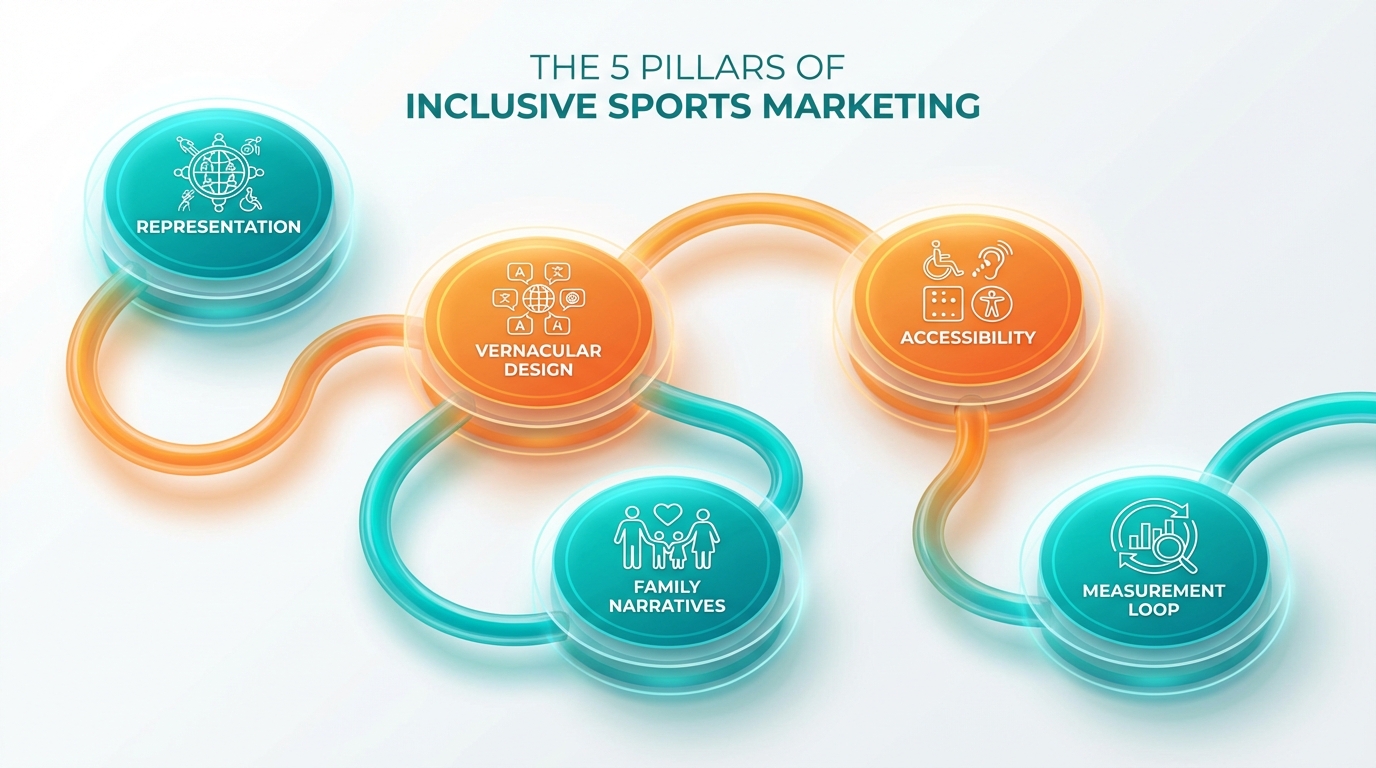
A robust conversion framework for 2026 includes five critical pillars. First, representation must go beyond tokenism, featuring athletes and fans across different regions, abilities, and age groups. Second, a language-first design is essential; leading with vernacular scripts and regional nuances ensures that the message hits home in Tier 2 and Tier 3 cities. Third, family narratives should position cricket as a shared aspiration, celebrating teamwork rather than gendered struggles.
Fourth, accessibility must be baked into every asset, from captions and descriptive audio to mobile-first framing that captures attention in the first 3 seconds. Finally, a rigorous measurement loop must be established to track brand lift and incremental reach. TrueFan AI's 175+ language support and Personalised Celebrity Videos allow brands to operationalize this framework at scale, delivering tailored messages that maintain the athlete's authentic voice across hundreds of regional dialects.
Sources:
- Economic Times: Her Story narrative resonance
- ET BrandEquity: Revenue realism vs. hype
- TrueFan AI: Localization capabilities
3. Video-First Playbook: Fan Engagement and Athlete Endorsements
In the 2026 digital-first ecosystem, women cricket fan engagement videos are the primary currency of attention. These aren't just commercials; they are personalized, context-aware interactions that drive real-world actions. From personal shoutouts for ticket waitlists to vernacular highlight explainers narrated by the stars themselves, the goal is to create a two-way dialogue between the brand, the athlete, and the fan.
Female athlete endorsement videos must prioritize authenticity, speed, and safety. By using modular scripts, brands can swap offers and regional references weekly without the need for expensive re-shoots. This agility is crucial during a fast-paced tournament where momentum shifts overnight. For instance, a brand could trigger a personalized congratulatory video from Jemimah Rodrigues to fans in Mumbai immediately after a match-winning performance.
The production of these assets at scale requires sophisticated technology that respects athlete likeness and data privacy. High-impact campaigns, such as JioStar’s collaboration with champions like Deepti Sharma and Shafali Verma, demonstrate the power of rallying national sentiment through women athletes. By integrating real-time API triggers, brands can deliver these inclusive brand messaging videos via WhatsApp or SMS, ensuring they reach the fan at the exact moment of peak emotional engagement.
Sources:
- SportsMintMedia: JioStar Women’s Champions campaign
- TrueFan AI Blogs: Video personalization ROI
- TrueFan AI Blogs: Personalized video software guide
4. Sponsorship Science: Measuring Women Sports Sponsorship ROI
The debate over "eyeballs vs. revenues" in women's sports is being settled by data-driven women sports sponsorship ROI models. To justify increased spends in 2026, Marketing Directors must move beyond vanity metrics like impressions and likes. A sophisticated KPI stack now includes upper-funnel ad recall, mid-funnel engagement rates, and lower-funnel assisted conversions and Customer Acquisition Cost (CAC) shifts.
Solutions like TrueFan AI demonstrate ROI through end-to-end analytics dashboards that track how personalized video interventions lift conversion rates across the funnel. By using Marketing Mix Modeling (MMM) that treats women’s cricket as a distinct node, brands can isolate the incremental impact of their 2026 investments. Multi-touch attribution (MTA) on owned channels further helps in understanding how a fan moves from watching a hero film to purchasing a jersey or subscribing to a streaming service.
The 2026 season also demands a focus on geo-incrementality. Brands should measure the lift in sales or app installs in specific regions where they have deployed localized, vernacular campaigns. This level of rigor ensures that the "marketing gold" of women's cricket translates into sustainable business growth. With advertiser growth hitting 2.8x, those who can prove ROI will be the ones who secure long-term partnerships with the sport's rising stars.
Sources:
- ET BrandEquity: Revenue realism and attribution
- exchange4media: Ad surge data
- TrueFan AI Blogs: ROI metrics
5. Automation and Commerce: Scaling Customer Acquisition
To manage the scale of the 2026 season, gender equality marketing automation is essential. This involves creating automated, consented customer journeys that deliver tailored experiences based on a fan's language, region, and favorite team. For example, a "new-fan welcome" journey could trigger a personalized athlete video in the fan's preferred language immediately after they sign up for a newsletter or download an app.
This automation engine is particularly powerful for women's cricket customer acquisition. Matchday nudges, such as lineup alerts or milestone triggers (like a fifty or a wicket), can be used to push real-time offers or watch-along invites. These interactions build a first-party data asset that is invaluable for long-term retention. By integrating these journeys with WhatsApp Business APIs, brands can achieve significantly higher read and conversion rates compared to traditional email marketing.
The commerce layer is the final piece of the puzzle. Women cricket merchandise personalization allows brands to offer 1:1 shoppable video recommendations. Imagine a video where an athlete calls a fan by name and suggests a limited-edition championship kit based on their previous browsing history. This level of personalization not only lifts Average Order Value (AOV) but also fosters a deep sense of loyalty that extends far beyond the final ball of the tournament.
Sources:
6. Enterprise Execution: The 2026 Championship Roadmap
Success in women's cricket world cup marketing 2026 requires a disciplined, week-by-week execution plan. Starting six weeks out in January, brands must finalize their audience research, lock in athlete partnerships, and define their KPI baselines. This is the time to integrate data stacks and ensure that CRM systems are ready to handle the influx of new fan data.
Four weeks before the ICC Women’s Championship, the focus shifts to creative production. Brands should build extensive script banks that cover multiple personas and languages, ensuring every asset undergoes a DEI-safe audit. This period is also critical for mapping out automation journeys and testing various offer structures. As the tournament goes live in February, the "purpose-led" hero films should be launched to build broad awareness and capture initial first-party data.
During the championship weeks, the strategy moves into high-frequency engagement. Automating matchday nudges and ramping up vernacular variants allows brands to stay relevant as the tournament narrative evolves. Post-championship, the momentum must be funneled directly into women's IPL preparation marketing. This transition period is ideal for hard CTAs, such as merch pre-orders and loyalty program enrollments, ensuring that the brand remains top-of-mind as the WPL season kicks off in late March.
Sources:
Frequently Asked Questions
How to measure women sports sponsorship ROI during the ICC Women’s Championship?
Measuring ROI requires a multi-layered approach. Brands should use Marketing Mix Modeling (MMM) to isolate the impact of women's cricket channels, combined with Multi-Touch Attribution (MTA) for owned digital assets. As noted by exchange4media, the 23.5x ad surge in recent finals indicates high demand, so benchmarking brand lift against non-sports periods is essential.
What are inclusive sports marketing strategies for women’s cricket in India?
Inclusive strategies focus on the 5-part framework: Representation (diverse casting), Language-first design (vernacular scripts), Family narratives (shared aspirations), Accessibility (captions/audio), and a rigorous Measurement loop. This ensures the campaign resonates across India's diverse socio-economic and regional landscape.
What is gender-neutral brand positioning and how to avoid “pink-washing”?
Gender-neutral positioning focuses on universal themes like skill, leadership, and performance rather than gendered clichés. To avoid "pink-washing," brands must ensure their internal DEI values match their external messaging and use authentic athlete stories that highlight professional excellence rather than just "struggle" narratives.
How to automate women’s cricket customer acquisition with video?
Brands can use platforms like TrueFan AI to create automated journeys triggered by fan actions. For example, a sign-up can trigger a personalized welcome video from an athlete via WhatsApp. These real-time, API-driven interactions significantly lower CAC and increase the quality of first-party data captured during the tournament.
Why is female sports viewership growth in India a key trend for 2026?
The growth is driven by a structural shift in consumption, with more families and Gen Z viewers tuning in. With WPL 2026 ad budgets rising by 30–50%, the commercial ecosystem is finally catching up to the massive audience potential, making it a primary target for brands in FMCG, BFSI, and Tech.