AI Video for Mental Health Apps India 2026: Scalable, Sensitive, Multilingual Therapy Content with AI Avatars
Estimated reading time: ~10 minutes
Key Takeaways
- AI video enables scalable, vernacular therapy content for India’s diverse audiences by 2026.
- A rigorous script-to-video automation pipeline preserves clinical integrity, localization, and safety.
- Multilingual mastery and cultural nuance go beyond translation to build trust and engagement.
- Governance under DPDP and Telepsychiatry requires consent, disclosures, crisis pathways, and compliant infrastructure.
- Clear ROI metrics include retention, EAP uplift, language parity, and clinical deltas.
As India races toward 2026, AI video for mental health apps India 2026 will define how therapy platforms, wellness apps, and corporate wellness programs scale guided content and personalized check-ins in Hindi and regional languages—without compromising clinical rigor, privacy, or cultural sensitivity. With a staggering 10.6% of Indian adults currently living with mental disorders, the demand for accessible, vernacular, and high-quality psychoeducation has never been more urgent.
The landscape of mental healthcare in India is undergoing a structural shift. By 2026, the integration of artificial intelligence is no longer a futuristic concept but a core operational necessity for startups and enterprises alike. According to recent projections, digital mental health adoption in Tier 2 and Tier 3 Indian cities is expected to increase by 15% by 2026, driven by smartphone penetration and the normalization of seeking help. Furthermore, with medical cost trends indicating a 12% rise in traditional therapy expenses, AI-driven automation offers a critical pathway to making wellness affordable and scalable.
In this comprehensive guide, we explore how wellness content automation AI is bridging the gap between clinical expertise and mass-market accessibility, ensuring that every Indian has a "therapist in their pocket" that speaks their language and understands their context.
1. AI Video for Mental Health Apps India 2026 — Why Now?
The "treatment gap" in India is well-documented: for every 100,000 people, there are fewer than 0.75 psychiatrists. This scarcity makes it impossible to provide 1:1 human intervention for every individual experiencing stress, anxiety, or burnout. By 2026, the focus has shifted from "finding more doctors" to "scaling the expertise of existing ones" through video.
Video content is uniquely suited for mental health because it facilitates co-regulation. The human brain responds to the prosody of a voice, the warmth of a facial expression, and the visual modeling of techniques like box breathing or progressive muscle relaxation. Static text or audio-only apps often struggle with high drop-off rates; however, AI-driven personalization is expected to reduce user drop-off by 40% in wellness apps by 2026.
Platforms like Studio by TrueFan AI enable mental health startups to generate thousands of these personalized video modules in minutes, allowing clinicians to focus on high-risk cases while the AI handles the heavy lifting of psychoeducation and daily mindfulness nudges.
The 2026 Inflection Point
Several factors make 2026 the "Year of AI Video" in Indian healthcare:
- WhatsApp-First Behaviors: Indian users increasingly consume health advice via WhatsApp. AI video allows for lightweight, high-impact delivery directly to the user's preferred chat app. Personalized video messaging automation for WhatsApp
- Enterprise Adoption: Corporate wellness spending in India is projected to hit $7 billion by 2026, with HR leaders demanding measurable engagement metrics that only interactive video can provide.
- Vernacular Pull: Wysa and other leaders have already signaled a massive shift toward multilingual support, recognizing that mental health is most effectively discussed in one's mother tongue.
Sources:
2. Closing the Content Gap with Wellness Content Automation AI
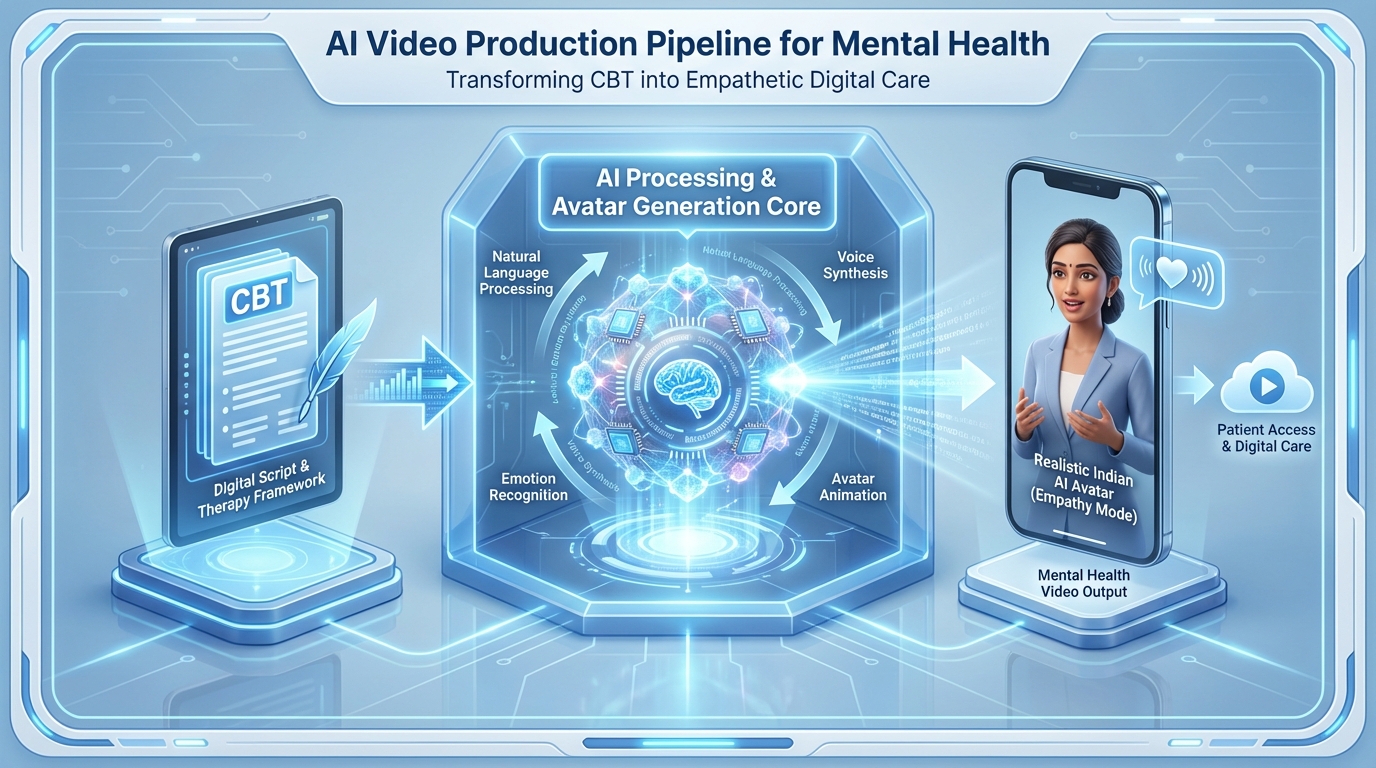
Wellness content automation AI refers to an end-to-end pipeline that converts clinically reviewed scripts into localized, captioned avatar videos at scale. For an Indian startup, this means moving away from expensive studio shoots and toward a "Script-to-Video" workflow that can produce a month’s worth of content in a single afternoon. Multimodal AI video creation in 2026
The Technical Pipeline for 2026
To maintain clinical integrity, the automation process must follow a rigorous flow:
- Intake & Safety Check: Scripts are mapped to evidence-based frameworks like Cognitive Behavioral Therapy (CBT) or Acceptance and Commitment Therapy (ACT). Automated trigger scanning ensures no harmful language is used.
- Avatar & Voice Selection: Choosing a persona that resonates with the target demographic (e.g., an approachable "Didi" figure for rural health or a professional "Coach" for corporate teams).
- Multilingual Rendering: Using SSML (Speech Synthesis Markup Language) to ensure the AI voice has the right pauses and empathetic inflections. Multilingual YouTube channel AI dubbing
- Distribution: Pushing the video to in-app modules, LMS platforms, or WhatsApp APIs. AI video webhook for WhatsApp Business
By automating this, platforms can create "micro-lessons" that address specific stressors—such as exam anxiety for students or appraisal stress for employees—without needing to re-film every time.
Mindfulness Content AI Generator India
A key application is the mindfulness content AI generator India. Instead of generic meditation videos, 2026 technology allows for "contextual grounding." For example, if a user in Mumbai is stuck in traffic, the app can instantly generate a 60-second "Commuter Grounding" video in Marathi, featuring an avatar that acknowledges the specific environment. This level of hyper-localization was impossible before the advent of high-speed AI rendering. Emotion-aware avatar videos
Sources:
3. Multilingual Mastery: Localizing Mental Health for Bharat
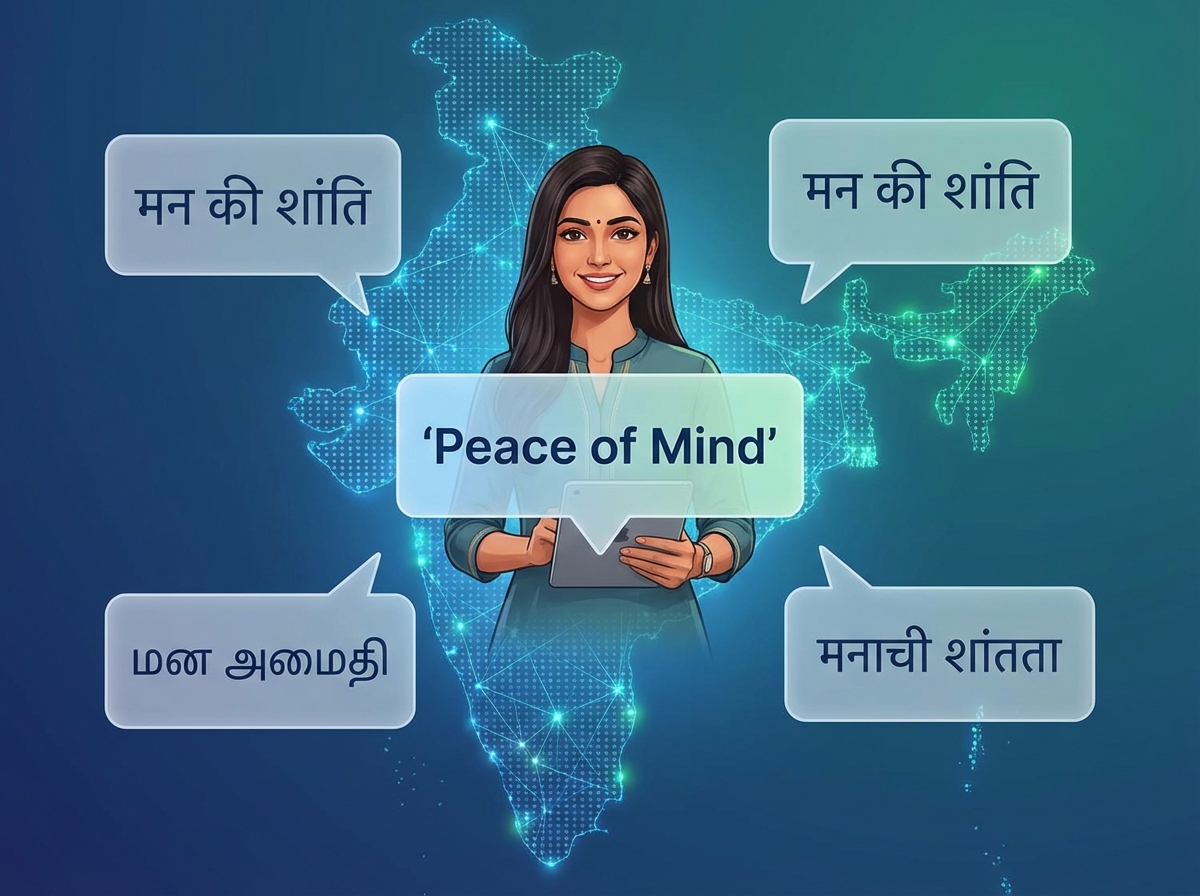
In India, language is not just a communication tool; it is a bridge to trust. Mental health awareness videos AI Hindi and other regional languages are critical for dismantling the stigma that often surrounds therapy in non-metro areas. Vernacular content consumption in health tech is projected to grow 3x by 2026, making regional support a "must-have" rather than a "nice-to-have." AI voice cloning for Indian accents
Beyond Translation: Cultural Nuance
Effective localization in 2026 goes beyond literal translation. It involves:
- Dialect Awareness: Using "Hinglish" for urban Gen-Z and pure Hindi or regional dialects for older cohorts.
- Cultural Metaphors: Replacing Western idioms with local ones (e.g., using "Man ki Shanti" instead of "Mindfulness" in certain contexts).
- Visual Representation: Ensuring avatars wear culturally appropriate attire, from formal clinical coats to traditional Indian wear, depending on the audience.
Studio by TrueFan AI's 175+ language support and AI avatars provide the infrastructure for this level of depth. Whether it’s a stress management video for a factory worker in Tamil Nadu or a postpartum depression explainer for a mother in Punjab, the platform ensures the voice, lip-sync, and cultural cues are perfectly aligned. Multilingual YouTube channel AI dubbing
Stress Management Video Creator for Corporate Teams
In the corporate sector, localization also means adapting to the "office culture." A stress management video creator can produce content that addresses the specific nuances of the Indian workplace—such as the difficulty of setting boundaries in a high-context culture or managing "quiet burnout" among remote teams. Conversational SEO for AI videos
Sources:
4. Guardrails & Governance: DPDP, MHCA, and Telepsychiatry
As we deploy AI video for mental health apps India 2026, we must navigate a complex regulatory landscape. The sensitivity of mental health data requires a "Privacy-by-Design" approach that aligns with India's latest legal frameworks.
Digital Personal Data Protection Act (DPDP) 2023
The DPDP Act mandates strict consent for health data. When using AI for therapy video personalization, platforms must:
- Obtain Explicit Consent: Users must know how their data (like PHQ-9 scores) is being used to tailor video content.
- Purpose Limitation: Data collected for wellness nudges cannot be repurposed for marketing without fresh consent.
- Data Minimization: Only the necessary attributes (language preference, age group) should be used to generate the video variant.
Telepsychiatry Operational Guidelines 2020
NIMHANS and the Ministry of Health have laid out clear boundaries for digital interventions. AI avatar therapist videos must be clearly labeled as "educational guidance" rather than "medical diagnosis."
Critical Safety Features for 2026
- Escalation Pathways: Every video should have a "Safety Card" or a direct link to the Tele-MANAS helpline (14416). Tele-MANAS is expected to handle over 2 million calls annually by 2026, making it a vital integration point for AI apps.
- Disclaimers: On-screen text must clarify that the avatar is an AI and not a human doctor.
- Crisis Detection: If a user’s engagement patterns suggest high risk, the AI video pipeline should automatically switch from "self-help" content to "emergency protocol" instructions.
Solutions like Studio by TrueFan AI demonstrate ROI through their built-in moderation layers, which prevent the generation of harmful or non-compliant content, ensuring that the platform remains a safe space for vulnerable users. Emotion detection in AI video marketing
Sources:
- PRS India: Digital Personal Data Protection Act, 2023
- NIMHANS: Telepsychiatry Operational Guidelines 2020
- PIB India: Tele-MANAS Helpline
5. Segment Playbooks: Startups, Platforms, and Corporates
The application of AI video varies significantly across different sectors of the Indian wellness economy.
Therapy Platform Video Marketing
For platforms like YourDOST or Wysa, video is the ultimate top-of-funnel tool. YourDOST Wysa style videos AI can be used to create empathetic explainers that demystify the therapy process.
- Use Case: A 3-part video series on "What to expect in your first therapy session" generated in 5 different languages.
- Goal: Reduce the "barrier to entry" for first-time seekers.
Conversational SEO for AI videos
Corporate Wellness Video Automation India
HR leaders are moving away from "check-the-box" wellness. They need emotional wellbeing videos AI that can be integrated into Slack, Microsoft Teams, or internal HRMS.
- Use Case: A "Monday Morning Reset" video sent via WhatsApp to all employees, featuring a 90-second breathing exercise led by a relatable avatar.
- Goal: Increase EAP (Employee Assistance Program) utilization and reduce absenteeism.
Wellness App Video Content Automation at Scale
For consumer-facing apps, the focus is on "The Daily Nudge."
- Use Case: Daily "Mood Boosters" that change based on the user's reported mood. If a user selects "Anxious," the app serves a 2-minute CBT-based reframing video.
- Goal: Build a daily habit and improve long-term retention.
Sources:
6. Measuring ROI and Impact in 2026
In 2026, "impact" is measured through a blend of engagement metrics and clinical outcomes. For a mental health startup, the ROI of AI video is clear: it allows for a 10x increase in content volume at 1/10th of the traditional cost.
Key Performance Indicators (KPIs)
- Retention Rate: Users who engage with personalized AI video are 40% more likely to remain active in the app after 30 days.
- EAP Uplift: Corporates using automated video nudges see a 25% increase in employees reaching out to human counselors when needed.
- Language Parity: Measuring whether engagement in Hindi or Marathi videos matches or exceeds English content, proving the success of the localization strategy.
- Clinical Delta: Using pre- and post-video self-reports (e.g., "How stressed do you feel now?") to measure the immediate efficacy of guided practices.
Experimentation and A/B Testing
The beauty of AI video is the ability to iterate. Startups can A/B test different avatars (e.g., a male vs. female coach), different hook lines, or different video lengths to see what resonates best with specific demographics. By 2026, these insights are fed back into the content automation engine to continuously refine the user experience.
Conclusion: The Future of Empathetic Automation
The era of "one-size-fits-all" mental health content is over. As we look toward the end of 2026, the success of Indian wellness platforms will depend on their ability to deliver high-quality, culturally resonant, and clinically safe video content at scale. By leveraging wellness content automation AI, startups can finally bridge the treatment gap, ensuring that mental health support is not a luxury for the few, but a right for the many.
Whether you are building the next big therapy app or managing a workforce of thousands, the tools to create a more resilient India are now at your fingertips. The future of mental health is digital, it is visual, and most importantly, it is personal.
Frequently Asked Questions
Is AI video a replacement for human therapists?
No. In 2026, AI video is viewed as a "force multiplier." It handles psychoeducation, awareness, and low-intensity skills training, allowing human therapists to focus on complex clinical interventions. It is a tool for support, not a substitute for medical treatment.
How do we ensure the AI doesn't give harmful advice?
Safety is paramount. All scripts must be clinically reviewed by qualified psychologists. Furthermore, advanced platforms use real-time content filters to block any high-risk or inappropriate generation. Emotion detection in AI video marketing
How does AI video handle the diversity of Indian languages?
Modern AI models are trained on vast datasets of Indian regional languages. They don't just translate; they capture the prosody and rhythm of languages like Bengali, Telugu, and Marathi, making the interaction feel natural and empathetic. Multilingual YouTube channel AI dubbing
What are the storage and privacy implications under the DPDP Act?
Data must be stored securely, often within Indian borders as per government mandates for sensitive health data. Studio by TrueFan AI's infrastructure is designed with these regulations in mind, offering ISO 27001 and SOC 2 certified environments to ensure that user interactions remain confidential and protected.
Can we use our own clinicians as AI avatars?
Yes. "Custom Avatar Training" allows a platform to create a digital twin of their lead psychologist or founder. This maintains brand consistency and builds a familiar face for the users, even as the content scales to millions of viewers. Real-time interactive AI avatars in India
What is the turnaround time for creating a localized video campaign?
With 2026 automation tools, a script can be turned into a fully rendered, multi-language video in under 5 minutes. This enables rapid responses to seasonal needs (like exam season) or national events with timely, localized content.