Student Transition Marketing 2026: Turning Result-Season Anxiety into Enrollments with Emotionally Intelligent Video
Estimated reading time: ~12 minutes
Key Takeaways
- Empathy-first video across WhatsApp, email, and web turns result-season anxiety into guided action.
- Exam outcome personalization and predictive modeling tailor guidance to each student’s context.
- Human counseling at scale with triage rules bridges automation and 1:1 support.
- Skill gap assessments and vocational pathways reduce choice paralysis and boost conversions.
- Scholarship matching automation and DPDP-compliant data use lower financial and trust barriers.
The landscape of Indian education marketing is undergoing a seismic shift as we approach the 2026 academic cycle. For EdTech enterprises and higher education institutions, the March–April window is no longer just a period of high-volume lead generation; it is a high-stakes emotional crucible. Student transition marketing 2026 represents an enterprise-grade strategy that transforms the inherent anxiety of result season into guided, confident action through the use of empathetic, hyper-personalized video journeys.
By integrating automated pathways across WhatsApp, email, and web interfaces, institutions can now meet students and parents at their most vulnerable moments with clarity and support. Research from NCERT indicates that “examinations and results” remain the primary cause of acute anxiety among nearly 3.79 lakh students surveyed across India. In this environment, traditional “hard-sell” tactics fail. Success in 2026 requires a transition toward empathy-first engagement that prioritizes student well-being alongside enrollment targets.
Platforms like TrueFan AI enable institutions to operationalize this empathy at scale, ensuring that every student receives a message tailored to their specific board results, subject strengths, and emotional state. This approach aligns with the evolving expectations of Gen Z and Gen Alpha, who demand authenticity and personalization in every digital interaction. By leveraging 175+ language support and seamless CRM integration, marketers can now bridge the gap between high-volume data processing and deeply human connection.
Sources:
Empathy-first activation — student emotional support campaigns
The first touchpoint in a successful student transition marketing 2026 strategy must be rooted in emotional intelligence. Student emotional support campaigns are designed as short, counselor-fronted or faculty-fronted video messages that acknowledge the immense pressure of board results. These videos do not lead with a sales pitch; instead, they normalize various outcomes and offer immediate psychological relief through structured next steps.
A typical 30–45 second script for these campaigns begins by validating the student's effort, regardless of the final percentage. By reassuring the student that multiple pathways to success exist, the institution positions itself as a partner in their journey rather than a gatekeeper. The call-to-action (CTA) is focused on booking a 1:1 review session or a wellness check-in, which naturally transitions the student into the enrollment funnel without the friction of a direct “apply now” prompt.
The delivery channel is as critical as the content itself. With WhatsApp serving as India’s largest messaging rail—projected to exceed 650 million active users by 2026—it provides the high-reach, high-response environment necessary for result-day communication. Delivering a personalized video via WhatsApp ensures that the message is seen within minutes of the result announcement, providing a calming influence during a period of peak digital noise. WhatsApp catalog video marketing guide
Parent-student consultation videos
While the student manages the emotional weight of results, parents are often focused on the practicalities of fees, safety, and long-term ROI. Parent-student consultation videos address this dual dynamic by delivering co-addressed messages that align guardian concerns with student aspirations. These 45–60 second videos use dynamic variables to mention the student’s name, the parent’s name, and specific local campus details, creating a sense of intimacy that generic emails cannot replicate.
These videos are particularly effective when they present 2–3 tailored options based on the student’s preliminary data. For example, a video might highlight a specific scholarship or an EMI plan to alleviate financial anxiety for the parent, while simultaneously mentioning a mentorship program that appeals to the student. By providing a direct calendar link for a family consultation, institutions can significantly reduce the lead-to-booking time during the frantic post-result week.
Sources:
- Economic Times: WhatsApp reach in India
- India Today: Wellness programmes in schools reduce anxiety
- TrueFan AI: AI video moderation tools guide
Personalization that converts — exam outcome personalization
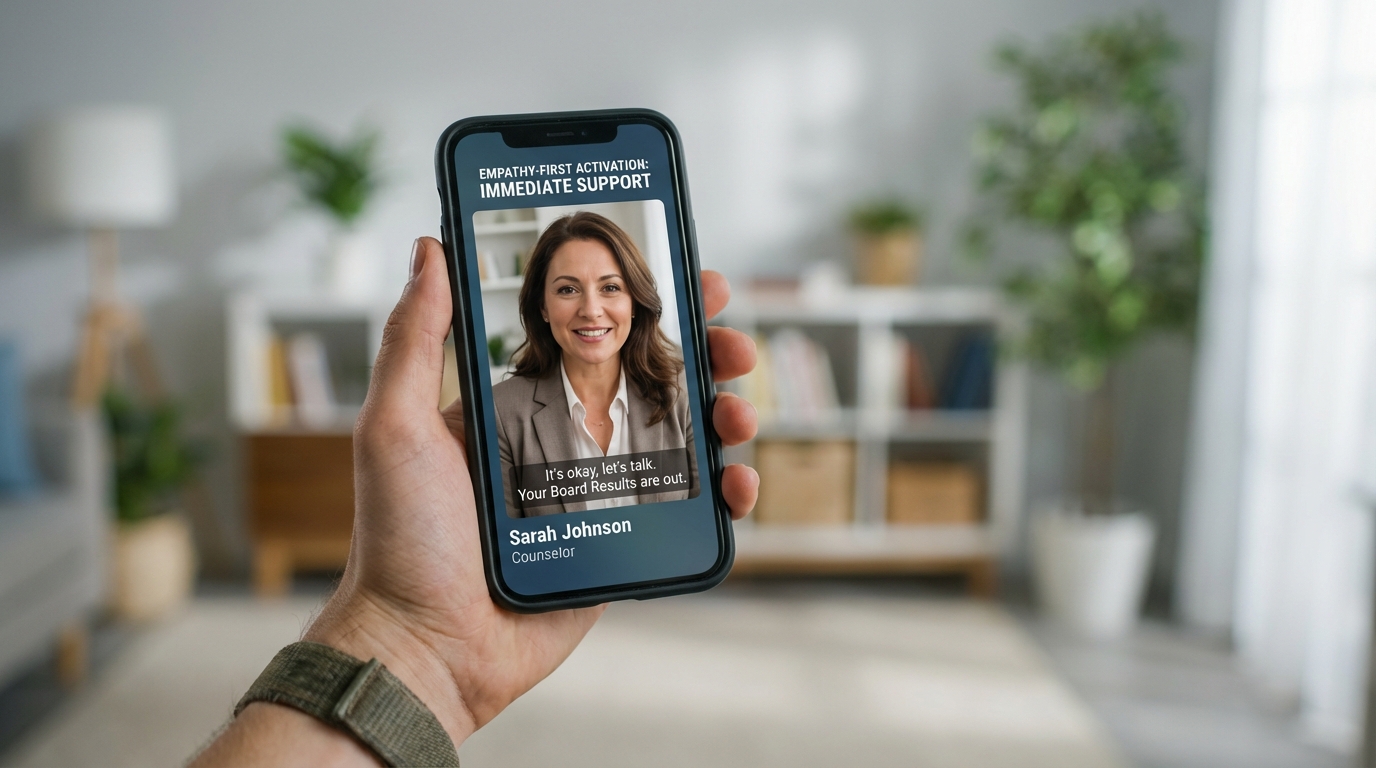
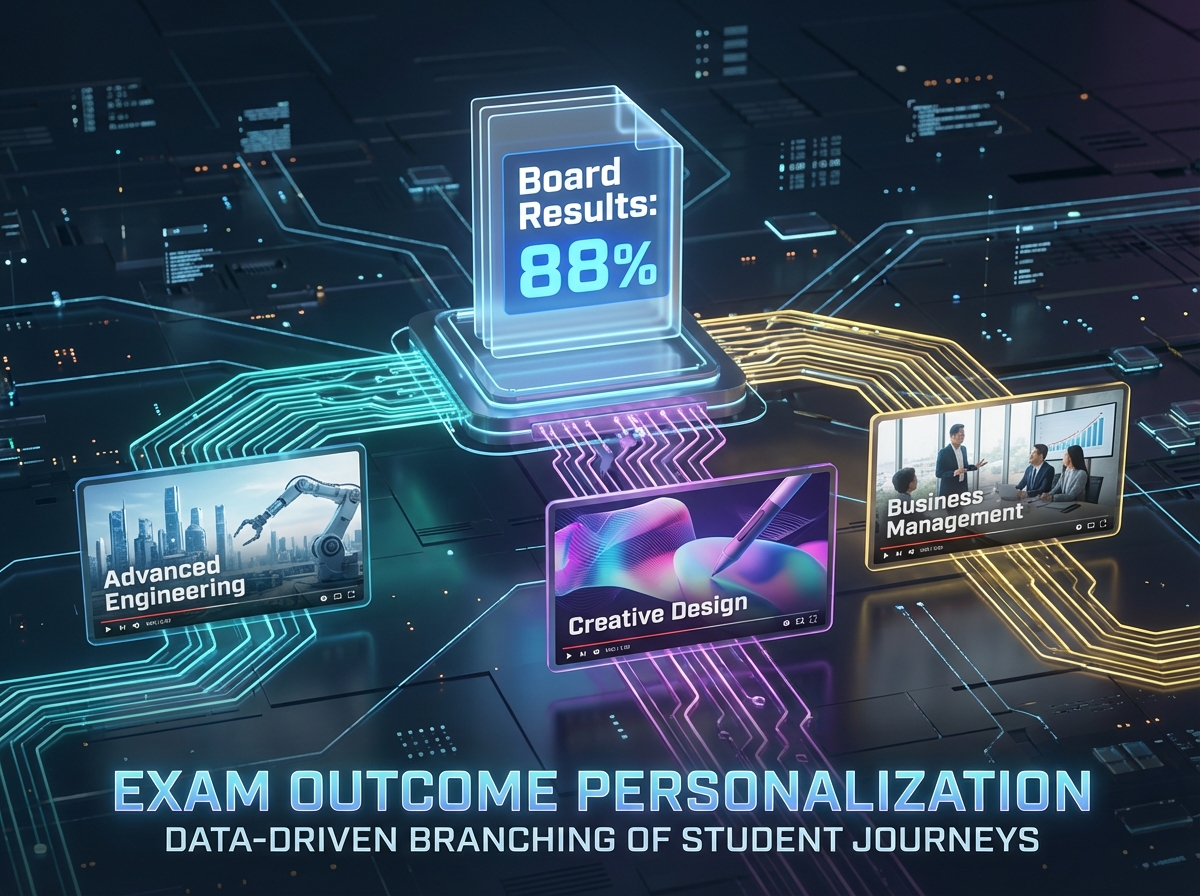
In 2026, the “one-size-fits-all” admission brochure is obsolete. Exam outcome personalization involves the data-driven branching of video content based on specific board types (CBSE, ICSE, State Boards), subject-wise percentiles, and student intent data. This ensures that a student who excelled in Humanities receives a fundamentally different guidance journey than one who is navigating a “near-miss” in Science.
TrueFan AI's 175+ language support and Personalised Celebrity Videos allow institutions to create these branches at scale, ensuring that a student in rural Tamil Nadu receives guidance in their native tongue, while a student in Mumbai receives a different localized version. The logic is mapped directly from CRM fields, where board results trigger specific video templates. For high-achievers (≥90%), the video might focus on fast-track honors and international opportunities. For the mid-band (70–89%), the focus shifts to program fit, internships, and future-ready skill programs.
For students who fall below the 70% threshold or those facing reappearance, the personalization logic is even more vital. Here, the messaging must normalize the setback and immediately route the student toward vocational training marketing or skill gap assessment videos. By providing a constructive path forward rather than a rejection, institutions maintain their brand reputation and capture a segment of the market that competitors often ignore.
Result-based course recommendations
Moving beyond general encouragement, result-based course recommendations utilize algorithmic matching to pair a student’s actual scores and subject strengths with a ranked shortlist of programs. This eliminates the “choice paralysis” that often follows result announcements. The video dynamically displays the top three recommended courses on-screen, complete with eligibility markers and potential bridging modules.
This level of detail demonstrates a profound understanding of the student’s unique situation. When a student sees their own marks reflected in a video that then suggests a logical career path, the trust barrier is lowered. The CTA in these videos typically directs students to “Compare Programs” or “Download a Custom Starter Pack,” moving them deeper into the consideration phase of the enrollment journey.
Student success prediction
An emerging pillar of the 2026 strategy is student success prediction. By using predictive modeling based on prior cohort outcomes, institutions can identify students who may require additional support to succeed in their chosen track. This data informs the video content by highlighting specific remedial modules or mentorship opportunities that will ensure the student’s long-term success. (predictive analytics for customer retention) predictive churn prevention videos guide
It is imperative that this predictive data is used ethically and in full compliance with India’s Digital Personal Data Protection (DPDP) Act 2023. Institutions must ensure purpose limitation and transparency, showing students how their data is being used to provide proactive support rather than for exclusionary purposes. When framed as a tool for personalized mentorship, success prediction becomes a powerful retention and conversion asset.
Sources:
- MeitY: DPDP Act 2023 (PDF)
- TrueFan AI: Video personalization at scale
- TrueFan AI: Batch video creation automation
Human guidance at scale — board results career counseling
While AI and automation drive the initial engagement, the human element remains the ultimate closer in education. Board results career counseling EdTech career counseling videos 2026 in 2026 is defined by the ability to provide 1:1 or small-group counselor sessions within a 48–72 hour window following result publication. This requires a sophisticated orchestration of video invites that feature the specific counselor’s avatar and location-aware availability slots.
The operational challenge of managing thousands of simultaneous counseling requests is solved through triage rules. Students in high-stress categories—such as those who narrowly missed a cutoff or those requiring vocational shifts—are prioritized in the queue. Automated video messages via WhatsApp confirm these bookings and provide instant rescheduling options, ensuring that “no-show” rates are minimized during this critical period.
This seamless transition from an automated video to a human counselor creates a “high-tech, high-touch” experience. The counselor enters the session already briefed on the student’s personalized video journey, marks, and interests, allowing for a much more productive and empathetic conversation. This efficiency is a primary driver of the 20–35% lift in counseling bookings observed by early adopters of this strategy.
Career transition mentorship
The journey does not end at enrollment. Career transition mentorship is a vital component of the 2026 student experience, pairing new enrollees with senior students or industry mentors. This reduces early-stage churn and builds employability confidence from day one. A four-touch video cadence—ranging from a personalized welcome to a placement readiness plan—keeps the student engaged during the “summer melt” period between enrollment and the start of classes.
By showcasing real stories of alumni who navigated similar result-season anxieties, institutions can provide a tangible vision of the future. These mentor videos serve as a bridge, transforming the student’s identity from an “applicant” to a “future professional.” This long-term engagement strategy ensures that the institution is seen not just as a place of study, but as a lifelong partner in career success.
Sources:
Close the skills gap — skill gap assessment videos
As the gap between traditional education and industry requirements widens, skill gap assessment videos have become a cornerstone of the 2026 marketing playbook. These interactive video nudges prompt students to take a quick diagnostic quiz immediately after receiving their results. The video then returns a visualized report of their skill gaps, paired with specific micro-course recommendations.
This approach shifts the conversation from “what you studied” to “what you can do.” By promising a 15–20 minute assessment that yields immediate, actionable feedback, institutions provide value before the student has even paid a deposit. For the institution, this data is gold; it allows for the hyper-targeted promotion of future-ready skill programs that address the specific deficiencies identified in the assessment.
Tracking the completion rates of these assessments provides a clear indicator of student intent. Those who finish the assessment and engage with the recommended micro-courses are significantly more likely to convert into full-time enrollments. Retargeting non-finishers with encouraging, personalized video reminders further optimizes this funnel, ensuring that no potential lead is left behind due to a lack of engagement.
Vocational training marketing
For a significant portion of the student population, traditional four-year degrees may not be the immediate goal. Vocational training marketing in 2026 focuses on high-impact, hands-on programs tied to specific job outcomes, such as healthcare assistants or digital marketing associates. These campaigns use localized language explainers to reach audiences in Tier 2 and Tier 3 cities, where the demand for practical, salary-linked education is highest.
Video content in this segment emphasizes student success stories, apprenticeship tie-ups, and clear salary bands. By demystifying the path to employment, institutions can attract students who are looking for a faster ROI on their education. The use of personalized video to explain these pathways ensures that vocational options are presented with the same prestige and clarity as traditional academic tracks.
Sources:
Offers and access — scholarship matching automation
Financial barriers remain the most significant hurdle to enrollment in the Indian context. Scholarship matching automation solves this by automatically shortlisting institutional, government, and private scholarships based on a student’s academic and socio-economic profile. Instead of forcing students to search through endless PDFs, a personalized video delivers their top matches directly to their phone.
These videos highlight the specific amount the student is eligible for and provide a direct “Apply Now” link for the scholarship form. This level of proactive financial support can be the deciding factor for a family on the fence about enrollment. However, this process must be handled with extreme care regarding data privacy. Under the DPDP Act, institutions must capture explicit consent before processing sensitive data like family income or social category for scholarship matching.
In addition to scholarships, entrance exam preparation offers are a key conversion tool. For students who did not achieve their desired board results, limited-time bundles for upcoming entrance tests (like CUET or State CETs) provide a second chance. These offers are most effective when they are “result-to-prep” bundles, delivered within 72 hours of the result announcement, capitalizing on the student’s immediate motivation to improve their standing.
International education opportunities
For the high-achiever segment, international education opportunities are a primary focus. Video explainers that detail eligibility, visa timelines, and tuition bands help demystify the complex process of studying abroad. These videos are often co-delivered to parents, addressing their specific concerns about safety and global ROI.
Localization is key here. Vernacular explainers that break down the requirements for specific countries (e.g., Canada, UK, Germany) in the student’s native language can significantly increase engagement in non-metro areas. By using WhatsApp for RSVP and follow-ups for international webinars, institutions can maintain a high-touch relationship with these high-value leads throughout the lengthy application cycle.
Sources:
Orchestrating the journey — career pathway mapping automation
The final and most critical stage of student transition marketing 2026 is the orchestration of these various elements into a single, cohesive journey. Career pathway mapping automation uses rules-based logic to translate every data point—from exam scores to assessment results—into a stepwise progression. The journey begins with an empathy video, branches into personalized course recommendations, and culminates in a counseling booking and scholarship offer.
This orchestration requires a robust technical stack where CRM webhooks trigger video generation in real-time. For example, as soon as a result is imported, the system checks for DPDP consent, assigns a score band, and enqueues the appropriate video template. This entire process, from data import to WhatsApp delivery, must happen in under 30 seconds to maintain the relevance of the communication during the peak result-day window.
Solutions like TrueFan AI demonstrate ROI through this level of deep integration, providing an enterprise video ROI metrics dashboard that tracks every stage of the funnel. Marketers can see exactly which personalization elements—be it the student’s name, the specific course mentioned, or the scholarship amount—are driving the highest conversion. This data-driven approach allows for rapid iteration, where scripts can be updated via virtual reshoots to optimize performance mid-campaign.
Compliance, safety, and trust-by-design
In 2026, compliance is not a checkbox; it is a competitive advantage. Adhering to the DPDP Act 2023 means that every video sent must be backed by a clear record of consent and a specific purpose tag. Institutions must provide easy opt-out mechanisms on all channels, especially WhatsApp, to maintain channel hygiene and avoid being flagged as spam.
Furthermore, mental health sensitivity is paramount. AI safety protocols must include pre-flight moderation lists to ensure that no video contains triggering or high-pressure language. By embedding helpline links and wellness resources within the video journey, institutions demonstrate a genuine commitment to student well-being. This trust-by-design approach not only ensures legal compliance but also builds a brand that parents and students feel safe engaging with during their most stressful moments.
Driving student retention cultural festivals and academic success video campaigns
Marketing’s job does not end at enrollment; in the competitive 2026 landscape, student retention cultural festivals are vital for maintaining momentum and reducing churn (festival retention strategies for Q1 2026). Basant Panchami offers a unique opportunity to reinforce the student’s decision to join your institution through “Alumni Blessing” loops and community study rituals. By celebrating the festival as a collective milestone, brands can foster a sense of belonging that is essential for long-term student success and LTV (Lifetime Value).
Academic success video campaigns play a dual role in this phase: they serve as social proof for new prospects and as recognition for existing students. Dropping personalized “Progress Badge” videos when a student completes 25% or 50% of their course—timed around cultural festivals—creates a positive reinforcement loop. These micro-rituals, delivered via automated CRM journeys, ensure that the student feels seen and supported throughout their learning journey, significantly increasing course completion rates. (Basant Panchami marketing campaigns 2026)
Furthermore, the 2026 trend toward “regional growth” means that retention efforts must be multilingual. See the voice sync accuracy comparison guide for multilingual lip-sync and voice-retention benchmarks. A student in West Bengal may feel a deeper connection to a Saraswati Puja greeting in Bengali, while a student in Punjab might prefer a Basant-themed message in Punjabi. Providing these localized touchpoints through automated video platforms ensures that the institution’s brand remains culturally relevant and inclusive across India’s diverse geographic landscape.
Sources:
- IBEF – Regional Content Trends in India
- Meerut Public School – Educational Rituals
Integrating EdTech festival marketing India with enterprise-grade AI solutions
Executing a nationwide quick commerce festival marketing 2026 campaign at scale requires more than just creative vision; it requires a robust technical infrastructure. For the 2026 Basant Panchami season, enterprise leaders are looking for solutions that offer sub-30-second rendering and real-time delivery to handle the massive surge in festival-day traffic. Reliability is paramount when the goal is to deliver millions of personalized messages within a narrow cultural window. Quick commerce festival marketing 2026 guide
TrueFan AI’s 175+ language support and Personalised Celebrity Videos provide the necessary scale and localization capabilities to reach every corner of the Indian market. Whether it is a virtual reshoot to update an offer code or an AI-driven edit to change a background to a yellow-themed setting, these tools allow for rapid iteration without the need for expensive new shoots. This agility is what separates market leaders from laggards in the fast-paced 2026 digital economy.
Furthermore, solutions like TrueFan AI demonstrate ROI through measurable lifts in click-through rates (CTR) and conversion rates (CVR), often seeing a 3x-5x improvement over non-personalized content. With enterprise-grade security certifications like ISO 27001 and SOC 2, these platforms ensure that student data is handled with the utmost care, meeting the stringent compliance requirements of the modern educational sector. By integrating these AI capabilities into the CRM, brands can automate the entire lifecycle from acquisition to alumni relations.
Sources:
- Wildnet Technologies – EdTech Marketing Warnings 2026
- DrikPanchang – Cultural Calendar Accuracy
Frequently Asked Questions
How does student transition marketing 2026 differ from traditional admissions?
Traditional admissions rely on generic outreach and high-pressure sales. The 2026 approach uses empathetic, hyper-personalized video to provide guidance based on actual exam outcomes, prioritizing student well-being and clear career pathways over simple lead volume.
Is exam outcome personalization compliant with India’s DPDP Act?
Yes, provided that institutions obtain explicit consent for processing result data, follow purpose limitation (using data only for guidance/admissions), provide clear opt-out options, and practice data minimization—only processing the specific scores needed for course matching.
How can we manage the surge of counseling requests on result day?
Use board results career counseling automation with triage rules to prioritize high-need students. Automated video invites with real-time calendar integration enable instant self-booking and reduce manual load.
Can TrueFan AI integrate with our existing CRM and WhatsApp providers?
Yes. TrueFan AI is built for enterprise scale, offering seamless APIs and webhooks for major CRMs and WhatsApp Business API providers to automate video generation and delivery.
What kind of ROI can we expect from personalized video journeys?
Enterprises typically see a 20–35% lift in counseling bookings and a 15–25% increase in application starts. Value-first content such as scholarship matching automation further lowers friction across the enrollment funnel.