Sustainable Loyalty Programs India 2026: Gamified Eco-Rewards That Grow Retention and CSR Impact
Estimated reading time: ~9 minutes
Key Takeaways
- BRSR Core and EPR make verifiable eco-reward telemetry essential for compliant ESG reporting and value-chain assurance.
- Gamified eco-rewards and vernacular, personalized video content lift engagement, repeat purchases, and conscious consumer retention.
- SKU-level metadata enables carbon tracking personalization, plastic-free purchase rewards, and targeted green nudges.
- Economics-first design pairs earn/burn rates with breakage and redemption sinks to ensure sustainable unit economics.
- 90-day roadmap covers data audit, incentive design, pilot build, and launch optimization for Indian enterprises.
Sustainable loyalty programs India 2026 are no longer a niche marketing experiment; they have evolved into a board-level priority as Indian enterprises align their retention KPIs with BRSR Core and EPR compliance. In a landscape where Gen Z and Millennial consumers increasingly demand transparency, brands are moving beyond transactional discounts toward purpose-driven engagement. This strategic shift ensures that conscious consumer retention becomes a measurable driver of both long-term brand equity and environmental stewardship.
For CSR leaders and retention marketing teams, the challenge lies in bridging the gap between corporate sustainability goals and daily consumer behavior. The following blueprint provides a practical, data-driven framework for designing and scaling gamified eco-loyalty mechanics that deliver verifiable ESG outcomes while significantly lifting Customer Lifetime Value (LTV).
Why Sustainable Loyalty Programs India 2026 Matter Now: Regulatory and Consumer Context
The convergence of stringent SEBI mandates and a shift in consumer psychology has created a “perfect storm” for sustainable loyalty programs India 2026. As Indian brands navigate the complexities of the post-2025 regulatory environment, loyalty programs have emerged as the primary vehicle for gathering the granular data required for ESG disclosures.
BRSR Core and the Push for Value-Chain Assurance
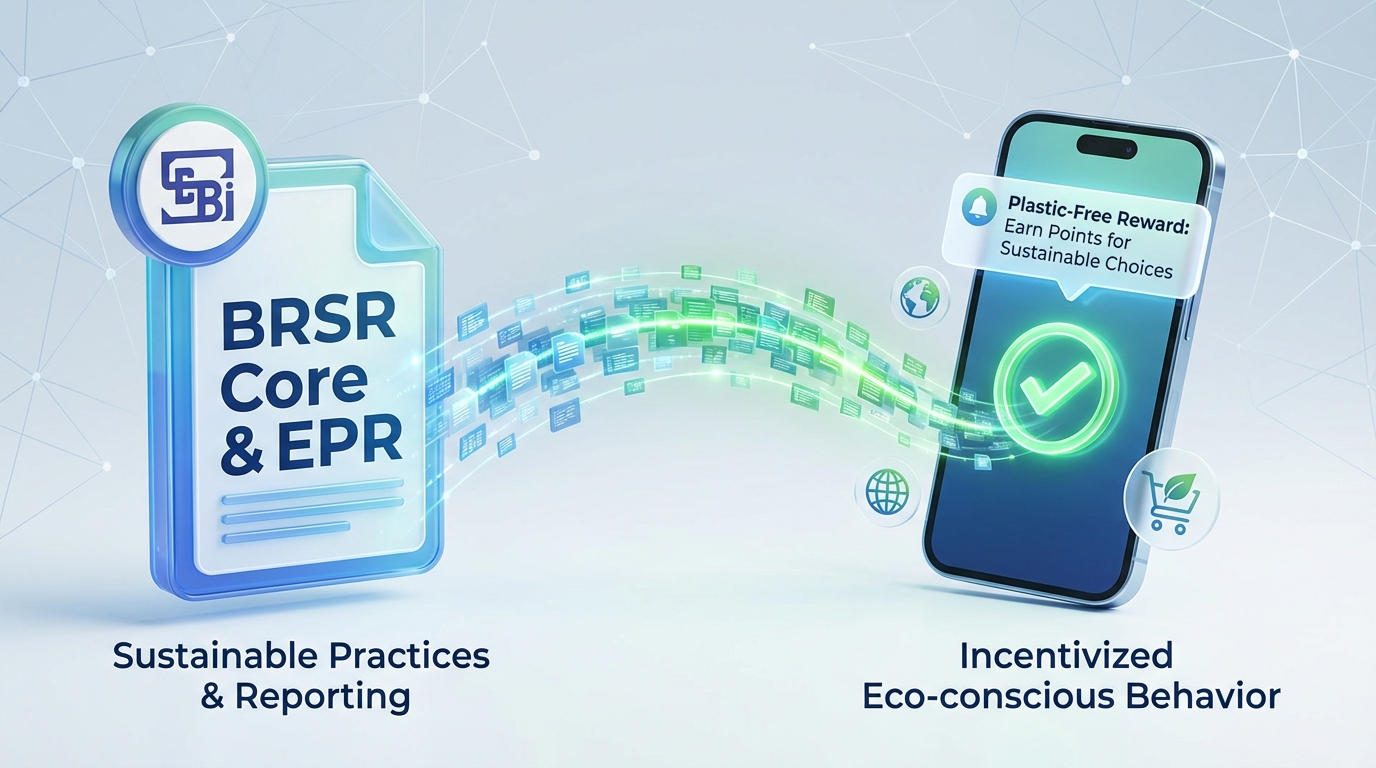
The Securities and Exchange Board of India (SEBI) has introduced the BRSR Core framework, a subset of the Business Responsibility and Sustainability Report that requires “reasonable assurance” for key ESG metrics. For enterprises, this means that sustainability claims—such as plastic reduction or carbon mitigation—must be backed by auditable telemetry. Loyalty programs provide this telemetry by tracking SKU-level data and consumer actions, which can then be rolled up into decision-useful metrics for value-chain coverage.
EPR for Plastic Packaging and SKU-Level Rewards
Extended Producer Responsibility (EPR) is now a legal obligation for plastic waste management and recovery in India. By 2026, brands are leveraging plastic-free purchase rewards to incentivize consumers to choose products with minimal or recyclable packaging. By tagging SKUs with “plastic-free” or “refillable” metadata, brands can reward behaviors that directly contribute to their EPR recovery targets, effectively turning their customer base into a distributed waste-management workforce.
The Shift from Points to Purpose
The loyalty landscape is shifting from generic points-based systems to responsibility-led incentives. According to recent industry standards, Indian consumers in 2026 value “instant gratification” combined with “experiential depth.” This means that green shopping incentive campaigns that offer UPI-based micro-rewards for low-carbon choices (like choosing slower shipping or paperless billing) are outperforming traditional cashback models.
Sources:
- SEBI BRSR Core framework and assurance requirements
- CPCB: Plastic Waste Management Rules and EPR
- CSR Universe: The future of loyalty—From rewards to responsibility
Program Design Blueprint: Mapping Eco-Intent to Incentives and Economics
Designing a successful sustainable loyalty program requires a meticulous mapping of eco-actions to tangible incentives. This ensures that the program remains economically viable while driving the desired environmental impact through green shopping incentive campaigns.
Defining the Eco-Action Catalog
To drive meaningful change, brands must define specific actions that earn rewards. These include:
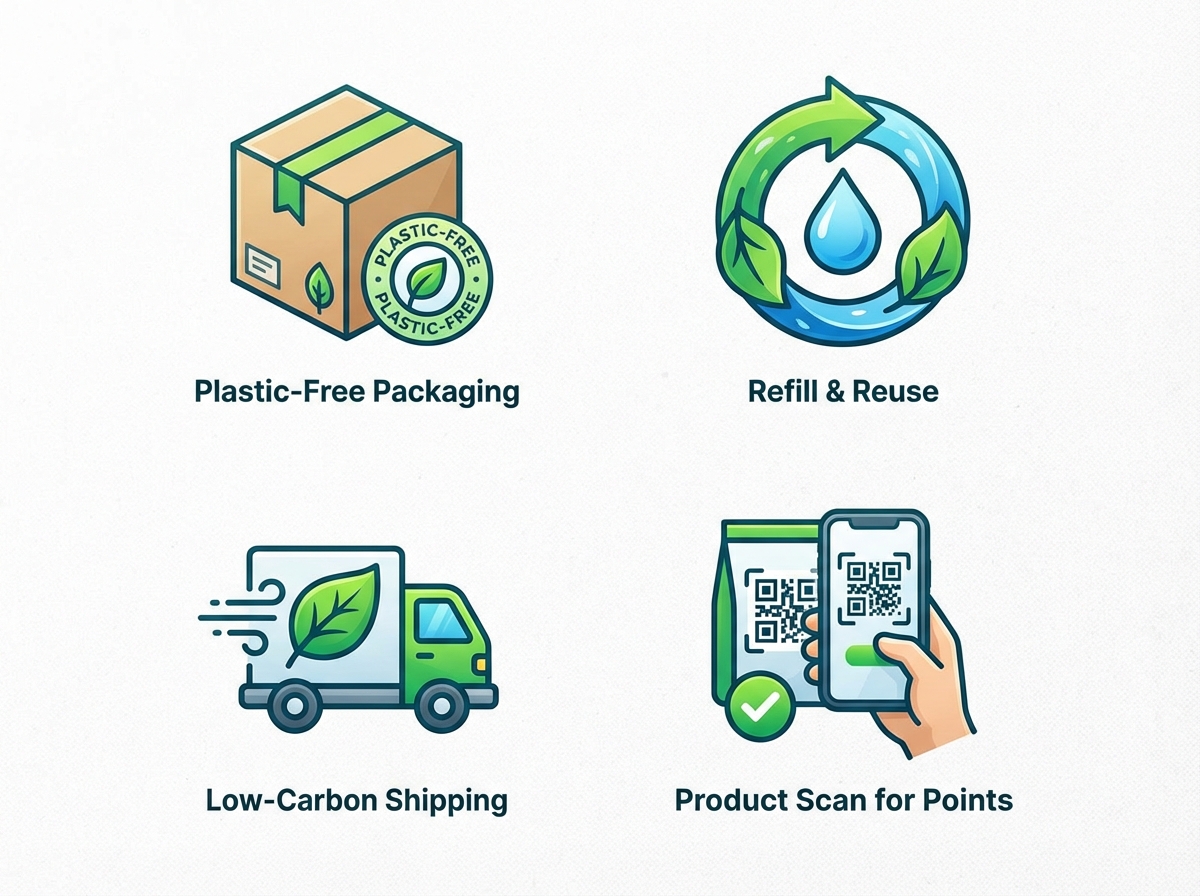
- Plastic-Free Baskets: Customers earn plastic-free purchase rewards when their cart contains a high percentage of recyclable or refillable SKUs. This is verified via SKU metadata that tracks packaging weight and material type (e.g., PET vs. HDPE).
- Circular Economy Loyalty Points: Rewards are granted for “circular” behaviors such as returning old packaging for refills, booking repair services, or participating in trade-in programs. These actions are verified through unique QR codes or service claim IDs.
- Sustainable Product Recommendations: AI-driven engines prioritize SKUs with lower CO2e intensity or eco-certifications (like FSC or GRS). Explanatory tags, such as “Why recommended: 40% lower carbon footprint,” help educate the consumer during the purchase journey.
- Low-Carbon Delivery Choices: Offering “Green Points” for consolidated shipping or PUDO (Pick-up/Drop-off) points reduces the last-mile carbon intensity of e-commerce.
The Economics of Eco-Rewards
The financial model must balance the cost of rewards with the savings generated from reduced packaging and improved retention. A typical 2026 model might include:
- Earn Rate: 1 Green Point per ₹100 spent, with a 3x multiplier for plastic-free SKUs.
- Breakage Targets: Aim for 15–25% breakage to maintain program liability.
- Redemption Sinks: Points can be redeemed for discounts on refills, repair services, or donated to verified climate projects (e.g., mangrove restoration) with tracked certificate IDs.
Data Requirements for Personalization
To enable carbon footprint tracking personalization, brands must maintain robust SKU metadata. This includes the per-unit CO2e factor, packaging weight, and material type. User attributes such as pincode and preferred language are also critical for delivering localized, relevant nudges that drive conscious consumer retention.
Gamification and the Content Engine: Video-First and Vernacular
In 2026, the success of a loyalty program is determined by its ability to engage users through immersive, real-time content. Loyalty program gamification in 2026 is the “glue” that keeps consumers returning to the platform.
Gamification Objects and Rituals
- Eco-Tier Progression Videos: Instead of static badges, brands use dynamic videos to visualize a member's journey from “Eco-Explorer” to “Sustainability Legend.” These videos recap the specific milestones achieved, such as “300 Green Points earned” or “5 refills completed.”
- Zero-Waste Challenge Marketing: Time-boxed missions, such as “The 30-Day Plastic-Free Challenge,” create a sense of urgency. Team-based leaderboards for housing societies or campuses foster community competition and social proof.
- Sustainability Milestone Celebrations: When a user hits a significant threshold—like saving 10kg of CO2e—the brand triggers a celebratory video. These assets are designed to be shareable, turning the user’s personal impact into brand advocacy. Eco-loyalty program videos
Content Machinery with TrueFan AI
Platforms like TrueFan AI enable enterprises to scale this level of personalization without the need for manual video production. By integrating AI-driven video generation, brands can deliver hyper-personalized content that resonates on a human level.
TrueFan AI's 175+ language support and Personalised Celebrity Videos allow brands to reach diverse Indian demographics in their native tongue. For instance, a brand ambassador can address a user by name in Marathi, congratulating them on their recent “plastic-free” purchase. This level of localization, combined with Indian accent voice cloning, ensures that eco-rewards gamification videos are both comprehensible and emotionally impactful. Voice commerce and vernacular personalization in India 2026
Real-time triggers ensure that these videos are delivered via WhatsApp or the brand app immediately after an action is completed. This instant feedback loop reinforces eco-friendly behavior nudges, making the sustainable choice the most rewarding one. WhatsApp catalog video marketing
Sources:
Data, Scoring, and Personalization Architecture
To be “assurance-ready” for BRSR Core, the data architecture behind a sustainable loyalty program must be transparent and auditable. This requires a sophisticated approach to carbon footprint tracking personalization.
The Carbon Footprint Model
The total carbon impact of an order is calculated using a multi-factor formula:
Order CO2e = Σ(SKU_i_CO2e × Quantity) + Packaging_CO2e + (Delivery_Mode_Multiplier × Distance)
By providing this data to the consumer in real-time, brands can offer “next-best-eco-action” logic. For example, if a user typically chooses air-express shipping, the system might nudge them toward ground shipping by showing the exact kg of CO2e they would save.
Environmental Impact Scorecards
Environmental impact scorecards serve as the primary interface for both the consumer and the CSR department.
- For the Consumer: A monthly summary of plastic avoided (in grams), trees planted, and CO2e mitigated. This builds trust and reinforces the value of their participation.
- For the CSR Team: Aggregated data by product line and region that can be directly exported into BRSR Core templates. This ensures that the loyalty program is not just a marketing tool, but a core component of the company’s ESG reporting infrastructure.
Behavioral Nudges and Social Proof
Eco-friendly behavior nudges are most effective when they leverage social comparison. Lines like “You are in the top 10% of eco-shoppers in Bengaluru” or “6,000 people in your city chose plastic-free packaging today” create positive social norms that drive conscious consumer retention. Predictive analytics for customer retention
Advocacy and Lifecycle Automation: Turning Impact into Influence
The final stage of a sustainable loyalty program is turning individual impact into collective influence. This is achieved through green brand advocacy automation and structured climate action programs. Eco-loyalty program videos
Climate Action Reward Programs
Beyond personal discounts, users value the ability to contribute to larger environmental goals. Climate action reward programs allow users to redeem their points for verified carbon offsets or community-based projects. These might include:
- Geotagged Tree Planting: Users receive a digital certificate with the exact coordinates of the tree planted in their name.
- Clean Cookstove Credits: Supporting rural health and livelihoods while mitigating carbon.
- Plastic Recovery Credits: Funding the removal of ocean-bound plastic, with proof of impact displayed in the user’s scorecard.
Green Brand Advocacy Automation
To scale the program's reach, brands must automate the creation of user-generated content (UGC). When a user hits a “Sustainability Milestone,” the system can automatically generate a branded video tile summarizing their impact. This tile is optimized for social sharing, effectively turning the brand's most loyal customers into eco-evangelists.
Measuring Retention and LTV
Solutions like TrueFan AI demonstrate ROI through increased engagement and repeat purchase rates. Data from 2026 pilots suggests that eco-engaged cohorts show an 8–15% higher repeat purchase rate compared to standard segments. By focusing on conscious consumer retention, brands can reduce churn and build a more resilient customer base that is aligned with the company's long-term purpose. Predictive analytics for customer retention
Implementation Roadmap: A 90-Day Plan for Indian Enterprises
Launching a sustainable loyalty program India 2026 requires a phased approach to ensure data integrity and system integration.
Weeks 1–3: Data Audit and Modeling
The first phase involves inventorying data sources and defining the emissions and plastic models. Brands must finalize their SKU metadata schema and wire the API triggers for real-time data payloads.
- Deliverable: A baseline impact model and wireframes for environmental impact scorecards.
Weeks 4–6: Incentive and Content Systems
This phase focuses on designing the earn/burn rates and creating the content library. Brands should script their eco-rewards gamification videos and eco-tier progression videos, ensuring that vernacular variants are ready for a diverse audience. Eco-loyalty program videos
- Deliverable: An offer catalog and the first set of AI-rendered video templates.
Weeks 7–9: Pilot Build and QA
The pilot build includes configuring the nudges, integrating WhatsApp delivery, and setting up the analytics dashboard. It is crucial to dry-run the BRSR and EPR export functions to ensure compliance. WhatsApp catalog video marketing
- Deliverable: UAT sign-off and a compliance checklist for the pilot launch.
Weeks 10–12: Pilot Launch and Optimization
Launch the program to a 10–20% sample of the audience. Use A/B testing to optimize scripts and incentives. For example, test whether a “name mention in the first 5 seconds” of a video leads to higher watch-through rates. Loyalty program gamification 2026
- Deliverable: Pilot results and a scale-up plan for full market rollout.
Frequently Asked Questions
How do sustainable loyalty programs help with BRSR Core compliance?
Sustainable loyalty programs capture granular, SKU-level data on consumer behavior (e.g., plastic avoided, carbon mitigated). This data provides the “reasonable assurance” required by SEBI for ESG disclosures, as it creates an auditable trail of environmental impact within the company’s value chain.
What are the most effective rewards for eco-conscious Indian consumers in 2026?
While UPI-based micro-rewards remain popular for instant gratification, experiential rewards like sustainability milestone celebrations and access to exclusive “green” events are highly valued. Additionally, the ability to donate points to verified climate projects provides a sense of purpose that drives long-term loyalty.
Can AI-generated videos really improve conscious consumer retention?
Yes. Personalized video content has a significantly higher engagement rate than static emails or SMS. By using TrueFan AI to create videos that recap a user’s personal environmental impact in their native language, brands can build a deeper emotional connection, leading to higher LTV and lower churn. Eco-loyalty program videos
How do you prevent “greenwashing” in loyalty programs?
Transparency is key. Brands must publish their methodologies for CO2e and plastic calculations. Providing direct links to third-party registries for carbon offsets and using environmental impact scorecards with verifiable data points helps maintain trust and regulatory compliance.
Is WhatsApp a viable channel for eco-loyalty programs in India?
WhatsApp is the primary interface for loyalty in India due to its high penetration and ease of use. Integrating eco-rewards gamification videos directly into WhatsApp allows for seamless interaction, instant reward notification, and easy sharing of sustainability milestones. WhatsApp catalog video marketing guide
Book an enterprise demo today to launch personalized eco-loyalty journeys at scale across WhatsApp, app, and email. Leverage hyper-personalized video and real-time impact scorecards to drive conscious consumer retention and achieve your 2026 CSR goals.