UAE healthcare AI: How Genomics and AI Diagnostics Are Powering Precision Medicine in the UAE
Estimated reading time: ~12 minutes
Key Takeaways
- Interoperability first: NABIDH and Malaffi enable secure, standardized data exchange to power AI-assisted care.
- Genomics at scale: The Emirati Genome Program is moving from research to clinical integration with PGx and counseling workflows.
- Sovereign AI focus: UAE-hosted models protect data residency while enabling advanced diagnostics.
- Proven impact: National AI screening programs demonstrate measurable KPIs and ROI in throughput and TAT.
- Change enablement: Patient and clinician education—boosted by personalized content—accelerates adoption.
The rapid evolution of UAE healthcare AI represents a fundamental shift in the nation’s clinical paradigm, moving from reactive treatment to proactive, data-driven wellness. By integrating artificial intelligence across the Department of Health (DoH) Abu Dhabi, the Dubai Health Authority (DHA), and Emirates Health Services (EHS), the UAE is establishing a global benchmark for precision medicine. This transformation is underpinned by robust health information exchanges like Malaffi and NABIDH, which provide the longitudinal data liquidity necessary for advanced algorithmic triage and personalized therapeutic pathways.
As we look toward the 2026 fiscal landscape, the momentum is undeniable. According to the Philips Health Trends Research UAE 2025, presented at the World Health Expo Dubai 2026, 77% of UAE residents express high confidence in AI’s ability to enhance diagnostic accuracy. Furthermore, the UAE’s telemedicine sector is projected to maintain a 19.1% CAGR, accelerating the adoption of AI-first clinical workflows that prioritize earlier detection and tailored interventions.
Strategic investments in sovereign AI and high-performance computing are enabling the UAE to process vast genomic datasets locally, ensuring data residency and security. This executive-ready guide explores how the convergence of the Emirati Genome Program, AI-driven diagnostics in Dubai, and Mubadala’s healthcare technology ecosystem is redefining the future of precision medicine in the UAE.
The UAE healthcare AI landscape accelerates: Policy, platforms, and partnerships
The acceleration of UAE healthcare AI is driven by a sophisticated interplay of government policy, centralized data platforms, and strategic academic-industrial partnerships. The DoH Abu Dhabi’s “AI in Health” agenda and the DHA’s digital transformation strategy have created a regulated environment where innovation can scale without compromising patient safety. These initiatives are supported by national platforms like Malaffi and NABIDH, which ensure standardized exchange of health data using HL7 FHIR and DICOM protocols.
Interoperability remains the cornerstone of this ecosystem, allowing for the seamless flow of information between electronic health records (EHRs) and specialized AI diagnostic tools. This connectivity is vital for the deployment of “Agentic AI,” a 2026 trend identified by Deloitte Middle East, where autonomous task orchestration manages complex clinical operations. By leveraging UAE-hosted, privacy-preserving models, healthcare providers can maintain “Sovereign AI” capabilities that align with national data residency requirements.
Ecosystem engines such as the Mohamed bin Zayed University of Artificial Intelligence (MBZUAI) and M42 are at the forefront of this R&D. These institutions are developing healthcare-specific models that address the unique genetic and demographic profile of the UAE population. Platforms like TrueFan AI enable healthcare organizations to bridge the communication gap between complex AI-driven clinical outcomes and patient understanding through high-fidelity, personalized digital content.
Sources:
- Philips: World Health Expo Dubai 2026 innovations
- Deloitte Middle East: 2026 AI trends
- MBZUAI: Healthcare AI partnerships
- DoH Abu Dhabi: Innovation agenda
AI diagnostics Dubai: From NABIDH to scaled imaging AI
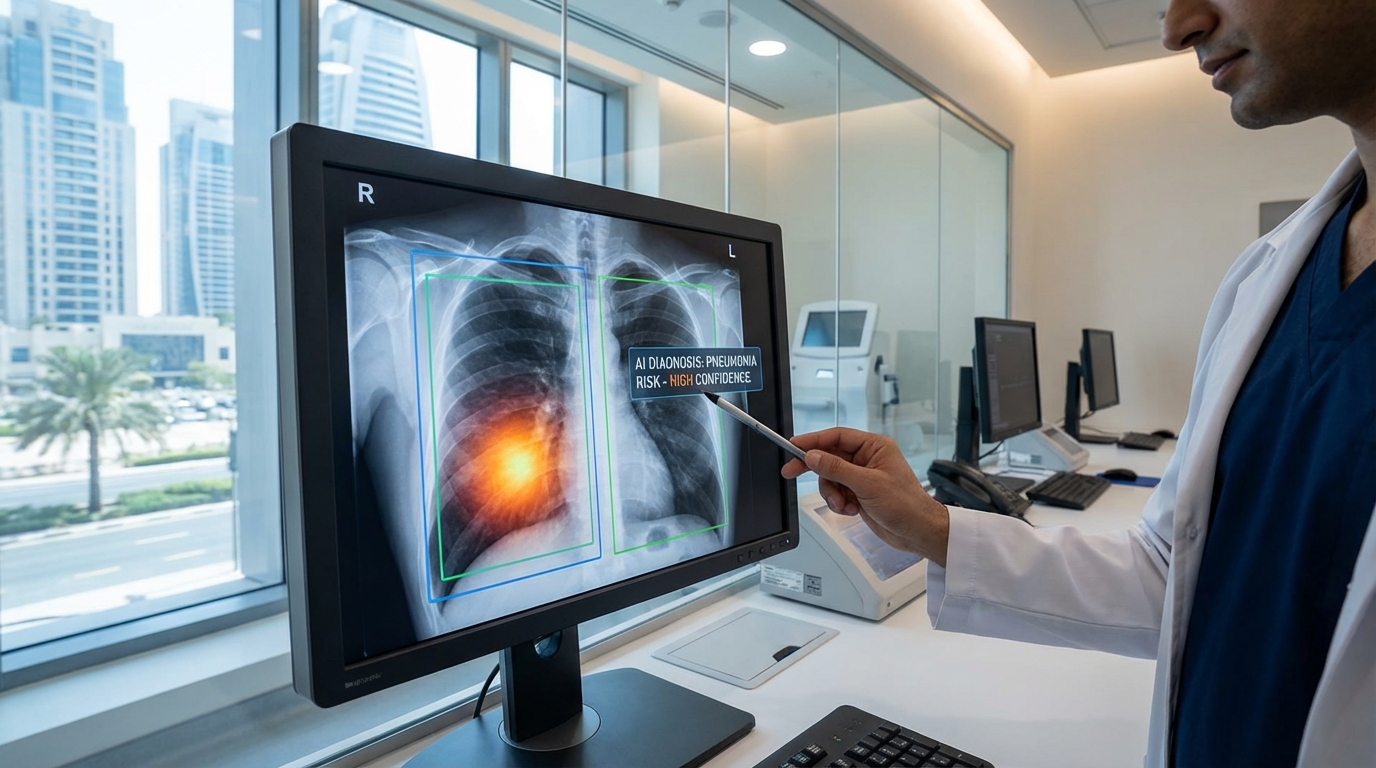
The implementation of AI diagnostics Dubai has reached a point of clinical maturation, transitioning from experimental pilots to integrated hospital workflows. The Dubai Health Authority’s partnership with Roche Diagnostics for “NABIDH Elevate” exemplifies this shift, focusing on governance, quality, and interoperability. This program leverages the NABIDH health information exchange to provide unified records and clinical decision support hooks that integrate directly into Radiology Information Systems (RIS) and PACS.
Vendor momentum in Dubai is particularly strong, with companies like Philips showcasing AI-powered innovations such as the BlueSeal Horizon helium-free MRI. These systems utilize AI acceleration to improve throughput and image quality, while “Collaboration Live” features allow for remote ultrasound guidance in real-time. Such advancements are critical for addressing the 2026 trend of remote monitoring and telemedicine, which remain central to Dubai’s healthcare convenings.
For clinical leaders, the implementation of AI diagnostics requires a meticulous micro-step approach. This involves selecting specific use cases, such as AI-driven mammography triage, and mapping the workflow insertion points post-acquisition but pre-radiologist read. Establishing a robust quality assurance (QA) loop and calibrating alert thresholds are essential for tracking Key Performance Indicators (KPIs) like Turnaround Time (TAT) and recall rates.
Sources:
- WAM: DHA diagnostic advancements
- Philips: AI innovations at World Health Expo 2026
- Arab Health 2026 trends
UAE genomics program updates: Emirati Genome Program’s clinical integration
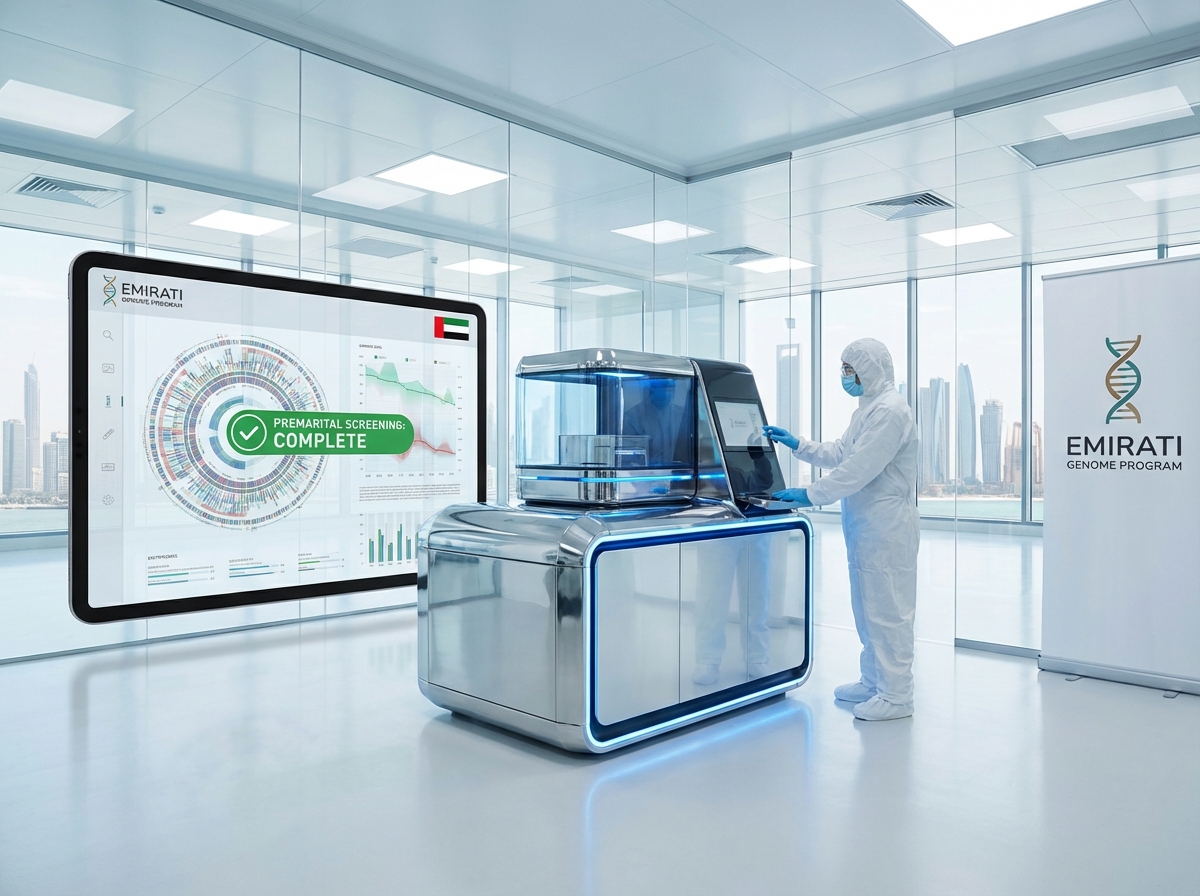
The latest UAE genomics program updates highlight a significant shift toward the clinical translation of genetic data. Chaired by H.H. Khaled bin Mohamed bin Zayed in March 2025, the Emirates Genome Council has accelerated the integration of the Emirati Genome Program (EGP) into standard care. This includes the mandate for national premarital genetic testing for Emiratis, which commenced on January 1, 2025, marking a transition toward predictive and preventive healthcare.
The bridge from research to clinic is being built through collaborations between Khalifa University, the DoH, and M42. These partnerships focus on developing EHR flags for genetic carriers, pharmacogenomics (PGx) decision support rules, and specialized counseling workflows. By aligning these efforts with national registries, the UAE is creating a comprehensive blueprint for genomic medicine that can be replicated across the region.
TrueFan AI 175+ language support and Personalised Celebrity Videos can be utilized within this genomic framework to provide culturally resonant education. For instance, personalized videos can explain complex genetic results to families in their preferred language, ensuring higher comprehension and engagement with preventive care plans. This level of personalization is essential for the success of large-scale public health initiatives like the EGP.
Sources:
- Emirates Genome Council: March 2025 meeting
- MoHAP: Premarital genetic testing mandate
- Khalifa University: Precision medicine updates
Mubadala healthcare tech: Inside M42’s AI- and genomics-enabled care platform
The emergence of Mubadala healthcare tech, specifically through the formation of M42, represents a massive consolidation of AI and genomic capabilities. M42, a joint venture between G42 Healthcare and Mubadala Health, operates as a first-of-its-kind integrated health powerhouse. Its focus areas—precision oncology, population health, and remote monitoring—are designed to leverage the UAE’s unique data assets to deliver superior clinical outcomes.
M42’s platform emphasizes continuous care through AI-enabled remote patient monitoring (RPM) and biosensor collaborations. These technologies are particularly effective in post-acute monitoring and cardiometabolic programs, where earlier detection of physiological shifts can prevent hospital readmissions. The Mubadala Investment Company portfolio further supports this by providing the necessary UAE-hosted compute power and data security infrastructure required for regulated clinical AI.
Solutions like TrueFan AI demonstrate ROI through enhanced patient engagement and change enablement within these large-scale technology deployments. By automating the creation of executive briefings and patient education modules, M42 can ensure that both clinicians and patients are aligned with the rapid pace of technological change. This integration of communication and technology is a key differentiator for Mubadala’s healthcare strategy.
Sources:
Precision medicine UAE: Programs, policy, and provider readiness
The advancement of precision medicine UAE is anchored by the DoH’s Personalized Precision Medicine Program, which initially focuses on oncology-focused pathways and tumor boards. Precision medicine in this context refers to the use of multi-omic data, imaging, and lifestyle factors to create individualized prevention and therapy plans. Provider readiness is a critical factor here, with 2024 studies indicating a growing awareness of pharmacogenomics among GCC clinicians, though training gaps remain.
To address these gaps, organizations are looking toward 2026 enterprise AI adoption trends, which emphasize automation and operational efficiency. Insights from Codiant and Esferasoft suggest that UAE companies are increasingly aligning their budgets with AI-first patient journeys that offer clear ROI. This includes investing in clinical decision support (CDS) systems that provide real-time guidance on drug dosing based on a patient’s genetic profile.
The role of APMAD (Advanced Precision Medicine and Diagnostics) and other regional institutes is vital for the translational research needed to validate these precision pathways. By focusing on representative datasets that include Emirati and multicultural cohorts, the UAE ensures that its precision medicine initiatives are both effective and equitable. This commitment to validation and bias mitigation is essential for maintaining trust in AI-driven healthcare.
Sources:
- APMAD: Precision medicine research
- Codiant: UAE AI automation 2026
- Esferasoft: AI consulting trends UAE 2026
- PubMed: Pharmacogenomics in GCC (2024)
Real-world diagnostics and screening examples: Outcomes and lessons
A landmark example of UAE healthcare AI in action is the multi-year contract between Lunit and SEHA to power a national AI breast cancer screening program. Announced in early 2025, this initiative uses AI for the triage and diagnosis of mammography images across the entire SEHA network. The primary goal is to improve sensitivity and specificity while reducing the workload on radiologists through automated triage of normal cases.
Operational lessons from this rollout emphasize the importance of establishing baseline targets for sensitivity and specificity. A robust governance framework, including double reading and the management of false positives, is necessary to ensure clinical safety. Key performance indicators such as the Positive Predictive Value (PPV) and patient recall rates are tracked meticulously to measure the program's impact on public health outcomes.
Validation culture is also taking root in the UAE, with local academic institutions conducting prospective, multi-site studies to verify AI accuracy. These studies use metrics like Area Under the Curve (AUC) and Receiver Operating Characteristic (ROC) curves to disclose model performance transparently. This rigorous approach to validation ensures that AI tools are calibrated for the specific imaging equipment and patient populations found in the UAE.
Sources:
Leader’s implementation playbook: 90-day action plan, KPIs, and ROI
For healthcare executives, implementing UAE healthcare AI requires a structured approach that balances clinical validation with operational efficiency. A 90-day action plan can serve as a catalyst for broader organizational transformation. In the first 30 days, leaders should establish an AI steering group, identify clinical champions in radiology or oncology, and map data flows between EHR and PACS systems.
The middle phase (Days 30–60) focuses on technical integration and “silent mode” validation. This involves setting up DICOM router rules and FHIR-based results ingestion while comparing AI performance against the standard of care. Training is also paramount; clinicians must be educated on AI interpretability and safety through microlearning modules that fit into their busy schedules.
The final 30 days involve a limited site go-live and the establishment of a monitoring framework to detect model drift. ROI should be measured across multiple dimensions, including a 20–40% reduction in mammography turnaround time and a 20–35% increase in screening throughput. By aligning these metrics with 2026 budget planning guides, organizations can demonstrate the tangible value of their AI investments.
KPI/ROI Framework for 2026:
- Time-to-Diagnosis: Target 30% reduction in TAT for critical imaging findings.
- Throughput: Aim for 25% increase in screening volume without additional staffing.
- Clinician Efficiency: Target 15 minutes saved per complex oncology case review.
- Patient Attendance: Aim for 15% uplift in screening attendance through personalized communications (personalized video campaigns).
Sources:
Executive Summary: 6 Fast Takeaways for Healthcare Leaders
- Deployment Readiness: AI diagnostics Dubai are now deployment-ready via NABIDH-enabled workflows; prioritize PACS/RIS integration and governance to capture immediate efficiency gains.
- Genomic Integration: The Emirati Genome Program and mandated premarital testing are scaling precision screening nationwide, shifting the focus to preventive care.
- Proven Scalability: The Lunit–SEHA national AI breast screening program provides a proven model for scaling AI safely across large healthcare networks.
- Strategic Trends: The 2026 trendline favors sovereign and agentic AI, requiring leaders to invest in UAE-hosted infrastructure and autonomous clinical orchestration.
- Public Trust: With 77% of residents trusting AI for diagnosis, now is the time to leverage patient-facing education to accelerate the uptake of new digital health services.
- ROI Focus: Align 2026 implementations with automation levers that offer clear ROI, such as reduced turnaround times and increased screening throughput.
Recommended Internal Links
- 2026 digital transformation budget planning — Executive budget frameworks and ROI measurement methods to support the Leader’s Playbook and precision medicine budgeting.
- Personalized video campaigns for engagement — How personalized video campaigns drive engagement and attendance; useful for patient communications and KPI uplift.
- ESG score marketing automation 2026 — Multilingual, compliance-safe, video-first workflows aligned to assured data; relevant to genomic counseling and enterprise communications.
- Green financing marketing 2026 — Demonstrates ROI, automation, and “virtual reshoots” for large-scale personalized content in regulated contexts; aligns with M42 change enablement.
- Green bonds Abu Dhabi — For UAE executives exploring sustainable financing models that could support large-scale AI and genomics infrastructure initiatives.
Frequently Asked Questions
How does UAE healthcare AI ensure the privacy of patient genomic data?
Data privacy is maintained through strict adherence to UAE data residency laws, which require health data to be stored on local, secure servers. Furthermore, the use of “Sovereign AI” models and federated learning allows for data processing without the need to centralize sensitive personal health information (PHI).
What is the role of NABIDH in AI diagnostics Dubai?
NABIDH acts as the central health information exchange for Dubai, providing the interoperability framework needed for AI tools to access longitudinal patient records. This enables more accurate clinical decision support and ensures that AI-generated insights are available to clinicians at the point of care.
How can TrueFan AI assist in the rollout of national screening programs?
TrueFan AI can automate the creation of personalized patient education videos that address individuals by name and provide specific instructions for their appointments. This high level of personalization helps overcome cultural barriers and improves attendance rates for programs like the national breast cancer screening initiative.
What are the primary KPIs for measuring the success of precision medicine UAE?
Success is measured through clinical outcomes (e.g., improved survival rates in oncology), operational efficiency (e.g., reduced time-to-treatment), and patient engagement (e.g., adherence to personalized wellness plans). ROI is also tracked through system-wide cost savings associated with earlier disease detection.
What are the 2026 trends for AI in the UAE healthcare sector?
Key trends for 2026 include the rise of Agentic AI for clinical operations, the deployment of multimodal models that combine imaging and genomics, and a focus on sovereign AI to ensure national data security and regulatory compliance.