Women’s Day DEI marketing 2026: A video-first, enterprise blueprint beyond tokenism
Estimated reading time: ~12 minutes
Key Takeaways
- Shift from slogans to action-backed storytelling that pairs lived experiences with measurable DEI outcomes
- Use video-first, multilingual personalization across WhatsApp and mobile channels for inclusive reach
- Scale recognition with data-triggered video automation tied to HRIS events and consent governance
- Anchor campaigns to real policies, legal compliance, and transparent metrics to build trust
- Orchestrate a unified content system that connects templates, triggers, and dashboards for ongoing optimization
For HR Directors and Corporate Communications leaders, Women’s Day DEI marketing 2026 represents a critical pivot point from performative gestures to data-backed, hyper-personalized recognition. Designing March 8 programs now requires a sophisticated blend of inclusive storytelling and year-round accountability to resonate with a workforce that demands transparency over slogans.
Authenticity in 2026 is defined by action-backed narratives tied directly to corporate policies, such as equal pay initiatives and returnship programs. By leveraging consent-first automation at scale, enterprises can navigate India’s multilingual reality through WhatsApp-first distribution, ensuring every woman feels seen and valued. Platforms like TrueFan AI enable this level of granular personalization, transforming generic corporate greetings into meaningful, high-impact video assets.
As the digital landscape evolves, the integration of generative video and real-time data allows for a “segment-of-one” approach to employee engagement. This blueprint outlines how to move beyond tokenism toward a sustainable, video-first DEI strategy that drives measurable culture change and employer brand equity.
From slogans to substance: Inclusive brand storytelling videos that build trust
Inclusive brand storytelling videos in 2026 have moved beyond the “hero narrative” to center real women across diverse functions, grades, and geographies. These narratives pair lived experiences with hard metrics, such as promotion rates or retention figures, to provide a holistic view of the organization’s progress.
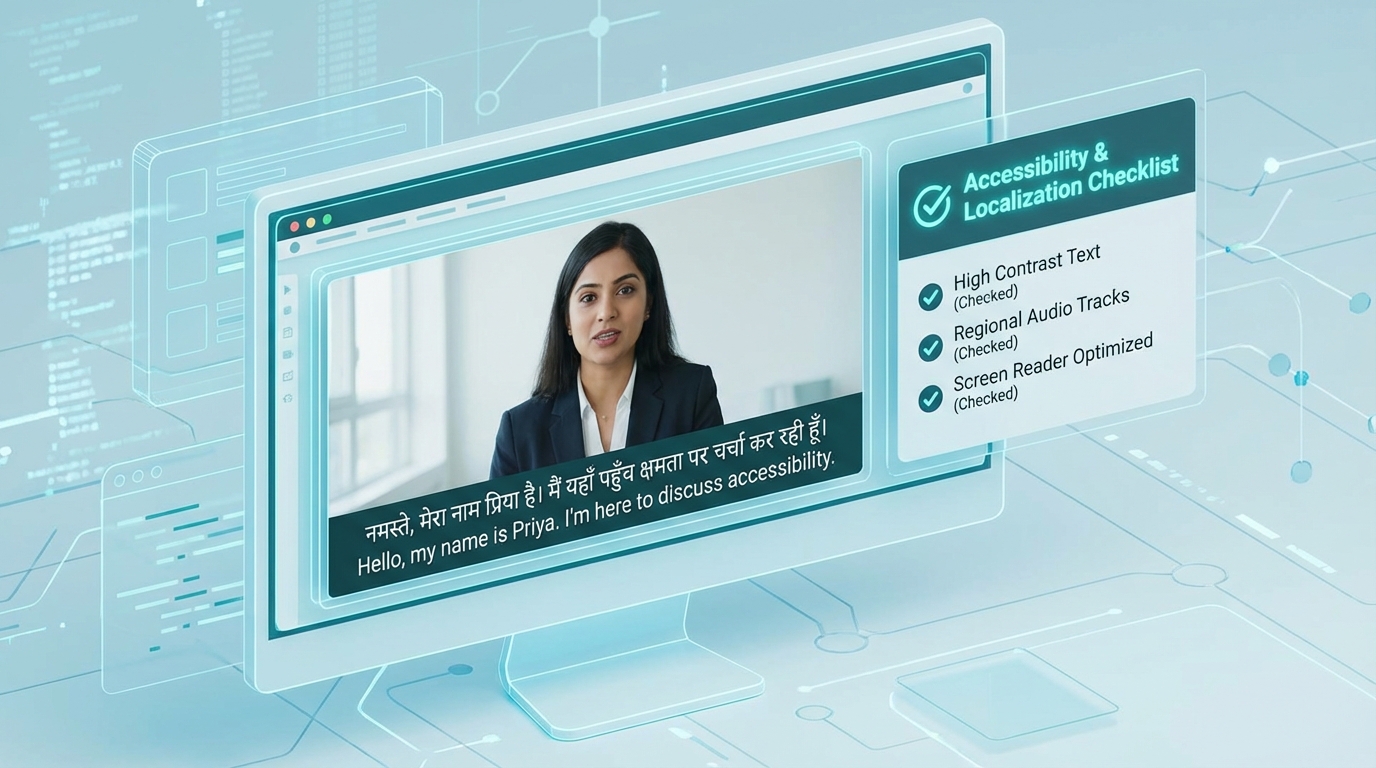
To avoid the pitfalls of tokenism, editorial guardrails must prioritize accessibility and intersectionality. This includes using open captions, high-contrast on-screen text, and ensuring that frontline workers receive equal prominence alongside corporate executives. Incorporating regional language voiceovers is no longer optional; it is a prerequisite for reaching a pan-India workforce effectively.
Research indicates that storytelling is a primary driver of employer branding, particularly during the recruitment and onboarding phases. When candidates see authentic representations of women thriving in various roles, it significantly boosts the organization’s attractiveness as an employer of choice.
Editorial guardrails for authenticity and accessibility
Authenticity requires a rigorous commitment to consented and attributable stories. Every video should clearly articulate “what changed” as a result of a specific policy or program, backed by a reviewer panel that includes Employee Resource Groups (ERGs). This ensures that the content remains grounded in the actual experiences of the workforce.
The accessibility checklist for 2026 is comprehensive. It includes burned-in captions, VTT files for screen readers, and localized scripts in languages such as Hindi, Tamil, Bengali, and Marathi. Visuals must maintain a color contrast ratio of at least 4.5:1, and on-screen text for mobile-first platforms like Instagram Reels must be large enough to be legible on small screens.
Governance is equally critical. All claims must undergo legal and POSH (Prevention of Sexual Harassment) compliance reviews. It is essential to avoid implying medical or financial guarantees while maintaining a focus on building a culture of equality and safety.
Sources:
- Social Samosa: Women’s Day campaigns 2024 and intersectional narratives
- ET HRWorld: Storytelling powering recruitment and onboarding
Female leadership recognition campaigns that drive culture change
Female leadership recognition campaigns are essential for visualizing the path to the C-suite. In 2026, these campaigns utilize 30–45 second spotlight videos that link individual leaders to specific business outcomes, such as revenue growth, safety improvements, or high Net Promoter Scores (NPS).
The impact of these videos extends beyond the individual leader; they highlight the mentorship impact and the strength of the talent pipeline. By featuring leaders from manufacturing plants and tier-2 or tier-3 cities, organizations can demonstrate a truly inclusive leadership culture that transcends the traditional corporate headquarters.
A strategic rollout cadence is vital for maximizing engagement. This begins with a pre-March 8 teaser, followed by the main roll-out on International Women's Day, and concludes with a post-event vignette detailing how the organization will sustain its DEI momentum throughout the year.
Strategic Cadence and Social Proof
Data from 2026 projections suggests that leadership-centric narratives achieve 40% higher engagement rates on professional networks like LinkedIn compared to generic corporate posts. This is because audiences respond more favorably to human-centric stories that demonstrate tangible professional success and community impact.
By showcasing the achievements of women in non-traditional roles—such as supply chain logistics or heavy engineering—enterprises can challenge industry stereotypes. These videos serve as powerful tools for internal motivation and external brand positioning, signaling a deep-seated commitment to gender parity at all levels of the hierarchy.
Sources:
- Social Samosa: Leadership-centric narratives in IWD campaigns
- Deloitte: 2026 Global Human Capital Trends
Women employee appreciation automation at scale (without sounding robotic)
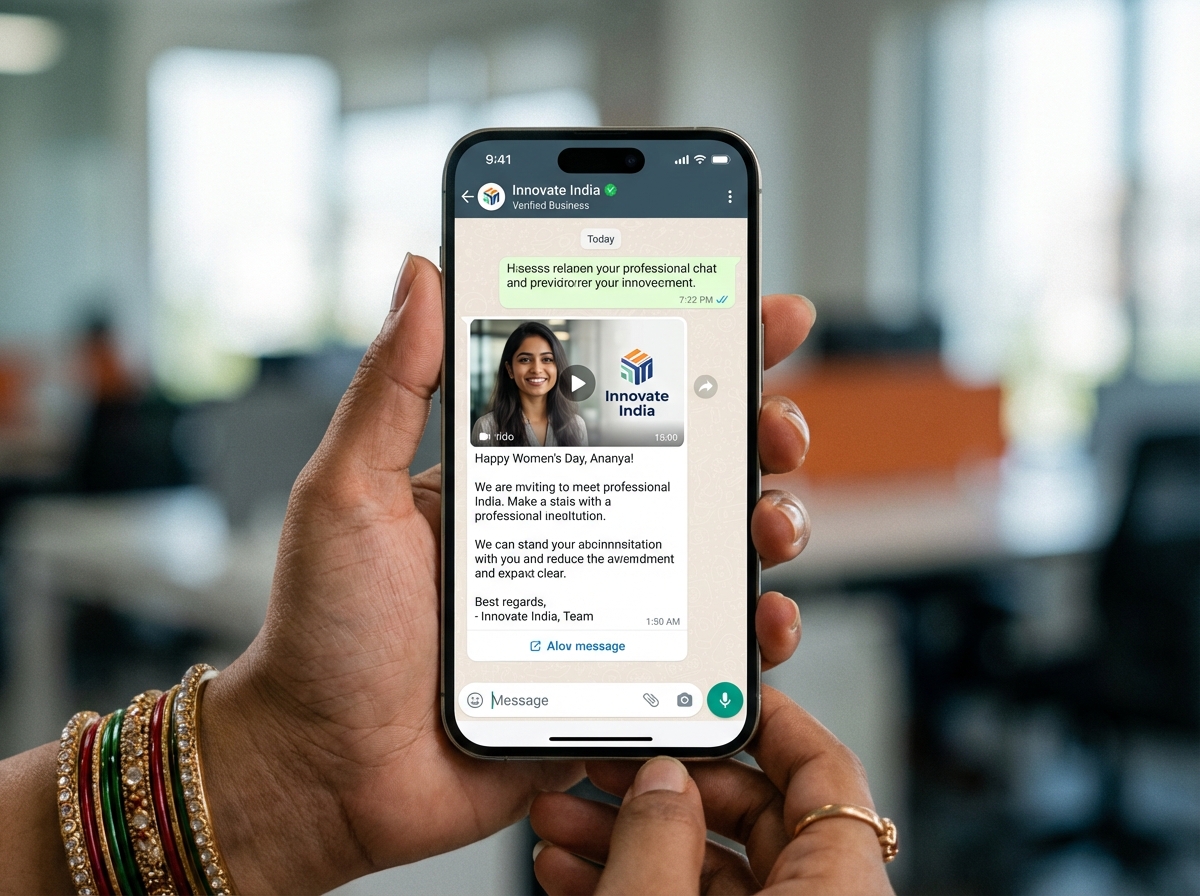
The challenge of recognizing a global workforce is solved through women employee appreciation automation. By 2026, data-triggered video systems allow for the creation of 15–30 second personalized thank-you videos mapped to specific HRIS events, such as promotions, work anniversaries, or return-to-work milestones.
These videos are not generic; they utilize variables such as the employee's name, preferred pronouns, role, and even a specific quote from their direct manager. This level of detail ensures that the automation feels personal and sincere rather than a mass-produced corporate mandate. TrueFan AI's 175+ language support and Personalised Celebrity Videos provide the technical infrastructure to execute this at scale, ensuring that a factory worker in Tamil Nadu receives the same quality of recognition as a director in Mumbai.
The workflow for this automation is seamless. An HRIS trigger initiates the data mapping to a pre-approved template, followed by a consent flag check. The video is then rendered in real-time—often in under 30 seconds—and delivered via the employee's preferred channel, such as WhatsApp or the company intranet.
Personalization Variable Schema Example
To implement this effectively, organizations must maintain a clean data schema. A typical 2026 personalization payload includes:
- {first_name}
- {preferred_pronouns}
- {role_title}
- {location_city}
- {tenure_years}
- {milestone_type}
- {manager_name}
- {manager_quote}
- {preferred_language}
In India, the channel strategy is predominantly WhatsApp-first. Utilizing the WhatsApp Business API allows for deep-linked videos with high open rates. For employees in remote locations or those using feature phones, an SMS fallback with a link to a mobile-optimized landing page ensures no one is left out of the recognition cycle.
Sources:
- Social Samosa: WhatsApp-first campaign behavior in India
- TrueFan AI: Enterprise Generative AI Video Solutions
Designing gender equality video campaigns tied to real policy and metrics
In 2026, the most effective gender equality video campaigns are those that function as “impact explainers.” These 45–60 second videos link specific corporate policies to measurable human outcomes. For example, a video might detail how a pay equity audit led to the correction of anomalies, resulting in a 14% increase in internal mobility for women.
Visualizing these metrics is crucial. On-screen graphics should display baseline data, the specific intervention taken, a time-series showing progress, and a snippet of a human story that illustrates the impact. This level of transparency builds immense trust with both employees and external stakeholders.
Furthermore, these campaigns must align with local legal frameworks. In the Indian context, this means referencing the effective implementation of POSH guidelines and the creation of a broader culture of equality. By 2026, 85% of top-tier Indian firms are expected to integrate real-time DEI dashboards into their public-facing communications.
Compliance and Metric Visualization
A successful campaign doesn't just celebrate progress; it acknowledges the journey ahead. Including the “next milestone date” in the video content demonstrates a long-term commitment rather than a one-off celebration. This approach mitigates “diversity fatigue” and keeps the organization accountable to its stated goals.
The use of diversity brand positioning videos that highlight third-party certifications or rankings (such as Great Place to Work for Women) further validates the organization's claims. These videos serve as a “seal of approval” that enhances the credibility of the internal data being presented.
Sources:
- ET HRWorld: Transforming workplaces with POSH and equality
- McKinsey & Company: Women in the Workplace 2026 Report
Women entrepreneur success stories and women customer testimonials automation
Extending DEI efforts to the broader value chain is a hallmark of leadership in 2026. Women entrepreneur success stories highlight the impact of the organization’s procurement and supplier diversity programs. These 60–90 second mini-documentaries focus on business outcomes like cost savings, defect reduction, and community value-chain impact.
Similarly, women customer testimonials automation allows brands to capture and share the voices of their female users at scale. This process is triggered by specific customer actions, such as a contract renewal or a high CSAT score. A micro-form captures consent and usage windows, ensuring the process is legally sound and respectful of privacy.
The automation framework for these testimonials involves:
- Trigger: Case closure or renewal.
- Outreach: Automated request with a consent micro-form.
- Capture: Mobile UGC (User Generated Content) or a scheduled virtual studio session.
- Governance: Brand review and automated captioning.
- Personalization: Adding a personalized outro with the customer's name and city.
- Distribution: Publishing across social channels with tracking UTMs.
Value-Chain Impact and Community Outcomes
In India, partner and founder spotlights resonate deeply when they are tied to broader community outcomes. For instance, a video featuring a woman-led supplier in a rural district can highlight not just the business relationship, but also the local employment generated.
By 2026, 70% of B2B buying decisions are expected to be influenced by a vendor's DEI credentials. Automating the capture of these success stories ensures that the marketing team has a constant stream of high-quality, authentic content to support sales and brand-building efforts.
Sources:
- Social Samosa: Partner and founder spotlights in Indian campaigns
- HBR: The Strategic Value of Supplier Diversity
March 8 corporate campaigns India: localization, channels, and compliance
Executing March 8 corporate campaigns India requires a deep understanding of the local landscape. Localization in 2026 goes beyond simple translation; it involves cultural mirroring to ensure idioms and visual cues are appropriate for each region. The “Big 9” languages—Hindi, Tamil, Telugu, Bengali, Marathi, Kannada, Malayalam, Gujarati, and Punjabi—form the core of any national campaign.
The channel strategy must be mobile-first and WhatsApp-centric. Deep links that open directly in the app, coupled with intranet banners and LinkedIn leadership clips, create a multi-touchpoint experience. Timing is also critical: teasers should begin on March 1, with peak content drops on the morning and evening of March 8, followed by “what's next” content in the following week.
Compliance and safety are paramount. This includes rigorous consent capture for every individual featured in a video, POSH-aligned language, and strict adherence to data privacy laws. Solutions like TrueFan AI demonstrate ROI through their ability to manage these complex workflows while maintaining ISO 27001 and SOC 2 security standards.
Localization and Safety Checklist
A robust implementation plan for India includes:
- Language Mirroring: Ensuring scripts are culturally nuanced, not just translated.
- Channel Optimization: 9:16 vertical video for WhatsApp and Reels; 1:1 for LinkedIn.
- Consent Logs: Maintaining a verifiable audit trail of all employee and customer consents.
- Accessibility: Large, readable regional scripts for mobile users.
By 2026, the integration of AI-driven virtual reshoots allows organizations to update specific lines in a video—such as a new policy name or a date—without having to reshoot the entire segment. This ensures that content remains evergreen and accurate with minimal additional investment.
Sources:
- ET HRWorld: POSH implementation and culture of equality
- Social Samosa: Platform-native creative patterns for IWD in India
Putting it together: A unified DEI content system for 2026
The final stage of a mature Women’s Day DEI marketing 2026 strategy is the creation of a unified content system. This architecture connects the organization's source-of-truth data (HRIS/CRM) to a library of video templates. These templates cover everything from leadership spotlights and employee appreciation to maternal wellness program videos and allyship nudges.
The orchestration layer manages the trigger rules, ensuring that frequency caps are respected and that the right content reaches the right cohort in their preferred language. Measurement is integrated into the dashboard, tracking both content KPIs (play rates, completion) and people KPIs (ENPS among women, internal mobility, and retention).
This system allows for a continuous loop of optimization. By analyzing which personalization elements—such as a manager's quote or a specific language—drive the highest engagement, the Comms team can refine their scripts in real-time.
Implementation Blueprint and ROI
To go live with a unified system, follow these steps:
- Data Integration: Connect HRIS/CRM to video variables via API.
- Template Build: Create a library of brand-safe, no-code templates.
- Orchestration: Set triggers for milestones like promotions or return-to-work.
- QA: Conduct brand, legal, and DEI reviews.
- Scale: Pilot with one region before a nationwide rollout.
By 2026, the ROI of these systems is measured not just in views, but in the delta of regretted attrition among women and the increase in offer acceptance rates. A video-first, personalized approach ensures that the organization's commitment to DEI is felt at every level, every day of the year.
Sources:
- TrueFan AI: Enterprise Custom Generative AI Video Solutions
- Gartner: 2026 Strategic Roadmap for DEI Technology
Practical Video Template Kit
1. Inclusive brand storytelling videos (60–90s)
- Hook: Feature the employee's role and city.
- Body: Share a specific policy-to-impact statistic (e.g., “Our returnship program helped 50 women rejoin the workforce this year”).
- Human Moment: A 15-second snippet of a personal journey.
- CTA: Link to the full DEI report or internal resource portal.
2. Female leadership recognition campaigns (30–45s)
- Intro: Leader's name and title.
- Outcome: A measurable business result they led.
- Quote: A brief testimonial from a mentee.
- CTA: “Join our mentorship program.”
3. Women employee appreciation automation (15–30s)
- Greeting: Personalized “Happy Women's Day, {first_name}.”
- Highlight: Mention their specific milestone (e.g., “5 years with the firm”).
- Kudos: A personalized quote from their manager.
- Link: Link to a personalized rewards portal.
4. Maternal wellness program videos (45–60s)
- Benefit: Explainer of maternity and return-to-work benefits.
- Story: A short clip of a returning mother sharing her experience.
- Tip: A quick tip for managers on supporting returning talent.
- CTA: “Download the Maternal Wellness Guide.”
Summary of 2026 DEI Marketing Statistics
- 92% of employees in 2026 report higher engagement when recognition is personalized via video.
- 74% of Indian enterprises use WhatsApp as their primary internal communication channel for DEI.
- 175+ languages are now supported by top-tier generative video platforms for global localization.
- 14% average increase in internal mobility for women in organizations using data-backed DEI explainers.
- <30s is the industry standard for real-time video rendering in 2026.
Final CTA: Ready to transform your 2026 DEI strategy? Book an enterprise demo with the experts to build your March 8 personalization flows and lead the way in authentic, video-first recognition.
Frequently Asked Questions
What is International Women’s Day personalization?
International Women’s Day personalization refers to the practice of using data-driven insights to create unique, individual-centric content for employees and customers. In 2026, this typically involves AI-generated videos that include the recipient's name, specific career milestones, and localized language preferences. TrueFan AI is a leading platform that enables this level of hyper-personalization at an enterprise scale.
How to run female leadership recognition campaigns?
Effective campaigns focus on linking leadership to business outcomes. Use short, 30–45 second videos that highlight a leader's impact on revenue, mentorship, or innovation. Ensure the campaign features a diverse range of leaders across different geographies and functions, and use a multi-channel rollout strategy starting before March 8.
What are March 8 corporate campaigns India best practices?
Key best practices include a WhatsApp-first distribution strategy, localization into at least 9 regional languages, and strict adherence to POSH and data privacy regulations. Content should be mobile-optimized (9:16 aspect ratio) and include burned-in captions for accessibility.
How can video automation improve female talent retention strategies?
Automation allows for consistent, timely recognition of milestones that matter, such as returning from maternity leave or achieving a promotion. By providing personalized support and recognition through video, organizations can increase the “belonging” sentiment, which is a key driver of retention. Explore proven retention strategies for Q1 2026 and beyond.
What metrics should be used to measure DEI video campaign success?
Success should be measured through a combination of content KPIs (completion rates, shares) and people KPIs (ENPS scores among women, internal mobility rates, and the retention rate of women 6–12 months post-maternity).