Women’s Day DEI Marketing 2026: How CHROs and DEI Leaders in India Scale Authentic, Personalized Video Campaigns That Retain and Attract Female Talent
Estimated reading time: ~9 minutes
Key Takeaways
- Move from performative gestures to outcome-driven, authentic Women’s Day campaigns focused on retention and belonging.
- Multilingual personalization is essential in India—deploy Hindi, Tamil, Telugu, Bengali, Marathi, and Kannada with cultural nuance.
- Use tokenized video automation integrated with HRIS to scale thousands of individualized messages from leaders.
- Tie recognition to career pathways—mentorship, ERGs, micro-learning—to measurably lift women’s retention.
- Extend DEI stories beyond employees via customer and partner testimonials to build brand trust and equity.
The landscape of corporate inclusion in India has reached a critical inflection point. As we navigate the complexities of Women’s Day DEI marketing 2026, the shift from performative gestures to measurable, outcome-driven strategies is no longer optional. For CHROs and DEI leaders, the challenge lies in moving beyond the “pink-themed” social media posts of the past and toward a future defined by radical authenticity and hyper-personalization.
In 2026, the Indian enterprise ecosystem is recalibrating its diversity efforts to focus on culture, belonging, and tangible talent outcomes. Amidst a global reframing of DEI initiatives, Indian firms are increasingly prioritizing “inclusion-led outcomes” such as female talent retention and manager enablement. Platforms like TrueFan AI enable these organizations to bridge the gap between high-level corporate intent and individual employee experience through automated, high-fidelity video narratives.
The goal for International Women’s Day (IWD) 2026 is clear: recognize every woman employee at scale, elevate leadership stories through multilingual automation, and strengthen women-centric employer branding. This requires a sophisticated blend of human-centric storytelling and cutting-edge video technology to ensure that every message resonates across the diverse linguistic and cultural fabric of the Indian workforce.
Sources:
- Economic Times: Hues of Inclusion Fade in India Inc’s Diversity Palette (Nov 2025)
- Exchange4media: Why Trust Defines Brand Equity in 2026
- International Women’s Day Official Site
The Authenticity Blueprint for India: Gender Equality Brand Campaigns India
Authenticity in 2026 is measured by the depth of lived experiences reflected in a brand's communication. For gender equality brand campaigns India, this means moving away from generic empowerment tropes and toward specific, localized narratives that acknowledge the intersectionality of the Indian workforce. A woman leader in a Mumbai boardroom faces different challenges and triumphs than a female shopfloor supervisor in Pune or a field sales executive in Coimbatore.
To achieve true authenticity, DEI leaders must implement a multilingual scripting strategy. English-only campaigns often fail to reach the 70% of the Indian workforce that prefers professional communication in regional languages. By deploying content in Hindi, Tamil, Telugu, Bengali, Marathi, and Kannada, brands demonstrate a deeper level of respect and inclusion. This is not just about translation; it is about cultural nuance, accurate name pronunciation, and regional context.
Furthermore, inclusive workplace video marketing must activate “Allyship in Action.” In 2026, the most successful campaigns involve male allies and managers delivering concrete support messages. These are not vague promises but are tied to tangible actions like fair workload distribution, sponsorship of high-potential female talent, and the enforcement of meeting hygiene to ensure women’s voices are heard.
Sources:
Personalization at Scale with International Women’s Day Personalization
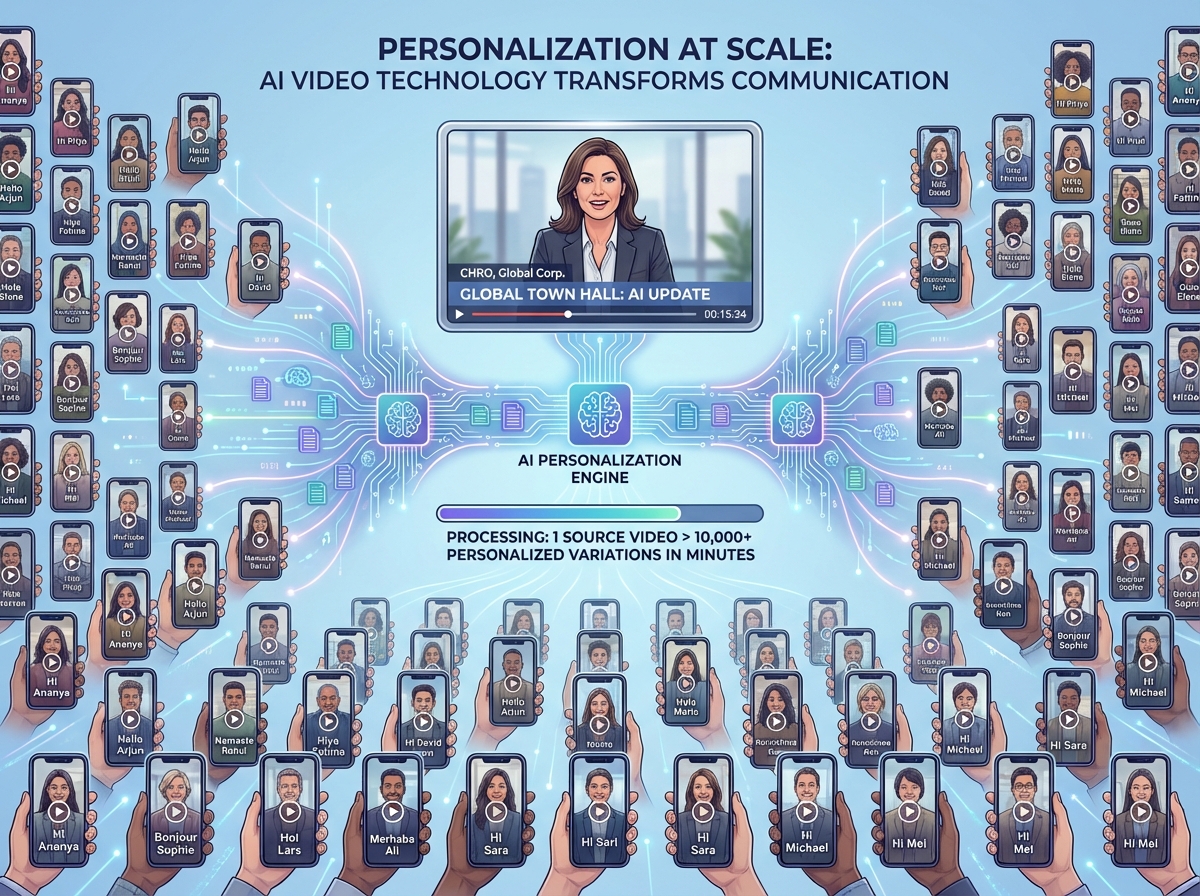
The primary barrier to authentic DEI marketing has historically been the inability to scale personal touchpoints. International Women’s Day personalization in 2026 solves this by utilizing tokenized video scripting. By integrating HRIS data, enterprises can now generate thousands of unique videos where leaders address employees by their first name, acknowledge their specific role, and celebrate their tenure or recent project wins.
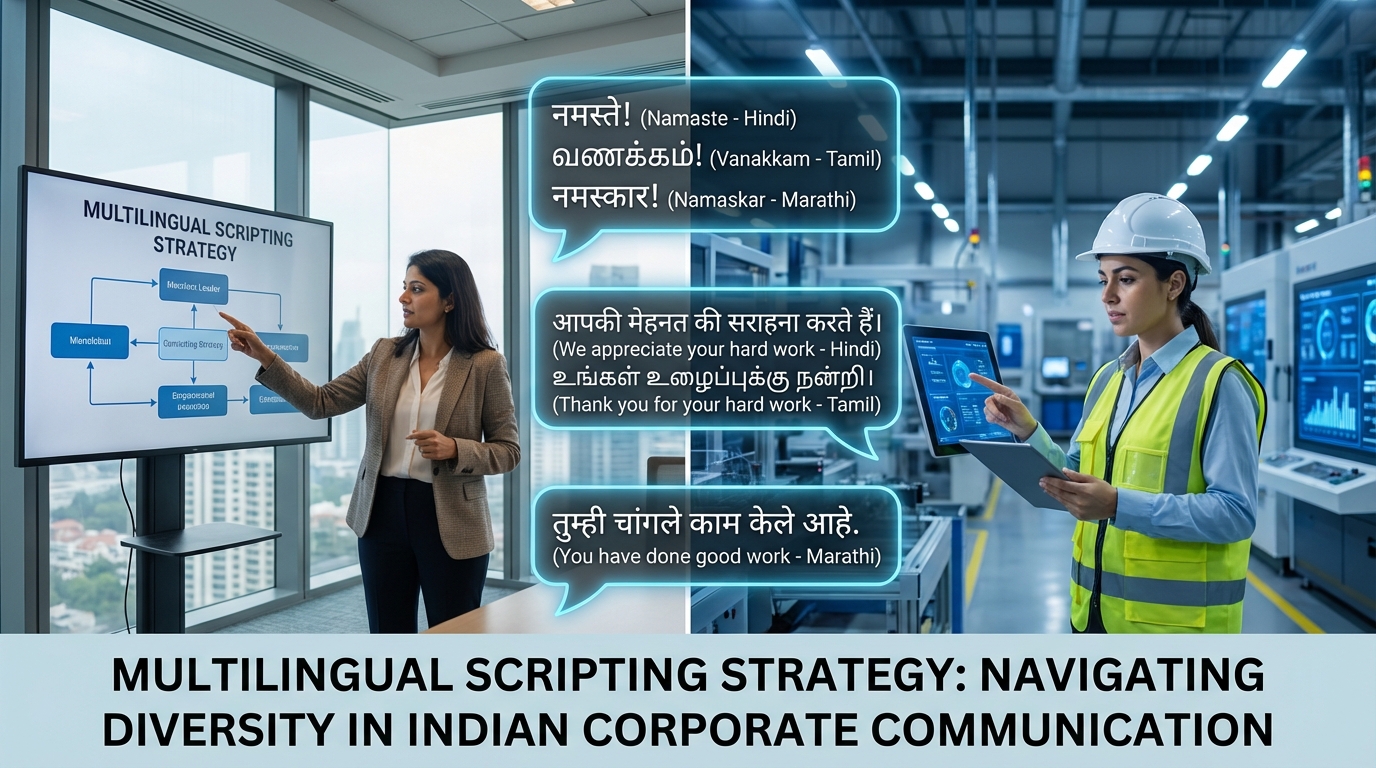
TrueFan AI's 175+ language support and Personalised Celebrity Videos allow for a level of engagement previously thought impossible. Imagine a CHRO recording a single 15-minute base video that is then transformed into 10,000 personalized messages, each delivered in the employee's preferred language with perfect lip-sync. This technology ensures that a “thank you” feels as personal to a junior developer as it does to a senior vice president.
Women leadership storytelling automation is another critical pillar. By automating the distribution of “Day in the Life” reels and mentorship advice from senior women leaders, organizations can provide role models to every level of the pipeline. This is particularly vital for mid-career women who often face the “broken rung” on the ladder to leadership. Automation allows these stories to be refreshed quarterly, ensuring the narrative remains current and relevant to the evolving business landscape.
Sources:
- McKinsey & Company: Women in the Workplace 2025
- Digital Agency Network: Inspiring IWD Ad Campaign Ideas
Strengthening Talent Outcomes with Female Talent Retention Strategies
The ultimate KPI for any Women’s Day initiative is its impact on female talent retention strategies. In 2026, recognition must be the “hook” that leads to deeper engagement. A personalized recognition video should not be a standalone event; it should be a gateway to structured mentorship, skills sprints, and Employee Resource Group (ERG) invitations.
Data from 2026 indicates that female talent retention increases by 22% when recognition is personalized and tied to career progression opportunities. By using “Nudge Flows,” organizations can follow up a Women's Day video with a survey or a registration link for a leadership development cohort. This transforms a moment of celebration into a long-term career milestone, fostering a sense of belonging that is difficult for competitors to replicate.
Women-centric employer branding also benefits from this data-driven approach. Diversity brand positioning videos that feature real internal mobility stories—such as a woman returning from a career break to lead a major department—serve as powerful magnets for external talent. In 2026, candidates are looking for “proof of life” regarding a company’s DEI claims. Authentic video content provides that proof, showing rather than just telling the market about the inclusive culture.
Sources:
- Silverpush: Celebrating Women in Adtech & Representation
- Economic Times: DEI Recalibration in India Inc
Customer and Partner Storytelling: Women Customer Testimonial Automation
Beyond internal employees, Women’s Day DEI marketing 2026 extends to the broader ecosystem of customers and partners. Women customer testimonial automation allows brands to highlight the success of their female clients in a way that is both ethical and scalable. By using consent-safe automation, companies can capture and distribute localized testimonials that feature women from various industries and cities, speaking to the specific value they’ve derived from a product or service.
This approach is equally effective for women entrepreneur partnership campaigns. Many Indian enterprises now partner with women-led NGOs or small businesses. Automating the storytelling around these partnerships—through co-branded launches or mentor circle spotlights—amplifies the impact of the collaboration. It moves the partnership from a line item in a CSR report to a living, breathing narrative that consumers and employees can engage with.
Solutions like TrueFan AI demonstrate ROI through these external-facing campaigns by increasing brand trust and sentiment. When a woman entrepreneur sees a major corporation highlighting her journey in her native language, it builds a level of brand equity that traditional advertising cannot touch. This is the essence of women empowerment content marketing in 2026: using technology to give a platform to voices that have historically been underrepresented.
Sources:
Wellbeing and Policy Communications: Workplace Equality Video Campaigns
A significant gap in traditional DEI marketing is the failure to communicate policies that actually help women navigate their careers. Workplace equality video campaigns in 2026 focus on making policy accessible. Instead of a 50-page PDF, employees receive short, engaging video explainers on maternal wellness program promotion, pay equity methodologies, and hybrid flexibility guidelines.
These videos are particularly crucial for maternal wellness. Postpartum mental health awareness and return-to-work pathways are often misunderstood or underutilized. A personalized video from a manager, welcoming a mother back and outlining the support available to her, can be the difference between her staying with the company or leaving the workforce. This is inclusive workplace video marketing at its most practical and impactful.
Furthermore, 2026 has seen the rise of “Manager Micro-Nudges.” These are short video prompts sent to managers before performance reviews or team meetings, reminding them of unconscious bias triggers and encouraging equitable speaking time. By integrating these nudges into the daily workflow, DEI becomes a continuous practice rather than a once-a-year celebration.
Sources:
Execution Playbook: Inclusive Workplace Video Marketing at Scale
Executing a high-impact Women’s Day campaign requires a structured 90-day timeline. The process begins in January with the identification of key DEI priorities and the development of script packs. In 2026, the focus is on “Token QA”—ensuring that phonetic dictionaries for Indian names are accurate and that role titles are normalized across the organization.
The distribution strategy must be as diverse as the workforce itself. While email and internal portals remain relevant, the WhatsApp Business API has become the primary channel for reaching employees in India, especially those in field or plant roles. By sending personalized video links via WhatsApp, brands achieve significantly higher read and watch rates compared to traditional channels.
Measurement is the final, critical step. Beyond vanity metrics like “likes,” DEI leaders in 2026 track female application rates, internal mobility, and 90-day retention post-campaign. They also conduct intersectional audits to ensure that representation equity is maintained across all roles and regions. This level of rigor ensures that the campaign is not just a creative success, but a business driver.
Key 2026 Statistics for DEI Leaders:
- Retention Impact: Personalized recognition videos correlate with a 22% increase in female employee retention in the Indian IT and BFSI sectors.
- Multilingual Engagement: Content delivered in regional Indian languages sees a 400% higher engagement rate among non-metro employees.
- Trust Factor: 78% of Indian professionals in 2026 state that “authentic representation in corporate video” significantly influences their decision to join or stay at a company.
- Scale Efficiency: AI-driven video automation reduces content production time by 85%, allowing for hyper-localization that was previously cost-prohibitive.
- Candidate Attraction: Companies using women-centric employer branding videos see a 35% increase in high-quality female applicants for STEM roles.
Sources:
- TrueFan AI Enterprise Case Studies (Zomato, Hero MotoCorp, Goibibo)
- Exchange4media: Brand Equity Trends 2026
Conclusion: The Future of Inclusion is Personal
As we look toward March 8, 2026, the mandate for Indian enterprises is clear: make it personal, make it authentic, and make it count. By leveraging the power of automated video, CHROs and DEI leaders can finally deliver on the promise of inclusion at a scale that matches the ambition of their organizations.
The transition from performative to purposeful marketing is not just a trend; it is a requirement for any brand that wishes to remain competitive in the talent market of 2026. By focusing on the individual—her name, her language, her achievements—companies can build a culture of belonging that lasts long after the Women’s Day banners are taken down.
Sources:
- Economic Times: DEI Pushback and Recalibration
- McKinsey: Women in the Workplace Report
- Exchange4media: Trust and Reputation in 2026
Recommended Internal Links
- Women’s Day DEI Marketing 2026: Campaign Ideas That Win
- Women’s Day DEI Marketing 2026: Video Strategies That Win
- Multilingual Voice Marketing Automation: Tactics for 2026
- UGC Testimonial Automation: Strategies for 2026 Growth
- WhatsApp Catalog Video Marketing: Automation Strategies
- Employee Review Season Engagement: Proven Retention Tactics
Frequently Asked Questions
What is Women’s Day DEI marketing 2026 for India Inc?
In 2026, Women’s Day DEI marketing for India Inc refers to outcome-focused, multilingual, and consent-safe video programs. These campaigns span employee recognition, leadership storytelling, and employer branding, with success measured by retention rates, application volume, and employee sentiment. It moves away from generic messaging toward hyper-personalized experiences powered by platforms like TrueFan AI.
How do I create female employee recognition videos at scale?
To scale recognition, use tokenized scripts that pull data from your HRIS (name, role, tenure). Record a base video with a leader or manager, and use AI automation to generate thousands of personalized variants. Ensure the platform supports 10+ Indian languages and includes built-in consent capture and accessibility features like captions and transcripts.
Why is multilingualism important for gender equality brand campaigns India?
India is a linguistically diverse nation, and professional identity is often tied to regional language. Providing DEI content in languages like Hindi, Tamil, and Marathi demonstrates a deeper commitment to inclusion, ensuring that women in all regions and roles—from corporate offices to manufacturing plants—feel seen and valued.
What are the risks of using AI in Women’s Day DEI marketing 2026?
The primary risks include mispronunciation of names, lack of consent, and data privacy concerns. These are mitigated by using phonetic dictionaries, explicit opt-in workflows, and enterprise-grade security (ISO 27001/SOC 2). It is also vital to conduct representational audits to ensure the AI-generated content reflects the true diversity of your workforce.
How can women leadership storytelling automation improve the talent pipeline?
Automation allows you to distribute role model stories to a wider audience more frequently. By showcasing the diverse paths to leadership—including return-to-work stories and mid-career pivots—you provide the “social proof” necessary to encourage junior and mid-level women to pursue higher positions, effectively addressing the “broken rung” in the leadership ladder.