Women’s Day DEI marketing 2026: Build authentic, scalable campaigns beyond tokenism with video personalization
Estimated reading time: ~11 minutes
Key Takeaways
- Move beyond performative gestures to authentic DEI storytelling aligned with policies and measurable outcomes.
- Use video-first, hyper-personalized recognition to celebrate every woman at scale across regions and roles.
- Prioritize localization—regional languages, cultural nuance, and accessibility—to increase impact.
- Integrate IWD activation with female talent retention and maternal wellness programs for year-round value.
- Track ROI using culture, HR, and brand KPIs; optimize with data-driven iteration.
The landscape of corporate social responsibility and employer branding has undergone a seismic shift as we approach 2026. For HR Directors and Corporate Communications leaders in India, the traditional “pink-washed” banner or the generic “Happy Women’s Day” email is no longer just insufficient—it is a reputational risk.
Modern Women’s Day DEI marketing 2026 Women’s Day DEI marketing 2026 guide requires a move toward radical authenticity and hyper-personalization. Employees and consumers now demand proof of progress, seeking narratives that reflect their lived experiences rather than polished, top-down corporate scripts.
To meet this demand, enterprises are turning to sophisticated video-first strategies. Platforms like TrueFan AI enable leadership teams to bridge the gap between global DEI mandates and local, individual recognition, ensuring that every woman in the organization feels seen, heard, and valued.
1. Moving beyond tokenism with gender equality brand campaigns
Tokenism in 2026 is defined by surface-level gestures that lack policy alignment or measurable outcomes. When an organization celebrates International Women’s Day (IWD) without addressing systemic gaps, it creates a “say-do” gap that erodes employee trust and brand equity.
Authentic gender equality brand campaigns must be anchored in the IWD 2026 theme, “Give To Gain.” This theme emphasizes an abundance mindset where investing in women’s growth yields exponential returns for the entire ecosystem.
In India, this alignment must also reflect the statutory landscape. For instance, the Maternity Benefit (Amendment) Act, 2017, which provides 26 weeks of paid leave and mandates crèche facilities, should not just be a compliance checklist but a storytelling pillar that demonstrates a culture of care.
By 2026, data suggests that 88% of Indian female professionals prefer working for organizations that publicly share their progress on pay equity and leadership representation. Moving beyond tokenism means using March 8 as a launchpad for year-round transparency.
Sources:
- International Women’s Day 2026 Theme: Give To Gain
- Maternity Benefit (Amendment) Act, 2017 – Guidelines
2. Scaling impact through female employee recognition videos
The core of any successful DEI initiative is the individual employee. However, for large enterprises with thousands of staff across multiple regions, recognizing every woman personally has historically been an operational impossibility.
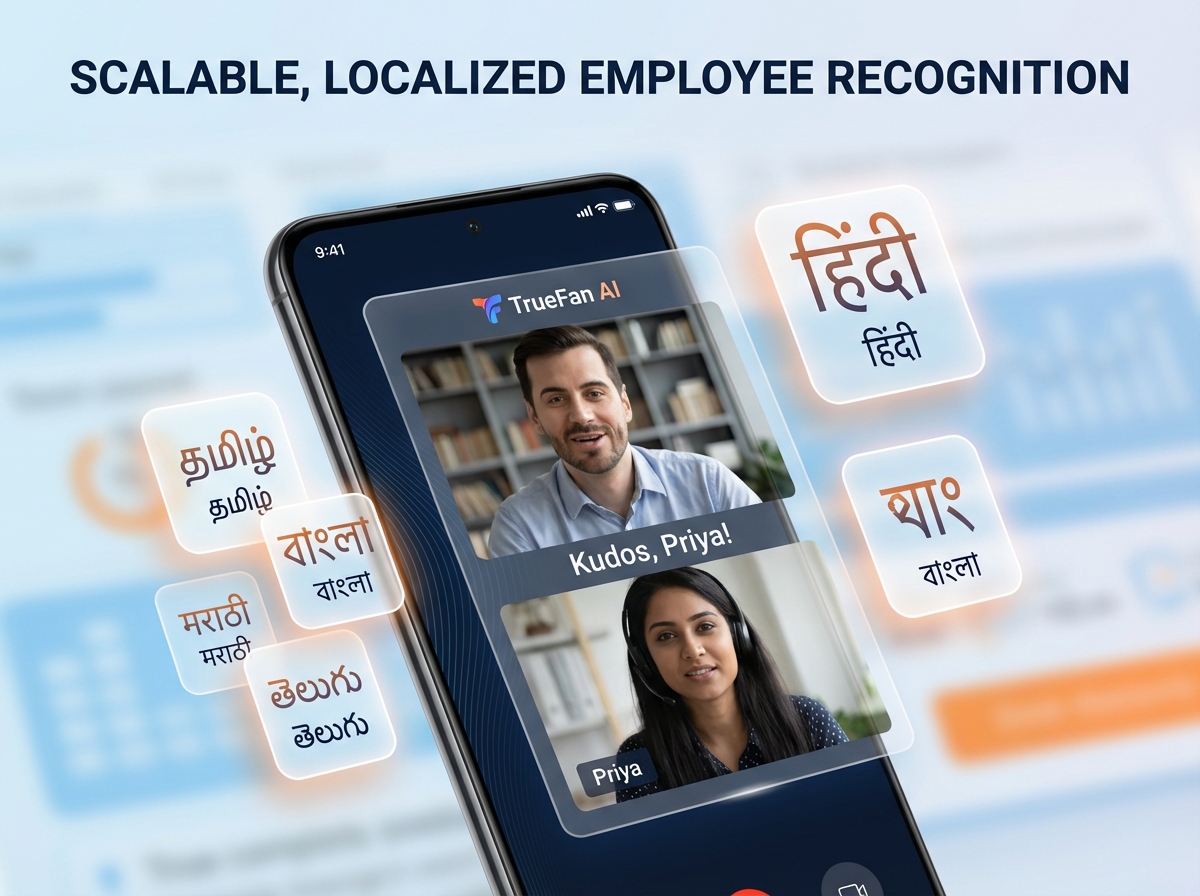
Female employee recognition videos Women’s Day marketing campaigns 2026 solve this by combining human sentiment with algorithmic scale. These are short, 15–45 second mobile-first videos where managers or peers provide specific “kudos” for tangible achievements, such as project milestones or mentorship contributions.
To execute this, organizations should implement “story circles” facilitated by Employee Resource Groups (ERGs). These circles surface authentic narratives—like a woman engineer in a Tier-2 city leading a critical site launch—that would otherwise remain invisible to central leadership.
By 2026, the expectation for regional relevance is absolute. A recognition video sent to an employee in Chennai should ideally be in Tamil, reflecting her local context and dialect. This level of localization ensures that the recognition feels earned and personal, rather than a mass-produced corporate artifact.
Sources:
3. Driving authority with women leadership storytelling automation
Leadership visibility is a primary driver of female talent retention. When aspiring leaders see women at the top sharing their authentic journeys—including the challenges and the “allyship moments”—it creates a roadmap for their own career progression.
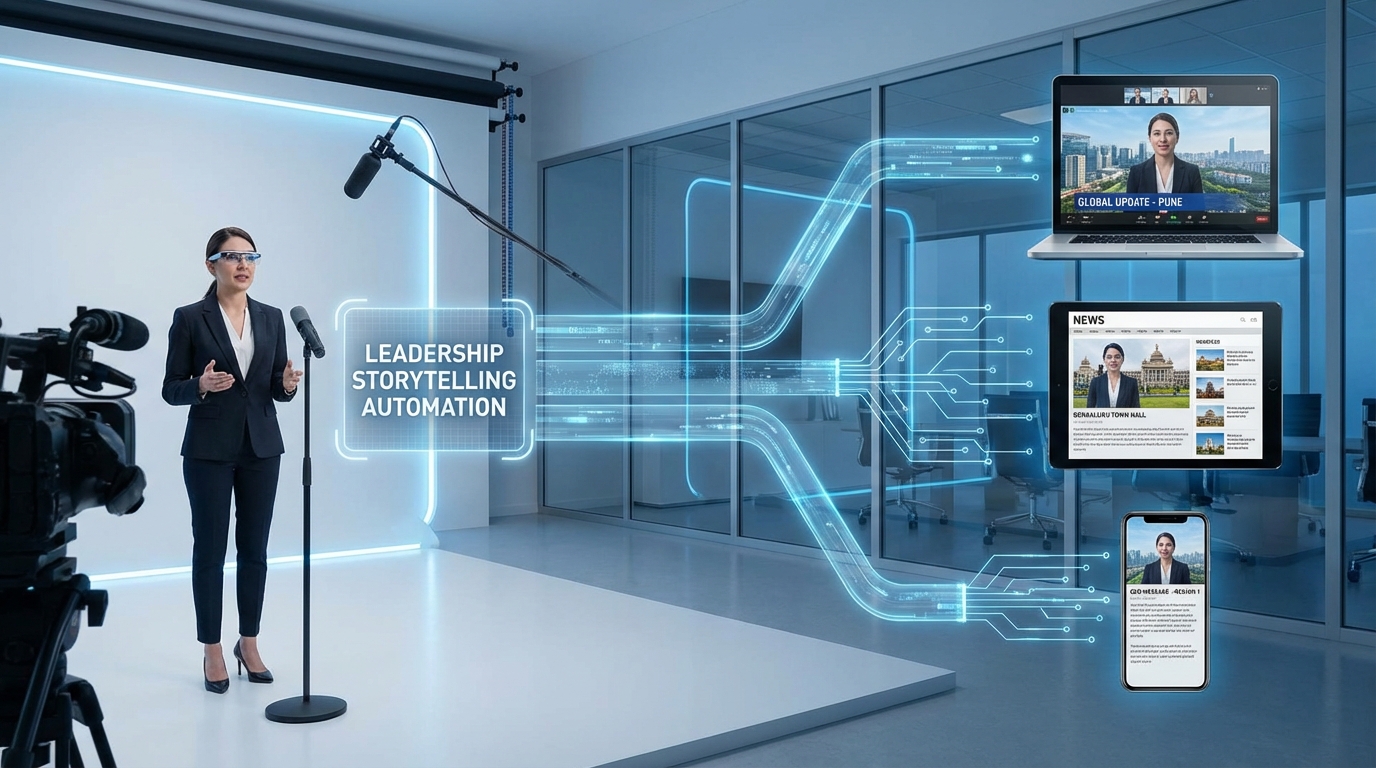
Women leadership storytelling automation Women’s Day DEI marketing 2026 playbook allows CXOs to record a single, high-impact master narrative that is then variantized for different audiences. For example, a Chief Technology Officer can record a message about “breaking the glass ceiling in STEM,” which is then automatically tailored to mention specific departments or regional offices.
These automated scripts should follow a “Give To Gain” framework: an opener tied to a business milestone, a middle section featuring a personal lesson on resilience, and a closing call-to-action (CTA) for mentorship or skills workshops.
By automating the distribution of these narratives, enterprises can ensure that a new joiner in Pune and a senior manager in Bengaluru both receive a leadership message that feels uniquely addressed to their career stage and function.
Sources:
4. Building trust through diversity brand positioning videos
External perception is increasingly shaped by “inclusive brand proof.” This involves moving away from stock imagery of diverse teams and toward diversity brand positioning videos Diversity brand positioning examples that feature real women customer testimonials and women entrepreneur partnerships.
In the Indian context, “she-commerce” is a burgeoning force. By 2026, women-led small businesses and female consumers are expected to drive 45% of all digital commerce growth in India. Brands that spotlight these partners through video storytelling build a community of advocates.
She-commerce video marketing should be shoppable and short-form, tailored to the high mobile penetration in India. These videos don’t just celebrate women; they provide a platform for women-led suppliers and entrepreneurs within the company’s value chain to reach new markets.
Measurement of these campaigns must go beyond “likes.” ROI should be tracked through brand lift, add-to-cart rates for women-led product lines, and sentiment shifts among female cohorts. Solutions like TrueFan AI demonstrate ROI through high engagement rates and the ability to render thousands of personalized variants in sub-30 seconds, ensuring no lead is left unaddressed.
Sources:
5. Integrating IWD with female talent retention strategies
A Women’s Day campaign that exists in a vacuum is a missed opportunity. To be truly effective, March 8 initiatives must be integrated into broader female talent retention strategies Q1 2026 appraisal and retention strategies and maternal wellness programs.
Retention in 2026 is driven by “flexibility and foresight.” This includes returnship programs for women re-entering the workforce, lateral mobility opportunities, and robust support for caregivers. Videos used during IWD should explicitly link to these policies, making the “invisible” benefits visible to the entire workforce.
Maternal wellness programs are a critical component of this integration. Beyond the 26 weeks of paid leave mandated by Indian law, leading enterprises are using personalized video content to guide mothers through postpartum transitions, lactation support, and manager-led reintegration plans.
When an employee receives a personalized recognition video that also reminds her of the upcoming mentorship circle or the new crèche facility at her site, the DEI message moves from “marketing” to “mission-critical.”
Sources:
- PIB: Maternity Benefit Act and crèche requirements
- People Matters: Retention strategies for the modern Indian workplace
6. Mastering International Women’s Day personalization
The technical execution of International Women’s Day personalization IWD personalization tactics is what separates market leaders from the rest. In 2026, personalization is not just about inserting a name into a text field; it is about full-scale video localization.
TrueFan AI’s 175+ language support and Personalised Celebrity Videos or executive messages allow for a “one-to-many-to-one” workflow. A single master shoot can be transformed into thousands of hyper-personalized variants with perfect lip-sync and voice retention, ensuring that the message resonates in the recipient’s native tongue.
The execution blueprint for a 2026 campaign follows an 8-week cycle:
- Weeks 1–2: Aligning the brief to “Give To Gain” and securing ERG buy-in.
- Weeks 3–4: Sourcing stories and conducting master shoots with leadership and employees.
- Weeks 5–6: API-led personalization, where HRIS data is used to generate variants.
- Weeks 7–8: Multi-channel rollout across WhatsApp Business, LinkedIn, and internal hubs.
This structured approach to March 8 corporate initiatives ensures that the campaign is governed by an “Inclusive Review Council,” preventing cultural blind spots and ensuring all content meets ISO 27001 and SOC 2 security standards.
Sources:
7. Measuring the ROI of workplace equality campaigns
To sustain DEI budgets, leaders must move toward a data-driven ROI model for their workplace equality campaigns. By 2026, the analytics stack for these campaigns has evolved to track both cultural and commercial metrics.
Key Performance Indicators (KPIs) should include:
- Culture Metrics: Participation rates in recognition programs, eNPS (Employee Net Promoter Score) shifts among female employees, and growth in ERG membership.
- HR Metrics: Reduction in regretted attrition of female talent and the “promotion delta” (the rate at which women are promoted compared to their male counterparts).
- Brand Metrics: Share of voice in DEI conversations, sentiment analysis of external video comments, and conversion rates from she-commerce initiatives.
Using real-time dashboards, Comms leaders can A/B test different video hooks or CTAs. For instance, data might show that a leadership video mentioning a specific regional achievement has a 40% higher completion rate than a general global message. This level of insight allows for continuous optimization throughout the month of March and beyond.
Sources:
The 2026 DEI Roadmap: A Summary for Leaders
As we look toward March 8, 2026, the mandate for HR and Communications leaders is clear: move from broad strokes to fine details. The technology now exists to treat every employee and customer as an individual, providing them with a personalized narrative that reflects their unique contribution to the organization’s success.
By focusing on the three pillars of recognition, leadership storytelling, and brand proof, and by anchoring these in the “Give To Gain” philosophy, Indian enterprises can build DEI programs that are not only authentic but also highly scalable.
Final Checklist for your March 8 corporate initiatives:
- Is the campaign tied to a measurable HR outcome (e.g., retention or promotion)?
- Have you secured informed consent for all employee-led content?
- Is your video content localized for India’s diverse linguistic landscape?
- Are you using automated tools to ensure every woman in the organization is recognized?
- Does your “she-commerce” strategy provide a platform for women-led partners?
The transition from tokenism to authenticity is not just a moral imperative; it is a competitive advantage. In 2026, the brands that win will be those that use technology to amplify human voices, not replace them.
Sources:
- International Women’s Day: Official Theme
- PIB: Maternity Benefit Act updates
- People Matters: Employee engagement strategies
- Social Samosa: Indian campaign trends
- CleverTap: Women’s Day marketing guide
Frequently Asked Questions
How do we avoid tokenism in Women’s Day DEI marketing 2026?
To avoid tokenism, ensure your campaign is “action-first.” Tie every story or video to a concrete policy, such as maternal wellness programs or pay-equity audits. Use the “Give To Gain” theme to show how the organization invests in women, and secure explicit, informed consent for all employee-led narratives.
What are best practices for female employee recognition videos in India?
Prioritize localization and accessibility. Distribute via WhatsApp catalog video marketing, offer regional-language versions, and include captions. Focus on specific achievements instead of generic praise to ensure authenticity.
How does International Women’s Day personalization work with AI video at enterprise scale?
Connect HRIS or CRM data via APIs to a video generation platform. Record one master video and automatically generate thousands of variants personalized by name, role, and language. TrueFan AI provides the infrastructure to execute this at a scale of millions of videos while maintaining high security and consent standards.
Which female talent retention strategies pair best with IWD campaigns?
Combine IWD with sponsorship circles, returnship programs after career breaks, and transparent communication on Maternity Benefit Act compliance. Use IWD to launch or amplify these initiatives for maximum visibility and uptake.
How do we ensure ethical standards in AI-driven video campaigns?
Adopt privacy-by-design: clear consent workflows, right-to-review for participants, opt-in/opt-out choices, and secure processing in SOC 2 compliant environments. Maintain audit trails and provide accessible channels for revoking consent.



