Summer Appliance Urgency Marketing 2026: Converting India’s Heat Wave Anxiety into Instant Purchases
Estimated reading time: ~9 minutes
Key Takeaways
- Shift from seasonal promotions to temperature-triggered automation to align spend with real-time heat spikes
- Use weather-responsive commerce videos to personalize specs, prices, and installation promises by location
- Integrate IMD data, inventory, and dynamic suppression to prevent ads for out-of-stock SKUs
- Leverage loss aversion and immediacy bias to convert “temperature anxiety” into instant purchases
- Deploy TrueFan AI to scale hyper-localized, multilingual videos and improve ROAS
The landscape of summer appliance urgency marketing 2026 is defined by a paradigm shift where meteorological precision meets hyper-personalized automation. As India prepares for a projected escalation in extreme thermal events, consumer durables brands must transition from static seasonal promotions to dynamic, weather-triggered conversion engines for regional heat wave targeting that address acute consumer distress in real-time.
The 2026 summer season is anticipated to be one of the most challenging in recent history, with the India Meteorological Department (IMD) forecasting above-normal maximum temperatures across the majority of the subcontinent. For retailers specializing in air conditioners, refrigerators, and cooling solutions, this climate volatility represents a critical window to deploy sophisticated marketing frameworks that capitalize on “temperature anxiety.”
By integrating real-time IMD data feeds with automated creative production, brands can transform a general heatwave into a localized, high-intent purchasing event. This playbook outlines the strategic orchestration required to dominate the 2026 summer market, ensuring that every degree of temperature rise correlates directly with an uptick in conversion rates and sell-through velocity.
1. Market Dynamics and Climate Urgency: The 2026 Outlook
The consumer durables sector in 2026 is operating within a unique intersection of regulatory shifts and intensified climate patterns. According to the IMD Seasonal Forecast, the probability of extended heatwave days in the April–June window has increased significantly, particularly in the core heatwave zones of Central and Northwest India.
This meteorological reality is driving a surge in demand, with industry leaders like Voltas anticipating double-digit growth fueled by first-time buyers seeking relief from unprecedented thermal stress. Market intelligence from Mordor Intelligence suggests that the Indian home appliances market is entering a phase of volumetric expansion, supported by easing inflation and a growing middle-class appetite for premiumization.
Furthermore, the implementation of revised Bureau of Energy Efficiency (BEE) norms effective January 1, 2026, has fundamentally altered the pricing landscape. As noted by Thermal Control Magazine, new star ratings are mandatory for all cooling appliances, leading to a projected price increase of 5% to 10% across the category. Brands must navigate this by emphasizing long-term value and energy savings in their heat wave triggered offers India to mitigate price sensitivity during peak demand.
Sources:
- IMD Seasonal Forecast
- ET BrandEquity: Voltas bets on first-time buyers to drive summer demand
- Thermal Control Magazine: Energy efficiency star ratings mandatory for cooling appliances (2026)
- Mordor Intelligence: India home appliances market report
- PSUWatch: BEE’s new ratings to push AC and refrigerator prices
2. The Psychology of Temperature Anxiety and Instant Cooling Solutions
“Temperature anxiety” is a psychological state characterized by a perceived loss of domestic comfort, sleep quality, and professional productivity as ambient temperatures breach the 35°C threshold. In the context of the Indian summer, this anxiety functions as a powerful catalyst for impulse purchases, provided the brand can offer instant cooling solutions that promise immediate relief.
To effectively leverage this state, marketers must employ cognitive triggers such as loss aversion and immediacy bias. Instead of traditional discounting, successful 2026 campaigns frame the purchase as an avoidance of physical suffering, highlighting the “daily cost of discomfort” versus a manageable EMI.
Social proof also plays a pivotal role in high-heat scenarios; seeing that neighbors in the same pincode are upgrading to high-efficiency units creates a localized urgency. When the heat index spikes, the consumer’s decision-making window narrows significantly, making the speed of fulfillment and installation the primary differentiator over brand loyalty or marginal price differences.
Sources:
3. Strategic Architecture: Temperature-Based Marketing Automation
The foundation of a successful 2026 campaign lies in temperature-based marketing automation with regional heat wave targeting, a system that synchronizes digital advertising spend and creative assets with live weather signals. This architecture ensures that marketing messages are only deployed when and where they are most relevant, maximizing Return on Ad Spend (ROAS).
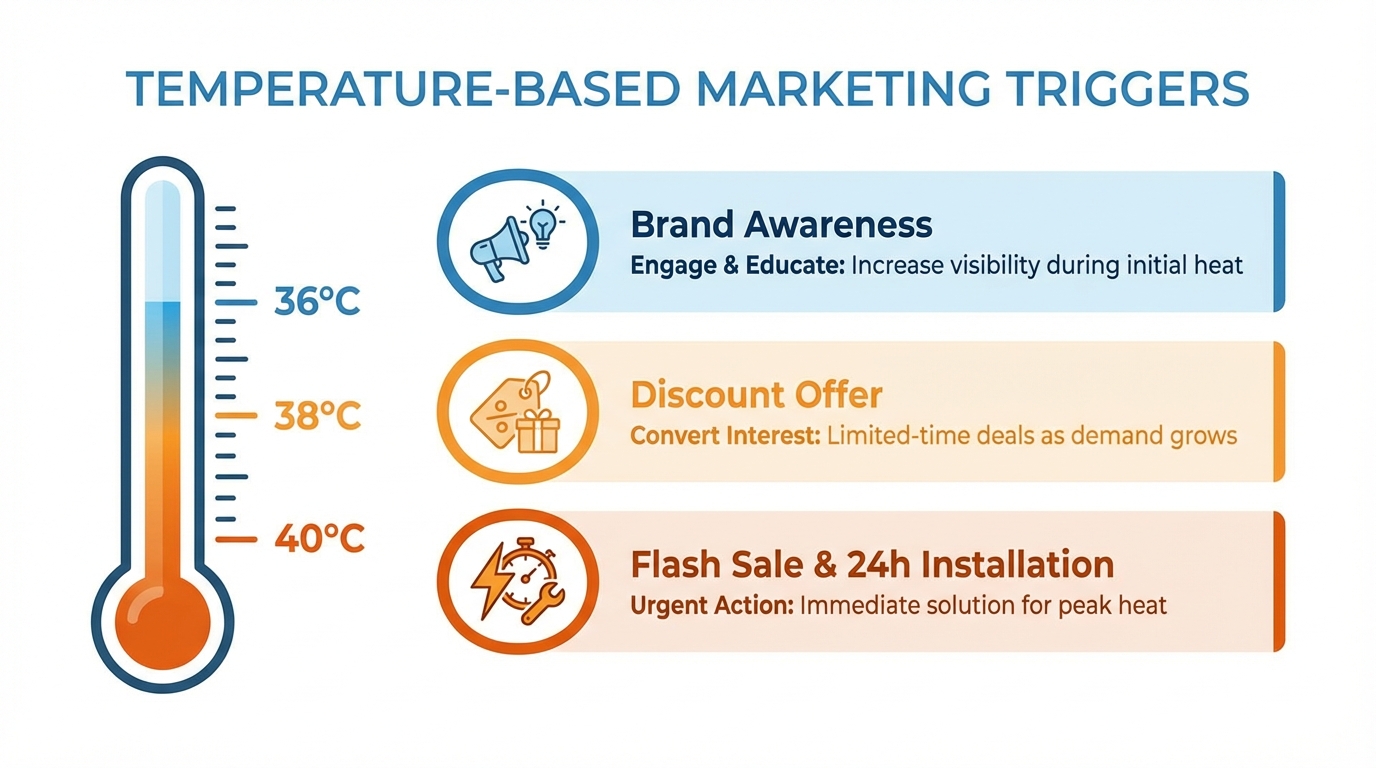
A robust automation framework utilizes specific thermal thresholds to trigger different levels of urgency. For instance, at 36°C, the system might initiate “awareness” nudges; at 38°C, it activates specific offers; and at 40°C+, it switches to “maximum urgency” mode, featuring real-time installation countdowns and stock alerts.
This system must also incorporate weather prediction commerce via climate-adaptive marketing, utilizing 3-to-7-day IMD outlooks to pre-position inventory and pre-build creative templates. By anticipating a heatwave before it hits, brands can capture the “pre-wave” search intent, securing orders before competitors even activate their triggers. Furthermore, regional heat wave targeting allows for nuanced messaging that distinguishes between the dry, searing heat of the North and the oppressive humidity of coastal regions, ensuring the product recommendations are climatically appropriate.
Sources:
4. Creative Evolution: Weather-Responsive Commerce Videos
In 2026, static banners are insufficient for capturing the attention of a heat-stressed consumer; the new standard is weather-responsive commerce videos for summer retail. These are personalized, data-aware video assets that dynamically update their content—including product specifications, local temperature, and pricing—based on the viewer’s real-time environment.
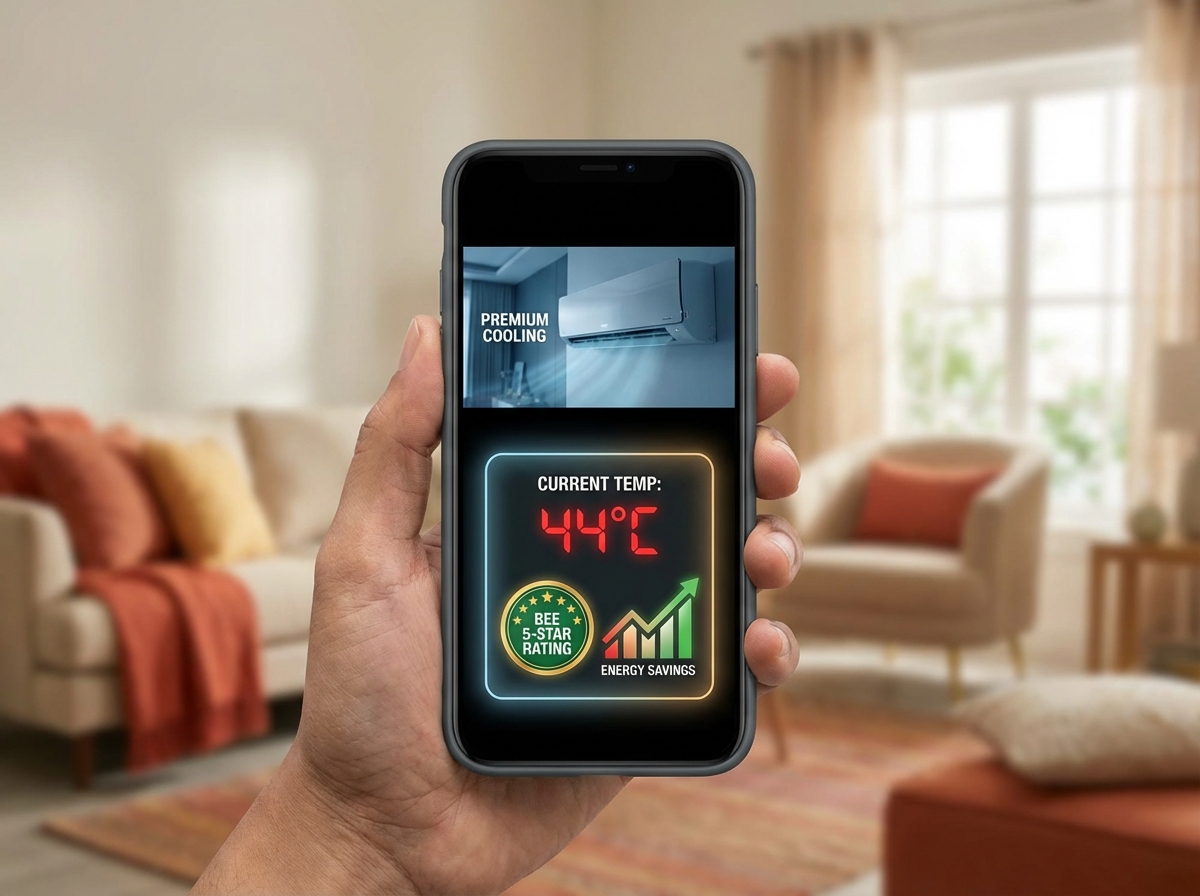
For the cooling category, AC cooler personalization campaigns should match specific units to room sizes and local humidity levels, while explicitly referencing the new 2026 BEE star ratings. These videos can calculate and display the energy savings a consumer would realize by switching from an older model to a new, energy-efficient variant, effectively turning a high-ticket purchase into a rationalized investment.
Beyond heavy appliances, this creative system extends to beverage cooling campaigns and summer fashion video marketing. Quick-commerce brands can trigger video ads for chilled beverages exactly when the local temperature hits a specific peak, promising delivery within 30 minutes. Similarly, fashion retailers can deploy “heat-index lookbooks” featuring UV-protective and breathable fabrics, tailored to the specific commute conditions of the viewer’s city.
Sources:
- BestMediaInfo: Godrej builds growth on premiumisation
- ET BrandEquity: Early summer heat drives surge in cooling appliance sales
5. Execution Stack and TrueFan AI Integration
Executing a hyper-localized, weather-triggered strategy at scale requires an enterprise-grade technology stack capable of generating thousands of creative variations with minimal latency. Platforms like TrueFan AI enable brands to bridge the gap between weather data and personalized video delivery, ensuring that a temperature spike in Nagpur triggers a different creative than a humidity surge in Chennai.
The integration process involves connecting IMD weather APIs to a centralized marketing automation platform, which then signals the video generation engine. TrueFan AI’s 175+ language support and Personalised Celebrity Videos allow brands to reach diverse demographics across India, ensuring that tier-2 city summer offers reach local audiences in the local vernacular with culturally resonant messaging.
This level of automation is not just about creative variety; it is about operational efficiency. Solutions like TrueFan AI demonstrate ROI through significantly higher engagement rates and lower cost-per-acquisition, as the content is inherently more relevant to the consumer’s immediate physical reality. Furthermore, pre-summer sale automation can be used to drive early-season maintenance and AMC (Annual Maintenance Contract) sign-ups, smoothing out the demand curve before the peak heat hits.
Sources:
6. Operational Alignment and Climate-Adaptive Marketing
A sophisticated marketing front-end must be supported by a resilient back-end, specifically through seasonal inventory optimization. In 2026, inventory management is no longer a static quarterly exercise but a fluid response to weather forecasts. Brands must maintain “hot belt” stock buffers and be prepared for inter-DC (Distribution Center) transfers as heatwaves migrate across the country.
Marketing automation must be deeply integrated with supply chain data to ensure “dynamic suppression.” If a specific AC model goes out of stock in a particular pincode, or if installation lead times exceed 72 hours, the system should automatically pause those specific ads or swap them for in-stock alternatives. This prevents consumer frustration and protects brand reputation during periods of peak stress.
Finally, climate-adaptive product marketing tailored for India requires brands to acknowledge the diverse microclimates of India. Marketing desert coolers in high-humidity coastal zones is an inefficient use of capital; instead, the automation should prioritize high-moisture-removal ACs for Mumbai and high-CFM (Cubic Feet per Minute) coolers for Rajasthan. By aligning product features with regional climatic needs, brands demonstrate a level of expertise and empathy that fosters long-term consumer trust.
Sources:
- Economic Times: Volume-led growth as inflation eases
- Indian Express: Heatwave forecast for April–June
Recommended Internal Links
- Regional heat wave targeting strategies
- Summer fashion video marketing
- Climate-adaptive marketing in India (2026)
- Monsoon preparedness marketing 2026 guide
- Tier-2 festival commerce automation
Sources:
Frequently Asked Questions
How does temperature-based marketing automation improve ROAS?
By syncing ad spend with real-time weather data, brands ensure they are only bidding aggressively when the consumer’s need is highest. This reduces wasted impressions during cooler periods and maximizes visibility during high-intent heatwaves.
What are the key 2026 BEE energy efficiency changes to know?
As of January 1, 2026, star ratings for cooling appliances have been tightened. A 5-star AC from 2025 might only qualify as a 4-star under the new norms, necessitating clear communication of “Total Cost of Ownership” and energy savings in your energy-efficient appliance videos.
How can TrueFan AI help in reaching tier-2 and tier-3 markets?
TrueFan AI facilitates the mass-personalization of video content in over 175 languages and dialects. This allows brands to deliver localized, celebrity-led messages that resonate with regional consumers, significantly increasing trust and conversion in non-metro markets.
What temperature thresholds should trigger “Urgency” offers?
While it varies by region, 38°C is generally considered the activation threshold for North India, while 35°C with high humidity serves as the trigger for coastal regions. At 40°C, campaigns should pivot to “Instant Relief” messaging with express installation promises.
How do I handle out-of-stock situations during a heatwave?
Your marketing stack should include a real-time inventory feed. If a SKU is unavailable, the automation should either suppress the ad or dynamically replace it with the nearest available substitute, ensuring that your media spend always leads to a viable purchase path.
Why is “Weather Prediction Commerce” better than reactive marketing?
Reactive marketing misses the research phase of the consumer journey. Using 3–7 day forecasts lets you capture intent while consumers plan for an upcoming heatwave, securing the sale before competitors’ real-time triggers fire. Explore the Monsoon preparedness marketing 2026 guide for a complementary seasonal strategy.