Voice Commerce Vernacular India 2026: Enterprise Playbook for Hindi, Tamil, Bengali in Tier-2/3 Bharat
Estimated reading time: ~15 minutes
Key Takeaways
- By 2026, vernacular voice-first commerce will be the default interface for 650M+ users across tier-2/3 Bharat.
- Code-mix aware ASR/NLU and regional TTS are essential to handle Hinglish, Tamlish, and Bengali dialects.
- Conversion lifts come from vernacular video automation, UPI voice flows, and OTP-less verification.
- Voice SEO needs schema-led, question-first content and real-time “voice-to-video” responses.
- Governance with AI voice cloning transparency and consent logging builds long-term trust.
The digital landscape of the Indian subcontinent is undergoing a seismic shift as we approach 2026, transitioning from a “text-first” to a “voice-first” paradigm. Voice commerce vernacular India has emerged as the definitive frontier for enterprise growth, representing a sophisticated ecosystem where digital shopping journeys are completed entirely through speech in regional languages. This evolution is not merely a technological convenience but a fundamental necessity for capturing the next 650 million users in Bharat’s tier-2 and tier-3 cities.
By 2026, projections indicate that vernacular voice interfaces will become the default interaction model for over 650 million regional users, significantly reducing the cognitive load and typing friction that previously hindered e-commerce penetration. Platforms like TrueFan AI enable enterprises to bridge this linguistic divide by integrating high-fidelity video automation with voice-driven commerce engines. This playbook outlines the strategic framework for deploying natural language commerce India initiatives that leverage Automatic Speech Recognition (ASR), Natural Language Understanding (NLU), and Text-to-Speech (TTS) to dominate the Hindi, Tamil, and Bengali markets.
The inflection point of 2026 is supported by robust infrastructure tailwinds, most notably the Bhashini national multilingual stack. This government-led initiative provides the ASR and NMT (Neural Machine Translation) foundations required to lower word error rates in code-mixed environments like Hinglish or Tamlish. As enterprises move beyond simple voice search toward full-funnel voice transactions, the integration of regional dialect video automation becomes the primary driver of conversion and trust.
Sources:
- TrueFan AI: Voice Commerce India 2026
- Bhashini Portal: National Language Technology Mission
- MeitY Annual Report: Digital India Bhashini Program
Why Natural Language Commerce India is the 2026 Enterprise Unlock
The transition toward natural language commerce India is driven by a profound change in user behavior across the “Bharat” demographic. For the first-time internet user in cities like Kanpur, Madurai, or Asansol, the traditional QWERTY keyboard remains a barrier to entry. Voice commerce vernacular India 2026 strategies recognize that code-mixed speech—the fluid blending of English with regional languages—is now the mainstream linguistic currency.
Market signals from the Indian app ecosystem confirm this trajectory. PhonePe’s Indus Appstore has already pioneered voice search in ten Indian languages, setting a precedent for frictionless discovery. Furthermore, the ubiquity of WhatsApp voice notes has served as a behavioral on-ramp, conditioning users to communicate with digital interfaces through audio rather than text. This shift is particularly evident in high-frequency categories like grocery and bill payments, where “doodh 2 packet kal wali brand” (two packets of milk, the same brand as yesterday) is a more natural intent than navigating complex app menus.
Infrastructure readiness has reached a critical mass. Telco bundles now frequently include voice-activated assistants, and the Bhashini public stack has democratized access to high-quality linguistic models. Enterprises that fail to adopt tier-2 voice adoption strategies risk obsolescence as competitors deploy “voice-to-cart” flows that bypass traditional search results entirely. The 2026 unlock lies in moving beyond “search” and into “conversational fulfillment,” where the AI understands not just the words, but the cultural context and intent behind the regional dialect.
Sources:
- IndiaMART: Talking Tech—Voice and Vernacular
- Inc42: Indus Appstore Voice Search Launch
- ROI Hunt: Top E-commerce Marketing Trends 2026
Strategic Execution of Tier-2 Voice Adoption Strategies
Successful implementation of tier-2 voice adoption strategies requires a phased linguistic coverage plan that prioritizes the most commercially viable regions. Phase 1 must focus on the Hindi belt, specifically Khariboli and Hinglish variants, followed immediately by Tamil and Bengali in Phase 2. The complexity of these markets demands a “code-mix aware” NLU training regimen, where phonetic spellings and colloquialisms are treated as primary data points rather than errors.
To drive conversion, enterprises must implement specific on-ramps such as UPI voice prompts and OTP-less, number-verified flows. Micro-incentives, such as a ₹25 cashback for the first voice-activated purchase, can significantly accelerate the adoption curve. However, the technology must be supported by rigorous CX safeguards. This includes graceful handovers to human agents when confidence scores drop and the use of “progressive disclosure” where critical transaction steps are confirmed via both local language audio and on-screen text.
Organizational readiness is the final pillar of this framework. Enterprises should field-test scripts in at least three to five tier-2 cities per language to account for dialectal variations. Recruiting local moderators to define “dialect bug-backlog” SLAs ensures that the voice interface remains culturally relevant. TrueFan AI's 175+ language support and Personalised Celebrity Videos provide the necessary infrastructure to scale these localized interactions without a linear increase in operational costs.
Sources:
- TrueFan AI: Vernacular Voice Playbook 2026
- Digital Retina: Digital Marketing Trends India 2026
- YourStory: AI for India—Personalisation in Travel
Scaling Conversion via Vernacular Video Automation
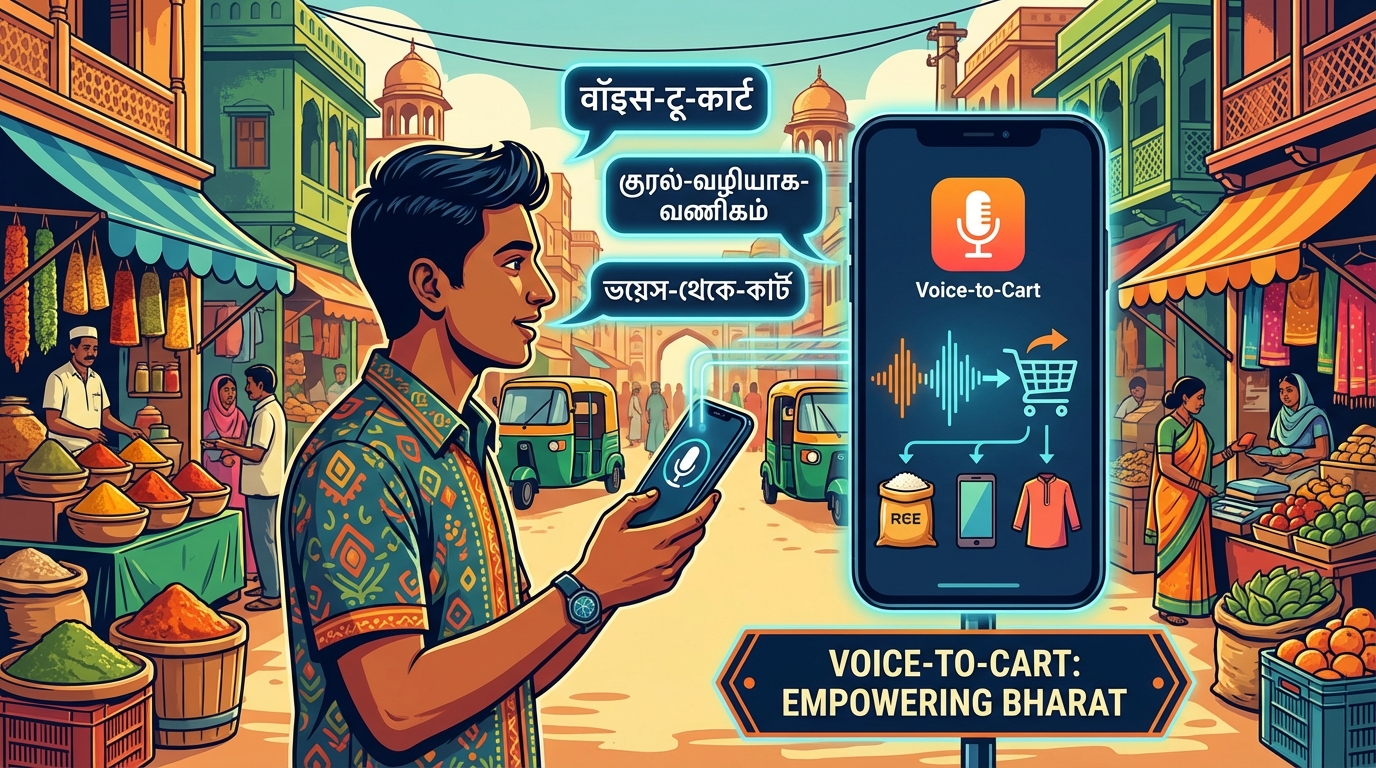
In the context of voice commerce vernacular India, video serves as the ultimate trust-building mechanism. When a user initiates a voice intent in a regional language, a multilingual AI video generator can instantly produce a hyper-relevant explainer or confirmation video. This “voice-to-video” workflow reduces ambiguity and provides the visual reassurance necessary for users in tier-2 markets to authorize payments.
Vernacular video automation allows brands to ingest their product feeds and automatically generate thousands of localized SKU explainers daily. By utilizing Hinglish AI video creation, enterprises can match the real-world speech patterns of their customers, leading to higher watch-time and CTR. Furthermore, regional dialect video automation enables micro-targeting, distinguishing between the nuances of Coimbatore Tamil and Chennai Tamil, or the specific vocabulary used in different districts of West Bengal.
Solutions like TrueFan AI demonstrate ROI through their ability to trigger these personalized videos in under 30 seconds via API. For instance, a user asking “Kolkata se Delhi next Friday flights” can receive a personalized video response showing the best options, narrated in a culturally authentic voice. This level of conversational shopping AI personalization transforms a transactional interface into a guided shopping experience, mirroring the assistance one might receive in a physical retail store in Bharat.
Sources:
- TrueFan AI: Vernacular Video Acceleration
- AdTechToday: Top 5 Marketing Trends Shaping India 2026
- Creator’s Space: Voice Search Trends and SEO 2026
Building Trust with AI Voice Cloning Indian Accents
Trust is the currency of commerce in tier-2 India, and nothing builds trust faster than a familiar, authentic voice. AI voice cloning Indian accents allows enterprises to move beyond the “robotic” neutral TTS of the past. By developing brand voice libraries that reflect the prosody and cadence of regional speakers, companies can create a more empathetic and reliable brand persona.
Governance is critical when deploying synthetic voices. Enterprises must implement strict SSML (Speech Synthesis Markup Language) prosody rules for each language to ensure natural delivery. Transparency is equally vital; users should be informed when they are interacting with an AI-generated voice, and consent must be captured and logged in compliance with emerging data residency and privacy regulations. Post-call trust nudges, such as a short recap video in the user’s language with a cloned brand voice, can significantly reduce order cancellations and support queries.
The integration of these voices into a 175 language support platform ensures that the brand remains consistent across all touchpoints, from the initial voice search to the final delivery confirmation. This holistic approach to voice quality ensures that the enterprise doesn't just “speak” the language, but truly “communicates” with the heart of Bharat.
Sources:
- IndiaMART: Voice and Vernacular Powering the Digital Wave
- TrueFan AI: Enterprise Voice Solutions
- Bhashini: Pravakta National Outreach
Technical Architecture and Voice SEO Optimization Regional
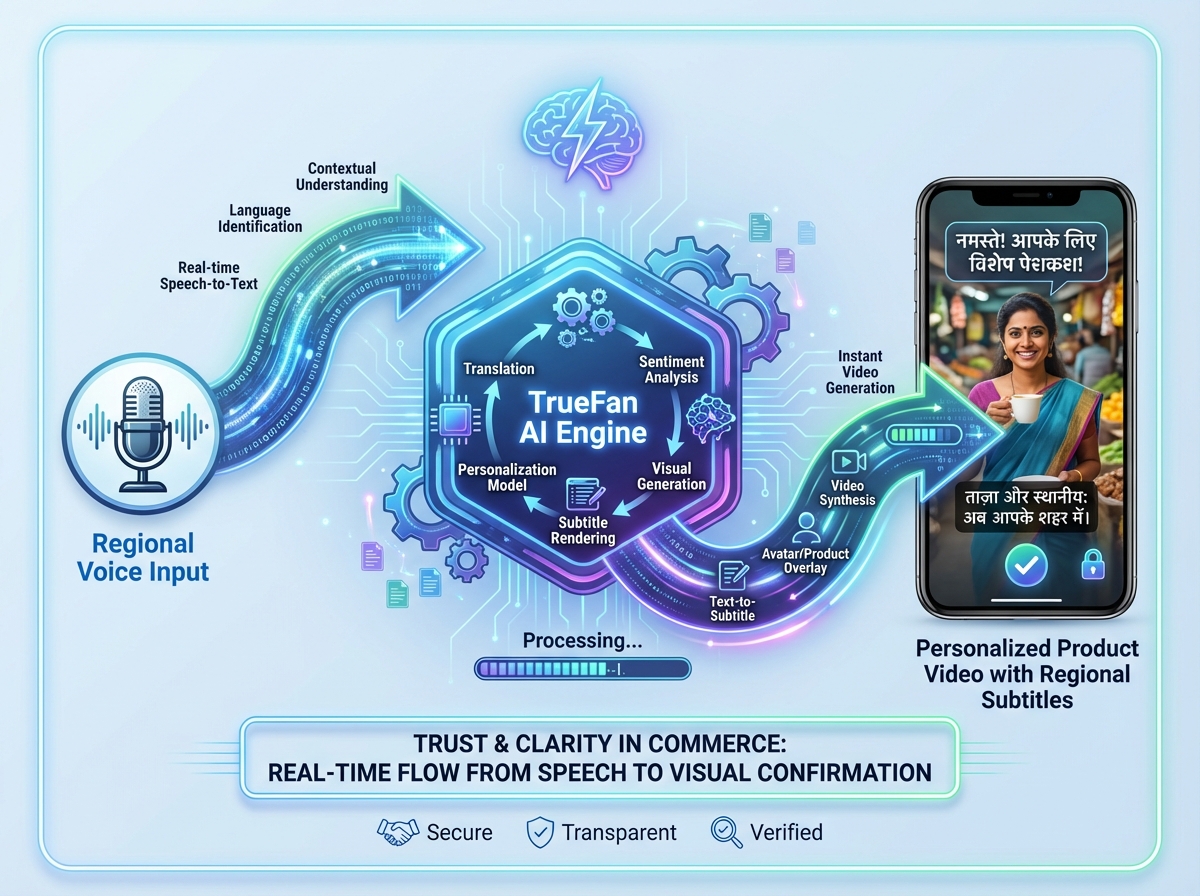
The underlying architecture for voice SEO optimization regional must be designed for speed, scale, and semantic depth. Unlike traditional SEO, voice SEO in 2026 focuses on capturing “featured snippets” for conversational, long-tail, and code-mixed queries. For example, optimizing for “sabse sasta pani purifying filter kaun sa?” (which is the cheapest water purifier?) requires a different content strategy than targeting the keyword “water purifier price.”
Enterprises must deploy FAQ schema and HowTo markup specifically for Hindi, Tamil, and Bengali. Localized slugs, H1 headers, and audio-first FAQ pages with embedded short vernacular videos are essential for capturing voice traffic. From a technical standpoint, the architecture must support a high-throughput pipeline: ASR (input) → NLU (intent) → Commerce Engine (logic) → Multilingual AI Video Generator (output). This entire cycle must occur in near real-time to maintain the conversational flow.
A robust 175 language support platform provides the necessary orchestration layer, handling queueing, retries, and safety filters. This ensures that PII-safe data flows are maintained while generating thousands of localized assets. By aligning entity markup with regional intents, brands can ensure they are the first choice when a user asks their smart speaker for a recommendation in their native tongue.
Sources:
- Creator’s Space: Voice SEO and Voice Commerce 2026
- Digital Retina: Vernacular Content as a Growth Driver
- MeitY: Digital India Program Context
Roadmap and FAQ for Voice Commerce Vernacular India
Implementing a comprehensive voice strategy requires a disciplined 180-day rollout. The first 30 days should focus on auditing the top 50 intents by category and seeding Hindi/Hinglish variants. By day 90, the expansion to Tamil and Bengali should be complete, with at least 1,000 regional dialect video automation variants live. The final phase involves scaling WhatsApp and IVR journeys while deepening conversational shopping AI personalization.
Frequently Asked Questions
1. How do we start voice commerce vernacular India in Hindi, Tamil, and Bengali?
Begin by identifying high-frequency, low-consideration categories like grocery or recharges. Use a phased approach starting with Hindi (Hinglish) and then expanding to Tamil and Bengali using a multilingual AI video generator to provide visual confirmation for voice intents.
2. What are the best practices for AI voice cloning Indian accents and disclosure?
Always prioritize cultural authenticity by using voices that reflect regional prosody. Ensure explicit opt-in for voice capture and clearly disclose the use of synthetic voices. Maintain an audit log of model versions and user consent to ensure compliance.
3. How does a 175 language support platform integrate with our existing commerce stack?
Modern platforms like TrueFan AI use API-first architectures. They ingest data from your CRM and product feed, process voice intents through an NLU layer, and trigger real-time video or audio responses that are delivered via your app, WhatsApp, or smart speakers.
4. How to do voice SEO optimization regional for Hinglish queries?
Focus on question-led queries and conversational phrases. Implement FAQ schema in regional languages and create audio-first content. Use localized slugs and ensure your entity markup is aligned with how users actually speak in tier-2 cities.
5. Can TrueFan AI handle the scale of millions of personalized videos for festive seasons?
Yes, TrueFan AI is built for enterprise scale. For example, during festive campaigns, the platform has successfully generated 2.4 million personalized greetings for Hero MotoCorp and 354,000 videos in a single day for Zomato, demonstrating its ability to handle massive batch operations with high reliability.
Sources:
- TrueFan AI: Case Studies and Success Stories
- ROI Hunt: Ecommerce Trends 2026
- AdTechToday: Personalisation and Brand Content
Scaling with Multilingual Voice Marketing Automation and Smart Speaker Commerce Bharat
The complexity of managing dozens of languages and thousands of regional offers necessitates multilingual voice marketing automation. This involves an automated journey builder that orchestrates voice-led interactions based on language, dialect, and user behavior. A centralized governance framework ensures that brand lexicon remains consistent across all languages while allowing for local nuances. This automation allows a single marketing team to manage national campaigns that feel hyper-local to every recipient.
While smartphones are the primary gateway, smart speaker commerce Bharat is gaining momentum in semi-urban households. Integrating with Google Assistant and Alexa routines allows brands to become part of the user's daily home environment. For instance, a morning routine could include a voice nudge for a grocery restock. In areas with lower smart speaker density, IVR and WhatsApp voice notes serve as the primary channels, providing a similar hands-free experience without the need for dedicated hardware.
TrueFan AI's 175+ language support and Personalised Celebrity Videos and the voice sync accuracy comparison guide provide the creative engine for these automated journeys, allowing brands to deliver high-impact, localized content that resonates deeply with tier-2 and tier-3 audiences. By integrating these assets into the automation flow, enterprises can achieve a level of personalization that was previously impossible at scale. This holistic approach ensures that the brand's voice is heard—literally—in every corner of the country.
Sources:
Discovery through Vernacular Voice Search Optimization and Dialect-Specific Shopping Videos
Capturing the user at the moment of intent requires a robust strategy for vernacular voice search optimization. Voice queries in India are often longer, more conversational, and heavily influenced by local dialects. Brands must optimize their digital assets for “Hinglish” and regional script queries, focusing on long-tail keywords like “Sabse sasta AC kahan milega” (Where can I find the cheapest AC). Implementing FAQ and HowTo schema in multiple Indic languages ensures that brand content appears in voice snippets and assistant responses.
To complement voice search, dialect-specific shopping videos provide the visual context necessary for conversion. These short, 15-30 second videos should mirror the exact voice flow the user is experiencing, using local idioms and on-screen captions in the regional script. A video in the Bhojpuri dialect for a user in Bihar, featuring a clear CTA and a UPI deep-link, is significantly more effective than a generic English advertisement. These videos can be distributed via WhatsApp, ShareChat, or Moj to reach users where they spend their time.
The synergy between voice search and video content creates a powerful discovery layer. When a user searches for a product via voice, the assistant can surface a dialect-specific video that explains the product's benefits and offers a direct path to purchase. This “see it, hear it, buy it” model is particularly effective for users with lower literacy levels, as it removes the barriers of reading and typing, making commerce truly accessible to everyone.
Sources:
- ET Telecom: 45% of Indians still do not access internet
- WARC: Brands need a voice search strategy in India
2026 Implementation Roadmap
- Q1 2026: Pilot in Hindi + 2 regional languages; focus on top 10 intents (search, offer, reorder) via WhatsApp and IVR.
- Q2 2026: Expand to 6+ languages; launch smart speaker commerce Bharat skills; integrate voice-activated offer redemption.
- Q3 2026: Scale to 20+ regions; deepen voice assistant regional integration; automate with multilingual voice marketing automation.
- Q4 2026: Standardize voice commerce ROI measurement dashboards; implement enterprise-wide governance and accessibility upgrades.
Frequently Asked Questions (FAQ)
Why is vernacular voice commerce pivotal for India in 2026?
Vernacular voice commerce aligns with how the next billion users naturally interact—through speech in local languages. It removes typing and literacy barriers, increases intent completion, and expands market reach across tier-2/3 regions.
How do enterprises handle Hinglish and dialects in NLU?
Train ASR/NLU on mixed-language corpora, phonetic variants, and colloquialisms. Use entity resolution, context windows, and confidence thresholds tuned by region, plus SSML in TTS for natural prosody.
What safeguards secure voice-activated offer redemption?
Device fingerprinting, geo-fencing, OTP/one-time tokens, CRM-linked eligibility, and consent capture mitigate fraud while keeping redemption flows fast and user-friendly.
How can brands measure ROI from voice commerce?
Track voice-initiated sessions, intent completion, AOV uplift, CAC/LTV by language, and re-engagement. Attribute via deep links and CRM integrations to see cohort-wise profitability.
Which channels best scale multilingual voice journeys?
Combine WhatsApp voice notes, IVR, and smart-speaker routines with multilingual voice marketing automation to orchestrate localized, high-frequency interactions at national scale.
Roadmap and FAQ for Voice Commerce Vernacular India (Continuation)
Implementing a comprehensive voice strategy requires a disciplined 180-day rollout. The first 30 days should focus on auditing the top 50 intents by category and seeding Hindi/Hinglish variants. By day 90, the expansion to Tamil and Bengali should be complete, with at least 1,000 regional dialect video automation variants live. The final phase involves scaling WhatsApp business commerce automation and IVR journeys while deepening conversational shopping AI personalization.
Frequently Asked Questions
1. How do we start voice commerce vernacular India in Hindi, Tamil, and Bengali?
Begin by identifying high-frequency, low-consideration categories like grocery or recharges. Use a phased approach starting with Hindi (Hinglish) and then expanding to Tamil and Bengali using a multilingual AI video generator to provide visual confirmation for voice intents.
2. What are the best practices for AI voice cloning Indian accents and disclosure?
Always prioritize cultural authenticity by using voices that reflect regional prosody. Ensure explicit opt-in for voice capture and clearly disclose the use of synthetic voices. Maintain an audit log of model versions and user consent to ensure compliance.
3. How does a 175 language support platform integrate with our existing commerce stack?
Modern platforms like TrueFan AI use API-first architectures. They ingest data from your CRM and product feed, process voice intents through an NLU layer, and trigger real-time video or audio responses that are delivered via your app, WhatsApp, or smart speakers.
4. How to do voice SEO optimization regional for Hinglish queries?
Focus on question-led queries and conversational phrases. Implement FAQ schema in regional languages and create audio-first content. Use localized slugs and ensure your entity markup is aligned with how users actually speak in tier-2 cities.
5. Can TrueFan AI handle the scale of millions of personalized videos for festive seasons?
Yes, TrueFan AI is built for enterprise scale. For example, during festive campaigns, the platform has successfully generated 2.4 million personalized greetings for Hero MotoCorp and 354,000 videos in a single day for Zomato, demonstrating its ability to handle massive batch operations with high reliability.
Sources:
- TrueFan AI: Case Studies and Success Stories
- ROI Hunt: Ecommerce Trends 2026
- AdTechToday: Personalisation and Brand Content
Recommended Internal Links
- Voice commerce India 2026 strategies
- Essential tier-2 voice adoption strategies
- Ultimate multilingual AI video generator guide
- Voice SEO for regional languages
- Vernacular voice SEO strategies
- Voice commerce personalization in India 2026
- Voice SEO regional optimization
- WhatsApp business commerce automation 2026
Frequently Asked Questions
How do we begin vernacular voice commerce in Hindi, Tamil, and Bengali?
Start with high-frequency, low-consideration intents (e.g., grocery, recharges). Launch in Hindi/Hinglish first, then expand to Tamil and Bengali. Pair voice intents with vernacular explainer videos to confirm actions and reduce friction.
What are best practices for AI voice cloning and disclosure?
Use regionally authentic voices with SSML-tuned prosody. Obtain explicit consent, disclose synthetic voice usage, log model versions, and comply with data residency and privacy regulations.
How does a 175-language platform integrate with our stack?
Adopt an API-first approach: CRM and product feeds in; ASR/NLU process intents; commerce logic executes; outputs via vernacular video or audio to app, WhatsApp, IVR, or smart speakers.
How do we optimize Voice SEO for Hinglish and dialect queries?
Target question-led, long-tail phrases, implement FAQ/HowTo schema in Indic languages, align entities to regional intents, and embed short vernacular videos for snippet eligibility.
How can we measure ROI from voice commerce initiatives?
Track voice-initiated sessions, intent completion, AOV uplift, CAC/LTV by language, and re-engagement. Use deep links and CRM data for cohort-level attribution and profitability.



